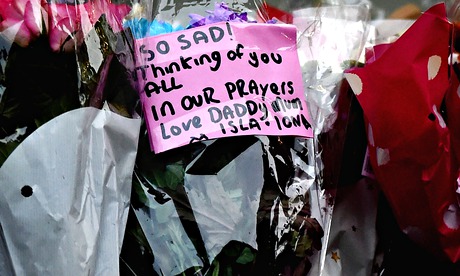
The people of Glasgow are today grieving six people who died as a result of a traffic accident in their city centre. A year ago they grieved the 10 deaths in the Clutha Vaults helicopter accident. Last week we grieved for Sydney and for Peshawar, as we once grieved the victims of the 2004 Indian Ocean tsunami, or those of Dunblane, Penlee and Aberfan.
Any comfort offered to those in distress is a kindness, even if it is distant, collective and conveyed through the cliched rhetoric of the mass media. For those in the cities concerned we can understand their shock that it could have been them, their anxiety that their own family and friends might be involved. A brief “how awful” before turning to the next item of news is better than none. People of faith can offer prayers, which may comfort the faithful. We can donate money where appropriate. The mind will always reach out to fellow humans in their suffering.
Yet collective grief is a strange emotion. We grieve for places that suffer mass bereavement, but not for individuals; theirs is considered a private affair. The result can be distorted responses. After the Aberfan primary school disaster, hundreds of toys were donated to the village – a village bereft of children. After the Penlee lifeboat disaster, the public gave £3m for the victims’ families. The widow of an earlier lifeboat victim wrote that she had received nothing when her husband died alone.
When a disaster is the result of human agency, as in a mass killing, collective grief can lose control. It fuels a desire for blame and indeed for retribution. When the culprit is sick, those responsible for him are “guilty”. When the culprit claims to act for a group or sect, the craving for revenge can escalate into retaliation and armed conflict. The wars against Muslim states fought by Britain and America in the last 15 years were, in truth, to relieve the grief of 9/11.
It should not diminish sympathy for those lost in the Glasgow disaster to hold that grief, but the anguish of one person is no less “civic” than that of six. Group grief, like group joy, is a transient sensation. We should be able to feel for others without shouting it from the rooftops.