What role can social enterprise approaches play in international development? How can they help ensure that vulnerable and marginalised communities share in the benefits of economic development? We are putting these questions to some of the world’s leading social entrepreneurs ahead of a debate the British Council is hosting on this topic in Brussels on 3 June as part of the EU Development Days (see below).
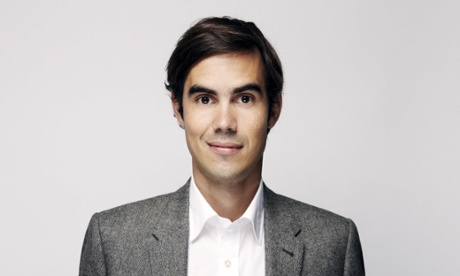
Our first interview is with Nicolas Hazard, the chairman of Le Comptoir de l’Innovation and vice chairman of Groupe SOS, a European social enterprise that works in 30 countries and supports 1 million people.
Could you tell us about Groupe SOS’ international programme?
Groupe SOS has an international programme that allows young passionate professionals to work worldwide, in countries with different economic realities, social issues and languages, with the objective of developing social entrepreneurship. Our goal is to share French and European know-how to allow local organisations and social enterprises to grow, but we also continuously seek new potential partnerships. We are convinced that effective solutions exist around the world and can be replicated. Why reinvent the wheel when it is not necessary? The confrontation of our organisation’s view with local realities has enabled us to foster social innovation. A direct outcome of this programme is the opening of the first social tech incubator in Morocco by Le Comptoir de l’Innovation which is empowering local entrepreneurs to tackle social issues with technological solutions.
What are some of the benefits that social enterprise approaches bring to vulnerable and poor populations?
Social enterprises address issues not covered by traditional for-profit businesses and directly target the most vulnerable populations. Their initiatives are driven by social innovation and social benefit. The solutions they offer are designed to provide innovative services and products to the unserved, but their most important goal is to give every citizen a second chance at life by providing jobs and market opportunities.
It’s been said that social enterprises can target specific markets in developing countries that are underserved by the private, public and NGO sectors. Do you agree?
It is not that social enterprises can, but that they do target specific underserved markets since they are created specifically to tackle a social problem. Business models are then adapted to these issues to ensure the sustainability of the organisation. Social enterprises are being created every day to solve a wide range of issues in areas ranging from health care and nutrition to environmental protection and education. Every social problem creates an opportunity for a social enterprise solution. Groupe SOS has existed for more than 30 years and has diversified its activities in the silver economy (i.e. catering to the needs of ageing populations) and the health sector. As long as you can build a business model that provides a solution for a marginalised population, you can create a social enterprise. There are no limitations in terms of the sector of activity or the type of beneficiaries. In a world that is growing more unequal, the opportunities for social enterprises are multiplying. This model is a reality, not a dream.
There is a lot of excitement about the benefits social enterprise approaches can bring to developing countries. But what are the risks?
Social enterprises tend to be local and relatively small compared to traditional for-profit enterprises. The risk is that growth slows down and that social entrepreneurship remains an alternative model unknown by the general public – a matter for sector experts. The objective of Groupe SOS with its international programme is to build bridges between different countries and partners to create sustainable initiatives. Social entrepreneurs need to learn how to work with institutions, governments, for-profit entrepreneurs, and NGOs.
Should the EU mainstream social enterprise approaches in its development aid agenda?
I am personally convinced that the EU should include social enterprise approaches in its development agenda. The sector is currently consolidating and needs financial and political backing at all levels to overcome growth barriers. The main argument in favour is the fact that social enterprises are innovative and create value and jobs for vulnerable people in a sustainable manner. The main obstacle is the lack of knowledge of social entrepreneurship at EU level and at the beneficiary level. We need to work harder at promoting the sector, show the benefits for all and share the knowledge that European countries have accumulated.
About the EU Development Days
The flagship event of the European Year for Development, the European Development Days will bring together 5,000 people in the development arena in Brussels to address the challenges to achieving a more sustainable and peaceful world. As part of this event, the British Council will host an auditorium panel debate on 3 June entitled ‘Stemming the tide on income inequality: social enterprise’, which will explore the role of social enterprise in the new, post-2015 development agenda, and how to increase its impact in tackling income inequality. Click here for more information or to register
About Nicolas Hazard
Nicolas Hazard is a French social entrepreneur. He is chairman of Le Comptoir de l’Innovation, which develops social entrepreneurship around the world. He is also the vice chairman of Groupe SOS, a leading European social enterprise . Each year he organises IMPACT², the ‘Davos’ of social entrepreneurship, which brings together nearly 1,500 political and economic decision-makers from 50 countries at Paris City Hall.
Nicolas is the author of “Capitalism for all, 20 enterprises that change the World” (Edit the World, 2013) and “L’entreprise du XXIeme siècle sera sociale ou ne sera pas” (Rue de l’Echiquier, 2012. He is a regular contributor to the Guardian and the Stanford Social Innovation Review and writes a monthly column “Social Made in France” for the French newspaper Le Monde.
Nicolas is a graduate of HEC and Sciences-Po Paris. He was elected in 2015 “Young Global Leader” by the World Economic Forum and won the Montgolfier prize.
Content on this page is paid for and provided by the British Council, sponsor of the international social enterprise hub