“Let Glasgow flourish by the preaching of the word”
Residing still in the Bellgrove hotel in Glasgow’s East End are men who started life two goals down and who have been struggling to reduce the deficit ever since. Now, at last, some good and able people are beginning the task of exorcising this evil that exists within its limits. The extent to which they are successful will determine just what this country, and all of us who live in it, is really made of.
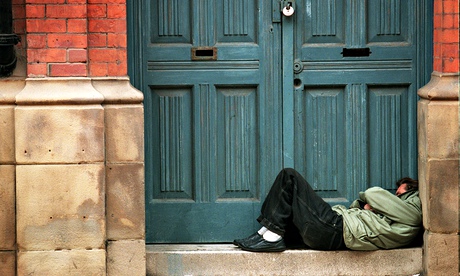
I have written before about this establishment, Glasgow’s very own House of the Rising Sun. It is a privately run hostel for those men whose problems with poverty-induced alcoholism and drug addiction have put them beyond the bounds of polite society. Each week, they exchange their giros for an existence in conditions of squalor that are barely fit for animals, let alone humans. The two men who own the facility maintain it for maximum profit with as little outlay as they can get away with. They have become millionaires many times over at the expense of other men’s sickness and misery. I pity the men who are drawn to doss down in this flop house, but I pity more the emptiness and desolation of a soul that can exploit these, their fellow human beings. I sincerely hope that their own offspring may never discover the evil that was done to fund their gilded childhoods.
And lest any of us are tempted to disdain the jaikies and deadbeats who flee to the Bellgrove then know this: an unfair dismissal; the pressure of a low-paid job; a sudden withdrawal of love – any or all of these can initiate the downward spiral.
At long last, though, the foundations of this building may just be starting to shake. Glasgow city council now has the will to kill off this wretched place, but that alone is not enough. To achieve this it is seeking an equal degree of enthusiasm by the Scottish government and a wide-ranging partnership of concerned agencies, including NHS Greater Glasgow and Clyde, Police Scotland, third-sector agencies and local communities. Many of the current Bellgrove residents have complex case histories and so the willing participation of criminal justice and social work departments dealing with addictions and mental health is also required.
To deliver the closure and re-settlement of residents will demand a multi-faceted strategy that will cost around £30m and test the reputation of Glasgow’s citizens for possessing big hearts and a generous spirit. A hostel management and staff team would need to be appointed to manage the facility in its current form. This would require the owners voluntarily to abdicate their responsibilities or to be forced to by one of several means. The long-term goal, though, must be the permanent closure of the Bellgrove as a home for these people.
This must be followed by a programme to build three residential units and a supported accommodation project for those men who require longer and more intensive support. To achieve this successfully will also require that each Bellgrove resident has his individual needs assessed. This will improve their chances of sustainable recovery.
In the first instance, I would approach all firms and agencies that have done well out of the city in recent years to help deliver this for little or no profit. It’s time they were invited to give a little back. Yet if this strategy is to succeed it may be that all of us who are citizens of this great city and who have flourished in it will be required to give something of ourselves. This will require too that we withhold moral judgment of the souls who eke out a living death in the Bellgrove hotel. These men were made in the image of God and are our brothers.
And nor is this simply for the 200 or so men who currently dwell in the Bellgrove. Their situation may be unique within Scotland but the social concordat being sought to address their problems could become the gold standard for local authorities, Scottish government and voluntary and private sectors to work together in future.
Glasgow city council, and its leader, Gordon Matheson, has been aware of the need to shut this place down for years and has long since stopped sending people to it. During this time it extinguished all similar, council-run facilities and placed many other men in suitable planned accommodation following a series of annual £15m grants from Holyrood. The Bellgrove, being a privately run enterprise, is an anomaly that allows its owners to dip their beaks in the tide of human misery that flows through their doors.
In Edinburgh, a small detachment of the Scottish political elite is gathering in an upper room trying to fashion a form of enhanced devolution. Curiously, on this occasion, the public has been locked out, the matters under discussion perhaps having been deemed to be too rich and complex for our untutored palates. We had been granted 18 months of constitutional freedom after all and must be thankful for that. If we were also to have been permitted a say on how many crumbs Scotland would be allowed to nibble following the no vote in the independence referendum then it might interfere with our sleep and give us even more ideas above our station.
Let’s be frank here – the Smith commission on extra devolved powers is a waste of time and a travesty. It will result merely in transferring a wee bit more fiscal autonomy from one centralised administration to another. I would like to see Westminster devolve a family of powers direct to Scotland’s biggest and most important city. This would allow it to address the poverty and deprivation within its own walls in its own way and to the overall benefit of Scotland.
Glasgow can survive without the rest of Scotland. Without Glasgow, the rest of Scotland resembles a decoration on the lid of a tin of shortbread.