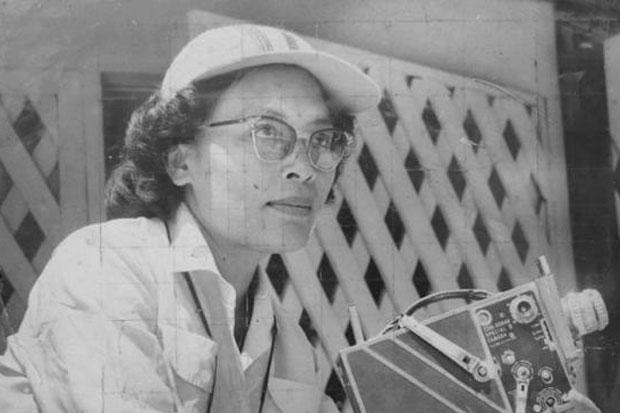
The movie industry has always been a men's club. Take a look at Hollywood. Last year, only 8% of the top 250 grossing films in the US domestic box office were directed by women. And though no official statistics are available, the Thai movie scene has also long been a male-dominated campsite.
Ask cinephiles to name some directors and they'll probably list the likes of Pen-Ek Ratanaruang, Wisit Sasanating, Apichatpong Weerasethakul, Banjong Pishanthanakul and Nawapol Thamrongrattanarit. But even though they may seem largely invisible, women have long been involved behind the camera.
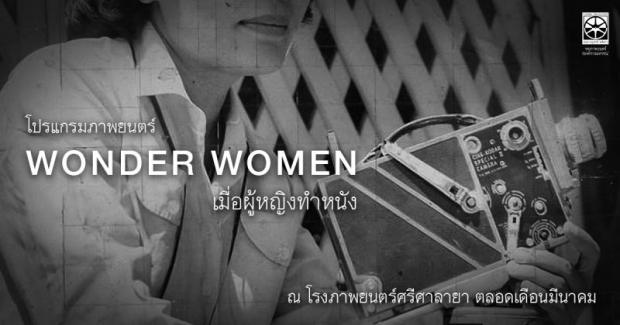
Today is International Women's Day, and the Thai Film Archive (Public Organization) is bringing women in film to the foreground. Until March 31, the Archive will be screening 13 movies focusing on Thai female film directors, with works dating from the 1970s until the present. This is not just to recognise their place in the industry but also give them a platform where their creativity can be fully appreciated.
Highlights include Rak Risaya (1979), a tale of forbidden love by acting legend Patravadhi Sritrairat; Dek Toh (2005) by Areeya Sirisopha, a documentary about a rural school; and Kanittha Kwanyoo's horror Arpat (2014), which caused such a frenzy with the Thai censorship board before finally getting released.
"There's not really a trend [like in Hollywood]. Nobody says, 'Hey, this year there aren't any female film directors being nominated'. It hasn't really been a topic of discussion," said Putthapong Cheamrattonyu, Archive Programming officer of the Thai Film Archive and the event's programmer. "But that's one of the reasons why the Thai Film Archive created this event."

Although it's been a record year for women in Hollywood, with 171 female nominees at the Academy Awards and a rise in the number of female nominees in non-gendered categories from 44 last year to 52 this year, there are still questions as to whether the industry has truly made progress. This is because only five women have ever been nominated for best director, and only one has won (Kathryn Bigelow for The Hurt Locker in 2010). At this year's Oscars, none of the films nominated for best picture had a female director.
The problem isn't just in Hollywood. At the Cannes Film Festival, arguably the world's most prestigious cinema gathering, the glass ceiling is firmly in place too. Jane Campion remains the only female director to have won the Palme d'Or, the festival's top prize (for The Piano in 1993). Relatively few women are invited to screen their works at the festival.
This doesn't mean that women in film are never recognised as creative engines driving the industry. There are plenty of prominent, celebrated names, past and present. Pioneering French director Alice Guy is one of cinematic history's most cherished names. She was the first female director in recorded history and the first woman to own a film studio in 1908. Currently in Hollywood, some of the most familiar directorial names are women: Patty Jenkins (Wonder Woman, Monster), Jodie Foster (Little Man Tate, The Beaver), Kathryn Bigelow (Point Break, Zero Dark Thirty) and Sofia Coppola, who won the Academy Award for Best Original Screenplay for Lost In Translation in 2003.
Back in Thailand, the Thai Film Archive's thorough research of newspaper clippings and old magazines found the earliest mention of Thai female directors after World War II. Pratuang Srisuphan, who directed the titles Tat Rak (1953) and Sood Teerak (1955), is believed to be Thailand's first ever female cinematographer and director. Ladda Sarntayon, a theatre director-turned-film director, made Fai Cheewit (1956) and Kabuankarn Seree Cheen (1958). Popular actress of the time Suphan Buranapim is credited with directing Cha-am Amprang in 1955.
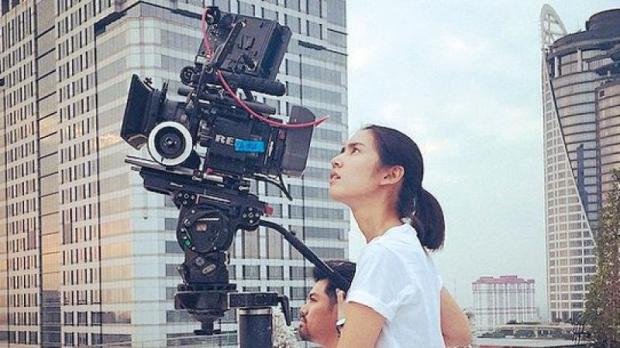
But even though Thai women have been creative forces in film since the 1950s, their presence in the industry remains limited. Yes, there are more opportunities for women in both the mainstream and indie film scenes these days, but it's still not easy.
"I never think that I can't do what men do," said director Kanittha Kwanyoo. "When something needs to be done, I do it. But I have to admit, there are some people -- not everyone -- who just see me as a 'woman'. They question whether I'm able to do it. Whether I'm even able to think. It's not all welcoming. I've had to prove myself quite a lot."
In 2014, Kanittha was put under the microscope after her debut horror film, Arpat, was banned for scenes depicting monks doing "indecent activities". The film, about a selfish young punk forced into the monkhood, was deemed by the censorship board to be destroying the image of Buddhism. It was eventually released after several changes, cuts and an 18+ rating.
"It wasn't destroying religion," she said. "It was about a person inside the religion destroying it. It gave me a huge problem. I felt so lost at the time. As a woman, should I not talk about this? I didn't have bad intentions. I didn't have the intention of destroying anything. I thought that, as a Buddhist myself, I have the right to talk about these things."
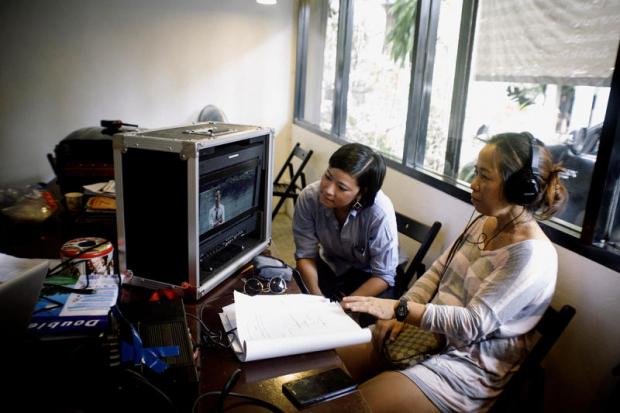
Kanittha, who is interested in telling stories about people, their lives and their dramas, still has hope for the future.
"I want to see women come out and tell stories," she said. "I believe women have a complexity to them and their own perspectives. I want to see these perspectives. I want to see more roles for women.
"I don't see [female] directors a lot. There are a lot of women scriptwriters, but they don't direct as much. But I'm seeing it more and more. The younger generation of female directors -- I think they're very brave."
The view from the Thai Film Archives is the same: looking at the submissions to the Archive's short movie events every year, more and more female film students are taking part and holding their own. Notable actresses are also taking turns behind the camera as well, like Bongkot "Tak" Benjarongkakul and Manassanun "Donut" Punlertwongsakul.
"The first idea we had with the screening programme was, should we separate topics?" said Putthapong. "Like women making movies about women, for example. But we decided that that would be putting a frame around them. There's no need to show that women do this and men do that. We just feel that, right now, the space for women may be quite limited, so we wanted to provide this space for people to know more about it."
Programme
Weekdays at 5:30pm
March 8: Wonder Woman (2017) Directed by Patty Jenkins
March 12: Yes Or No (2010) Directed by Sarasawadee Wongsompetch
March 14: Dek Toh (2005) Directed by Areeya Sirisopha, Nisa Kongsri
March 16: Sad Beauty (2018) Directed by Bongkot Benjarongkakul
March 20: Pumaree Si Thong (1988) Directed by Nantana Weerachon
March 22: Peen Kliew (1994) Directed by Oranuch Ladpanna
March 23:
1pm: Lovesucks (2015) Directed by Manassanum Punlertwongsakul
3pm: Karaoke Girl (2013) Directed by Visra Vijitvadhakarn
March 28: Rak Risya (1979) Directed by Patravadhi Sritrairat
March 29: Khaoniew Moo Ping (2006) Directed by Siwaporn Pongsuwan
March 31:
1pm: The Island Funeral (2015) Directed by Pimpaka Towira
3pm: By The Time It Gets Dark (2016) Directed by Anocha Suwichakornpong
All films are screened at Sri Salaya Theathre, Thai Film Archive (Public Organization) on Phutthamonthon Sai 5 Road.