Girls Active is one of the Youth Sport Trust’s key programmes. Recognising the significant gender imbalance in girls and boys participation in sport, Girls Active started with a year-long research project into what motivates girls to take part.
The model is focused on the concept that girls themselves are uniquely positioned to understand the motivations of other girls and sell PE and sport to them. The resulting 12-month pilot study demonstrated that the project could improve body image and confidence in girls, helping them in other areas of their lives. For example, the percentage of girls that felt positive about school rose from 24% to 78%.
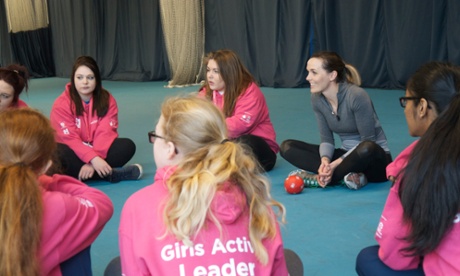
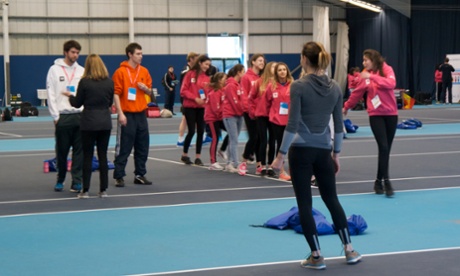
Last month we staged the Girls Active Camp, funded by Sport England National Lottery and supported by our partner Women in Sport, at Loughborough University. Olympic cycling champion Victoria Pendleton welcomed 165 14- to 16-year-old girls on a three-day journey which provided the young women with the inspiration and tools to go back to their schools as PE and sport marketeers. Victoria described the programme as exciting and innovative – and that’s exactly what we want it to be.
At the camp, we initially saw many of the girls lacking confidence and afraid to get involved for fear of being judged. I spoke to many who were apprehensive about being in this new environment. But as the camp progressed, we witnessed a complete transformation. The girls found their voice and became increasingly eager to contribute in the sessions. By the end, it was a completely different story and an absolute delight to see many of these young women inspired and motivated to make a difference, having demonstrated the resilience to stand up and be counted.
One young student said: “Clubbercise was really really good. It didn’t feel like a sport you were doing, it just felt like having fun and it gave you ideas for new ways you could introduce sport to other people.”
The camp was a significant learning experience for the Youth Sport Trust. There were some real challenges in dealing with a group who at the start would, for the most part, not describe themselves as being enthusiastic about PE and sport. We asked schools to send girls who were influential among their peer group but not overly sporty. Through this brief, the girls who attended camp could go on and identify with other girls from their own schools who don’t see the relevance of PE and sport to their lives.
The camp took many on a journey, undertaking activities to help them believe they have it in their power to make a difference. We provided the girls with skills and ideas to develop an exciting new PE and sport experience in their own schools – one which is attractive to all girls.
If we are serious about the wellbeing and achievement of all young people then creating a culture in schools where girls active participation in PE and sport is the social norm is vital – and girls, supported by their teachers, are best placed to do this.
Over the next 12 months, we will train teachers in 90 secondary schools to ensure the impact of Girls Active is felt right across the UK. We then hope to stage at least two more Girls Active Camps over the next two years, monitoring and evaluating the programme closely, to measure its success. Ultimately, the aim is to get Girls Active into every secondary school in the country and we will keep working hard to make that happen.
Through creative projects like Girls Active, we can help young people build a brighter future using high quality PE and school sport.
Join us on Wednesday, 22 April between 5.30pm and 7.30pm for a live chat: How can we make school sport and PE more inclusive?