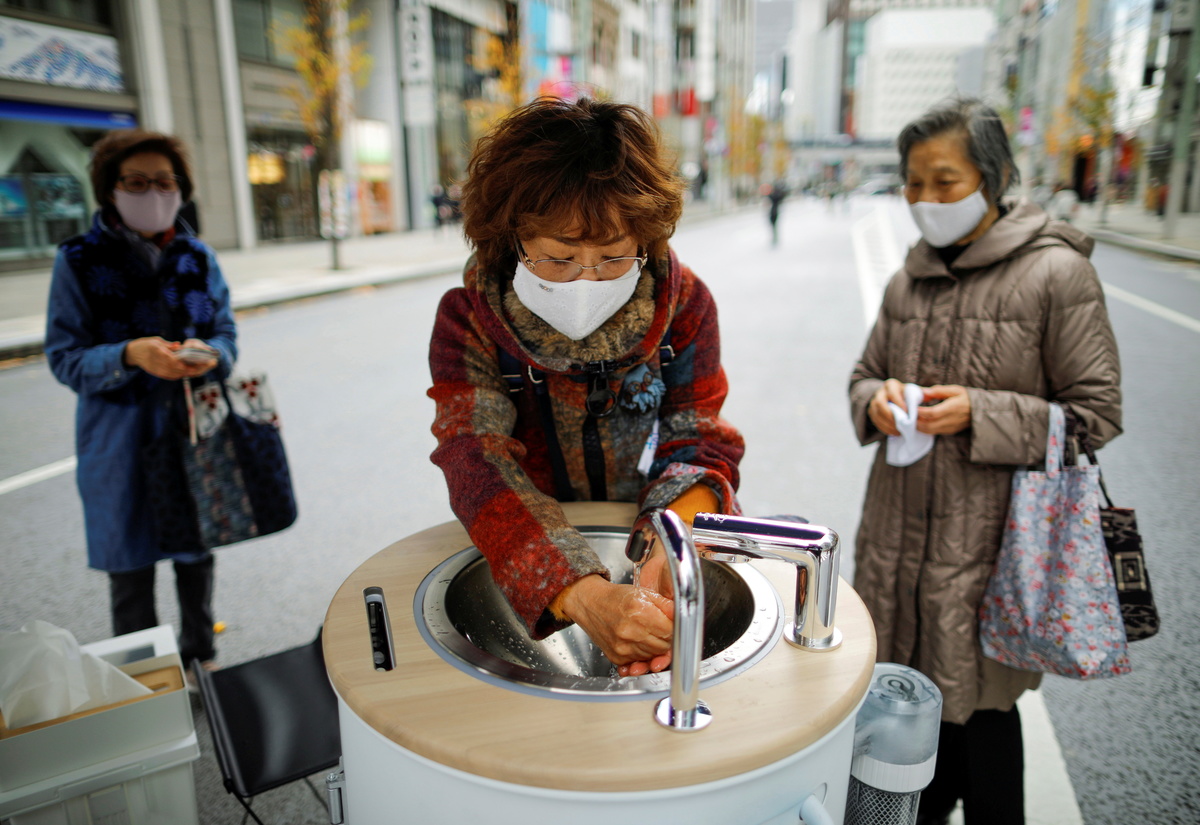
Shoppers washed their hands and sterilised their smartphones in the streets of Tokyo's posh Ginza district on Saturday using handwashing stations that a Japanese start-up hopes will revolutionise access to clean water and better hygiene.
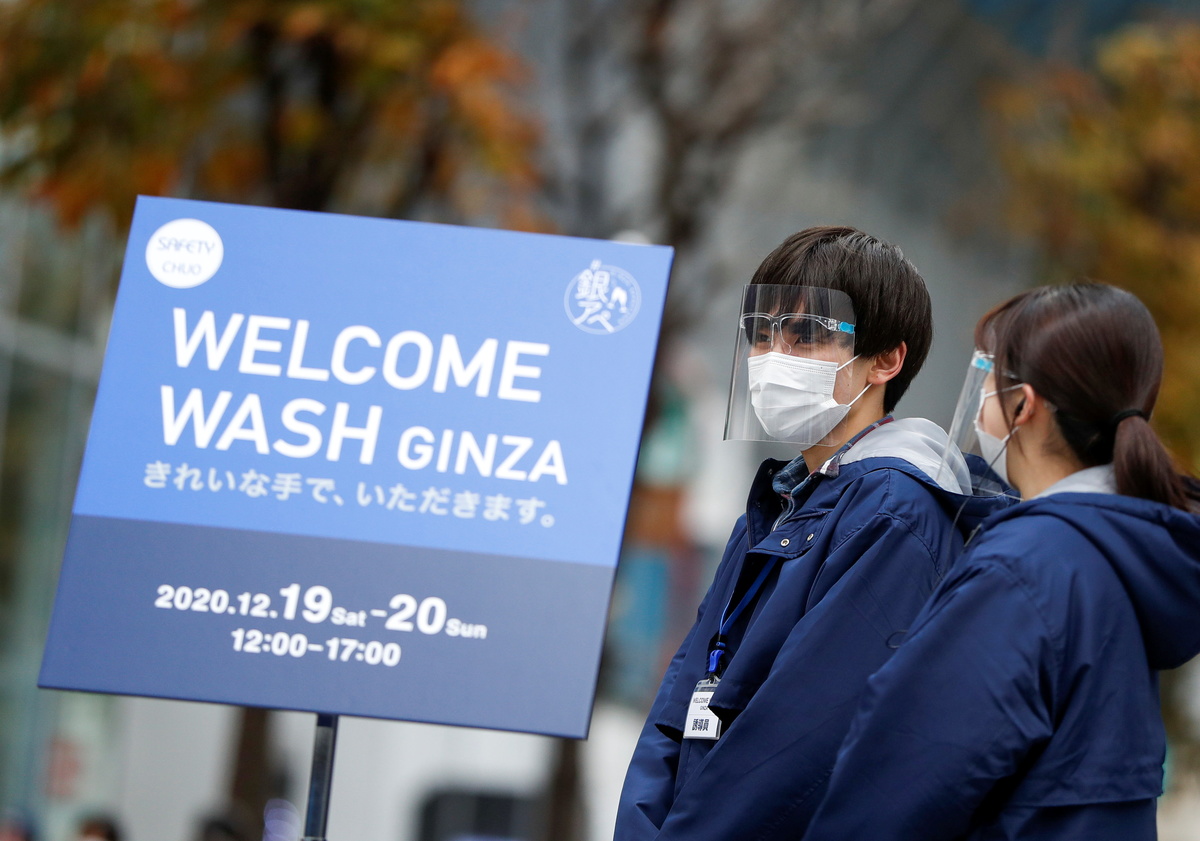
WOTA Corp set up 20 of its WOSH machines near popular Ginza stores in an initiative with a district association aimed at encouraging shoppers to wash their hands to prevent the spread of the coronavirus.
The machines don't require connection to running water and don't use fresh and waste water tanks. Instead they recycle the water through a three-stage process of membrane filtration, chlorine and deep ultraviolet irradiation.
They also have a device that cleans smartphones through 20-30 seconds of ultraviolet light exposure while users are washing their hands, since touching a dirty smartphone would otherwise negate their handwashing efforts.
The firm had already been developing the machine in part to alleviate long lines at rest rooms when the COVID-19 crisis hit early this year, Chief Executive Yosuke Maeda told Reuters.
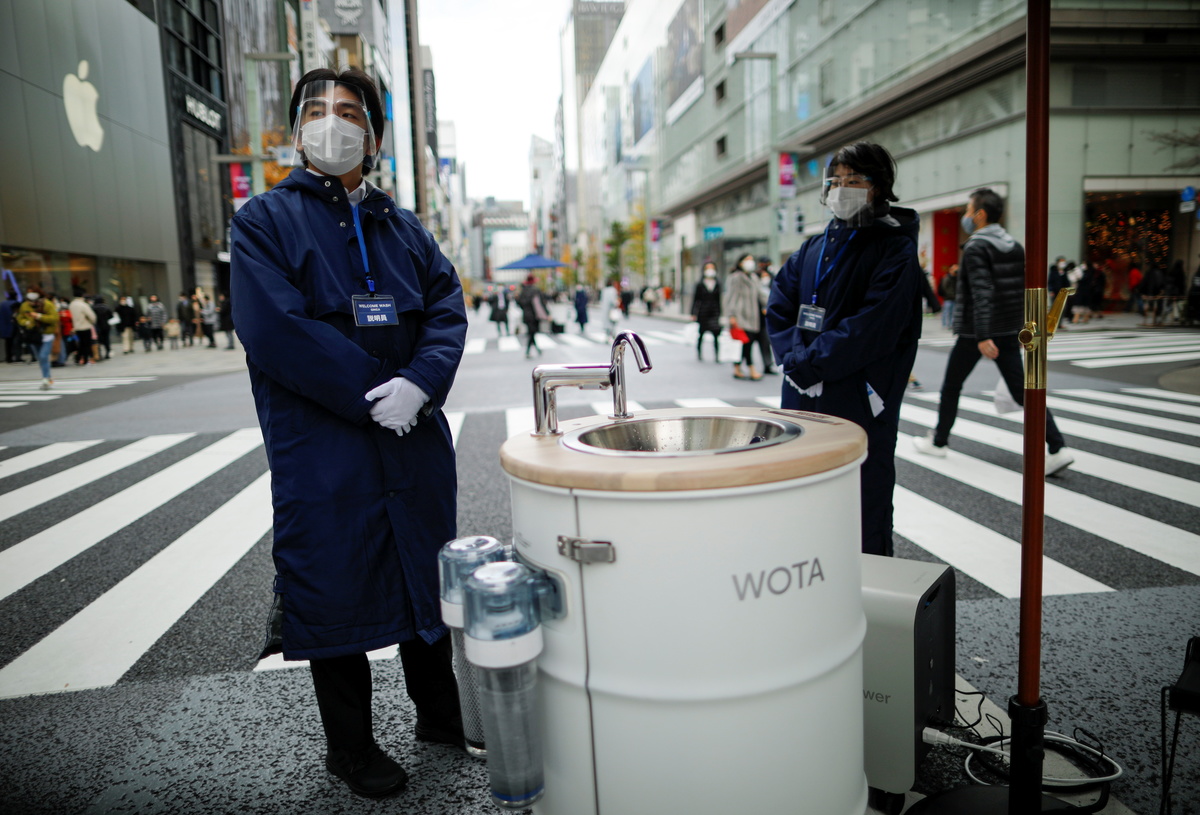
"Amid the impact of COVID-19 we thought we had to implement this as soon as possible," Maeda said. "So we sped up development and got things moving to have it in December in time for the third wave of the coronavirus."
On average 20 litres of water provides around 500 washes, while the filters should be changed after about 2,000, he said.
The machine, however, needs connection to a power supply.
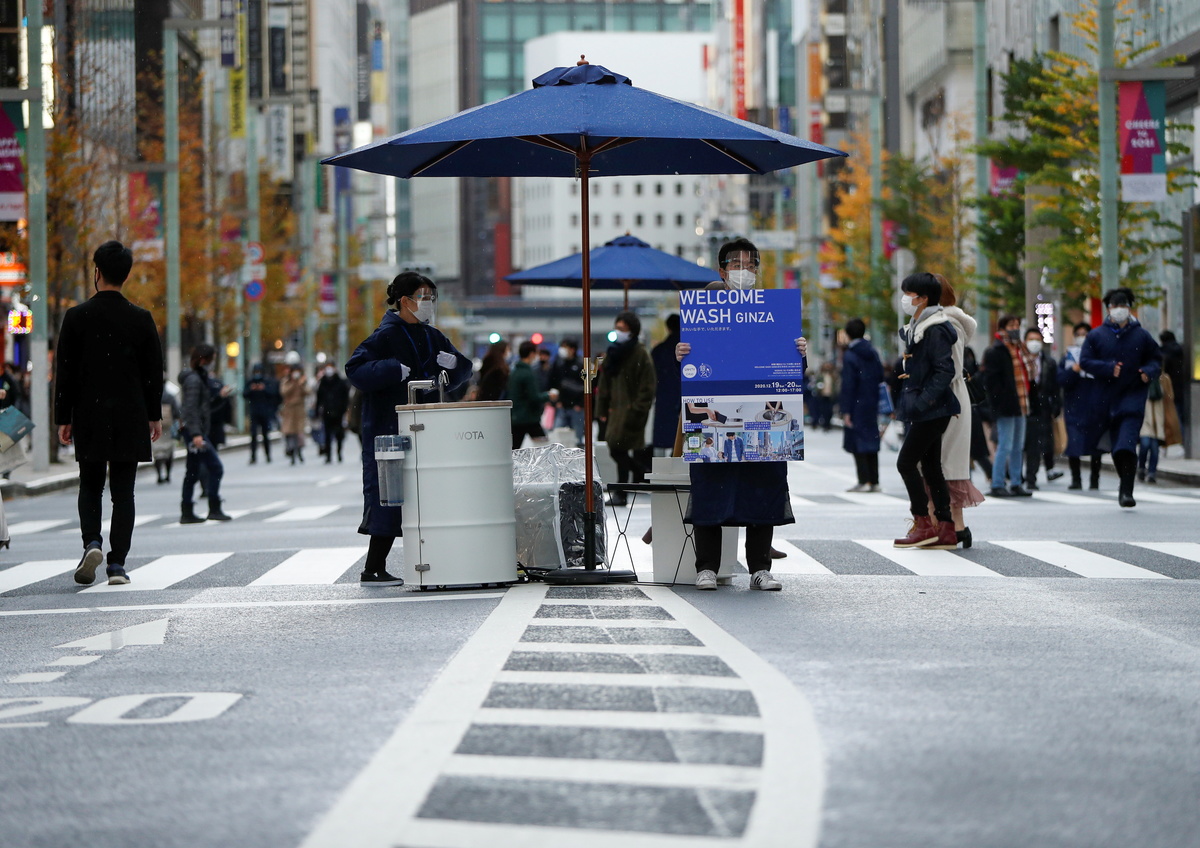
WOTA has now begun shipments within Japan of roughly 4,000 units. It aims to expand internationally next year, with many inquiries coming from the United States.
Maeda hopes the smartphone feature in particular will transform hygiene habits.
"We thought if it had the smartphone sterilisation function, maybe people who never wash their hands will start doing so," he said.
(Reporting by Chris Gallagher and Hideto Sakai; Editing by Michael Perry)