
Gigabyte is capitalizing on the ongoing resurgence in demand for AM4 motherboards as DDR5 RAM prices continue to rise. Spotted by TechPowerUp, the board maker has released four brand new boards, two on the A520 chipset and two on the B550 chipset, featuring a mix of Micro-ATX and Mini-ITX variants.
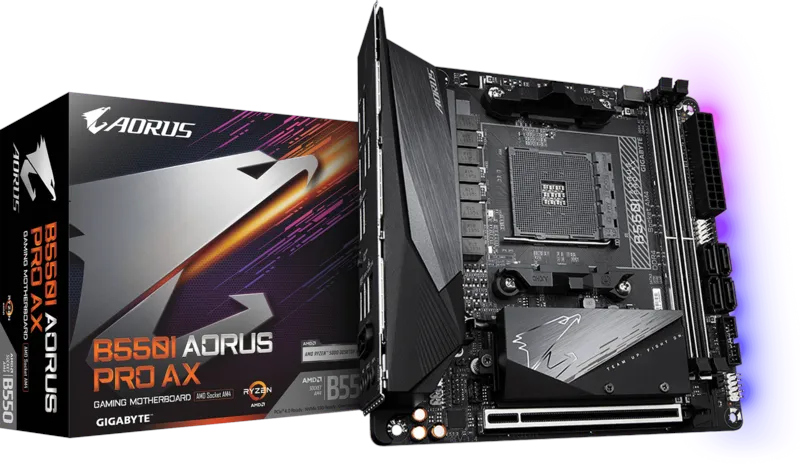
Most of the four boards are new iterations of existing models sporting minor upgrades to make them more modern, such as the addition of ARGB lighting or WiFi support. The Aorus B550I Pro AX 1.4 is the most premium board of the bunch, featuring a Mini-ITX form factor and, as the name implies, onboard Wi-Fi 6E. The board also comes with an 8-phase VRM power delivery system, PCIe 4.0 support, dual NVMe PCIe 4.0 slots, 2.5Gb Ethernet, dual HDMI ports, and USB 3.2 Gen 2 support. This variant is a revision upgrade over the Aorus B550I Pro AX 1.3 with no changes according to the spec sheet.
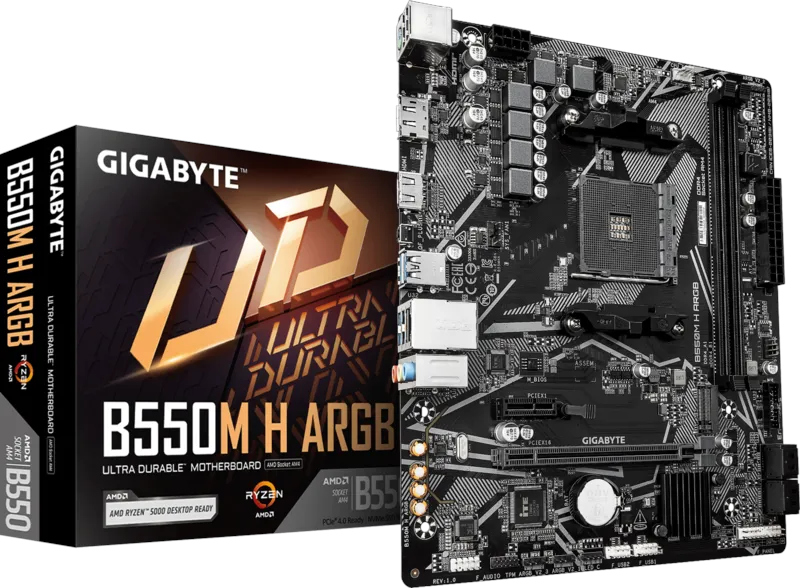
The B550M H ARGB is a new Micro-ATX variant based on the Ultra Durable series, featuring ARGB lighting compatibility, which the outgoing B550M H and B550M S2H models lack. The ARGB trim also features some other modifications, including the removal of the DVI port in favor of a DisplayPort connector. The graphics on the motherboard are also slightly different. The board features two DDR4 slots and PCIe 4.0 support via a single M.2 connector.
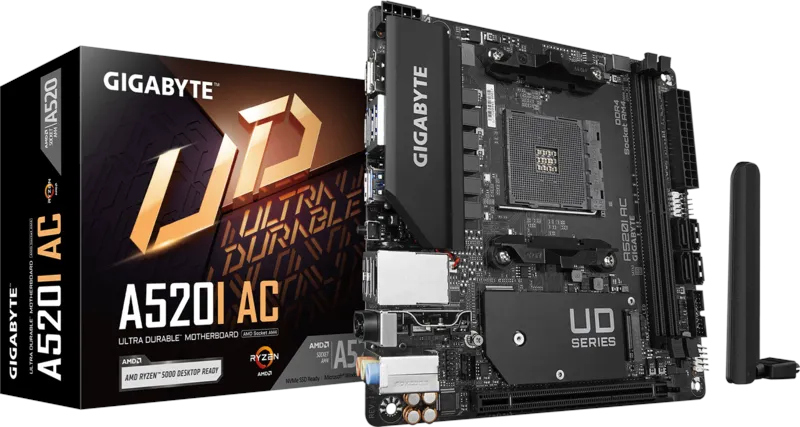
The A520I AC rev 1.5 is yet another revision update, just like the Aorus model above. But unlike that board, this A520 board does come with one change over its older counterparts. Gigabyte changed the Wi-Fi card from an Intel AC 3168 Wi-Fi 5 card to a Realtek AW-CB304NF Wi-Fi 5 card. Other than that, the two boards are seemingly identical. The A520I AC sports a mini-ITX form factor with a six-phase VRM power delivery setup, six USB ports in the rear, and a single PCIe 3.0 M.2 slot.
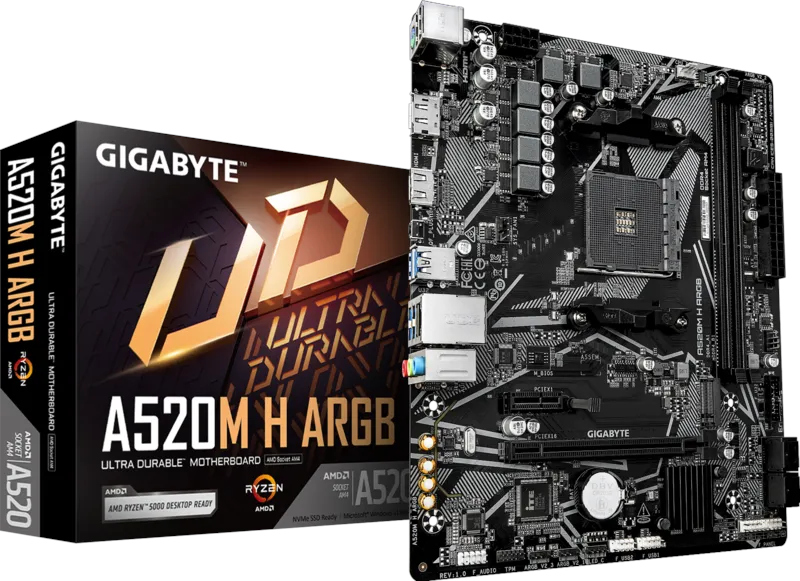
The A520M H ARGB is likely the cheapest board of the bunch, and also has a noteworthy amount of changes from the vanilla A520M H. The rear I/O removes a DVI port in favor of a DisplayPort connector, new headers are added for ARGB support, and the board removes a single PCIe x1 slot at the bottom, leaving just a single PCIe x16 and one PCIe x1 slot. The board features six USB ports in the rear, two DDR4 slots, and a single M.2 slot running at PCIe 3.0 speeds.
Gigabyte's focus back on AM4 is more evidence that buyers are flocking back to AMD's almost 10-year-old socket to build new systems as everyone weathers the storm of skyrocketing DDR5 consumer memory prices. AM4 is the only AMD socket that supports DDR4 memory. Despite DDR4 memory production having mostly ceased already, DDR5 memory prices have shot up so quickly that they have overtaken average DDR4 pricing, even at DDR4's elevated prices (from lack of production). You can still buy a 2x8GB (16GB) kit of DDR4 memory for just under $100 and a 2x16GB (32GB) kit for around $160-$180.
We really started to see consumers shift their focus to AM4 in mid-December, when Ryzen 7 5800X3D prices on eBay skyrocketed above Ryzen 7 9800X3D prices. Even now, Amazon's best-sellers list is dominated by AM4-based Ryzen 5000 CPUs, with the Ryzen 7 5800XT ranking 4th. Even AMD's old Zen 2-based Ryzen 5 3600 is in the list, ranking as Amazon's 6th most popular CPU sold.

Follow Tom's Hardware on Google News, or add us as a preferred source, to get our latest news, analysis, & reviews in your feeds.