Get all your news in one place.
100’s of premium titles.
One app.
Start reading
Reuters
Reuters
Business
Gabriela Baczynska and Elizabeth Piper

EU agrees 'best possible' Brexit deal, urges Britons to back May

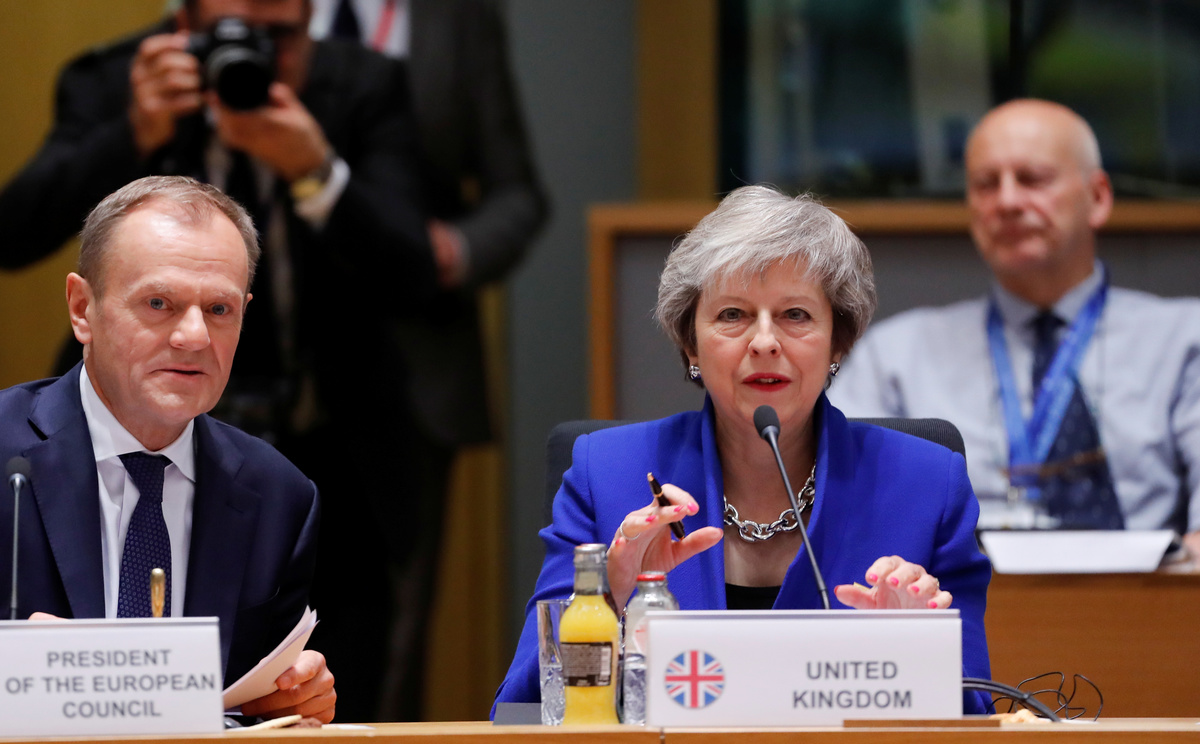
British Prime Minister Theresa May (R) and European Union Council President Donald Tusk during the extraordinary EU leaders summit to finalise and formalise the Brexit agreement in Brussels, Belgium November 25, 2018. Olivier Hoslet/Pool via REUTERS

BRUSSELS (Reuters) - European Union leaders finally sealed a Brexit deal on Sunday, saying the package agreed with Prime Minister Theresa May was the best Britain will get in a warning to the British parliament not to reject it.

"Those who think that, by rejecting the deal, they would get a better deal, will be disappointed," European Commission President Jean-Claude Juncker told reporters after the 27 other EU leaders formally endorsed a treaty setting terms for British withdrawal in March and an outline of a future EU-UK trade pact.
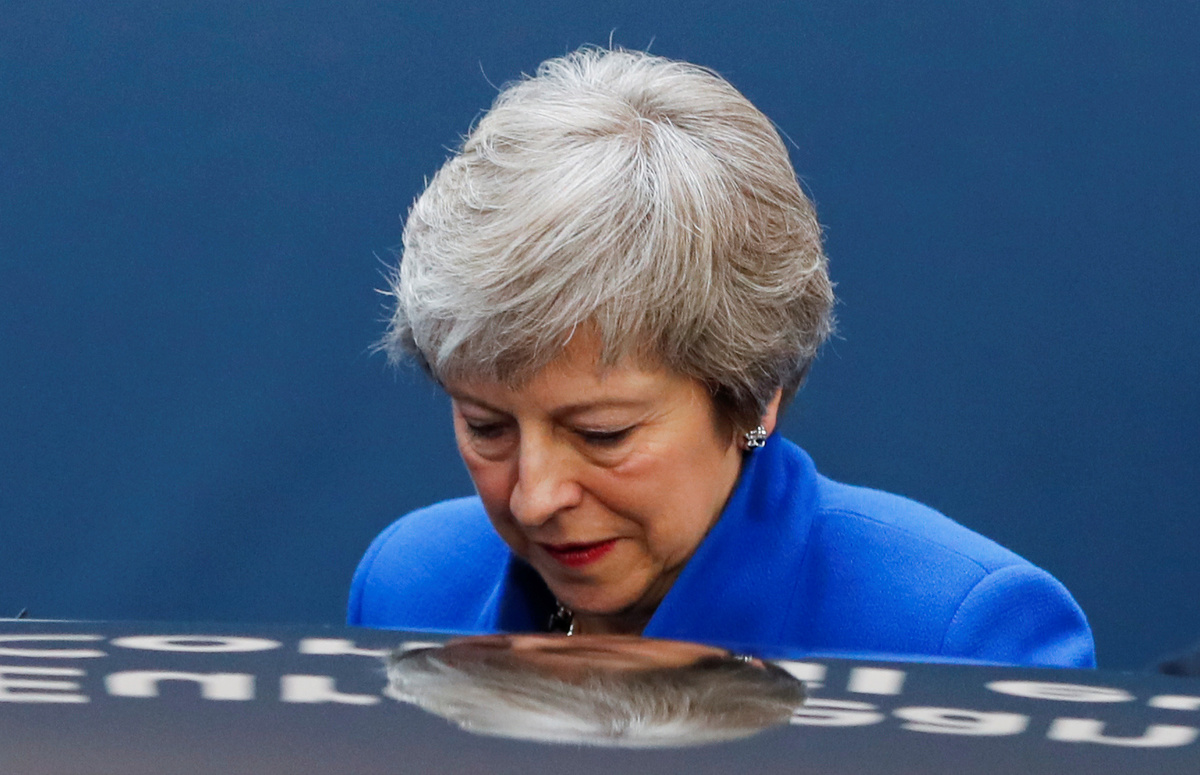
Britain's Prime Minister Theresa May leaves after the extraordinary EU leaders summit in Brussels, Belgium November 25, 2018. REUTERS/Yves Herman

Asked whether there was any chance Brussels would reopen the pact if an alliance of pro- and anti-Brexit forces votes it down in the British parliament, Juncker said "this is the best deal possible", although summit chair Donald Tusk sounded more guarded, saying he did not want to consider hypotheticals.

May used a post-summit news conference to make a sales pitch for her plan, telling television viewers at home that it was the "only possible deal", offering control of UK borders and budgets while maintaining close alignment with EU regulations that was good for business and the security of Britain and Europe.

"In any negotiation, you do not get everything you want. I think the British people understand that," said May, who arrived after the endorsement to voice hopes for continued close ties.
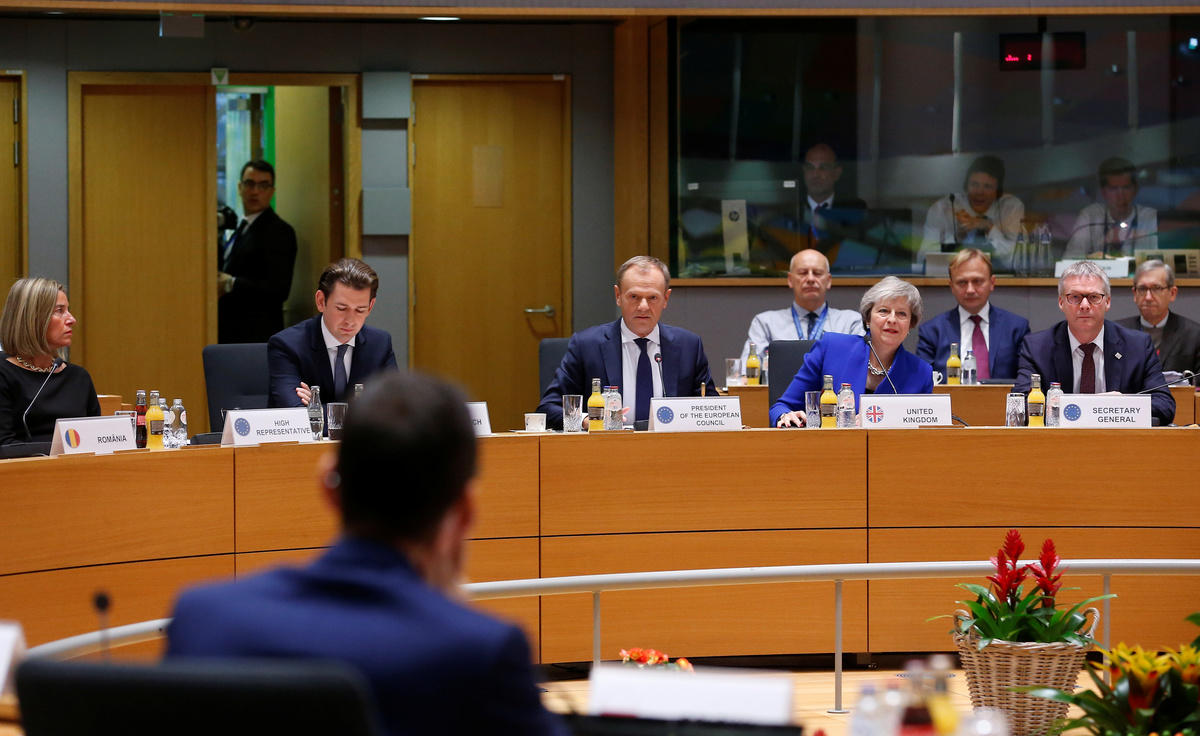
British Prime Minister Theresa May (R) and European Union Council President Donald Tusk during the extraordinary EU leaders summit to finalise and formalise the Brexit agreement in Brussels, Belgium November 25, 2018. Olivier Hoslet/Pool via REUTERS

Parliament's vote could open the door to a "brighter future" or condemn the country to more division, she said. "I will make the case for this deal with all my heart," she added, declining to answer whether she would resign if parliament rejects it.

German Chancellor Angela Merkel, the bloc's veteran guiding force, echoed that unwillingness to speculate on what she called a "historic day" that was both "tragic and sad".

"There is no Plan B," said Dutch Prime Minister Mark Rutte. "If anyone thinks in the United Kingdom that by voting No something better would come out of it, they are wrong."
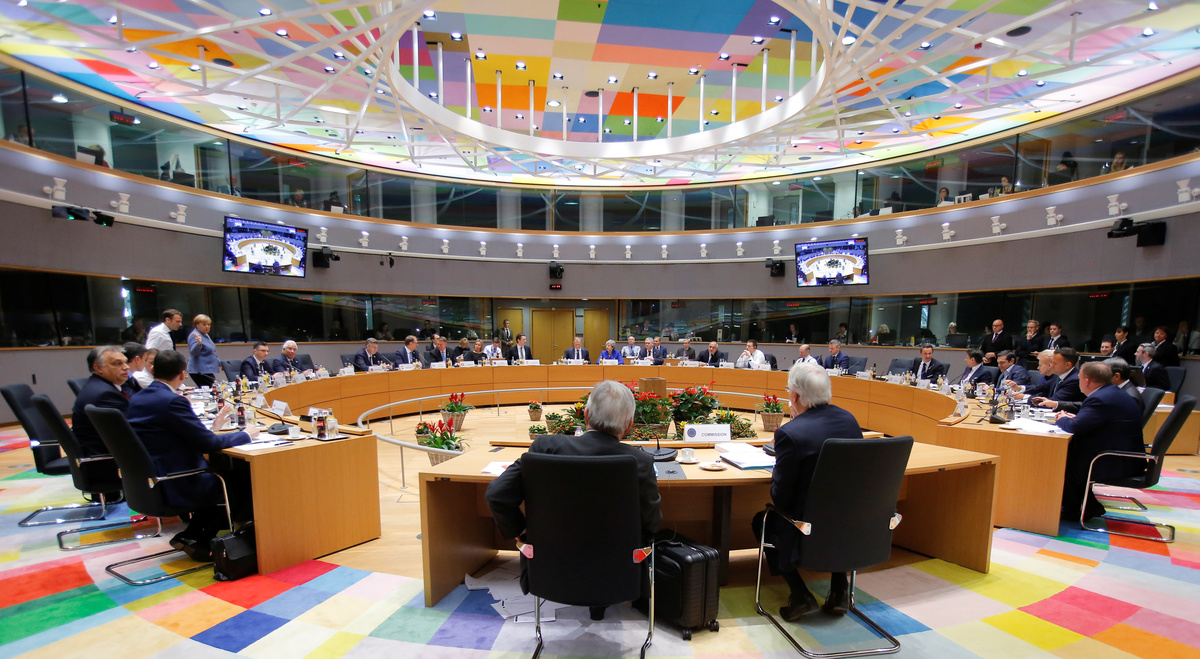
British Prime Minister Theresa May (R) and European Union Council President Donald Tusk during the extraordinary EU leaders summit to finalise and formalise the Brexit agreement in Brussels, Belgium November 25, 2018. Olivier Hoslet/Pool via REUTERS

The only Plan B was preparing a possible no-deal scenario in which Britain crashes out on March 29 into legal limbo, roiling Europe's economy, a senior EU official said.

In May's exchanges at the summit, there was no discussion of what may happen if parliament rejects the deal in a vote likely to take place just before the next EU summit on Dec. 13-14.
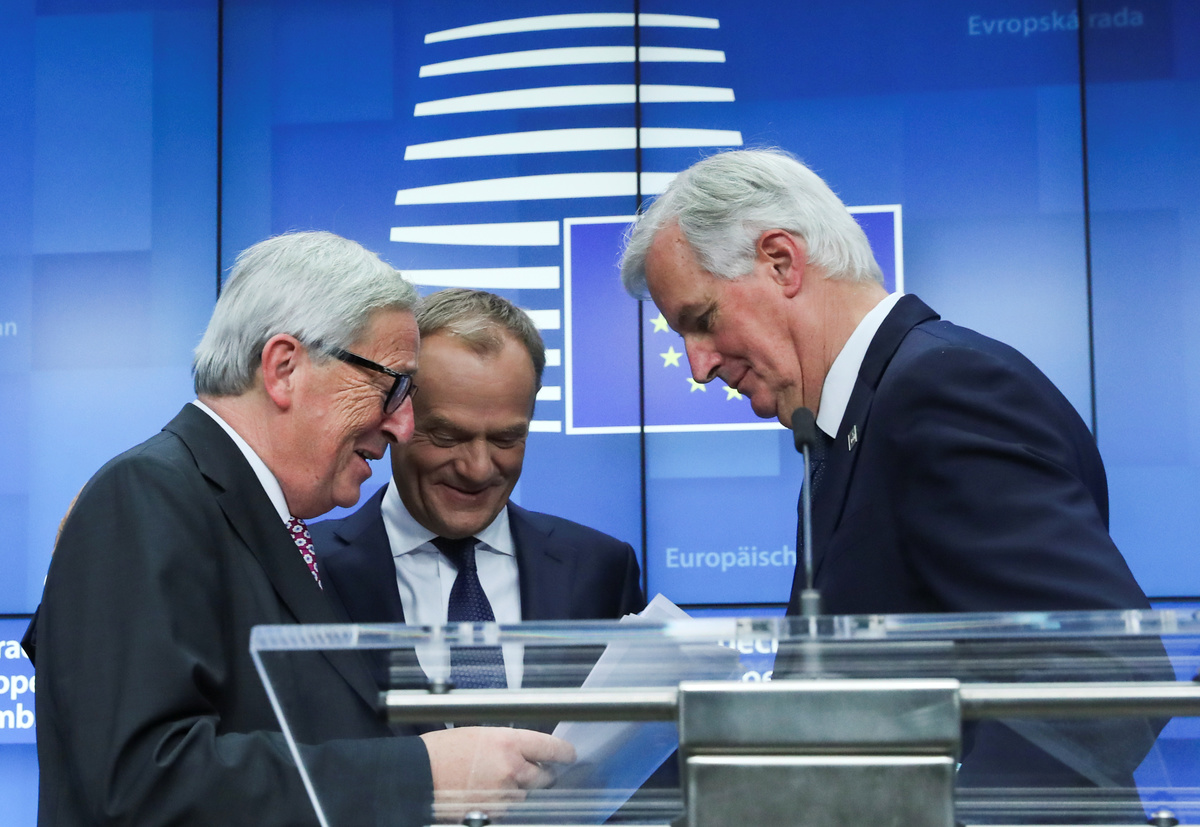
European Commission President Jean-Claude Juncker, European Council President Donald Tusk and European Union's chief Brexit negotiator Michel Barnier react during a news conference after the extraordinary EU leaders summit to finalise and formalise the Brexit agreement in Brussels, Belgium November 25, 2018. REUTERS/Yves Herman

NO CHAMPAGNE

Amid praise for Michel Barnier's team of negotiators for bringing home a deal after 18 months of gruelling talks, Juncker said it was "no time for champagne", as one of Europe's great powers quits after a 2016 referendum. The harder work of forging new relations now lies ahead, he added.

The EU leaders took barely half an hour to rubber-stamp the 585-page withdrawal treaty, aimed at an orderly exit in March to be followed by two to three years of a status-quo transition period. The outline of a future trading and security partnership was just 26 pages long. May's critics say it leaves Britain tied to EU regulations that it will no longer have a say in setting.
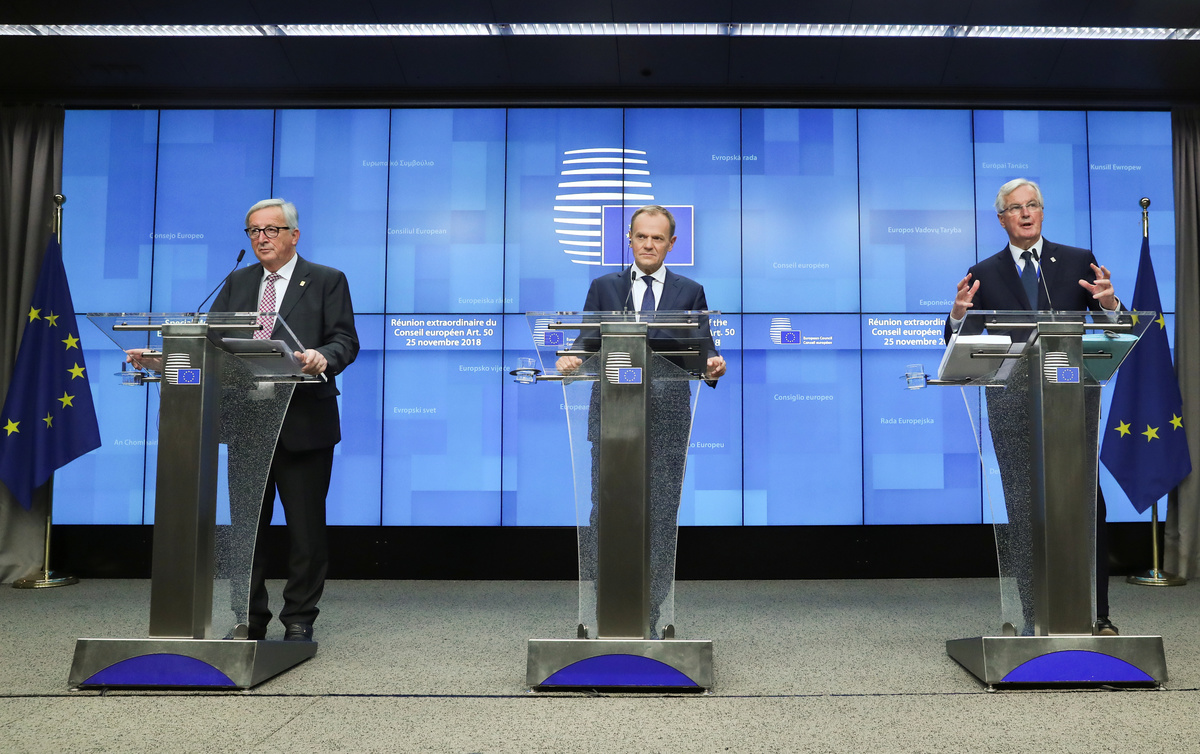
European Commission President Jean-Claude Juncker, European Council President Donald Tusk and European Union's chief Brexit negotiator Michel Barnier attend a news conference after the extraordinary EU leaders summit to finalise and formalise the Brexit agreement in Brussels, Belgium November 25, 2018. REUTERS/Yves Herman

Her foreign minister, Jeremy Hunt, said that the Brexit deal was a "staging post" towards Britain getting everything it wanted from leaving the EU, but that the arithmetic for getting the deal approved was "challenging".

European Council President Tusk said the bloc was determined to have as close as possible a partnership with Britain, which has long been sceptical about EU integration: "We will remain friends until the end of days. And one day longer," he said.

French President Emmanuel Macron said Britain's Brexit vote showed Europe needed reform. He stressed that Paris would hold Britain to tight EU regulations, in return for giving it easy trade access. He also foreshadowed coming, fraught, negotiations by demanding access to British fishing grounds after Brexit.
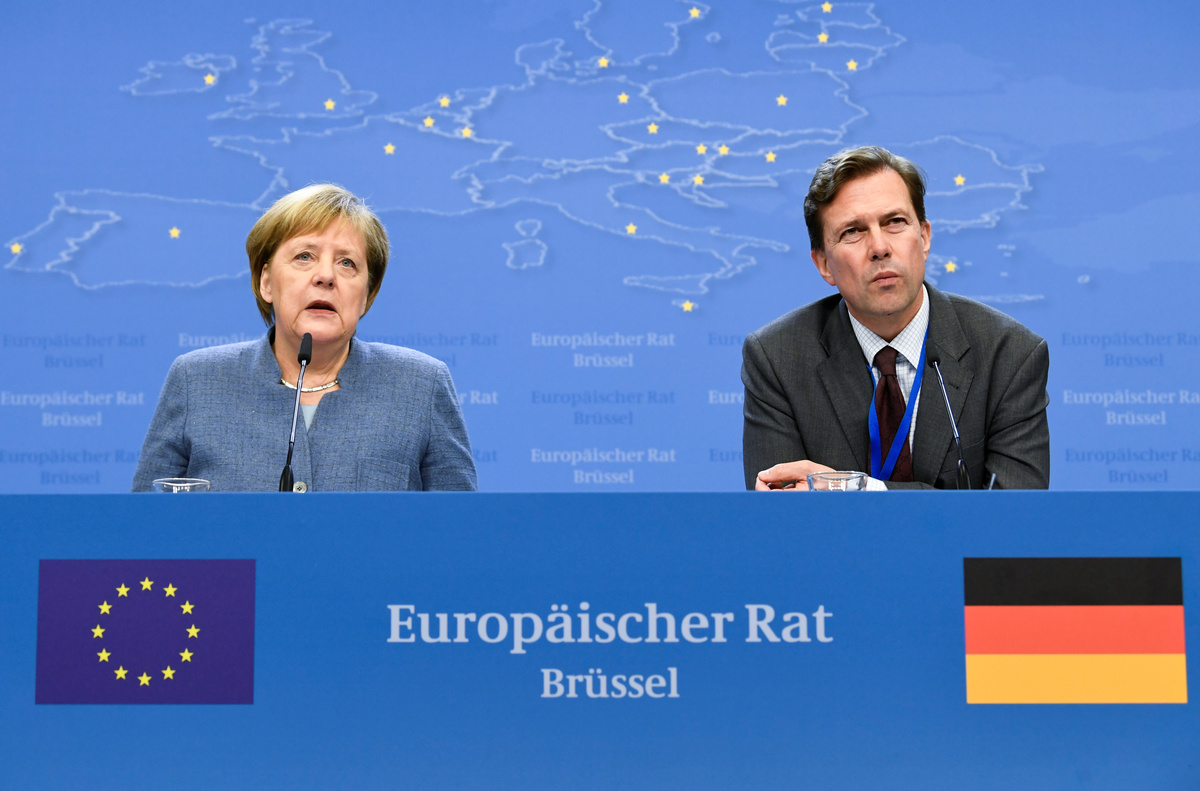
German Chancellor Angela Merkel speaks next to Steffen Seibert, head of the German Federal Government's Press and Information Office, during a news conference after an extraordinary EU leaders summit to finalise and formalise the Brexit agreement in Brussels, Belgium November 25, 2018. REUTERS/Piroschka van de Wouw

Lithuanian President Dalia Grybauskaite spoke of several scenarios if parliament blocks the package: that Britons would hold a second referendum; hold a new election to replace May or return to Brussels to try and renegotiate the package.

IRISH QUESTION
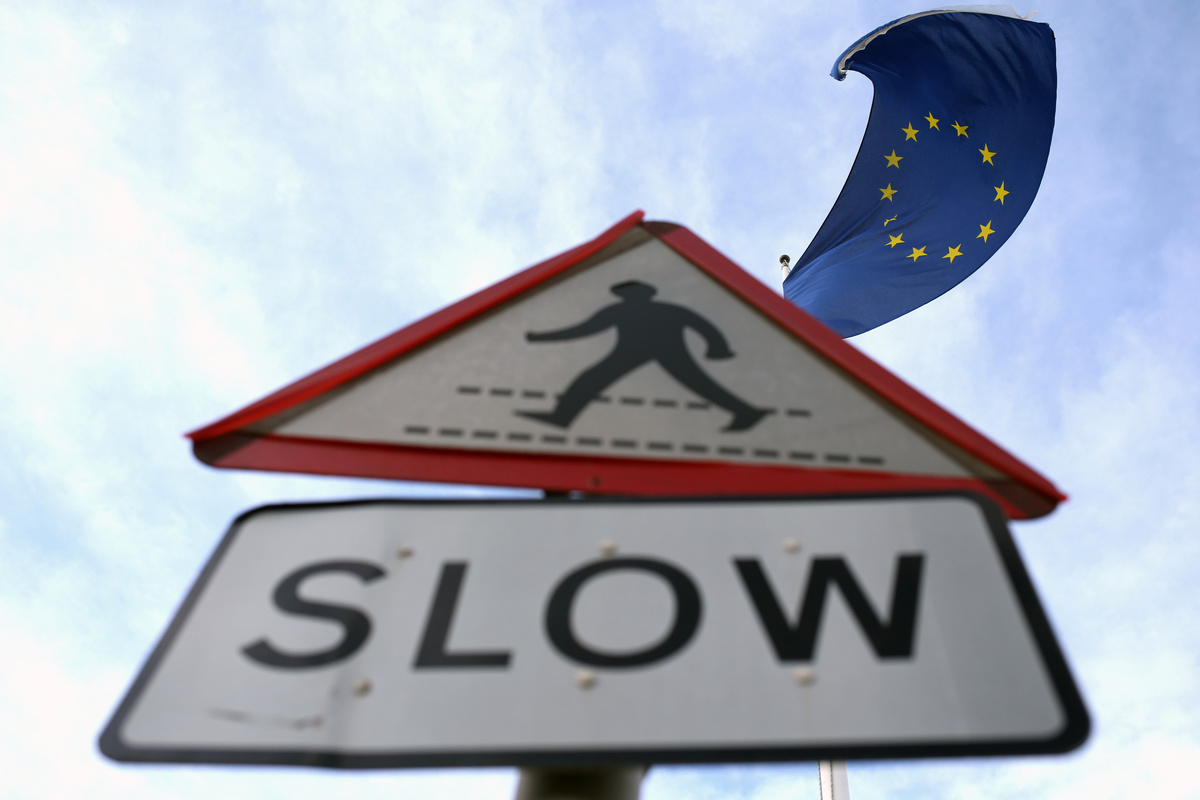
The European Union flag is flying, at the border of Gibraltar with Spain, in the British overseas territory of Gibraltar, historically claimed by Spain, November 25, 2018. REUTERS/Jon Nazca

Northern Ireland's Democratic Unionist Party, which props up May's minority government, said it would try to block the deal because it binds London to many EU rules and the DUP fears it may weaken the province's ties to Britain -- a result of efforts to avoid a risk of a "hard border" with EU member Ireland.

Wrangling over how to keep open troubled Northern Ireland's land border with the EU dogged much of the Brexit talks and DUP leader Arlene Foster said she would "review" the agreement to back May's Conservative government if the Brexit divorce is passed in parliament.

Opposition leader Jeremy Corbyn repeated that his Labour party, which says it could get a better deal, will vote against.
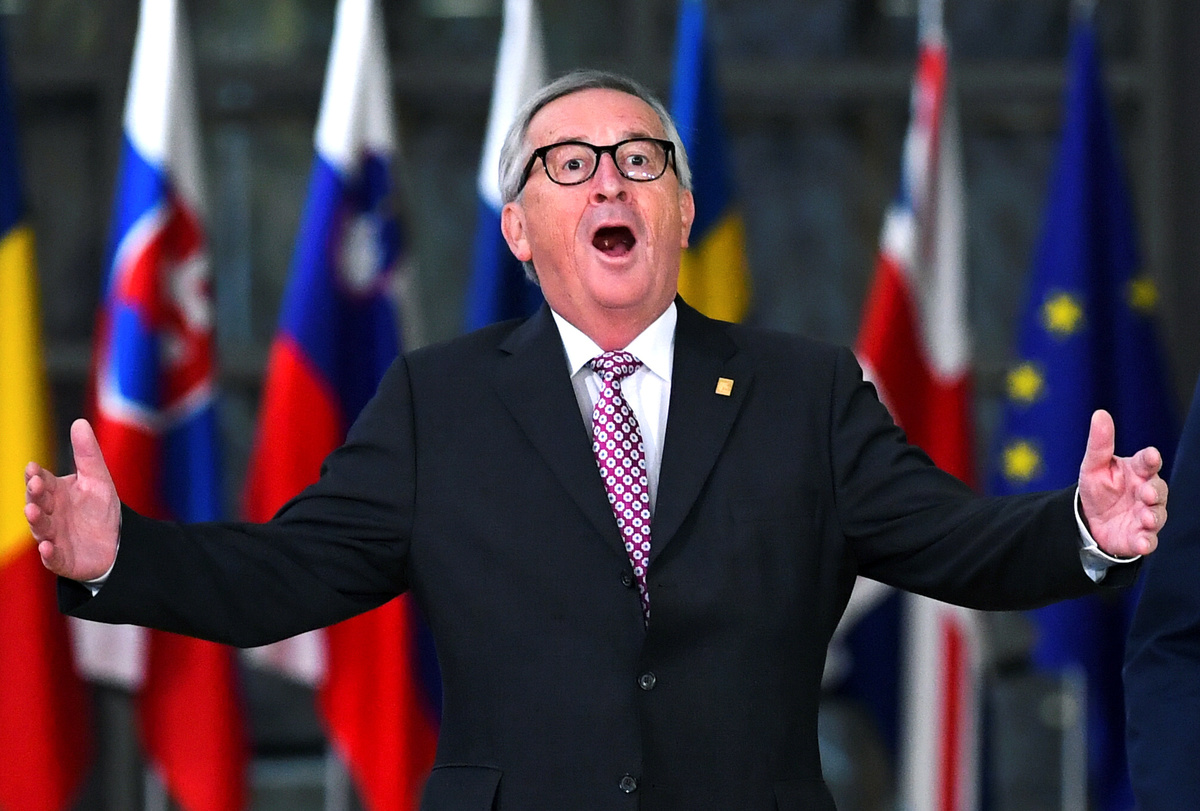
European Commission President Jean-Claude Juncker arrives at an extraordinary EU leaders summit to finalise and formalise the Brexit agreement in Brussels, Belgium November 25, 2018. REUTERS/Dylan Martinez

Britain's 300-year-old naval base in Gibraltar on Spain's southern coast, had also threatened to derail plans. But Prime Minister Pedro Sanchez said he was satisfied with guarantees of a say in the future of "The Rock", saying on Sunday that Spain wanted to claim a share of sovereignty.

(Reporting by Jan Strupczewski, Foo Yun Chee, Philip Blenkinsop, Alastair Macdonald, Peter Maushagen, Jean-Baptiste Vey, Robin Emmott and Belen Carreno in Brussels; writing by Alastair Macdonald,; Editing by Alexander Smith)
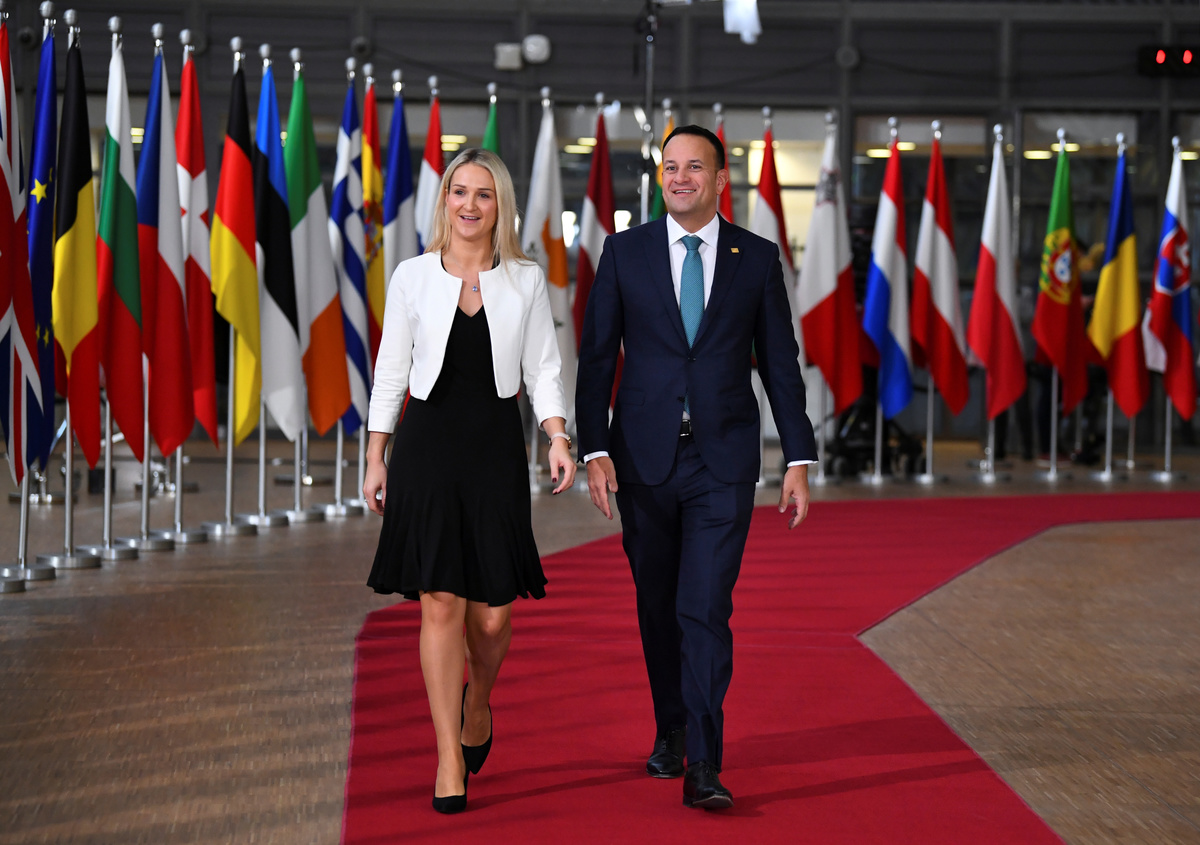
Ireland's Prime Minister (Taoiseach) and Defence Minister Leo Varadkar arrives at an extraordinary EU leaders summit to finalise and formalise the Brexit agreement in Brussels, Belgium November 25, 2018. REUTERS/Dylan Martinez
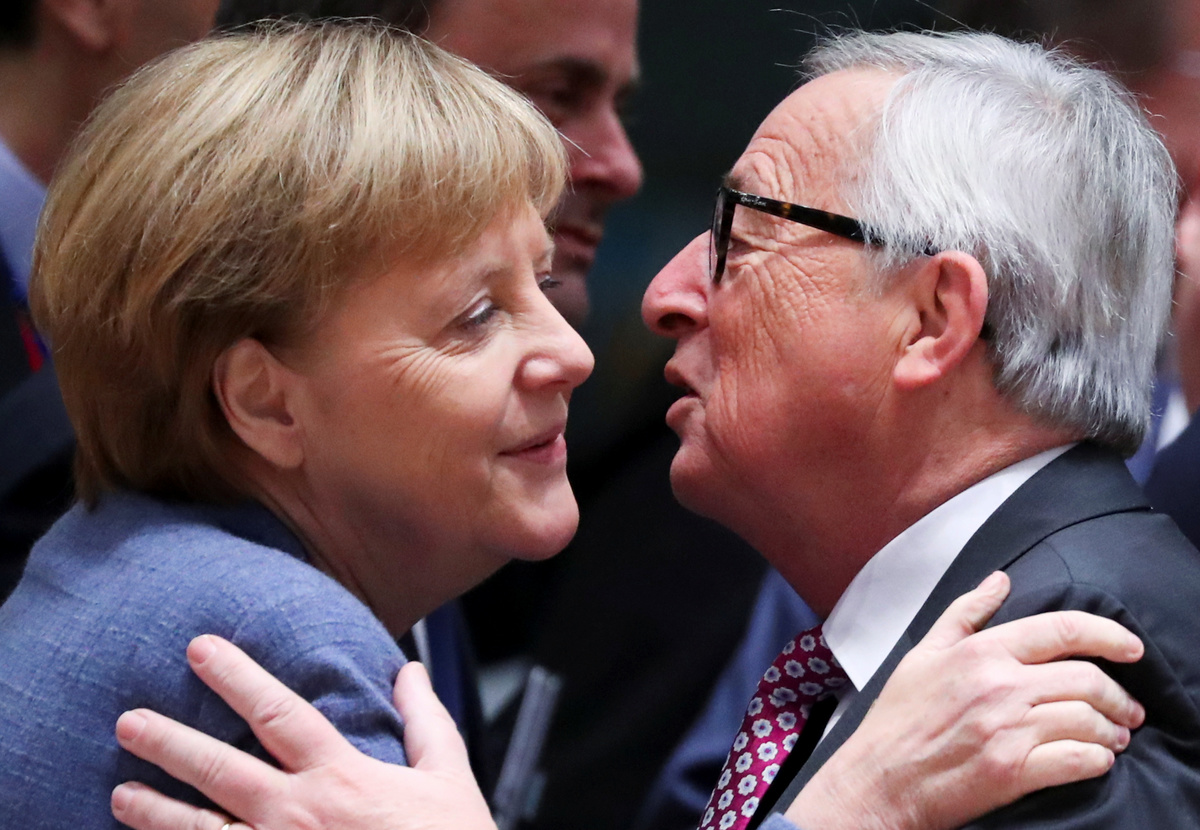
European Commission President Jean-Claude Juncker and German Chancellor Angela Merkel kiss as they take part in an extraordinary EU leaders summit to finalise and formalise the Brexit agreement in Brussels, Belgium November 25, 2018. REUTERS/Yves Herman
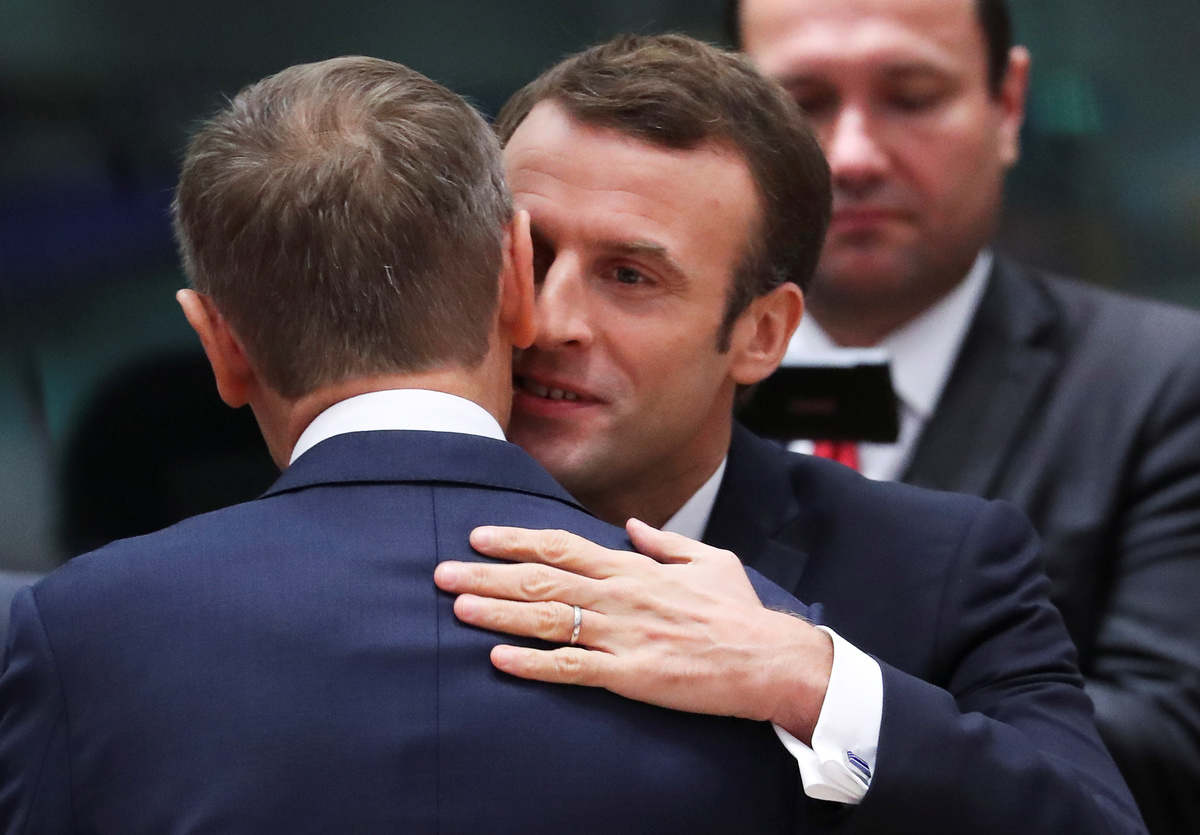
French President Emmanuel Macron and European Council President Donald Tusk hug as they take part in an extraordinary EU leaders summit to finalise and formalise the Brexit agreement in Brussels, Belgium November 25, 2018. REUTERS/Yves Herman
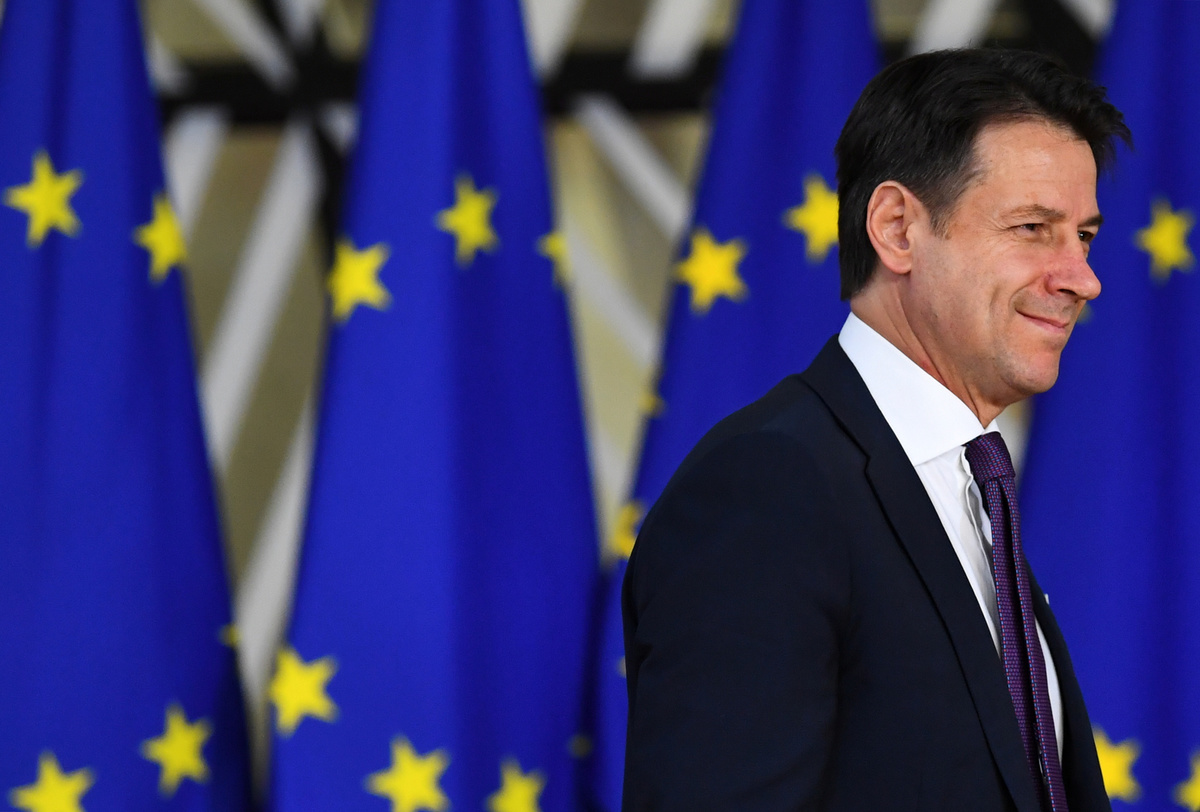
Italian Prime Minister Giuseppe Conte arrives at an extraordinary EU leaders summit to finalise and formalise the Brexit agreement in Brussels, Belgium November 25, 2018. REUTERS/Dylan Martinez
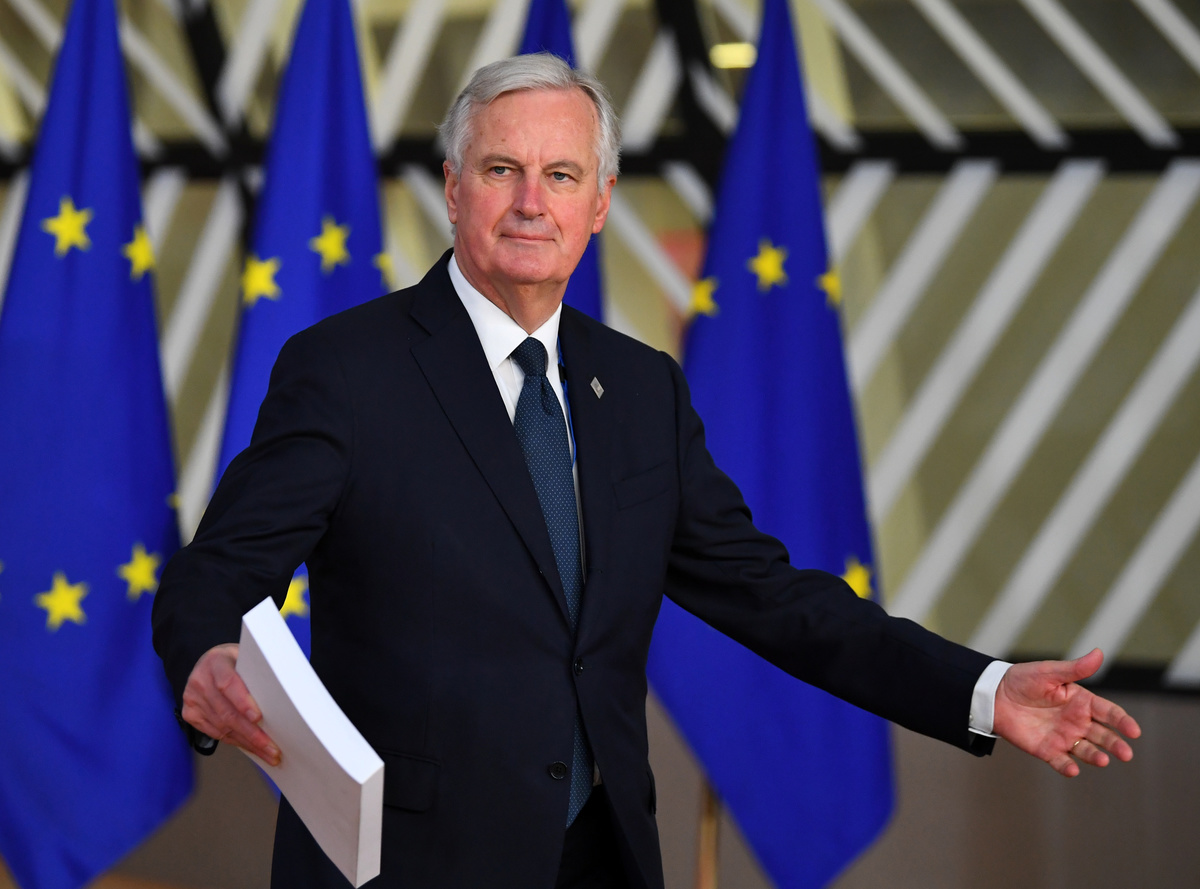
European Union's chief Brexit negotiator Michel Barnier arrives at an extraordinary EU leaders summit to finalise and formalise the Brexit agreement in Brussels, Belgium November 25, 2018. REUTERS/Dylan Martinez
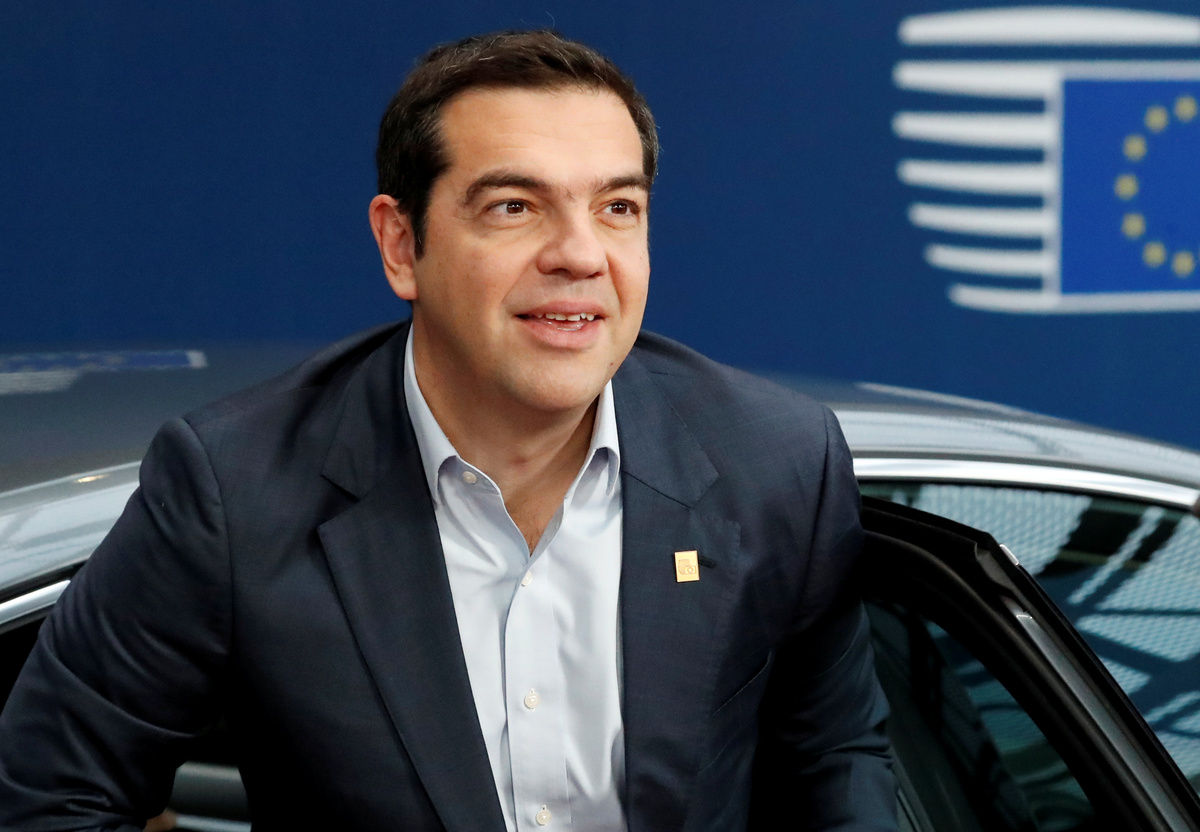
Greek Prime Minister Alexis Tsipras arrives at an extraordinary EU leaders summit to finalise and formalise the Brexit agreement in Brussels, Belgium November 25, 2018. REUTERS/Yves Herman/Pool
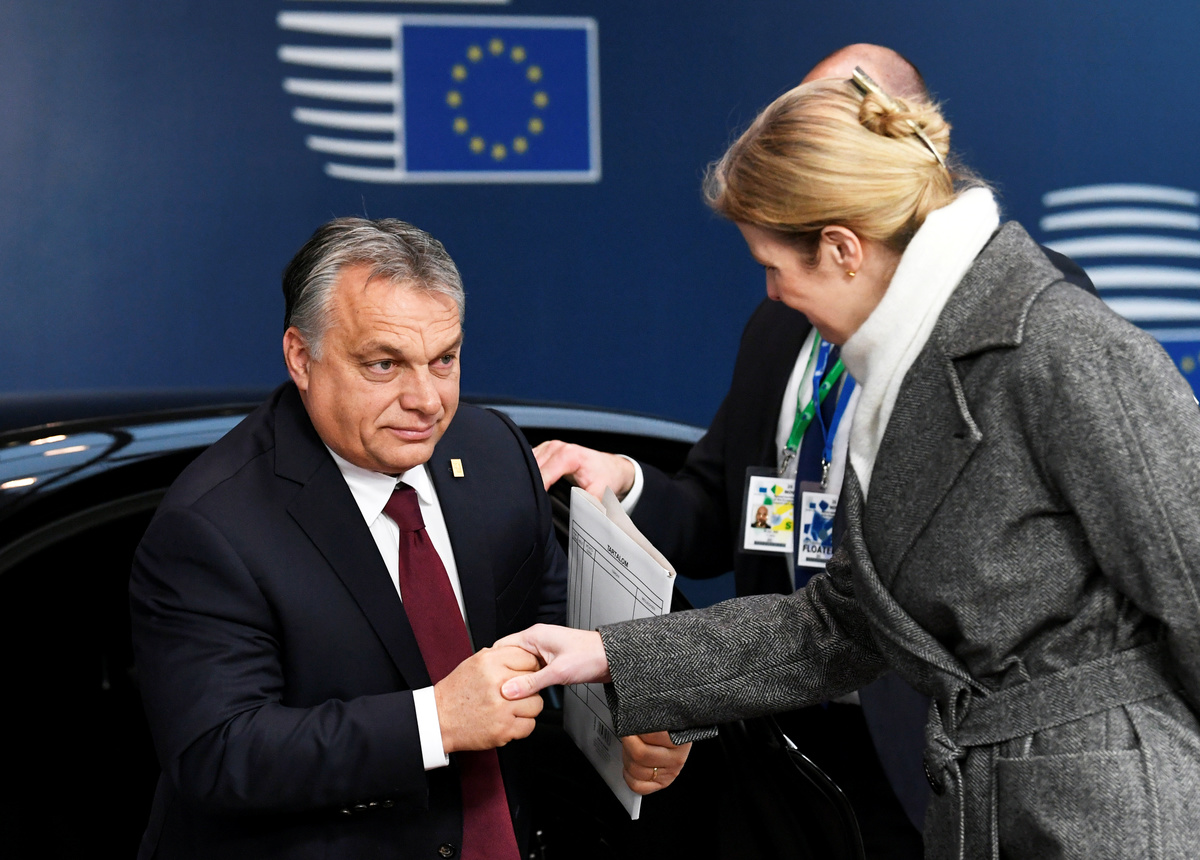
Hungarian Prime Minister Viktor Orban arrives at an extraordinary EU leaders summit to finalise and formalise the Brexit agreement in Brussels, Belgium November 25, 2018. REUTERS/Piroschka van de Wouw/Pool
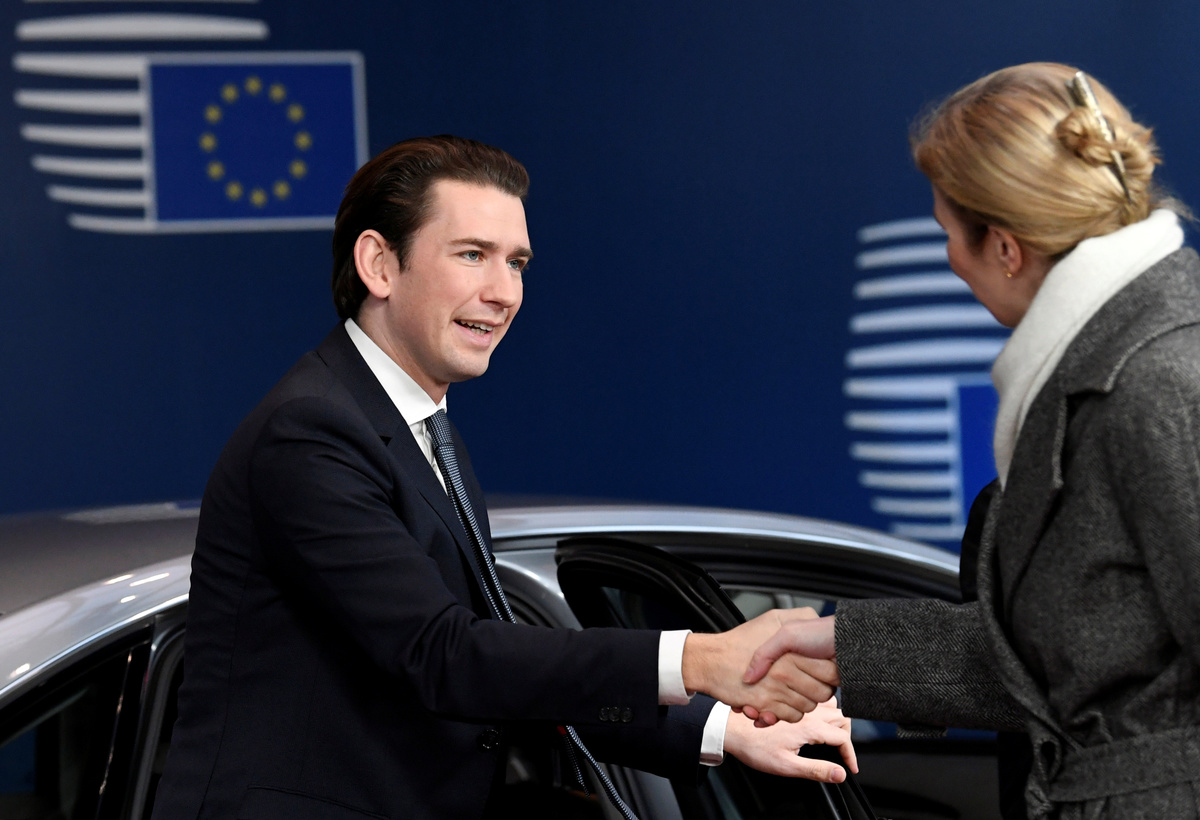
Austrian Chancellor Sebastian Kurz arrives at an extraordinary EU leaders summit to finalise and formalise the Brexit agreement in Brussels, Belgium November 25, 2018. REUTERS/Piroschka van de Wouw/Pool
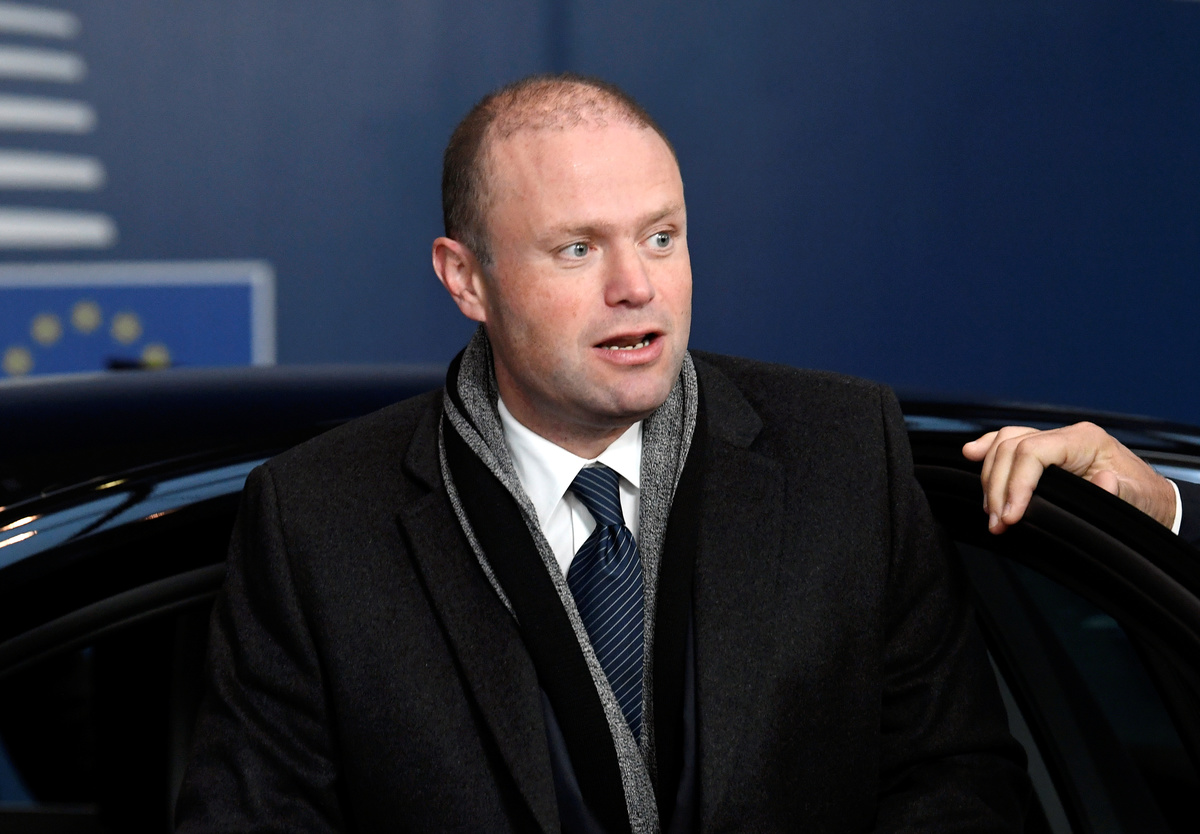
Malta's Prime Minister Joseph Muscat arrives at an extraordinary EU leaders summit to finalise and formalise the Brexit agreement in Brussels, Belgium November 25, 2018. REUTERS/Piroschka van de Wouw/Pool
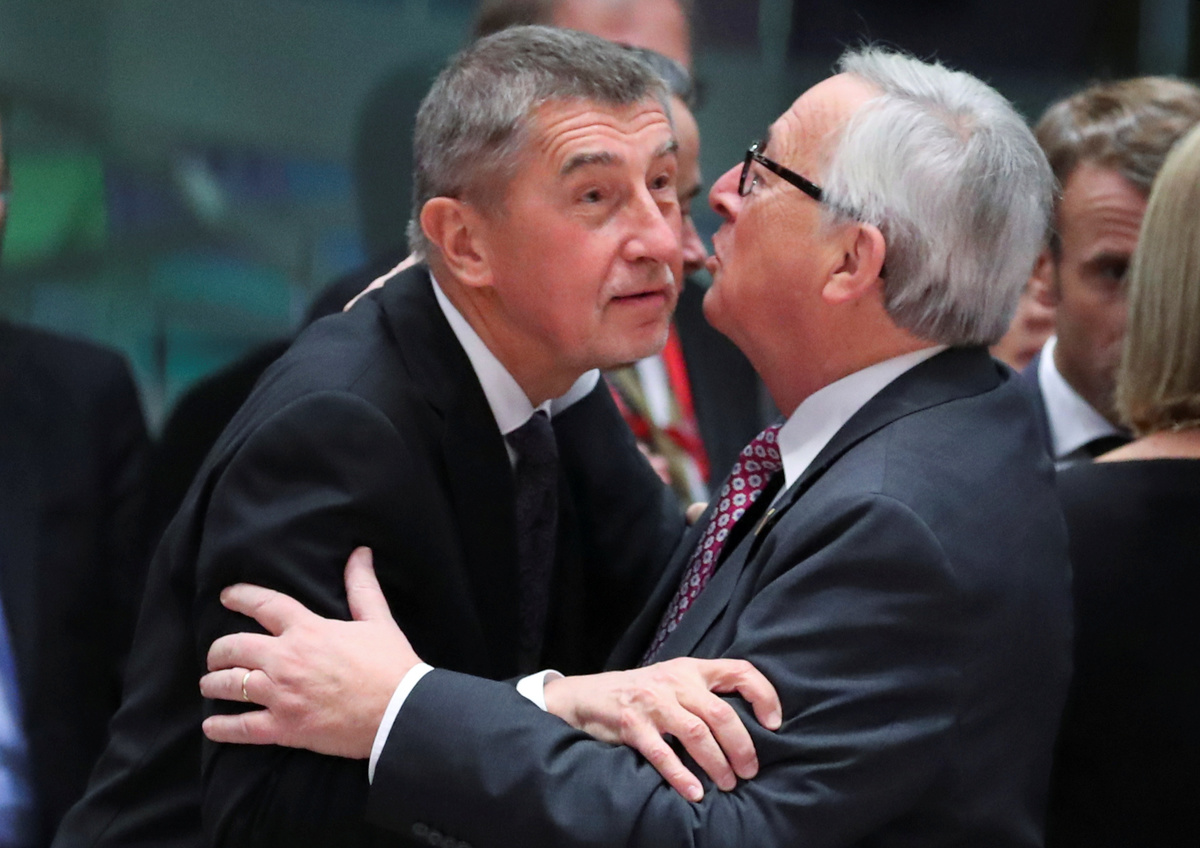
European Commission President Jean-Claude Juncker and Czech Republic's Prime Minister Andrej Babis kiss as they take part in an extraordinary EU leaders summit to finalise and formalise the Brexit agreement in Brussels, Belgium November 25, 2018. REUTERS/Yves Herman
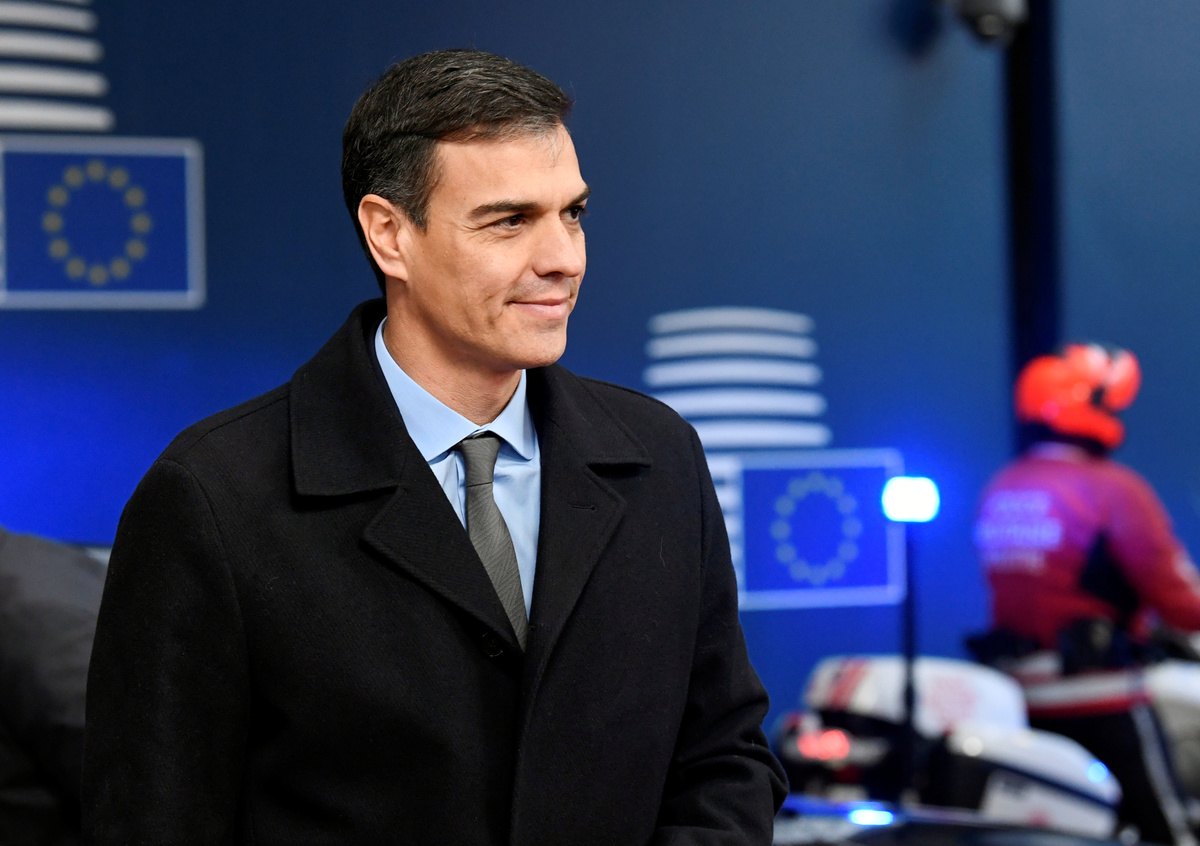
Spain's Prime Minister Pedro Sanchez arrives at an extraordinary EU leaders summit to finalise and formalise the Brexit agreement in Brussels, Belgium November 25, 2018. REUTERS/Piroschka van de Wouw/Pool
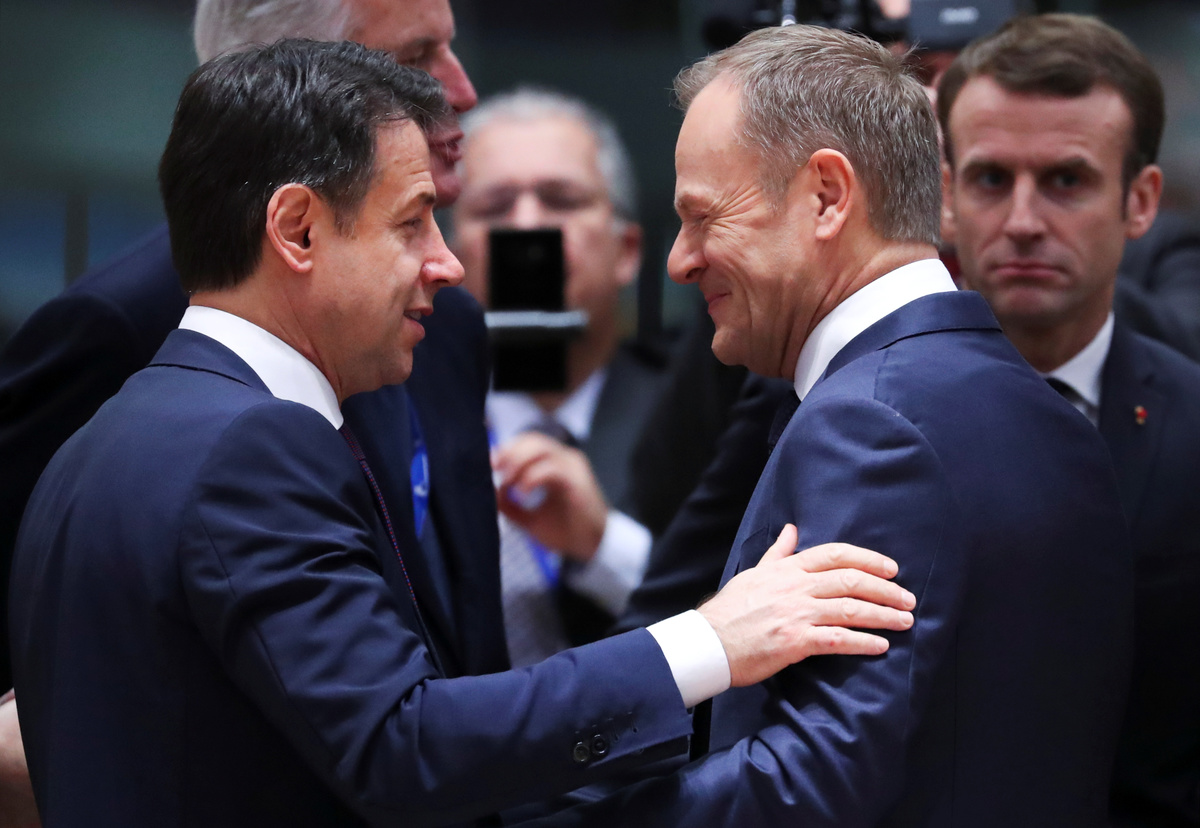
Italian Prime Minister Giuseppe Conte and European Council President Donald Tusk take part in an extraordinary EU leaders summit to finalise and formalise the Brexit agreement in Brussels, Belgium November 25, 2018. REUTERS/Yves Herman
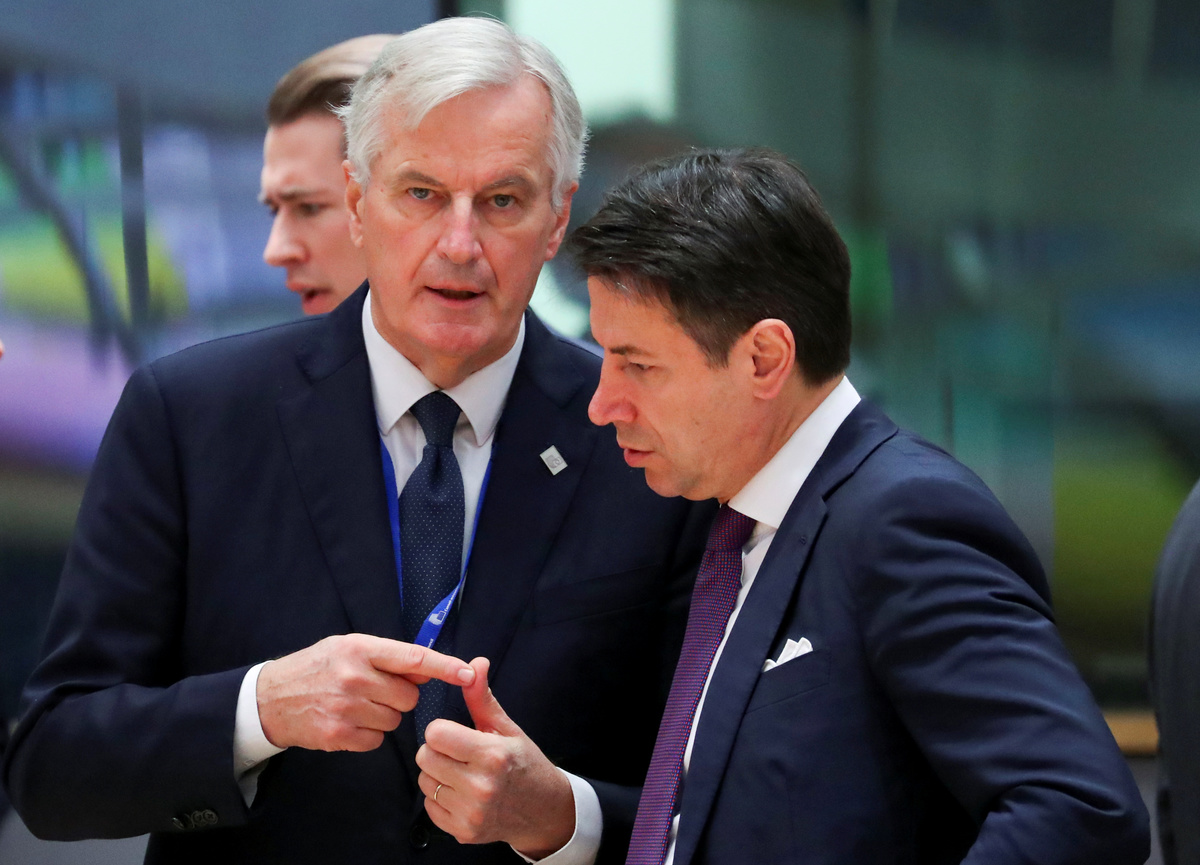
European Union's chief Brexit negotiator Michel Barnier and Italian Prime Minister Giuseppe Conte take part in an extraordinary EU leaders summit to finalise and formalise the Brexit agreement in Brussels, Belgium November 25, 2018. REUTERS/Yves Herman
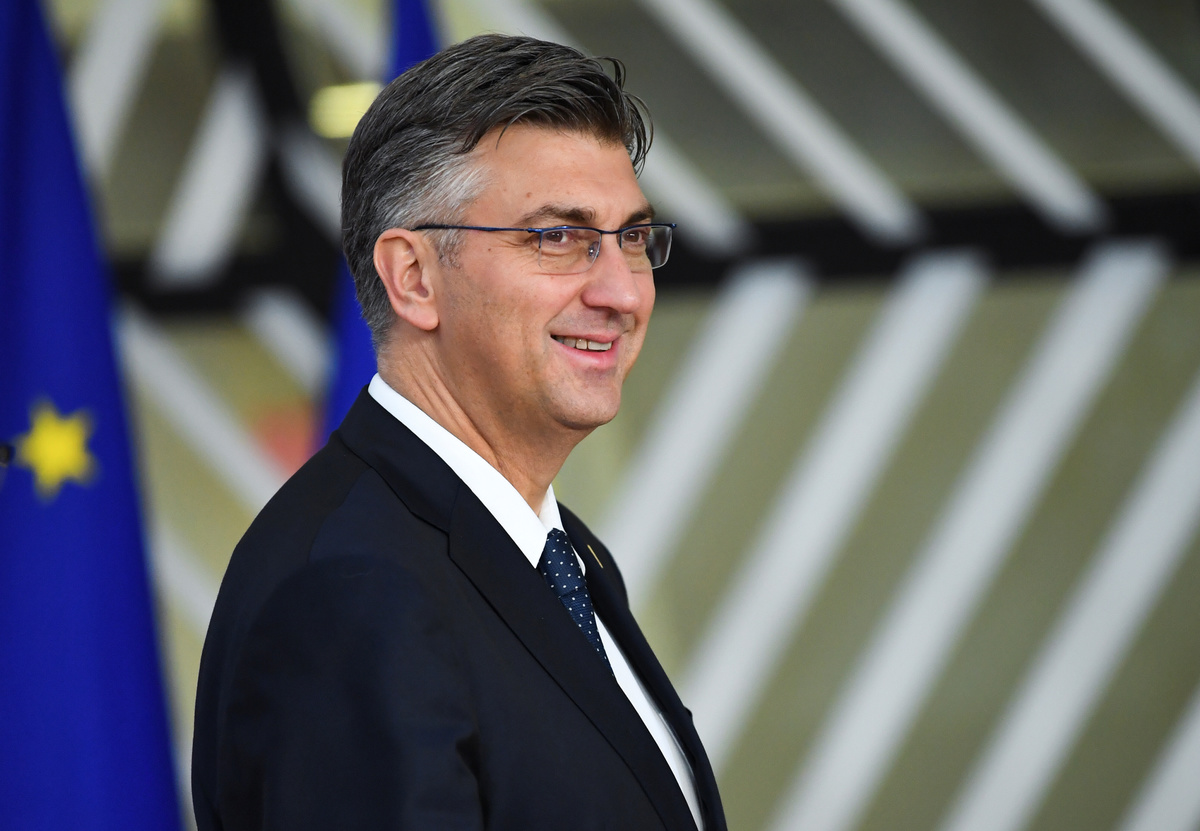
Croatia's Prime Minister Andrej Plenkovic arrives at an extraordinary EU leaders summit to finalise and formalise the Brexit agreement in Brussels, Belgium November 25, 2018. REUTERS/Dylan Martinez
Sign up to read this article
Read news from 100’s of titles, curated specifically for you.
Already a member? Sign in here
Related Stories
Top stories on inkl right now
One subscription that gives you access to news from hundreds of sites
Already a member? Sign in here
Our Picks
Fourteen days free
Download the app
One app. One membership.
100+ trusted global sources.