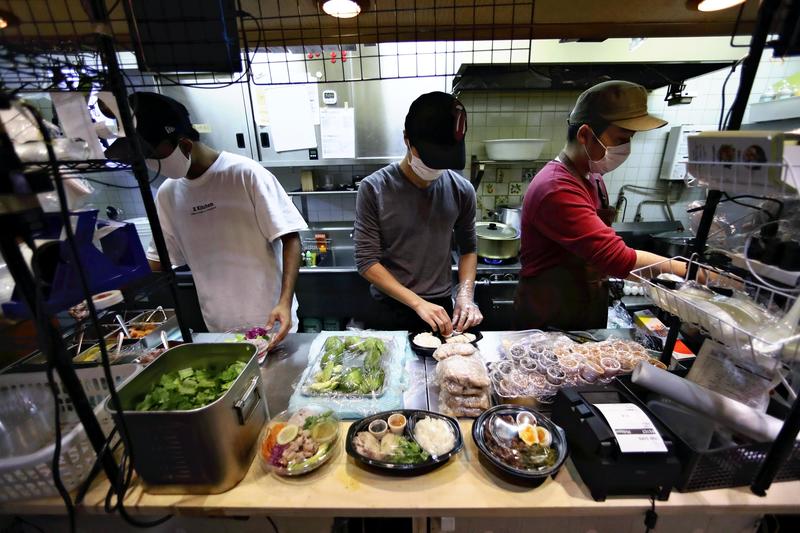
Chefs from five restaurants share a kitchen and show off their culinary techniques in a basement shop in Tokyo, devoid of tables and signs.
X Kitchen is a restaurant located in the Higashi-Nihombashi office district in Chuo Ward, Tokyo. Customers can order online and choose from Taiwanese, Thai, Hawaiian, salads and soup based on traditional Chinese medicine. These types of restaurants are referred to as "ghost restaurants" because their existence is not widely known and they specialize in delivery, which is outsourced to companies such as Uber Eats.
Ghost restaurants are a new style of eatery that was created in New York several years ago. These restaurants do not have tables, it doesn't have to pay for wait staff and location isn't important, making it cheaper to run. It has gained popularity during the coronavirus pandemic because authentic dishes can be enjoyed at a lower price. At X Kitchen, which opened in June last year, the number of orders per day jumped from about 50 to about 130 in April and May, during the state of emergency.
"Most of the customers are single people in their 20s and 30s," X Kitchen President Kenichiro Yamaji, 23, said. "There are many repeat customers."
The pandemic has changed the traditional dining experience of eating at a table with friends and family.
As the restaurant doesn't have to focus on serving customers in person, it has the advantage of being able to concentrate on its food.
"I want to create a wider variety of dishes by trying different kinds of food," said Kanako Hori, 22, a Hawaiian chef who dreams of opening her own cafe in the future.
Some restaurants will "rent" their kitchens to other restaurants. Yusuke Sameshima, 29, who cooks and sells taco rice on a food truck, opened the ghost restaurant Awakuro in Bukyo Ward, Tokyo, in July. Awakuro offers dishes made from Tokushima Prefecture brand beef.
Sameshima uses the kitchen of an Italian restaurant from 11 a.m. to 3:30 p.m. to run Awakuro and pays about 300,000 yen a month in operating costs, which is about half as much as running an actual restaurant.
Sameshima used a website that connects people who want to start a restaurant but do not want a physical shop with restaurant owners who are looking to rent their space. About 400 restaurants have registered and about 150 have opened, according to Yoshinoya Holdings Co., which runs popular restaurant chains and operates the website.
"Many restaurants close within a year, but renting a kitchen reduces the risk," said Jun Takeshige of Yoshinoya.
Sales at restaurants in July fell 15% from a year earlier, making it the fifth consecutive month that sales have decreased, according to the Japan Foodservice Association. By category, sales at family restaurants decreased by 22.6% and at pub and izakaya Japanese pubs, it fell 52.8%.
"While the restaurant industry is struggling because of the coronavirus pandemic, there is a great potential for growth in the ready-made meal category, [which is in between eating out and cooking at home]," said Asia University Prof. Jun Yokokawa, an expert in the restaurant industry. "Competition among delivery and takeout food service providers will intensify and some companies will be forced out of the market."
Read more from The Japan News at https://japannews.yomiuri.co.jp/