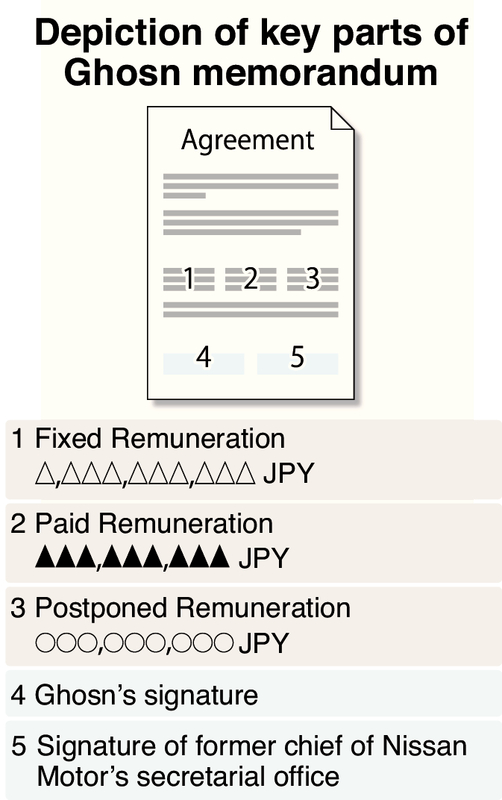
Former Nissan Motor Co. Chairman Carlos Ghosn's pay, including amounts not stated in the company's securities reports, was specified in English as "Fixed Remuneration" in memorandums, according to sources close to the matter.
Ghosn's signatures were on the memos, which were allegedly written to state Ghosn's annual compensation. Therefore the special investigation squad of the Tokyo District Public Prosecutors Office is looking into whether the memos support the allegation that the annual amount of his remuneration, including the pay not stated in the securities reports, had been finalized.
After regulations requiring the disclosure of individual executives' remuneration began to apply to securities reports from the fiscal year ending March 2010, Ghosn, now 64, decided to receive about 1 billion yen (8.89 million dollars) of his about 2 billion yen in annual pay after he stepped down as a Nissan executive, to avoid criticism of his high pay, according to the sources.
The "deferred amounts" were not stated in the reports, but Ghosn allegedly had former Nissan Representative Director Greg Kelly, 62, and others create documents about his remuneration, including the memos, to make sure he would receive the money later.
In the memorandums in English, titled "Agreement on compensation for Mr. Ghosn," the annual total pay for Ghosn was stated as "Fixed Remuneration," while the pay he had actually received was specified as "Paid Remuneration" and the deferred pay as "Postponed Remuneration." Each amount was stated down to the last yen.
The memorandums included statements that payment of part of the "determined" remuneration was being postponed. This implies that part of his compensation would be paid after his retirement. There were signatures by Ghosn and a 59-year-old former head of Nissan's secretarial office at the end of the memos, according to the sources.
The memorandums and other documents on Ghosn's remuneration were kept in a safe by the former chief of the secretarial office. The special investigative squad is believed to have obtained them based on a deal reached with the former chief under the Japanese version of a plea bargaining system.
The Financial Instruments and Exchange Law requires the determined amount of remuneration for the work of a year to be stated in that year's securities report. In Ghosn's case, the focal point is whether the amount of future payments had been finalized.
Both Ghosn and Kelly have denied falsifying the reports, claiming that the post-retirement payments had not been finalized, so Ghosn had no obligation to state such payments.
They have been indicted on suspicion of violating the Financial Instruments and Exchange Law by underreporting Ghosn's pay by more than 4.8 billion yen in total over a five-year period through the business year ending in March 2015. They have also been rearrested on suspicion of having underreported a total of more than 4.2 billion yen in payments during the three years through March 2018.
Read more from The Japan News at https://japannews.yomiuri.co.jp/