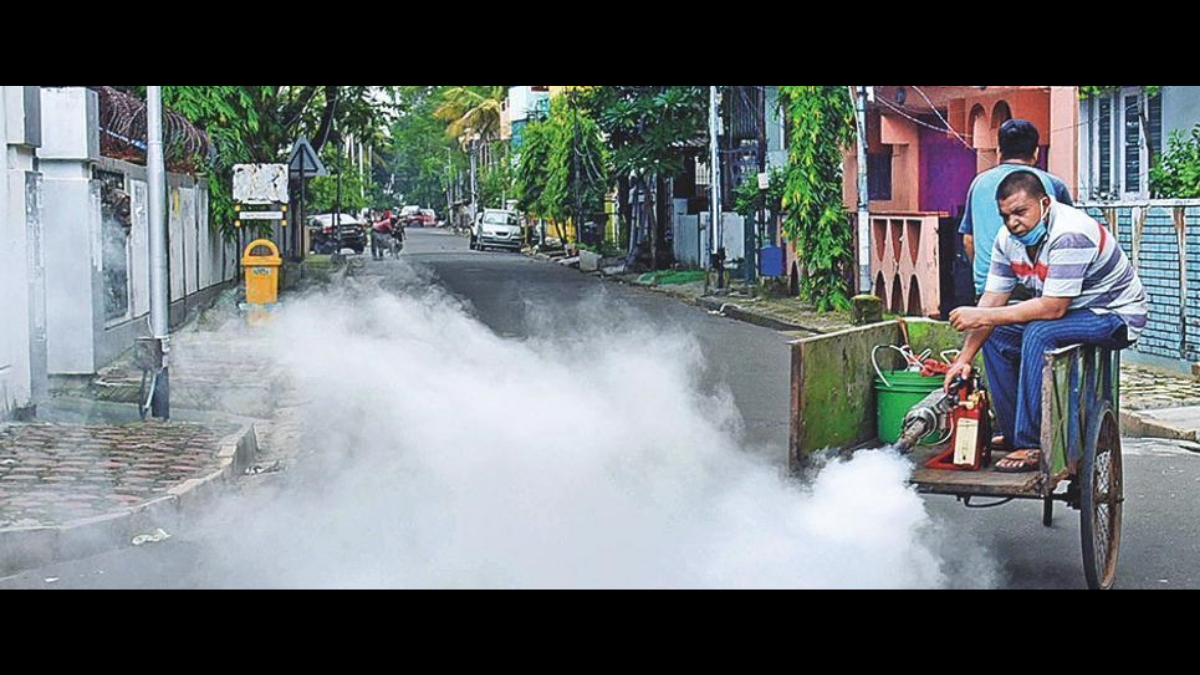
HYDERABAD: Following concerns about mosquitoes in Hyderabad becoming resistant to chemicals used in anti-fogging operations, the Greater Hyderabad Municipal Corporation (GHMC) officials are now taking measures to change the insecticide and larvicides currently being used in the fogging and anti-larval operations in the city.
The issue seems to have come under the lens of the officials after citizens and civic agencies working against this menace said that even anti-larval operations have not helped in keeping the mosquito menace under control, especially at a time when dengue cases are on the rise.
On July 10, TOI published the issues being faced by citizens and civic authorities about the mosquito menace that has turned acute despite the regular fogging and anti-larval operations to check breeding of mosquitoes.
“After the article was published, the higher-ups in the department discussed the issue and considered changing the chemicals being used in the anti-fogging and anti-larval operations,” said Dr Rambabu, chief entomologist, GHMC.
Officials also said that the civic body is preparing to write to the Vector Control Research Centre, Pondicherry and National Institute of Malaria Research, Delhi to invite their teams to Hyderabad and assess the anti-fogging and anti-larval chemicals being used in GHMC limits.
Entomologists reiterated that even though fogging does not eliminate mosquitoes completely, it is being done mainly due to demand from the public. “We use a chemical called Melathion which does not kill dengue or chikungunya causing mosquitoes. As per WHO, fogging using this chemical, especially in residential areas, is not advisable as it causes health issues for children, elderly and pregnant women,” said Dr A Rambabu, chief entomologist.
Currently, to control breeding of mosquitoes in stagnant water, authorities are conducting house-to-house anti-larval operations, releasing gambusia fishes into the water bodies as they eat the larvae of mosquitoes, and dropping oil balls in dirty water ponds or stagnant water, which forms a film on the surface of the water, killing mosquitoes and larvae, and breaking the reproductive chain.