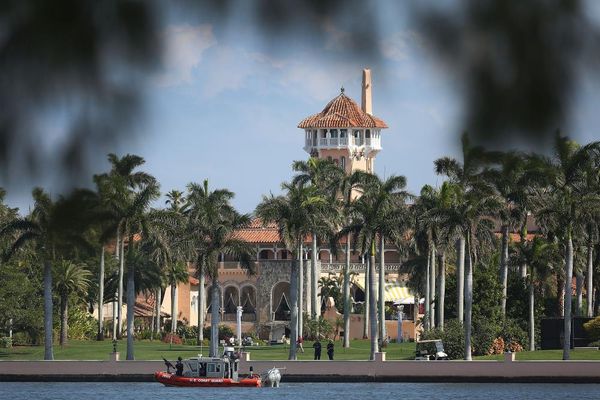
The Gherkin: one of the most celebrated recent designs. Photograph: Bertrand Langlois/AFP
Call it the Swiss Re building, 30 St Mary Axe or the Gherkin, but one of the world's most distinctive skyscrapers has just been sold for £600m within three years of its completion. Commissioned by Swiss Re, the 40-storey circular City of London tower, with its famous glass nose cone restaurant and bar, is the most celebrated recent design by the world-famous architects, Foster and Partners.
It cost something like £138m to build and so, presumably, and in strictly financial terms, the Swiss finance house has done well to sell it while the going is good; City rents have fallen in recent months, while Swiss Re has been unable to let out all the office space inside the tower. The company will, however, continue to rent about half the building, paying rent from now on to IVG Immobilien, a German real estate group.
For many of us such a sale seems surprising. We tend to think of buildings of this calibre as works of art, forgetting that 30 St Mary Axe is as much a machine for making money as it is an architectural tour-de-force. While we might be proud to hold on to the ownership of such a grand design, however, this is not the way of the financial world. Far from it. To international high financiers, buildings are a product, or a form of stock, much like any other. A city tower is, in fact, pretty much redundant unless it earns its keep very many times over. And there is no point in being sentimental about ownership. Donald Trump once told me how proud he was to own the Empire State Building, but has since sold on his investment.
Look around city centres anywhere, and landmark buildings change names as well as owners. The NatWest Tower, a close neighbour of the Gherkin, has been Tower 42 for many years now, even though Colonel Seifert, its architect, deliberately planned the stainless steel-clad tower in the shape of the NatWest corporate logo. The Pan-Am building, a late and horrid work by Walter Gropius of Bauhaus fame, looming above New York's Grand Central Station, is now the Met Life building.
In a way, though, this recycling of buildings has been going on for hundreds of years. The Parthenon, pride of Athens, has been a church, a mosque and a gunpowder store in its time as well as a pagan Greek temple. In Istanbul, I remember taking to a local who insisted that the Hagia Sophia was a mosque and always had been. See the other great mosques in the city, he said, they look the same ... true, Justinian's great monument had once been a mosque, but it was built as the grandest of all early Christian churches.
The difference between then and now is that ownership once enforced by the sword is now executed by electronic credit transfer. One of the nice things about architectural history is that it allows us to put enduring names to enduring buildings - Wren/St Paul's, Foster/Gherkin - but, when it comes to financial history, and reality, the story is a lot less clear. It is, you might say, less of a gherkin, and more of a pickle.