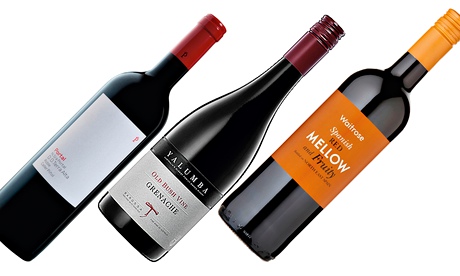
Waitrose Mellow and Fruity Spanish Red 2013 (£4.99) When I think of the garnacha grape variety, or grenache as its known in France, I think of crabby old bush vines on sun-blasted southern European terrain. Garnacha is lizard-like, basking in the heat of the sun, its roots seeking out water in the unlikeliest of crannies deep, deep down in even the driest, rockiest soils. Loved by growers for its resilience, its wines don’t always get the respect they deserve – or the prices. As a provider of high-quality budget reds, such as this sweetly brambly fruited red from Campo de Borja in Spain’s Aragon region, it simply can’t be beaten.
Celler Piñol Portal Tinto, Terra Alta 2011 (£14.45, Berry Brothers & Rudd) Garnacha’s reputation suffers for its being hidden in plain sight: the wines of two of the world’s most expensive regions, Châteauneuf-du-Pape in the Rhône Valley and Priorat in Catalan Spain, have grenache/garnacha as their principal component but it’s rarely singled out on the label. There is also a sense that garnacha’s sweet fleshiness is best accompanied by something darker and chewier. And so the recipe for this succulent, savoury, earthy red from the highlands of southwestern Catalonia tempers garnacha’s juiciness with syrah, sinewy cariñena (aka carignan) and a dollop of plummy merlot.
Yalumba The Y Series Old Bush Vine Grenache, Barossa, Australia 2013 (£11.99, Tesco) Grenache is naturally suited to many regions in Australia and it was widely planted there until the 1980s, when much of it was replaced by chardonnay and cabernet sauvignon, or lost altogether. Some growers had the foresight to hang on to their often very old vines, and it’s increasingly easy to find bottles where they’ve been put to use in solo grenache bottlings. Among the producers I’ve enjoyed recently are Teusner, Ochota Barrels, d’Arenberg and Langemil. And Yalumba’s sumptuous pepper-seasoned example from 30- to 70-year-old vines is stunning value.