Finance is crucial for any business to grow, regardless of the industry or the market in which it operates. However, for small businesses in the developing world, the likelihood of receiving a loan on fair terms is rare, and some organisations struggle to find reputable lending sources. Instead, they may be charged prohibitively high rates of interest or face demands for security that they simply can’t provide. They may lack the skills to produce the business plans or financial projections that are required by lenders, and struggle to access finance at all.
Yet when a farmer is faced with a crisis that threatens the sustainability of his supply chain, such as falling crop prices, or when a handcraft organisation finds that it needs to invest in equipment in order to increase sales, getting access to finance on fair terms is integral if they are to overcome the hurdles they face and build a better future for themselves, their families and their communities.
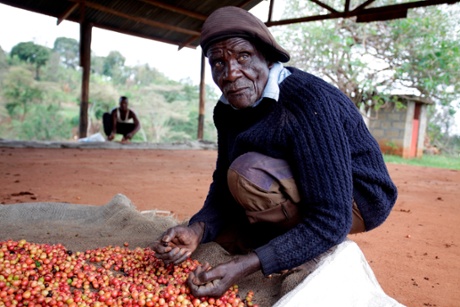
One group of farmers that recognised this is Kabuboni Farmers’ Co-operative Society Ltd., on the slopes of Mount Kenya. The farmers had relied on growing coffee for their main source of income, but when global coffee prices plummeted a number of the farmers neglected the crop and the sustainability of their supply chain was at risk. They identified an opportunity to diversify into dairy farming but although many of the farmers already kept dairy cows, they didn’t have facilities to store the milk at the correct temperature.
Kabuboni’s accountant, Philip Murithi Agostino, says they knew they were in dire need of funds to enable them to diversify. However, they didn’t have the knowledge or the financial evidence that was required to receive a business loan. This is where Shared Interest Foundation’s Access to Finance project stepped in. Funded by Comic Relief, the programme provides training in financial skills and business planning, and access to fair finance for farmers and handcraft makers in Kenya, Tanzania, Ghana, Uganda and Ivory Coast. To date, the programme has provided training to more than 90 businesses like Kabuboni, and injected almost £2m into fair trade businesses.
Chris Pay, head of the UK-based charity, Shared Interest Foundation explains: “When we met the team at Kabuboni, they had already embarked on a campaign to revitalise coffee farming in the area by distributing free seedlings and training their members in crop management. This wasn’t going to be enough to sustain coffee as the sole income source, however, and Kabuboni farmers were keen to diversify into milk production.”
Shared Interest Foundation partnered with Fairtrade Africa, which is based in Kenya, to provide Kabuboni with specialist business training. The co-operative later applied to Shared Interest Society for a business loan, which enabled Kabuboni to finance the cooling plant for its milk production business. As a result, the co-operative’s farmers are now less vulnerable to coffee price fluctuations, because they have an additional income. “The training has helped us access this finance and subsequently increase the number of female employees as the majority of dairy farmers tend to be women,” Agostino said.
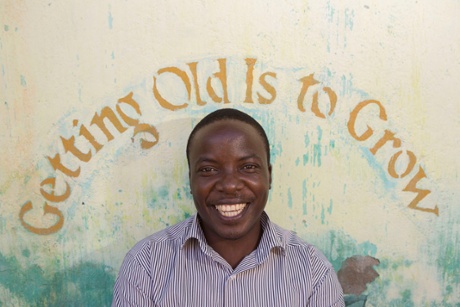
Another organisation that has benefitted from the Access to Finance programme is Getting Old Is to Grow (GOIG), a world fair trade certified handcraft organisation with 50 employees in Dar es Salaam, Tanzania. GOIG was founded in 1991 by a group of 12 retired women, with a mission to help older people in the community, and a vision to pass down their skills to the next generation. The organisation trains young people, especially girls, on handcraft making skills such as design, tailoring, textiles, jewellery, and candle-making. Shared Interest Foundation has provided GOIG with one-to-one mentoring and business support to help the business grow.
Following research into the handcraft market in East Africa, GOIG has designed a range of new products including children’s bags, and increased its use of sustainable materials such as old jeans and paper. Executive director, Misana Manyama manages the centre and the training unit in weaving, tailoring and jewellery-making. He said: “The Access to Finance mentoring made a big difference. It has assisted us to know how to manage our finances, how to keep our records and has made it easy for the auditors to audit us.”
Manyama had been keen to start working with new materials but didn’t have access to the funds that he needed to purchase the right equipment. A Shared Interest Society loan means that the organisation can now buy six new sewing machines that are suitable for working with heavy duty leather and canvas fabrics. Each machine will result in four new jobs, as well as a brand new cashier position, and the organisation will also re-employ 18 weavers who had previously been made redundant.
There is no shortage of small businesses in Africa that could benefit from access to fair finance, and while its current programme is focused on businesses in Kenya, Tanzania, Ghana, Uganda and Ivory Coast, Shared Interest now has its sights set on securing funding for a new programme in Malawi, which was recently struck by devastating floods. “These were the worst rains Malawi has seen for four decades, and farmers have been hit particularly hard,” said head of Shared Interest Foundation, Chris Pay. “As an immediate response, we have partnered with the Fairtrade Foundation to raise funds for the replanting of tea and sugar crops, but we also hope to offer farmers and handcraft makers in Malawi the access to finance that will enable them to get back on their feet and build a better future.”
Content on this page is paid for and provided by Fairtrade Foundation