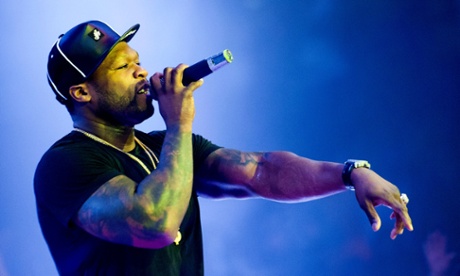
Filing for bankruptcy – as rapper 50 Cent has just done in a Connecticut court – is a pretty common occurrence in musical circles. MC Hammer and Meat Loaf have both gone bankrupt in the past. It’s almost a requirement for ex-boyband members: Shane Filan of Westlife filed for bankruptcy in 2012, having lost £18m in ropey property developments; earlier this year, Lee Ryan became the fourth and final member of Blue to go bankrupt.
We don’t necessarily expect famous musicians and actors – or anyone who gets successful quickly – to invest wisely or spend judiciously, but 50 Cent is routinely billed as a rapper/entrepreneur. He was an early investor in Glaceau Vitaminwater, which was bought by Coca-Cola for $4bn (£2.6bn) in 2007 in a deal that allegedly earned 50 Cent somewhere between $40m and $100m (his bankruptcy petition puts his assets at less then $50m – £32m). In addition to selling 22m albums, he is also the CEO of G-unit records and the founder of SMS Audio.
“Walt Disney has filed bankruptcy. Donald Trump has filed bankruptcy,” 50 Cent told E! News, making it sound like some kind of strategic route to success. “It means you’re reorganising your finances, but it does stop things from moving forward that you don’t want moving forward.” Among the things that may not move forward is the collection of $5m, money 50 Cent was ordered to pay in punitive damages to Lastonia Leviston last week, after she sued him for posting a sex tape of her online.

Chapter 11 bankruptcy – the type of petition made by 50 Cent – provides a legal framework for debt reorganisation, allowing the debtor the opportunity to put forward a repayment plan to creditors which, if approved, can be made binding by a court. It’s less drastic than Chapter 7 bankruptcy, which is basically a procedure for liquidating assets. Chapter 11 is a complicated business, although the application itself is just a five-page tick-box form, which invokes an automatic stay from debt collection on filing.
Among the more notable American bankrupts was boxer Mike Tyson, not least because he was said to have earned between $300m and $400m in his career up to the point of filing, and still faced debts of $27m, including unpaid child support and, quite possibly, outstanding bills for the care of his tigers (for which he had owed $8,100 a year earlier). Among the assets he lost was his 53-room mansion in Farmington, Connecticut, which went to his ex-wife as part of a divorce settlement. She then sold it to 50 Cent, who spent a reported $10m doing it up. It’s the address listed on his bankruptcy petition.
- This article was amended on 15 July 2015 to remove an incorrect reference to Elton John having “gone bankrupt”. Elton John has never gone bankrupt and we apologise for saying that he had.