In early 2005, a few months before that year’s general election, the journalist John Harris published a book entitled So Now Who Do We Vote For? It was an extended howl of disillusionment with the record of his party in office on the part of a previously loyal Labour voter. The deceptions perpetrated in the rush to war in Iraq inevitably loomed large in Harris’s calculations, but so too did the byzantine complexities of public service reform – the “quasi-markets”, targets, centralised audits and private finance initiatives (PFIs) that were as much an emblem of the New Labour years as was Tony Blair’s intimacy with George W Bush.
Harris was particularly exercised by the Faustian pact the Blair government had struck with the private sector. The shiny new schools and hospitals that sprung up around the country after 1997 – and it’s easy to forget just how denuded and dishevelled Britain’s public realm had become by the time Blair entered No 10 – were built with private capital that came with eye-watering interest rates attached. The theory was that the state paid these higher rates because the private sector was assuming risks previously borne by the taxpayer. Except, in the final analysis, it wasn’t. When PFI projects threatened to fail, as they often did, the government would always step in (people needed hospitals and schools, after all). But despite that, and despite the extraordinary growth of mega-firms such as Serco and G4S, whose principal business became winning government contracts to run services in areas in which they often had no expertise, we were told there was no alternative. As Alan Milburn, Blair’s favourite health secretary, declared, it was “PFI or bust”.
I was reminded of Harris when reading Zoe Williams’s new book – and not just because it arrives, as Harris’s did, on the eve of an election in which the Conservative party’s campaign has been orchestrated by Lynton Crosby, a man for whom a tincture of fear is always worth more than a bucketful of hope. (In 2005, the Tories’ slogan was this Crosby-minted dog whistle: “Are you thinking what we’re thinking?”) The two books share a controlled rage and the sense of a political intelligence chafing at the constraints placed on mainstream discourse by what the Brazilian philosopher Roberto Unger, whom Williams quotes approvingly, calls a “bastardised conception of political realism”. This is the idea that a policy or proposal is “realistic to the extent that it approaches what already exists”, and therefore ratifies a set of assumptions about, say, the superiority of the private sector, the self-interest of so-called “public servants” and the benefits of competition. “PFI or bust”, in other words.
Williams offers her own discussion of PFI and the related dysfunctions of the “outsourcing” industry in a chapter entitled “But doesn’t the private sector just do everything better?” And here the wit, fluency and sheer polemical brio of her prose belies her mastery of the fine detail of the deals that the state has struck with companies in the private sector over the past decade and a half. Williams knows her way round a balance sheet and can tell the difference between a capital amount and a “unitary charge” (the money that a contractor takes from the government for the repayment of the capital amount plus its servicing of the facility in question, whether it’s a hospital, a school or a road). The difference between those two figures is, as she shows, often mind-bogglingly large. For example, how, she asks, could a “mid-Bedfordshire schools project … cost £24m, yet require unitary charges of £454m?”
It’s a good question, and it’s a tributary of a larger one. What both Labour and the Conservatives have done in healthcare (and elsewhere) has destroyed, Williams argues, “our ability both to trust political parties and to differentiate between them”.
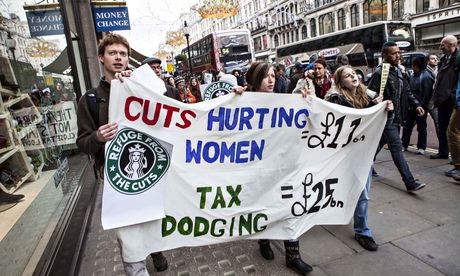
It was after surveying this same landscape, in which the major parties tussle for votes in a vanishingly small sliver of the “centre ground”, that, back in 2005, Harris started casting round for sympathetic Liberal Democrats, rebellious Labour backbenchers, Nationalists and Greens on whom disaffected socialists might bestow their vote. Williams, however, wants to go much further. If we’re going to “get it together”, as her title has it, and start the hard work of showing that an alternative to the “Serco state” is possible, then we should be looking not to mainstream political parties, she argues, but to civil society groups and campaigns. The housing pressure group Generation Rent, for example, anti-tax evasion campaigners UK Uncut, or the People Vs PFI if it’s those “unitary charges” that are really getting to you. After all, Williams asks, “What movement ever originated in parliament?”
There’s an important historical lesson here that is slightly obscured by Williams’s rhetoric. Lasting political change might not ever begin as “a conversation between one MP and another”, as she puts it, but it rarely ends without politicians pulling on the levers of power. The construction of the postwar welfare state, which Williams rightly thinks is in graver peril than it has ever been, is a case in point. It was the achievement of a party, Labour, that wasn’t just the preserve of a technocratic elite, but was rooted in a broad organisational network of trade unions, churches and other groups.
As the political scientist Peter Mair argued in the book Ruling the Void (2013), the golden age of the mass political party came to a close when those parties began to withdraw from civil society “towards the realm of government and the state”. Organisations that used to represent the people to the state, now represent the state to the people. The question, then, is who or what fills the void. Williams’s book offers one possible answer to it. We can’t wait, she writes, for economists to admit that they were wrong about the role that trade unions play in a healthy market economy, or the trade-off between inequality and GDP.
As it happens, the economists might be doing just that. In March this year, the International Monetary Fund published a report that showed a close correlation between the decline in the power of trade unions, on the one hand, and the steep rise in the incomes of the top 1%, on the other. Even Larry Summers, US treasury secretary under Bill Clinton and one of the architects of what we used to call the “Washington consensus”, has wondered aloud if collective bargaining might not in fact be the best way of shifting the balance of power between labour and capital. That may just be the sound of three decades’ worth of ideological pack ice beginning to crack.
• To order Get It Together for £11.99 (RRP £14.99) go to bookshop.theguardian.com or call 0330 333 6846. Free UK p&p over £10, online orders only. Phone orders min p&p of £1.99.