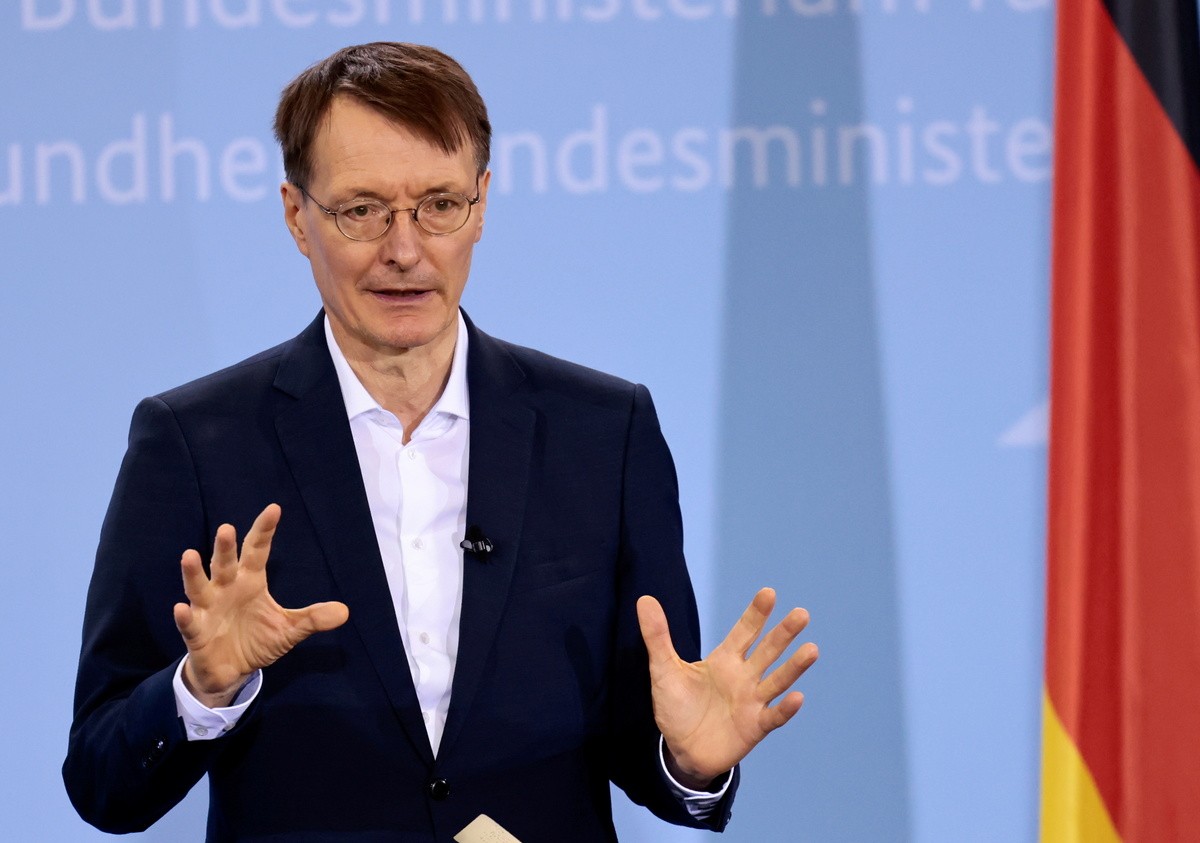
A Harvard-educated epidemiologist with a penchant for red bow ties, Karl Lauterbach became a household name in Germany during the pandemic by using Twitter and television appearances to urge fast implementation of novel ideas to fight the coronavirus.
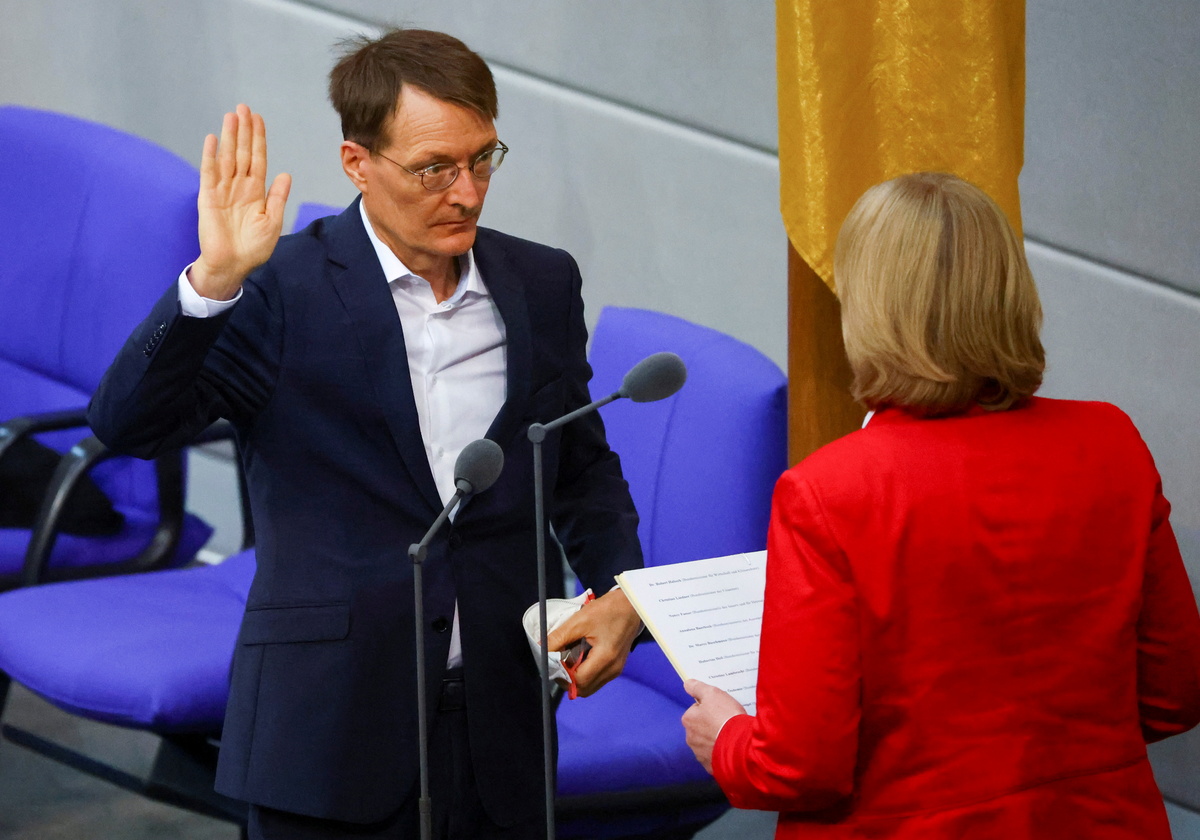
As Germany's new health minister, the 57-year-old Social Democratic (SPD) lawmaker will have to deliver more than words to a frustrated public expecting the new government of Chancellor Olaf Scholz to carve a way out of the pandemic.
Germany, praised during the first COVID-19 wave for keeping both deaths and infections relatively low, recorded 527 deaths on Wednesday in a fourth wave that has strained hospitals and forced authorities to restrict the unvaccinated.
Health officials have welcomed Lauterbach's appointment and said that his first priority should be to break resistance to vaccination in a country where only 69.2% of the population is fully inoculated compared with 87.3% in Portugal.
"The main challenge he faces is to convince those still unvaccinated to get vaccinated," said Dirk Heinrich, chairman of Germany's Virchowbund association of practicing physicians.
"He has to motivate them with a positive campaign and a simple message: 'If you get vaccinated you will be doing yourself and people around you a big favour.'"
The outgoing government of Angela Merkel was criticised for fraught communication with the public during the pandemic that resulted in confusion and frustration.
Critics pointed to the government's decision in October to recommend boosters to people aged 60 or older, contradicting a scientific committee that had recommended the extra shots to those aged 70 or more.
Lauterbach urged the government in late summer to start offering boosters, pointing to Israel which in July became the first country in the world to launch a booster campaign.
'RISKY BET'
In April he pointed to studies showing the effectiveness of a single vaccine dose in reducing hospitalisations. Because vaccine doses were scarce when they first became available, he urged the government to space out to as much as 12 weeks the gap between the first and second jab so that more people received their first shot, a strategy first adopted in Britain.
His well-placed, maverick interventions and working class background - which has earned him more than 700,000 followers on Twitter - made him a credible voice among a public frustrated with the political elite.
During his first address to his staff at the Health Ministry on Wednesday, Lauterbach said management of the pandemic will be guided by scientific evidence, not political considerations.
"Health policy can succeed only if it is anchored in scientific evidence. Our main goal is to end this pandemic. We will deliver booster shots as fast as possible."
Thorsten Benner of the Global Public Policy Institute (GPPi) said Scholz had no choice but to appoint Lauterbach as health minister given his "pop star" status.
"I guess Scholz's hope is that if Lauterbach succeeds in daily pandemic management, Scholz can focus on other governing priorities," said Benner. "The alternative would be having to live with Lauterbach as a parallel health minister of the hearts."
Germany's vaccination campaign has picked up over the last two weeks with almost one million jabs delivered each day.
Benner said Lauterbach's insistence on scientific guidance could put him at odds with colleagues in Scholz's coalition alliance of his SPD with the Greens and the pro-business Free Democrats (FDP). The FDP in particular could oppose any future plans to impose tougher restrictions on daily life if the wave if not tamed to protect a fragile economic recovery.
"Scholz's bet is risky," said Benner. "Lauterbach knows that if he upstages and upsets coalition partners and Scholz, that will be the end of his tenure."