GP Winery Mineralstein Riesling, Pfalz, Germany 2014 (£10, Marks & Spencer) There is no better wine style to drink at the height of summer than German riesling. At its best, it’s a style that is unmatched at combining complexity and concentration of flavour with lightness of touch and alcohol. I say style, but I should really say styles: while the riesling grape is the ingredient German winemakers use to make the overwhelming majority of their best white wines, the wines vary greatly according to the region, village, or vineyard in which they are grown. The Pfalz region, for example, tends to specialise in drier, richer, fuller, spicier but still, in the case of M&S’s house label, pristine, linear rieslings with a kick of zesty lime and a lick of minerals.
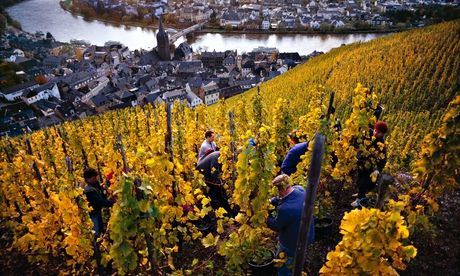
JJ Prüm Riesling Kabinett, Mosel, Germany 2012 (from £15.50, Wine Direct; Harvey Nichols; Fingal Rock; Handford Wines) A Pfalz wine like Mineralstein, which clocks in at 12% alcohol, has some similarities with the rieslings made just across the French border in Alsace, as well as with the many wines made around the world – from Australia to Slovenia – that have used both regions as a stylistic template for dry riesling. Rather fewer winemakers have succeeded in matching the silk-string delicacy and intricacy of the off-dry Rieslings labeled kabinett on the slate slopes of the Mosel Valley. The Prüm family are masters of the art, and the apricots, flowers, and salt of their classical 2012 skip across the tongue with the merest hint of sweetness and just 8.5% alcohol.
Dönnhoff Schlossböckelheimer Felsenberg Felsentürmchen Spätlese, Nahe, Germany 2011 (from £27.99, Ministry of Drinks; Uncorked) The relatively small Nahe wine region, which follows the banks of the Nahe river, a tributary of the Rhine, has only recently begun to challenge the two big names of German riesling that it sits between on the map: the Mosel and the Rheingau. But the valley is home to some of Germany’s most exciting winemakers, producing rieslings that match the grace of Mosel with a distinctive spiciness. Names to look out for include Schlossgut Diel and Emrich-Schönleber, but the star of the region is undoubtedly Helmut Dönnhoff. His racy, just off-dry citrus-tinged QbA Riesling 2013 (£16.50, Lea & Sandeman; Berry Bros & Rudd) is tangy, precise and utterly refreshing; the richer, sweeter, single-site Felsentürmchen Spätlese a heady mix of stone and tropical fruit, coriander, salt and spice.