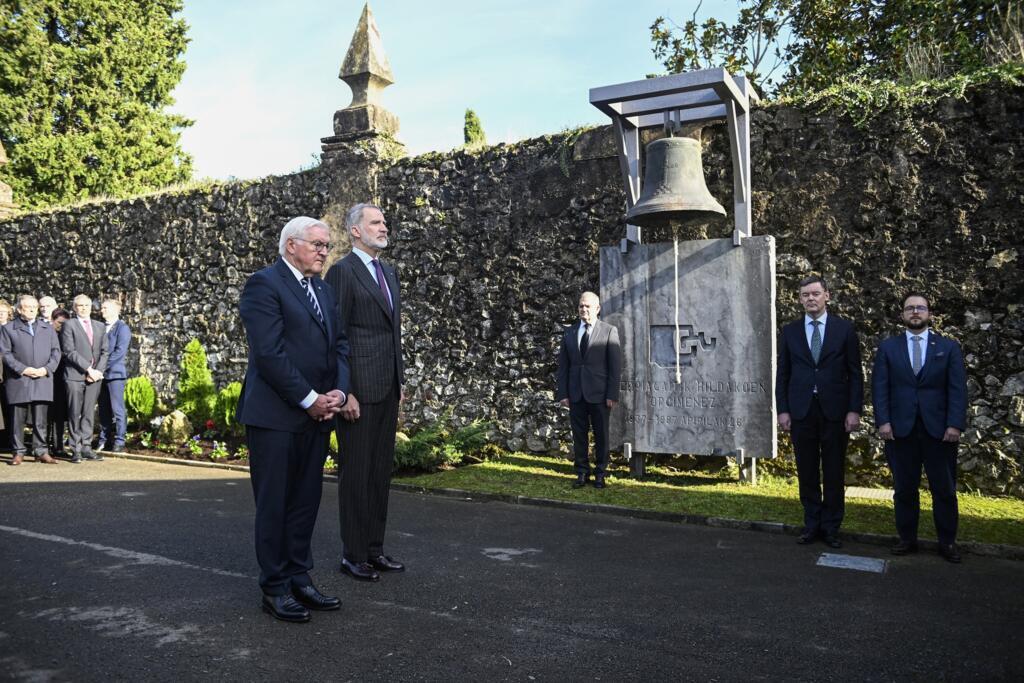
President Frank-Walter Steinmeier on Friday became the first German head of state to visit the Spanish town of Guernica, where Nazi bombers killed hundreds of civilians in 1937.
The Condor Legion unit of the German air force devastated the northern Basque town on 26 April 1937 in support of General Francisco Franco's rebels during the 1936-1939 Spanish Civil War.
Steinmeier attended a wreath-laying ceremony in memory of the victims with Spanish King Felipe VI on the third and final day of his state visit to Spain. The two men then visited the town's Museum of Peace, which tells the story of the tragedy, and met two survivors of the attack.
"Guernica is one of those places where the horrors of war and the vulnerability of innocent people have been indelibly etched into our European memory," Steinmeier told reporters after the ceremony.
The president said the "brutal crime" offered a "warning that we must oppose any nationalism, hatred and violence, but also the warning that we must defend peace, freedom and democracy".
On Wednesday, Steinmeier urged Germans never to forget the "terrible crimes" in Guernica, for which his country carried "a heavy burden of guilt".
"Guernica is a reminder – a reminder to stand up for peace, freedom and the preservation of human rights," he told a gala dinner at Madrid's Royal Palace.
The visit comes almost 30 years after former German president Roman Herzog recognised his country's "culpable involvement" and called for "reconciliation".
Firestorm
At the time of the bombing, Guernica held deep symbolic value as a historic centre of Basque self-government. The attack came on a market day, when thousands of civilians from surrounding villages were in the town.
It formed part of a wider Nationalist offensive in the north, aimed at breaking Basque resistance and securing the industrial city of Bilbao.
Over several hours, waves of bombers dropped high-explosive and incendiary munitions, followed by low-flying fighters that machine-gunned people attempting to flee, turning Guernica into a firestorm.
Much of the town centre and three-quarters of its houses were destroyed, with hundreds of civilians killed or wounded, although exact numbers remain disputed.
How Germany's Nuremberg trial for Nazi crimes transformed international law
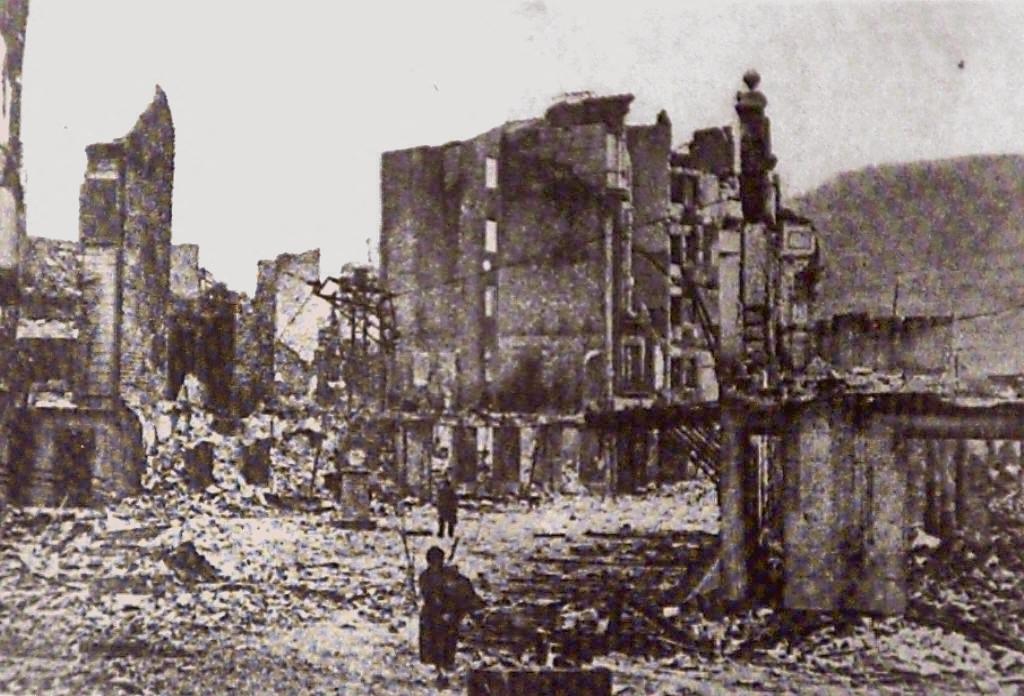
The raid is viewed as one of the first large-scale aerial attacks deliberately targeting a civilian population, a grim rehearsal for tactics later used in World War II.
Franco’s regime initially denied responsibility, blaming retreating Republicans for burning the town, but foreign correspondents quickly exposed the reality.
Ghost of Franco still haunts Spanish politics, 50 years on
International outrage was further fuelled by Pablo Picasso’s painting “Guernica”, unveiled in 1937, which turned the destroyed town into a universal symbol of anti-fascist protest and the horrors of modern, mechanised war.
Steinmeier viewed the painting at Madrid's Reina Sofia art museum on Wednesday.
On 20 November, Spain marked the 50th anniversary of Franco's death and the end of his 36-year dictatorship.
(with newswires)