BERLIN (Reuters) - The German environment ministry has rejected calls from two of the country's states for tax incentives to promote the sale of low-emission modern diesel and electric cars.
Representatives of Germany's federal government, states and major automakers will meet on Wednesday to discuss ways to avert driving bans on diesel cars, which have drawn public attention since Volkswagen's <VOWG_p.DE> emissions test-cheating scandal broke almost two years ago.
Stephan Weil, prime minister of Lower Saxony, VW's home state, has proposed financial incentives for drivers of older diesel cars to switch to more efficient models, while Horst Seehofer, the premier of Bavaria - home to BMW <BMWG.DE> - wants car tax to be lowered for owners of diesel models designed to meet the latest Euro-6 emission standards.
But the environment ministry, one of the hosts of the August 2 diesel summit, is rejecting the proposals.
"We are not particularly interested in supporting a technology that in the foreseeable future no longer belongs on the roads anyway," a spokeswoman for the Berlin-based ministry said on Saturday.
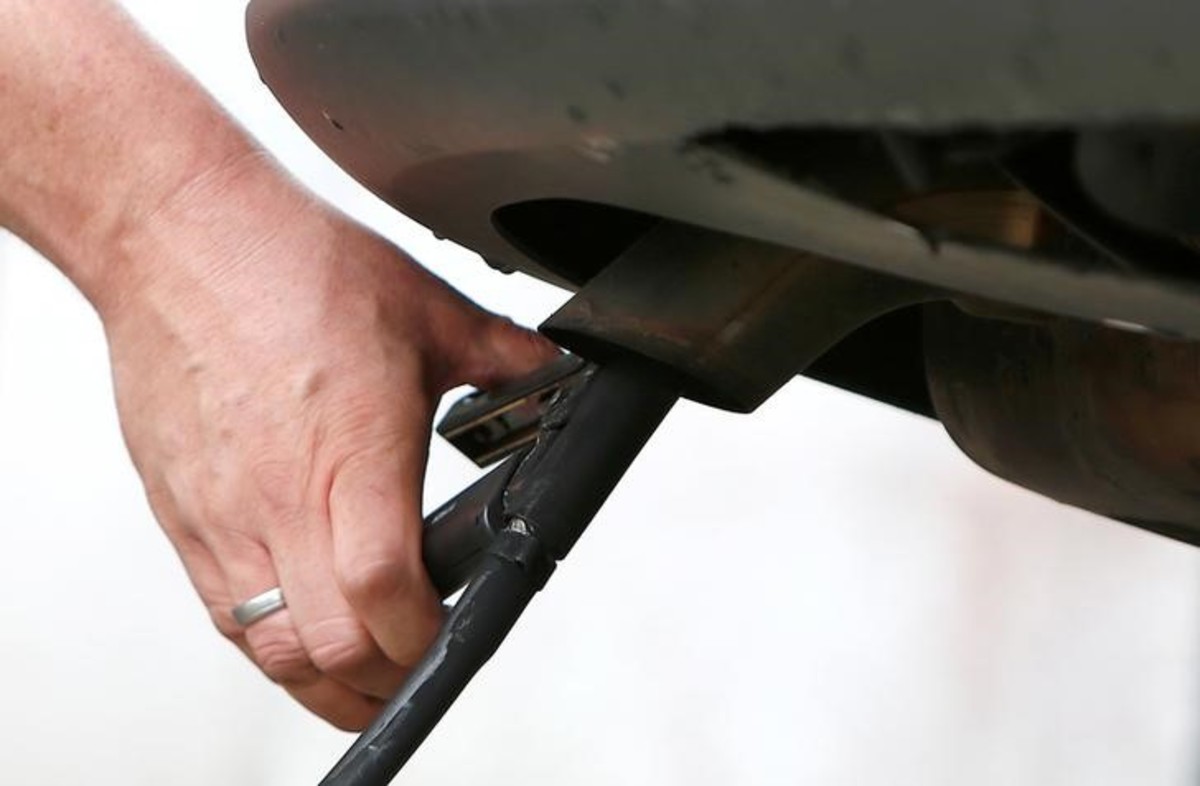
Instead, carmakers and politicians have worked on a plan to tackle diesel pollution and improve air quality by updating engine management software on some older vehicles to make exhaust filter systems more effective.
COURT RULING
However a German court ruling on Friday backing a push to ban diesel cars from Stuttgart, home to Daimler <DAIGn.DE> and VW's Porsche sports-car division, is raising doubts as to whether software modifications will suffice to bring cities' emissions levels into line with European standards.
"If one were to fulfill Euro-6 pollutant reduction targets with Euro-5 cars, pure software solutions would not be enough," Weil, a member of VW's supervisory board, was quoted by Tagesspiegel am Sonntag newspaper as saying.
Carmakers would need to make a "significant" contribution towards funding possible hardware changes, the costs of which must not be heaped on car owners, said Weil.
DUH, Germany's main environmental lobby group which has been fighting for air pollution control for years, said replacing emission control systems would cost about 1,500 euros per car, compared with about 100 euros per vehicle for software updates.
With about nine million diesel cars in Germany earmarked for software updates and the country's federal elections only eight weeks away, decision-makers are anxious to spare vehicle owners any driving restrictions and retro-fitting costs.
"Retrofittings must on balance be successful, so that Euro-5 cars will continue to be allowed to drive into the cities - that is the central agreement that must be the outcome of the diesel summit," Roman Zitzelsberger, head of the IG Metall labour union in Daimler's home-state of Baden-Wuerttemberg was quoted by Tagesspiegel am Sonntag as saying.
(Reporting by Markus Wacket; Writing by Andreas Cremer; Editing by Andrew Bolton)