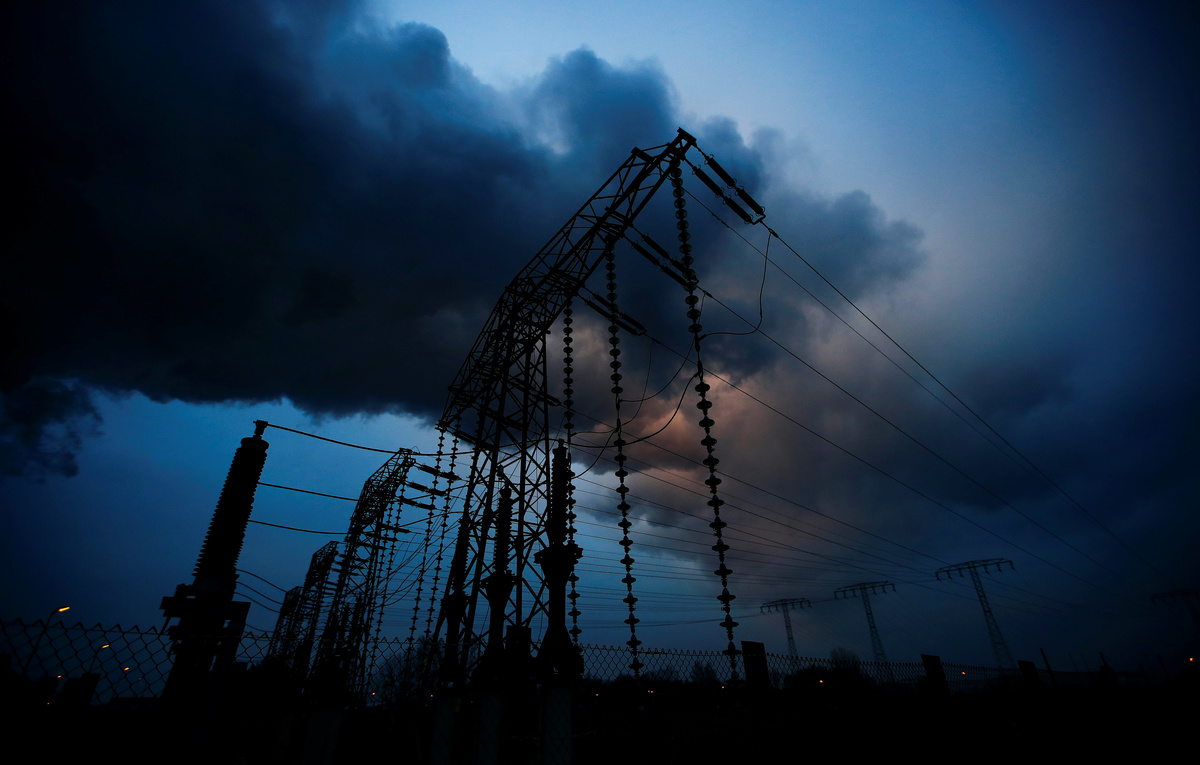
ESSEN, Germany (Reuters) - German gas demand could rise by up to 8 percent in the period to 2022 to replace orchestrated closures of coal-fired power plants recently recommended by a government-appointed commission, gas lobby group Zukunft Erdgas said on Wednesday.
In a presentation at the E-World of Energy trade fair, the industry group said the recommendations of the commission could make gas the second pillar of power supplies, after renewables which already hold 40 percent.
This would be up from currently 12.8 percent for gas and against coal's 35.5 percent share in a gross generation estimate putting power generation at 649 terawatt hours (TWh) in 2018.
"It is clear that the importance of gas-to-power stations will increase significantly," Timm Kehler, head of the industry group told Reuters.
The coal commission on Jan. 26 recommended that coal-burning capacity be more than halved by 2030. Nuclear reactors are also due to close by 2022.
Gas-fired power station capacity amounts to 30 gigawatts (GW), of which only 38 percent were utilized last year versus 80 percent of brown coal plants and 40 percent of hard coal ones, Kehler said.
"That gave the commission confidence that the switch out of coal could be handled," he said.
"Now it is a matter of creating incentives for long-term investments in the power system and the gas infrastructure," he added.
Calculations by Zukunft Erdgas assumed additional gas demand of between 30 and a maximum 81 TWh annually for gas to go into power generation by 2022, depending on how quickly gas takes the share formerly held by coal.
Germany's gas industry has failed for many years to make inroads into coal's share because coal was cheaper, even when factoring in twice the cost of carbon emissions permits.
Germany is Europe's biggest gas market as half of its home heating infrastructure relies on gas, as does manufacturing.
There is growing awareness on the political side, he said, that the existing capacity has to be kept and built upon and a transition of coal-fired cogeneration of heat and power installations, operated by urban utilities, should be supported.
He also said: "Power price increases arising from the switch to gas would be manageable because of higher supply."
Germany expects additional import volumes from the Nord Stream 2 pipeline under construction and with three terminal projects to receive liquefied natural gas (LNG) competing for permission.
(Reporting by Vera Eckert, editing by David Evans)