The German economy, the largest in the EU, contracted between April and June, as a global slowdown dented demand for its exports while Brexit also played a part.
Despite the contraction, in the euro zone as a whole output still rose 0.2 per cent, in line with the first official estimate.
German GDP dropped 0.1 per cent in the second quarter compared with the first, as expected by analysts. The Federal Statistics Office pointed to a sharp fall in exports – which are hugely important to the German economy – and a decline in construction investment.
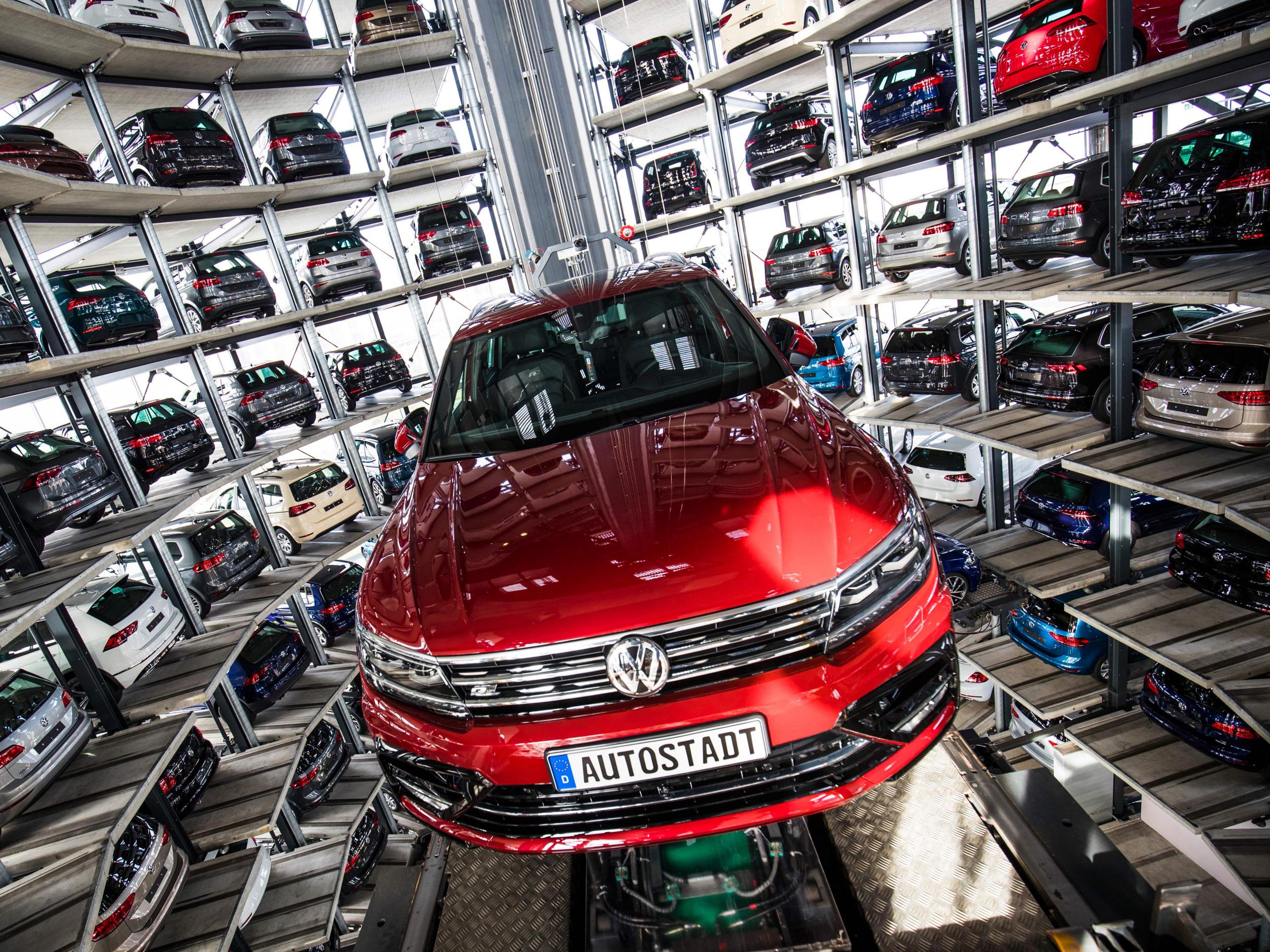
Appetite for German cars and other goods has waned in China in particular as frenetic growth in the world’s second-largest economy is cooling, partly due to the year-long trade war with the US.
On the home front, German construction output fell 1.1 per cent in the second quarter.
“Due to the unusually mild winter weather, some of the spring recovery in construction already began in the first quarter,” said Jörg Krämer, chief economist at Commerzbank.
“However, this does not change the fundamental weakness coming from the export-oriented manufacturing sector.”
The sector was probably affected by another factor as well: a payback after stockpiling in the run-up to the last Brexit deadline on 29 March. As the Bank of England noted in June, British companies were not the only ones stocking up on components and goods – firms in the EU did the same.
Brexit also threatens the German economy later this year.
“There may be another boost to German exports to the UK ahead of the next Brexit deadline,” said Andrew Kenningham, chief Europe economist at Capital Economics.
“However, we suspect that any pre-Brexit boost would be smaller than it was in the first quarter and it could prove to be the prelude to a larger hit to external demand towards the end of the year if the UK does actually leave the EU without a deal.”
Brexit has already contributed to a 0.2 per cent drop in Britain’s output between April and June, as the original date for the UK’s departure affected annual shutdowns of car plants, while uncertainty ahead of the new, October deadline weakened most parts of the economy.
In contrast, overall GDP both in the euro zone and the broader EU grew 0.2 per cent in the second quarter, Eurostat said on Wednesday. All countries in the euro zone for which data was available recorded economic growth, apart from Germany and Italy whose economy flatlined.