German Health Minister Jens Spahn urged the country's 16 federal states on Thursday to impose tougher restrictions quickly to try to slow a third wave of the coronavirus and not to wait until a national law on measures is passed.
His appeal came as the number of confirmed coronavirus cases jumped on Thursday by 29,426 to 3.073 million, the biggest increase since Jan. 8. The reported death toll rose by 293 to 79,381, data from the Robert Koch Institute (RKI) showed.
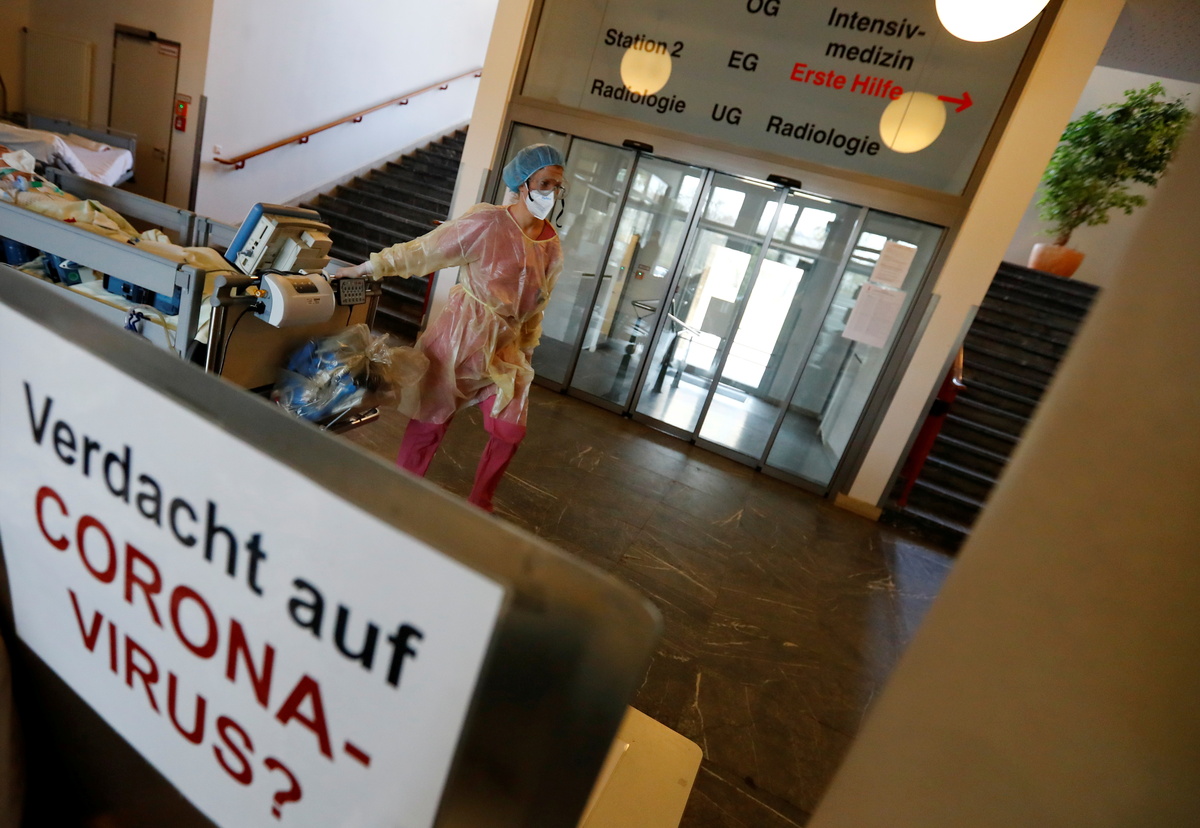
"We know from last autumn what happens when we don't act quickly," Spahn told reporters, adding that doctors expect some 6,000 patients to be in intensive care by the end of the month.
RKI President Lothar Wieler described the situation in hospitals as "dramatic" and called on politicians to take action to break the third wave now.
Germany is grappling with a more transmissible variant of COVID-19 five months before a national election in which Chancellor Angela Merkel's conservatives are forecast to suffer major losses.
Frustrated by a failure of some regions to implement tougher restrictions despite rising cases, Merkel wants parliament to grant the federal government temporary powers to enforce coronavirus lockdowns in areas with high infections.
On Thursday, Vice Chancellor Olaf Scholz defended the changes to the Infection Protection Act, which include curfews once the seven-day virus incidence exceeds 100 per 100,000.
"This has helped everywhere, it has been done in many countries around the world - and it has brought the incidence rates down," he told ARD television, adding that something had to be done to limit the spread of the virus.
Spahn said Germany's vaccination campaign was gaining pace. Around 20% of the population will have been given at least a first dose by the end of April and all adults should have been offered a shot by the end of summer, he said.
Nonetheless, Spahn cautioned that it would take until the third quarter to achieve group herd immunity against COVID-19.
Asked what this meant for booking summer holidays he said:
"I don't know if everyone will have to fly all the way to the Seychelles again, but I'm sure they'll get as far as the North Sea."
(Reporting by Caroline Copley and Andreas RinkeEditing by Toby Chopra and Gareth Jones)