German coronavirus tracing app downloaded 6.5 million times
Timotheus Hoettges, Chief Executive Officer of Germany's telecommunications giant Deutsche Telekom AG, holds a mobile phone as he attends the presentation of the new contact-tracing smartphone app that will use Bluetooth short-range radio and technology standards from Apple and Google to alert people of the risk of infection with the coronavirus disease (COVID-19), in Berlin, Germany, June 16, 2020. REUTERS/Hannibal Hanschke/Pool
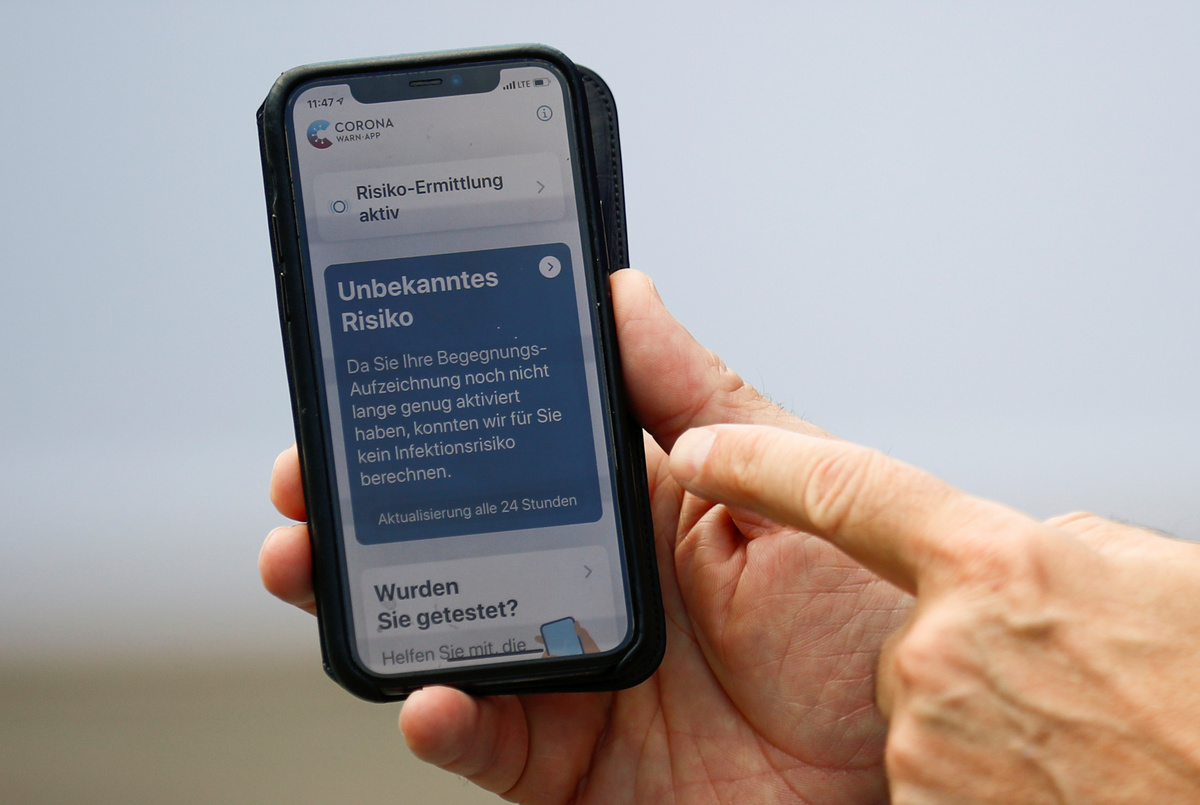
Germany's smartphone app to help trace coronavirus infections has been downloaded 6.5 million times in the first 24 hours since its launch, the chief executive of software company SAP said on Wednesday.
Christian Klein said the strong public reception was testimony to the collaboration between teams from SAP and Deutsche Telekom that readied the Corona-Warn-App in just six weeks.
"It's a big success, it scales, it's user friendly and it helps society," Klein told journalists in a video briefing.
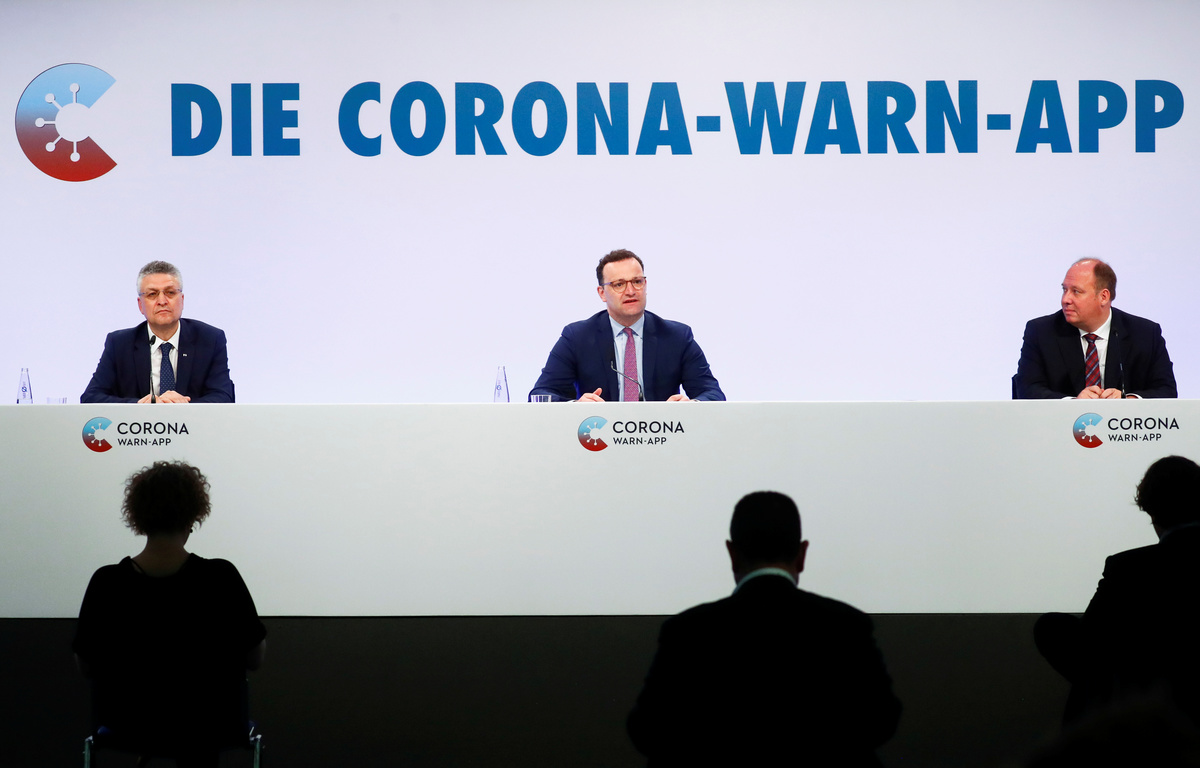
German Health Minister Jens Spahn speaks next to Head of the Robert Koch Institute Lothar Wieler and German Chancellery's Chief of Staff Helge Braun during the presentation of the new contact-tracing smartphone app that will use Bluetooth short-range radio and technology standards from Apple and Google to alert people of the risk of infection with the coronavirus disease (COVID-19), in Berlin, Germany, June 16, 2020. REUTERS/Hannibal Hanschke/Pool
Germany joins European countries like Italy, Poland and Latvia in launching apps that use Bluetooth wireless to measure contacts between people and issue a warning should one of them later test positive for COVID-19.
Although the technology is untested, governments have rushed to deploy it in the absence of a cure for COVID-19, seeking instead to achieve a kind of digital 'herd immunity' against the flu-like disease.
Widespread take-up is needed, however, to increase the chance that both people in a risk event - spending 15 minutes within 2 metres of each other - use the app. In field tests, the app successfully recorded 80% of such encounters.
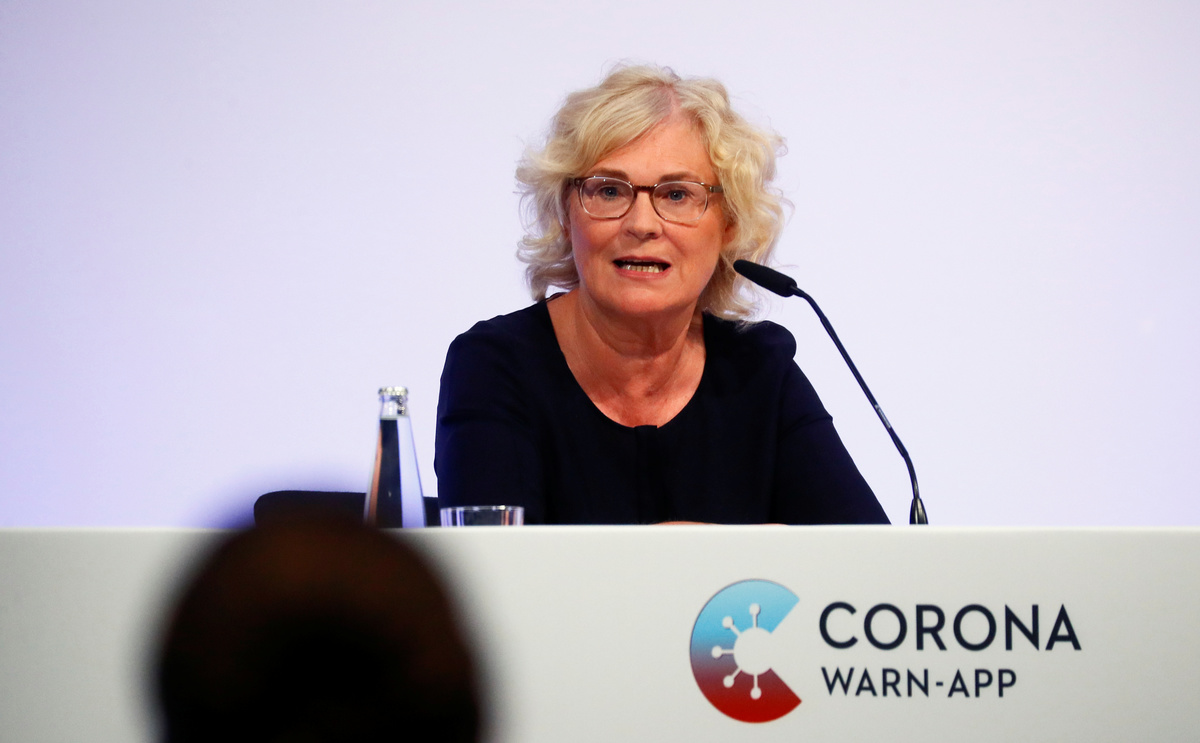
German Minister of Justice Christine Lambrecht speaks during the presentation of the new contact-tracing smartphone app that will use Bluetooth short-range radio and technology standards from Apple and Google to alert people of the risk of infection with the coronavirus disease (COVID-19), in Berlin, Germany, June 16, 2020. REUTERS/Hannibal Hanschke/Pool
Most apps being rolled out in Europe are based on technology from Apple and Alphabet's Google that logs contacts securely on a device and encrypts Bluetooth exchanges.
Such privacy by design appears to have won public trust in Germany, a country of 84 million. France's app, which stores data centrally and is not supported by Apple, has been activated by just 2% of the population.
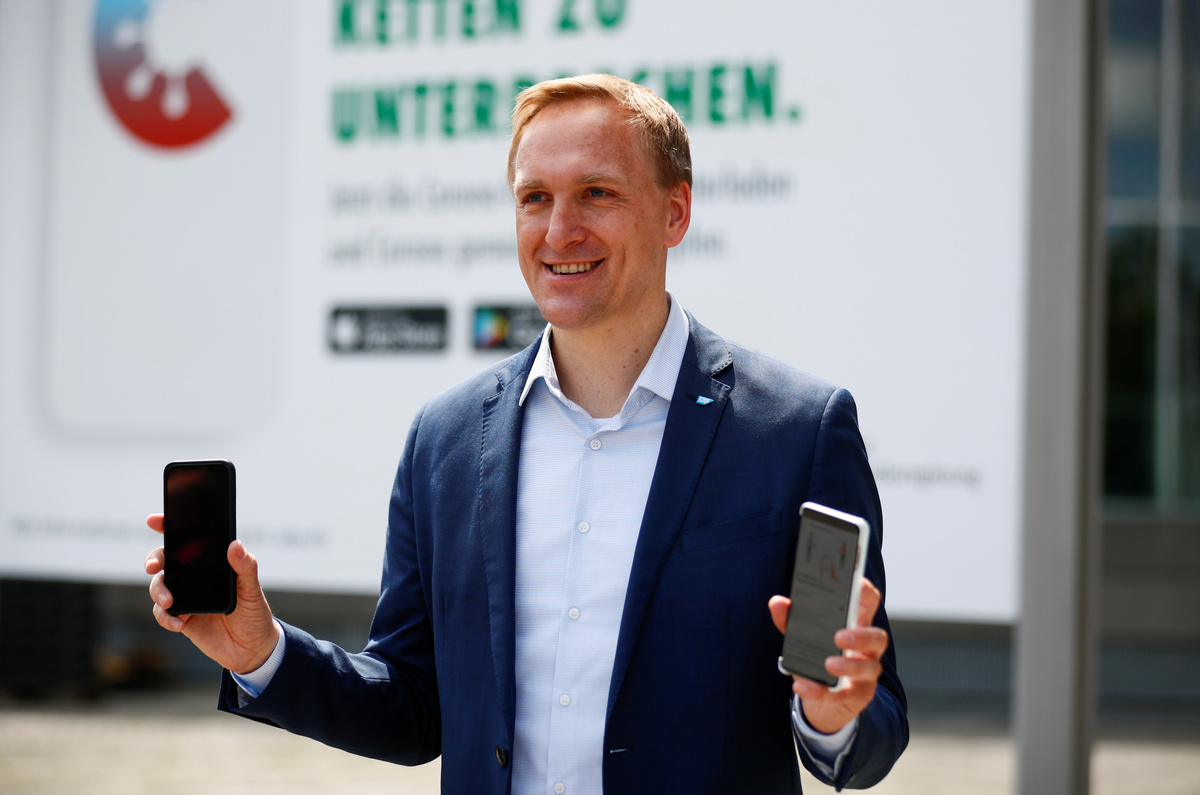
Member of the Executive Board of SAP Juergen Mueller (Chief Technology Officer) holds mobile phones as he attends the presentation of the new contact-tracing smartphone app that will use Bluetooth short-range radio and technology standards from Apple and Google to alert people of the risk of infection with the coronavirus disease (COVID-19), in Berlin, Germany, June 16, 2020. REUTERS/Hannibal Hanschke/Pool
(Reporting by Douglas Busvine; Editing by Riham Alkousaa and Jan Harvey)
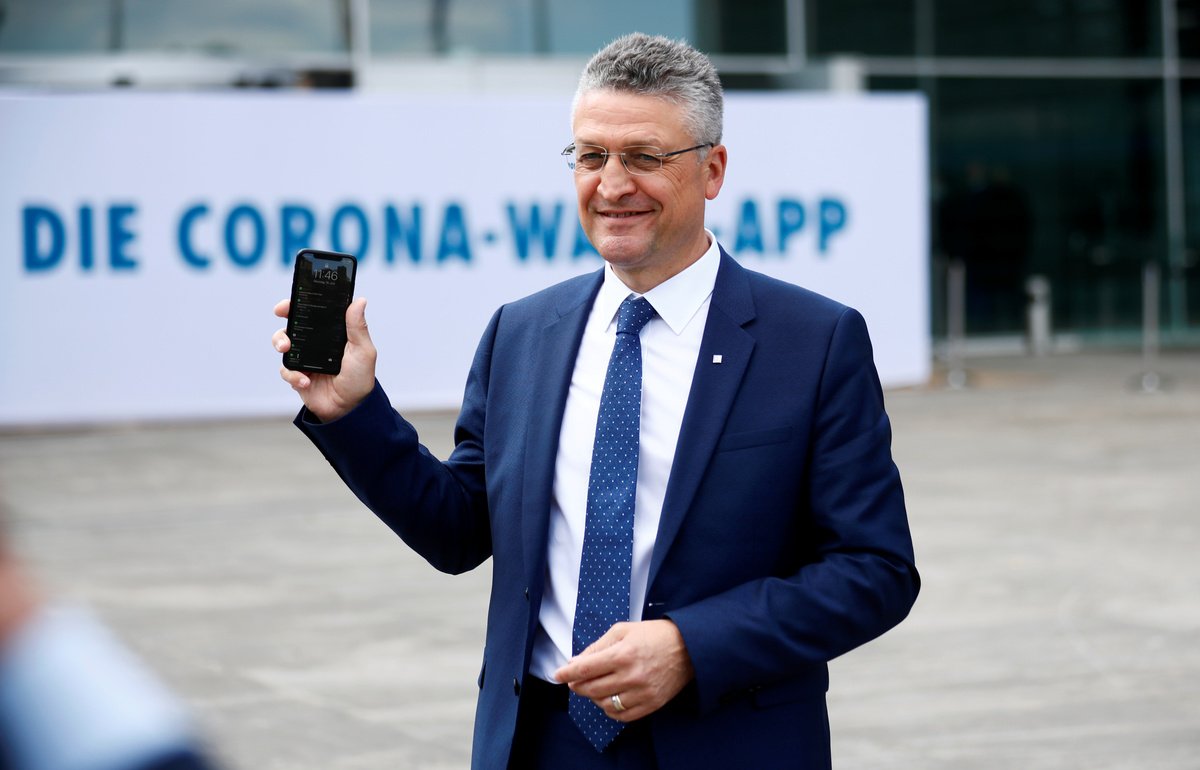
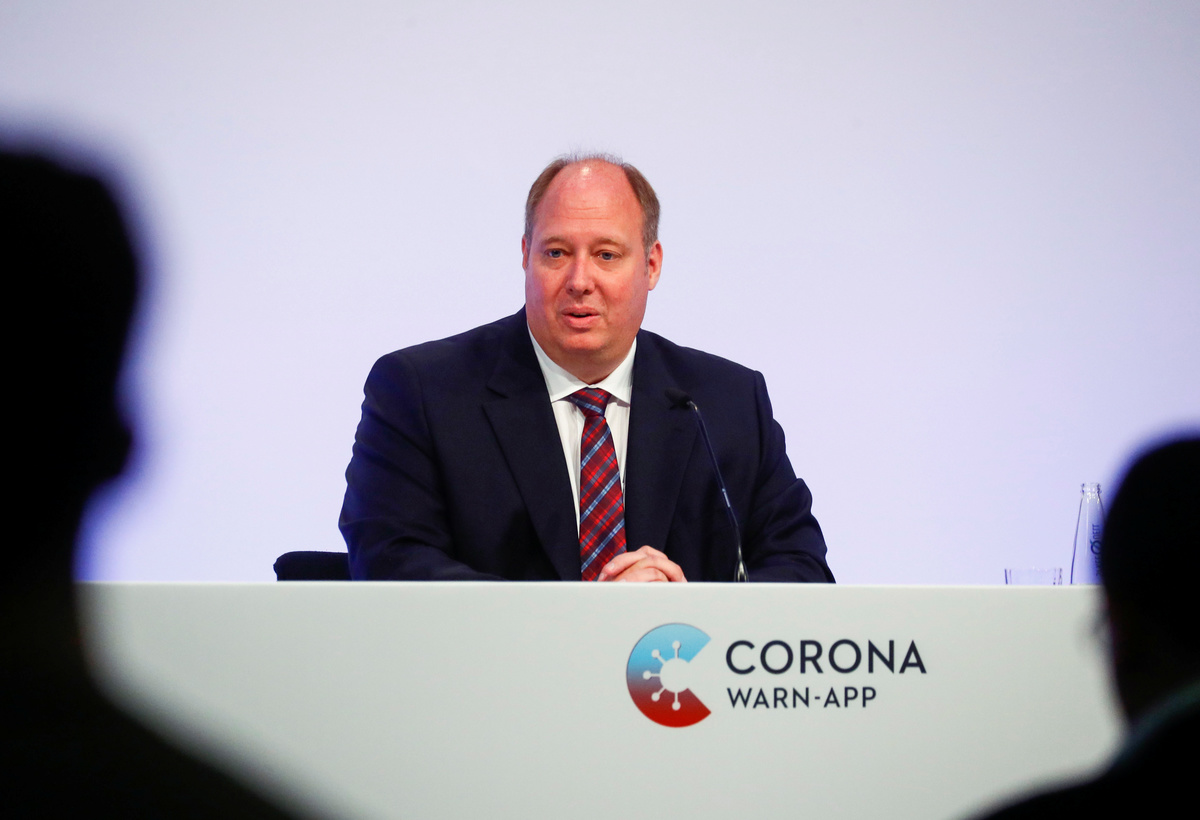
Head of the Robert Koch Institute Lothar Wieler holds a mobile phone as he attends the presentation of the new contact-tracing smartphone app that will use Bluetooth short-range radio and technology standards from Apple and Google to alert people of the risk of infection with the coronavirus disease (COVID-19), in Berlin, Germany, June 16, 2020. REUTERS/Hannibal Hanschke/PoolGerman Chancellery's Chief of Staff Helge Braun attends the presentation of the new contact-tracing smartphone app that will use Bluetooth short-range radio and technology standards from Apple and Google to alert people of the risk of infection with the coronavirus disease (COVID-19), in Berlin, Germany, June 16, 2020. REUTERS/Hannibal Hanschke/Pool
Sign up to read this article
Read news from 100’s of titles, curated specifically for you.