Angela Merkel’s conservatives have reached a coalition agreement with their main centre-left rivals, in a move that could keep the Chancellor in power for another four years.
Under the deal the SPD, which is led by former European Parliament president Martin Schulz, would gain control of large parts of government including the foreign ministry, finance ministry, and the work and welfare ministry.
The SPD’s membership, which is thought to be sceptical of another so-called “grand coalition” with their adversaries after taking a bruising at the polls in September, will have to vote on the deal to confirm it – with the result far from certain.
The promise of both the finance ministry and the social ministry could be enough to tempt 460,000 members back into government, however. The combination of the two would allow the SPD to both design and finance left-wing social policies while in government.
Following September’s elections Mr Schulz previously ruled out another grand coalition and said his party would return to opposition to lick its wounds. Talks however re-opened after negotiations between Ms Merkel’s CDU/CSU, the liberal FDP, and the Greens collapsed.
The finance ministry in particular is a big win for the social democrats; it has been controlled by the CDU for the last eight years.
Control of the country's foreign ministry would also give the extremely europhile SPD a platform from which to push further EU integration, though Ms Merkel would retain Germany's seat on the European Council.
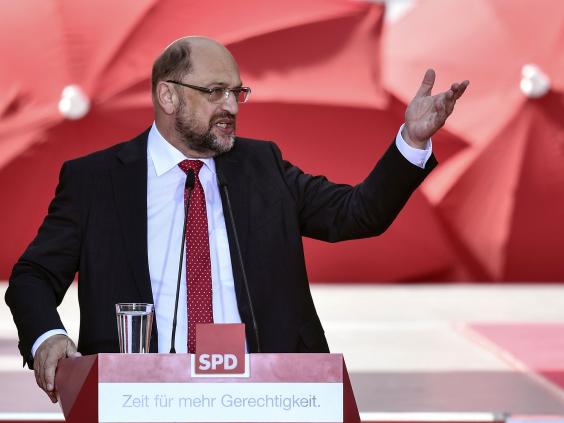
The conservative CDU would get to run departments including business, defence and the interior ministry under the deal – which could see Mr Schulz step down as party leader so that he can take a ministerial position in the government.
However, the SPD entering government would make the far-right AfD, which won seats in the Bundestag for the first time last year, the official opposition and give it an unusually high profile.
The deal is the last possible coalition for Ms Merkel; failure to sign it off would leave her with the option of either calling fresh elections, or governing as a minority government. Minority governments, where a party must seek support from part of the opposition to pass any legislation, are highly unusual in German politics.
The SPD crashed to a historic low at the last elections, taking just 20.5 per cent of the vote. Polls show it has fallen even further since considering a deal with the CDU, perhaps even close to being overtaken by the far-right AfD.