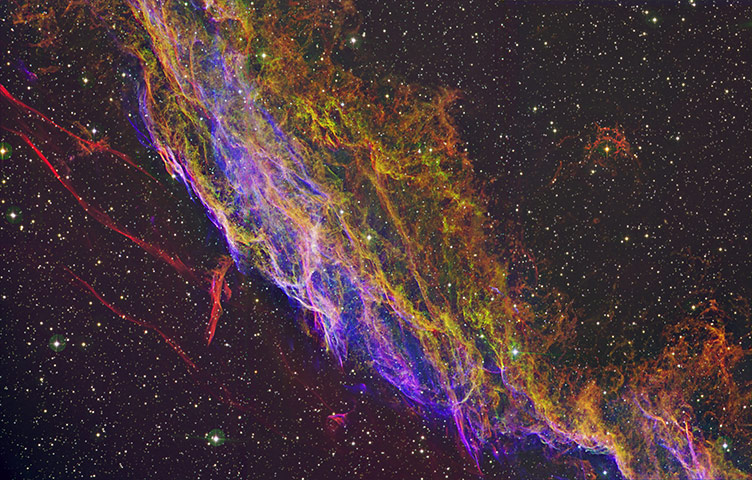
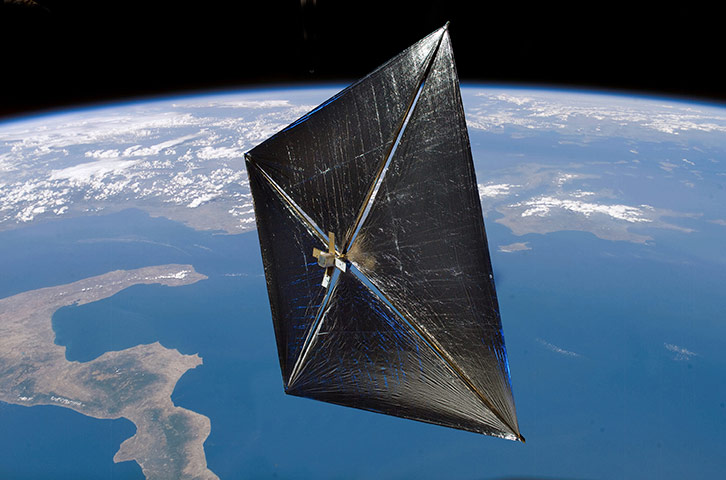
Part of the Veil Nebula imaged by the Isaac Newton Telescope. The picture is made from data collected using filters to isolate the light emitted by hydrogen, oxygen and sulphur atoms (red, green and blue respectively). The Veil Nebula is a faint remnant of a supernova that exploded some 5,000 years agoPhotograph: A. Oscoz, D. Lopez, P. Rodriguez-Gil and L. Chinarro/INGThree nebulae in the Orion Molecular Cloud: the Flame Nebula, Horsehead Nebula and NGC 2023. The image was captured by Nasa’s Wide-field Infrared Survey Explorer (Wise)Photograph: WISE Team/JPL-Caltech/NasaOn 6 December a 'nanosatellite' about the size of a loaf of bread was successfully ejected from another free-flying satellite in a first for space technology. NanoSail-D is designed to test whether solar sails like the one in the artist's impression above can be used to rapidly slow and 'de-orbit' defunct satellites so they burn up in the Earth's atmospherePhotograph: Nasa
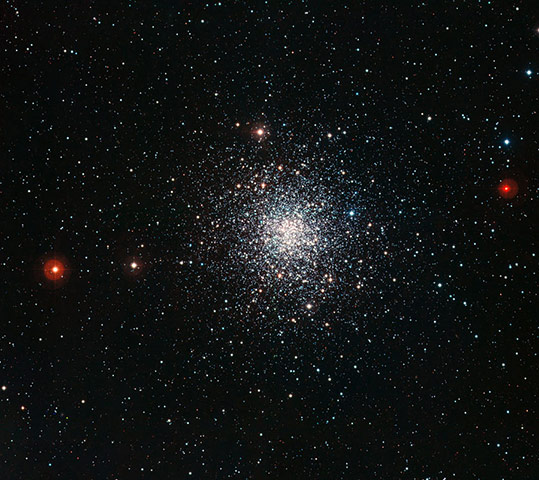
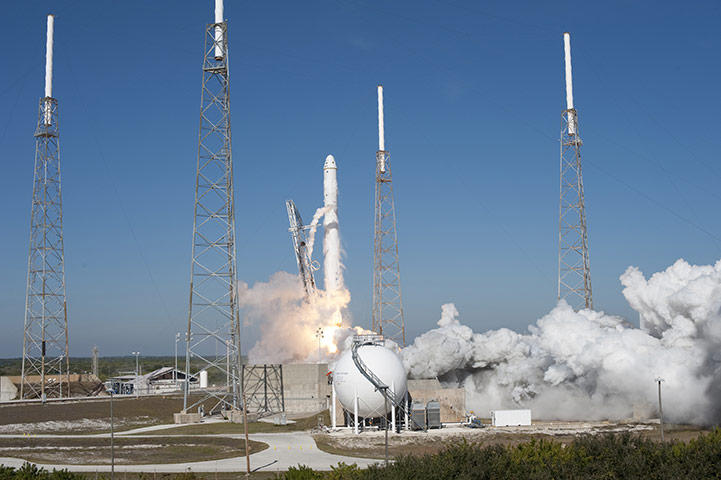
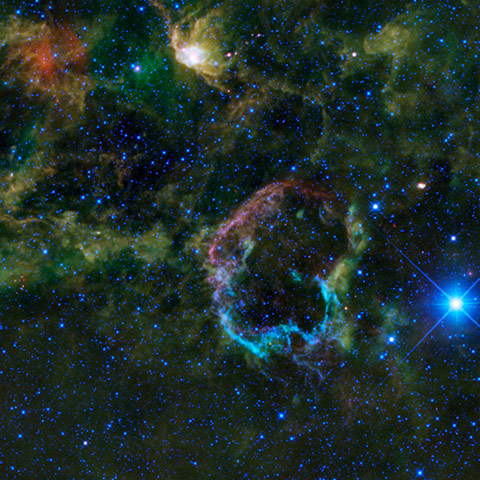
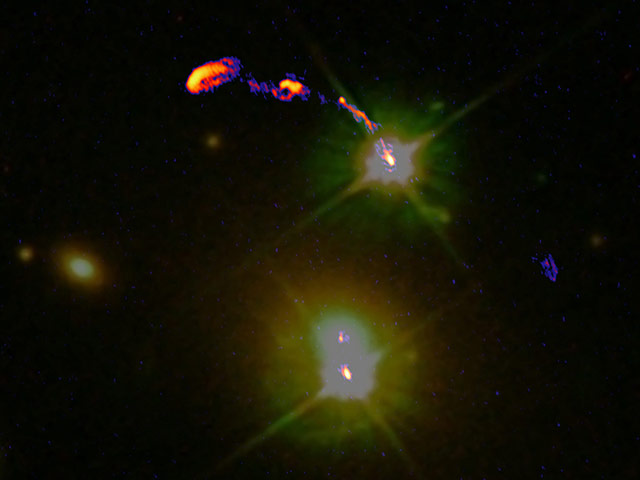
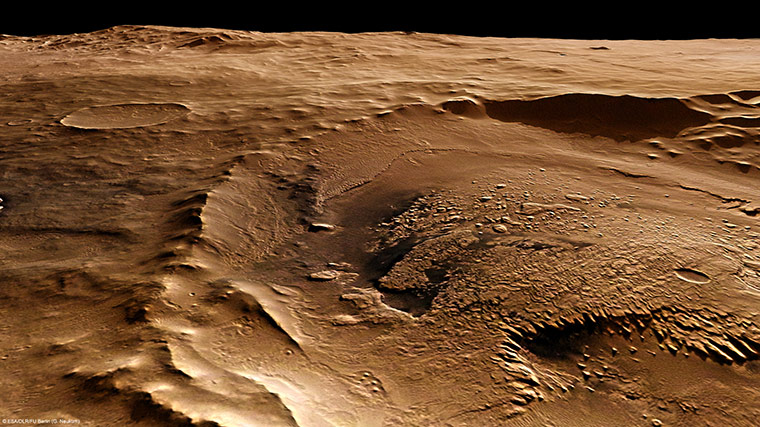
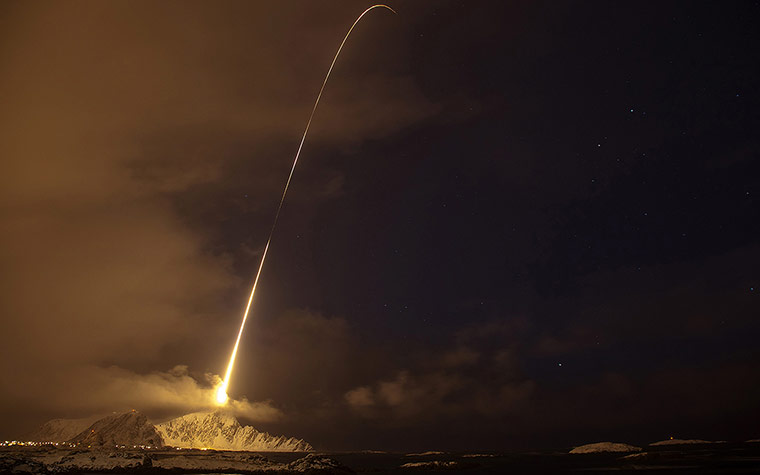
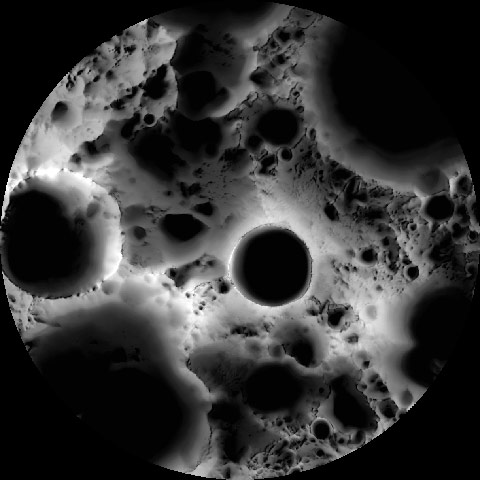
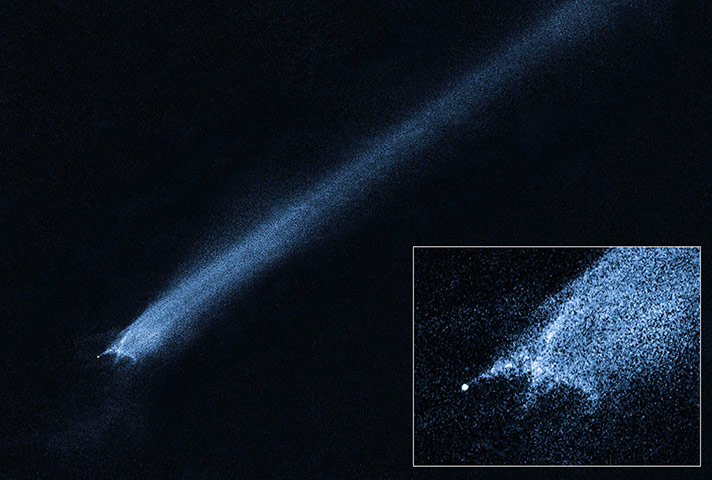
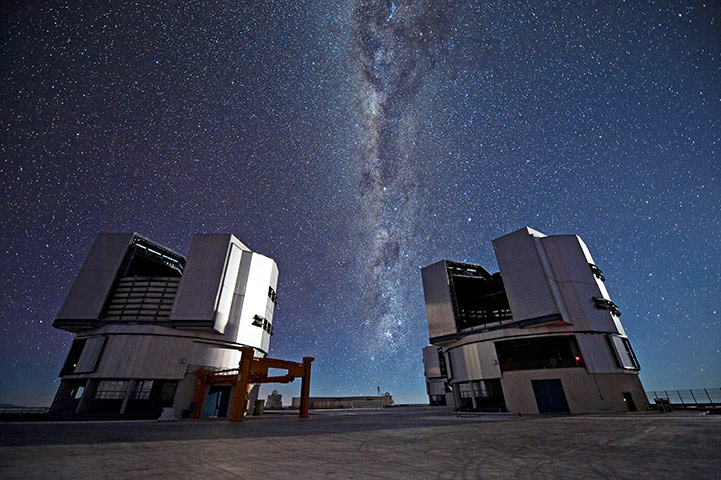
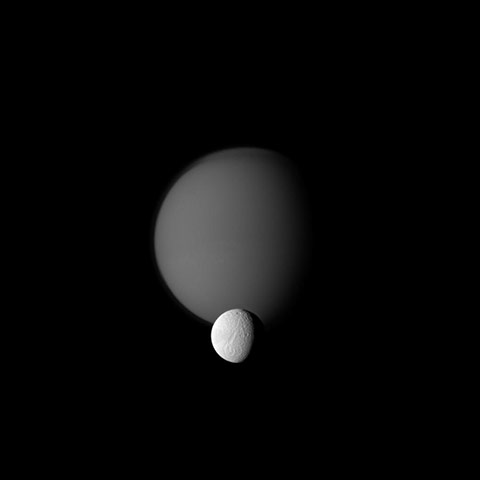
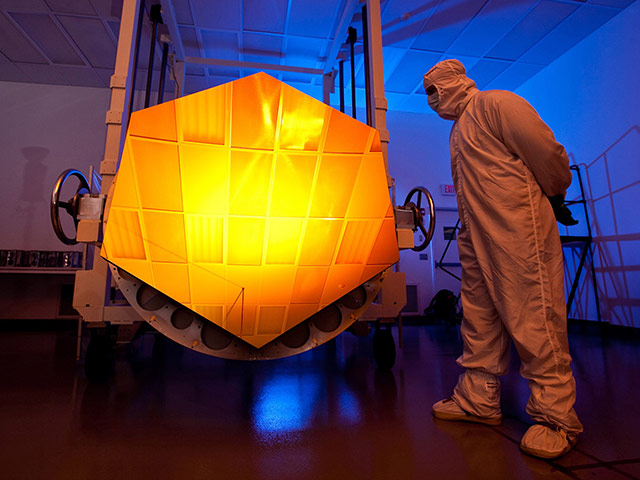
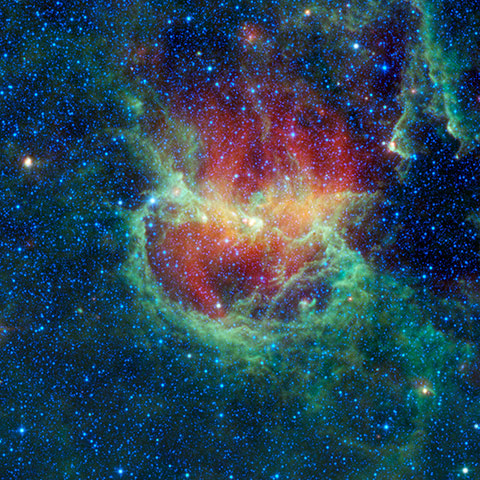
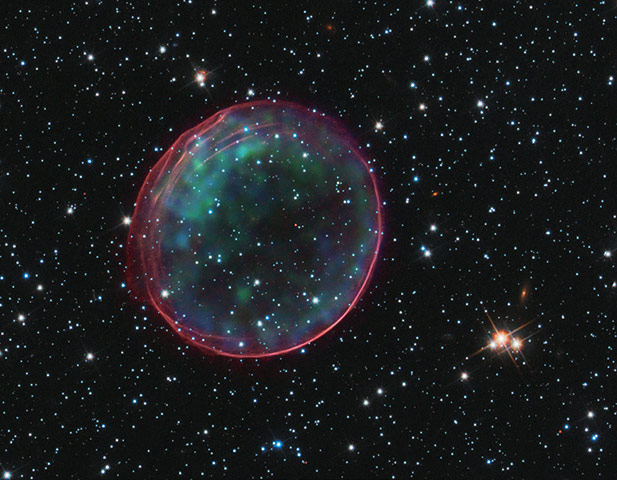
A swarm of ancient stars, one of around 150 'globular clusters' that orbit our galaxy. This one, Messier 107, was captured by the Wide Field Imager on the 2.2-metre telescope at the European Southern Observatory’s La Silla Observatory in Chile. Studying these crowds of geriatric stars helps to reveal the history of our galaxy and how stars evolvePhotograph: ESOSpaceX's Falcon 9 rocket, topped by a Dragon capsule, lifts off from Cape Canaveral in Florida on 8 December. In orbit, the Dragon spacecraft went through several manoeuvres before re-entering the atmosphere and splashing down in the Pacific Ocean about 500 miles west of the coast of Mexico. It was the first demonstration flight in Nasa's Commercial Orbital Transportation Services (COTS) programme, which will ferry cargo to the International Space Station Photograph: Tony Gray and Kevin O'Connell/NASAAn explosion of infrared light in the supernova remnant IC 443 as seen by Nasa's Wide-field Infrared Survey Explorer (Wise). When massive stars die, the explosion or supernova sends out shock waves that sweep up and heat surrounding gas and dust. This supernova happened between 5,000 and 10,000 years agoPhotograph: UCLA/JPL-Caltech/NasaThis is the first image from e-Merlin, a powerful new array of radio telescopes linked across the UK, including Jodrell Bank. The radio image is superimposed on an optical image from Hubble. It shows how the light from a quasar is bent around a galaxy in the foreground by the curvature of space. The quasar is a galaxy powered by a super-massive black hole ejecting jets of matter, one of which can be seen arcing to the left. The 'gravitational lens' produces multiple images of the same quasar – two can be seen here, one below the other, superimposed on the corresponding bright splurges of visible light seen by HubblePhotograph: University of Manchester/Jodrell Bank Centre for AstrophysicsSchiaparelli is a huge impact basin about 460km across in the eastern Terra Meridiani region of the Martian equator. This image from the European Space Agency's Mars Express orbiter is focused on a smaller, 42km crater embedded in its rim. The interior of the crater is filled with sediments etched by water and extreme windsPhotograph: FU Berlin (G. Neukum)/DLR/EsaOn 12 December a Nasa rocket carried an experiment into the aurora borealis over Andenes, Norway. Led by the University of New Hampshire Space Science Centre, it was designed to investigate the phenomenon of 'satellite drag' associated with the interaction of the solar wind and Earth's magnetic field. The flight lasted just 10 minutes but the vast quantity of data collected will take months to analysePhotograph: Kolbjørn Blix Dahle/Andøya Rocket RangeThis is a 'temporal illumination map' of the south pole of the moon, created with data from the Lunar Reconnaissance Orbiter Camera. For a full explanation, click here, but it essentially highlights regions on the moon's surface that were in permanent darkness over a six-month period (six lunar days) Photograph: Arizona State University/GSFC/NasaThis Hubble image is thought to show the aftermath of a head-on collision between two asteroids each travelling five times faster than a rifle bullet (about 5 kilometres per second). At the time this image was taken, the object was approximately 140m kilometres from Earth. In December, astronomers speculated that amino acids – the building blocks of proteins – may form in the superheated gases created in asteroid collisions like this Photograph: Hubble Space Telescope/Nasa/EsaTwo of the four telescopes in the European Southern Observatory's Very Large Telescope, which is sited on a remote mountaintop 2,600 metres above sea level in the Atacama Desert, Chile. The streak of light across the sky between the two telescopes is made of billions of stars in the plane of the Milky WayPhotograph: Jose Francisco Salgado PhD/ESOSaturn's moons Titan (background) and Tethys, as seen by the Cassini space probePhotograph: JPL/NASAThe first of 80 gold-coated segments that will make up the primary mirror of the James Webb Space Telescope. The segment has been coated with an ultra-thin layer of gold to maximise the amount of infrared light reflected into the telescope's instruments. The telescope is due for launch in 2014Photograph: Drew Noel/UK Space AgencyThis image from the Wide-field Infrared Survey Explorer, or WISE, shows a star-forming cloud in our galaxy called the Lambda Centauri or 'Running Chicken' nebula (in visible light it looks a bit like a running chicken). The nebula is about 5,800 light-years from Earth and home to a new cluster of stars born from the cloud nearly 8m years ago. The hottest of these produce enough ultraviolet radiation and strong winds to ionise and excavate the cloud. The red glow is from metallic dust grains, the coolest material in this image. The greenish components are warmer dust grains. The large green ring-like structure near the middle is 77 light-years across and is formed by the combined winds of the stars in the clusters blowing back the material from which they were bornPhotograph: WISE Team/JPL-Caltech/NasaThis composite image contains data from the Chandra X-ray Observatory (green and blue) that show heated material in the centre of a shell generated by a supernova explosion in the Large Magellanic Cloud. Optical data from the Hubble Space Telescope shows the glowing pink rim, which is ambient gas being buffeted by the blast wave from the supernova. The explosion that blew this bubble would have been visible from Earth some 400 years agoPhotograph: Chandra X-ray Observatory Center/Hubble telescope/NASA/ESA
Sign up to read this article
Read news from 100’s of titles, curated specifically for you.