As U.S. coronavirus death toll tops 51,000, handful of states move toward reopening
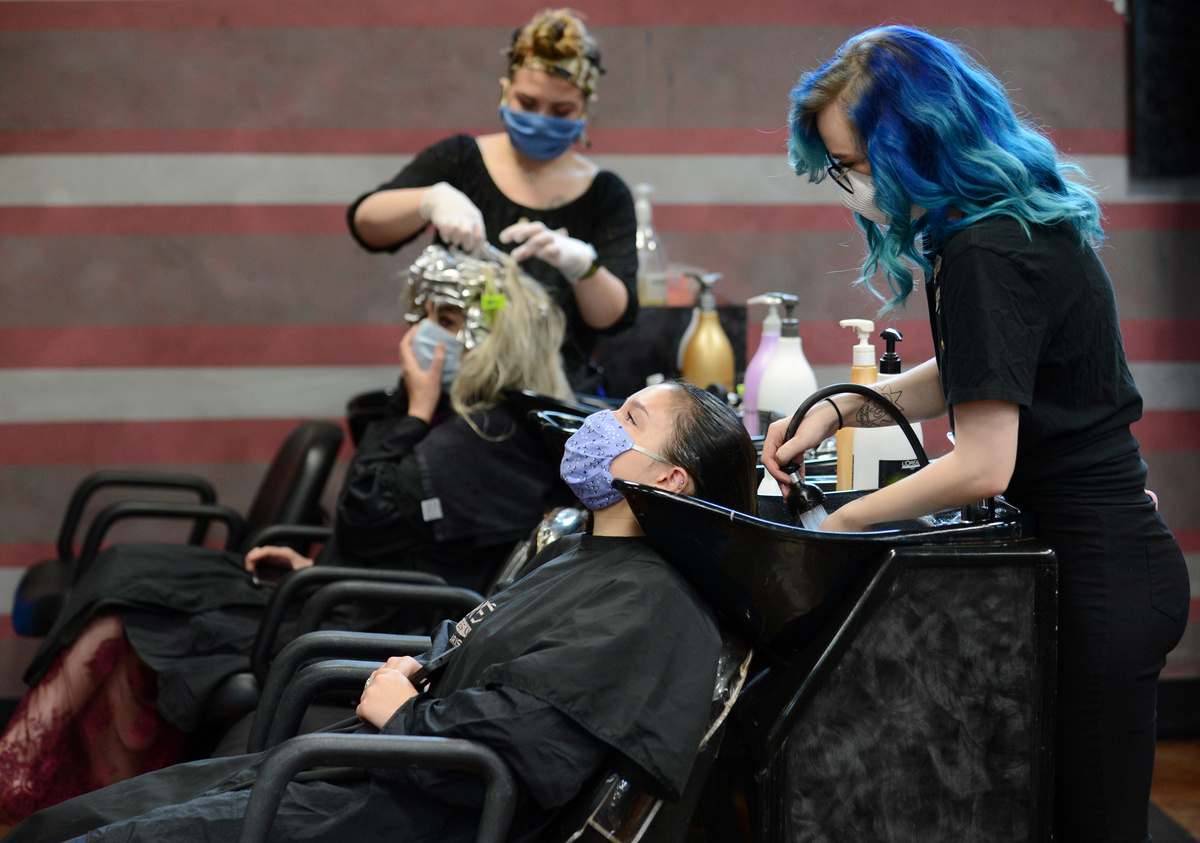
Customers have their hair shampooed at Three-13 Salon, Spa and Boutique, during the phased reopening of businesses and restaurants following the relaxing of restrictions due to the coronavirus disease (COVID-19), in Marietta, Georgia, U.S., April 24, 2020. REUTERS/Bita Honarvar
With the U.S. coronavirus death toll topping 51,000 and nearly one in six workers out of a job, Georgia, Oklahoma and several other states took tentative steps at reopening businesses on Friday, despite disapproval from President Donald Trump and medical experts.
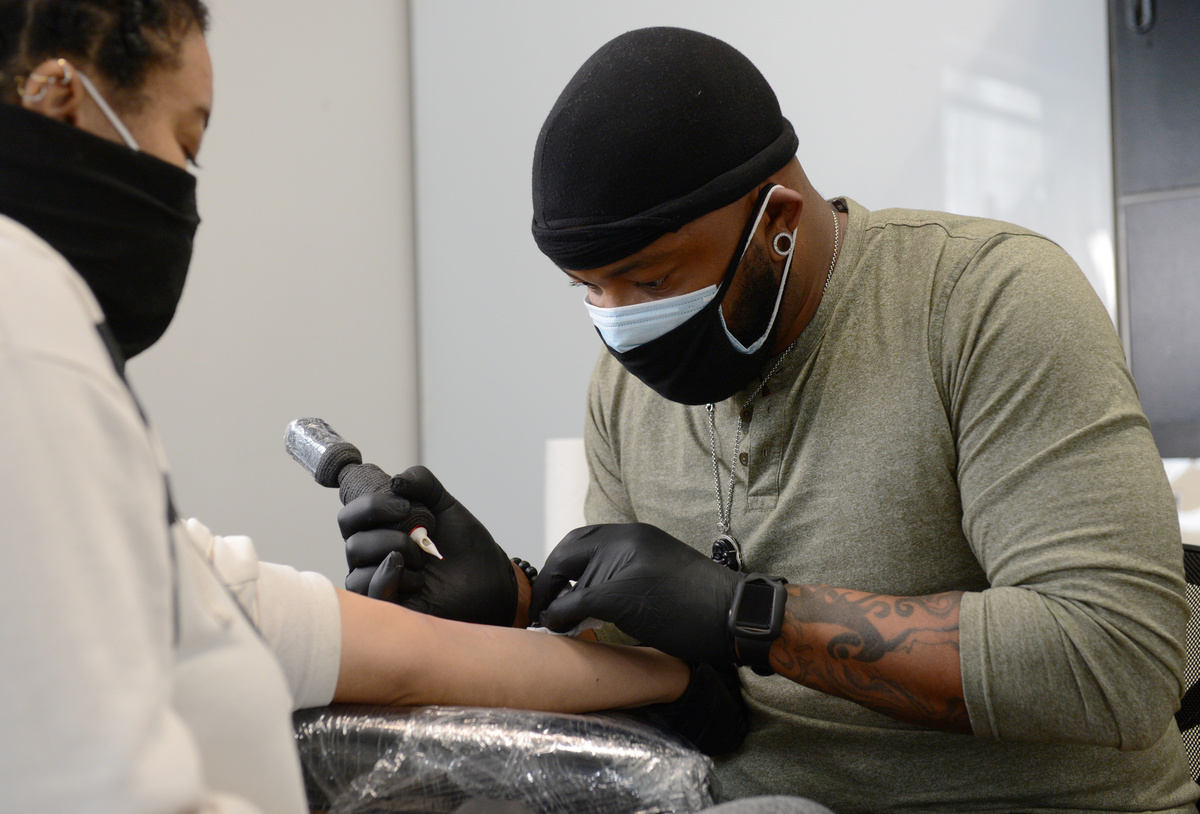
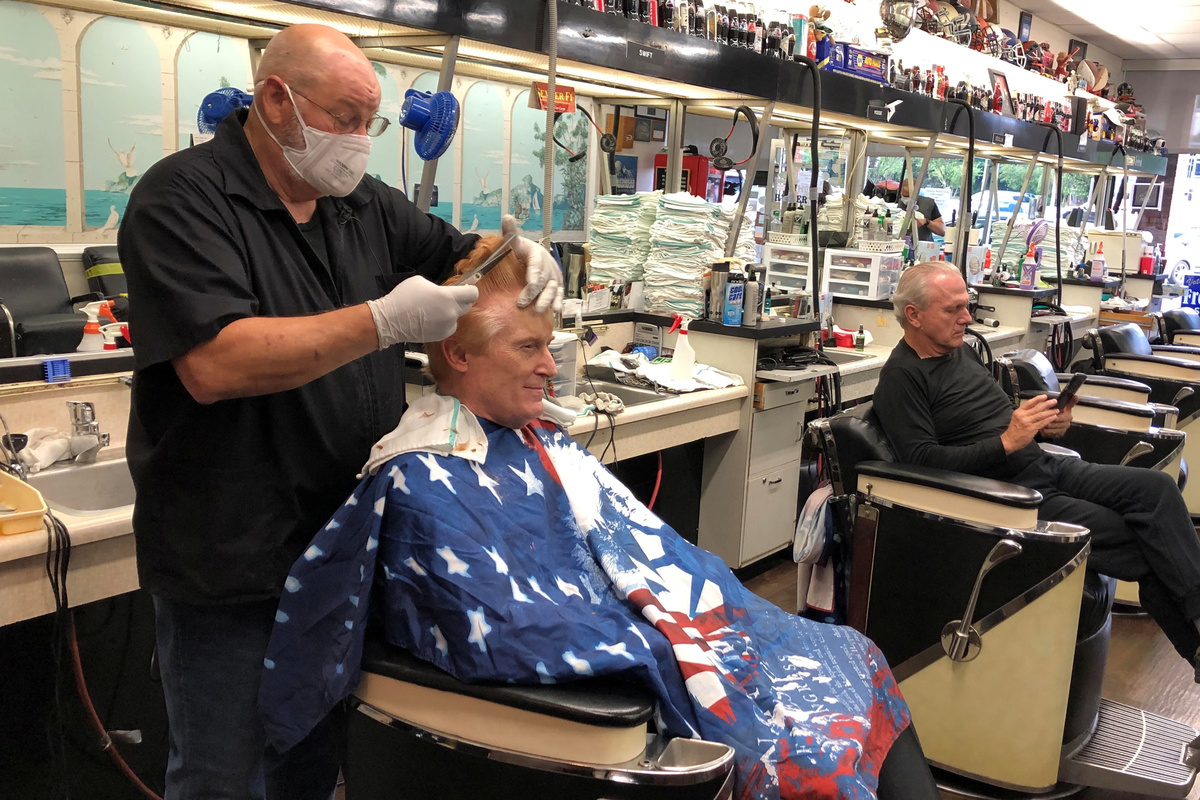
Fitness clubs, hair salons, tattoo parlors and some other workplaces were allowed to open their doors by Georgia Governor Brian Kemp, disregarding warnings from public health officials that easing restrictions too soon could lead to more infections and deaths.
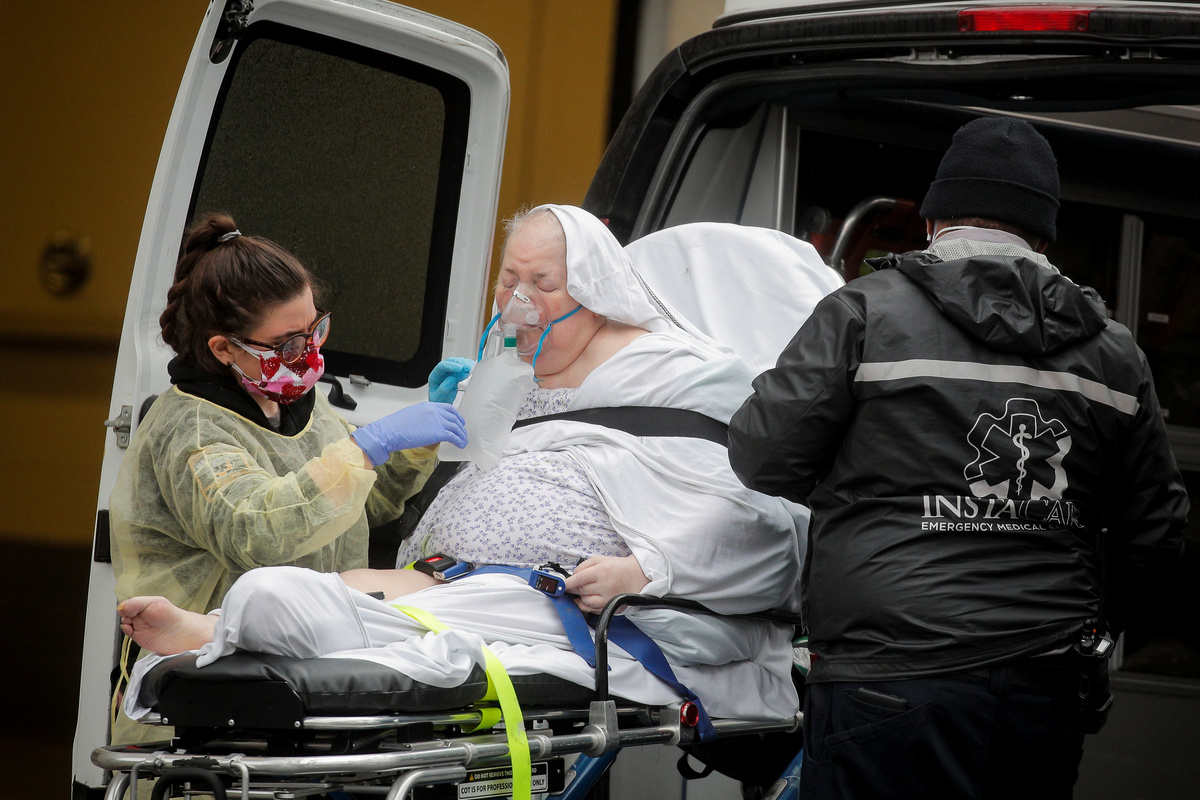
Emergency Medical Services paramedics unload a patient at NYU Langone Hospital-Brooklyn, during the outbreak of the coronavirus disease (COVID-19) in the Brooklyn borough of New York, U.S., April 24, 2020. REUTERS/Brendan McDermid
Georgia, one of several states in the Deep South that waited until early April to mandate restrictions imposed weeks before across much of the rest of the country to curb the outbreak, has become a flashpoint in the debate over how and when the nation should return to work.
While the COVID-19 illness is killing thousands of Americans daily, stay-at-home orders and business closures have thrown more than 26 million people out of work, a level of unemployment not seen since the Great Depression of the 1930s.
"We've been hurting real bad," said Lester Crowell, co-owner and manager of the Three-13 hair salon in suburban Atlanta, which reopened after 33 days. "I had to dip into my own bank account to keep the lights on here."
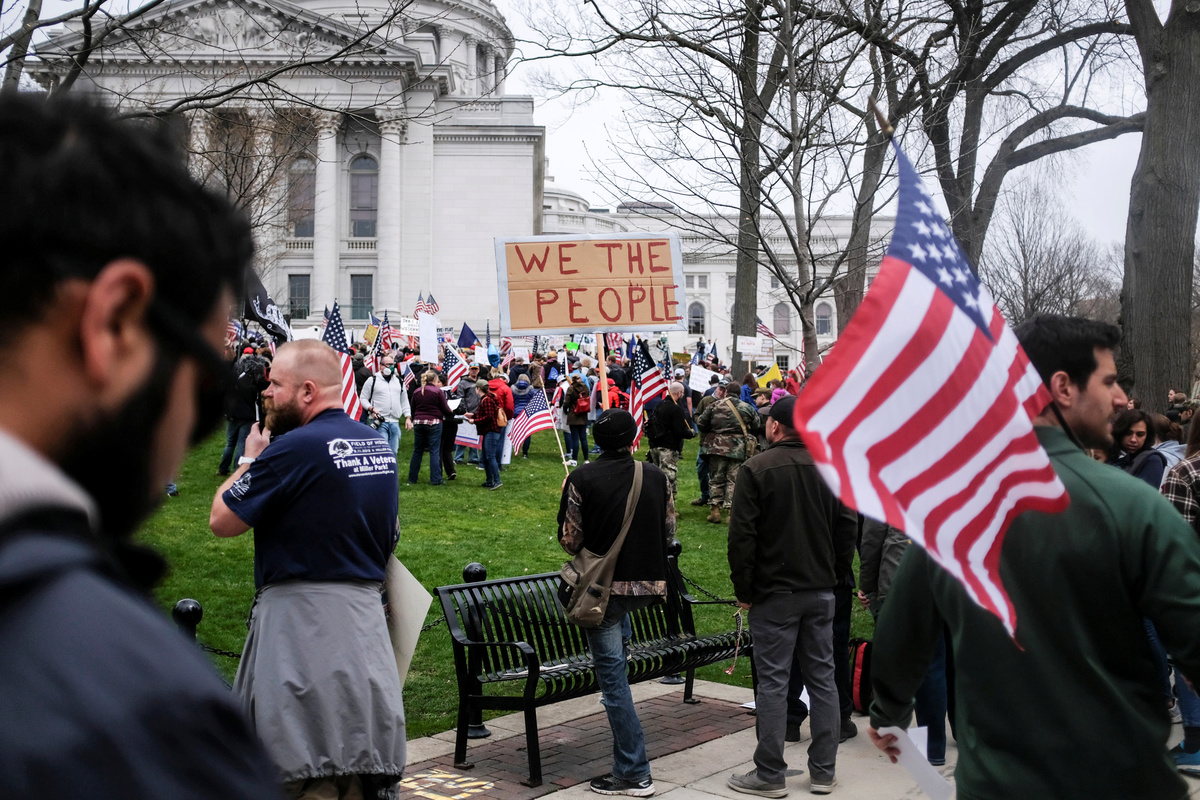
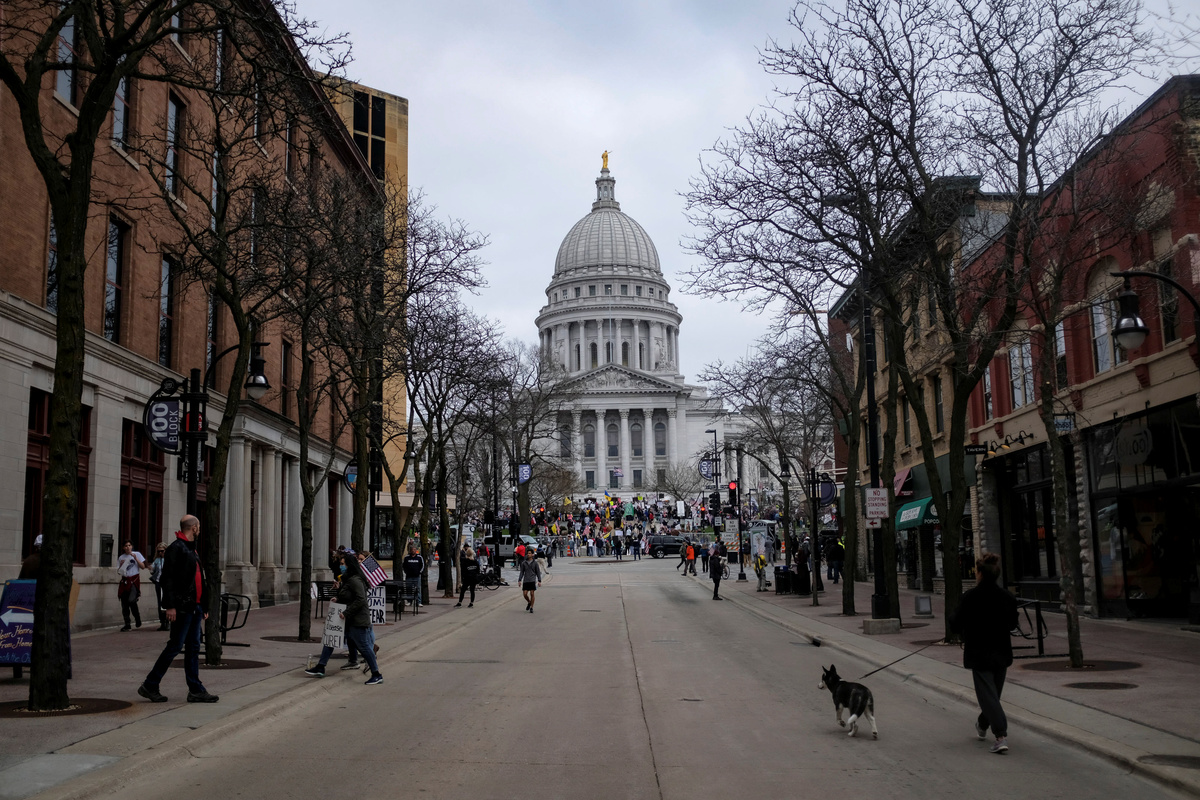
Protesters against the state's extended stay-at-home order to help slow the spread of coronavirus disease (COVID-19) demonstrate at the Capitol building in Madison, Wisconsin, U.S. April 24, 2020. REUTERS/Daniel Acker
A dozen customers lined up outside the salon, each standing 6 feet apart. Before they could enter, staff members took their temperatures and asked if anyone had a cough, a recent fever or a housemate who had been sick or quarantined.
Despite the lost revenue, not all eligible merchants in Georgia jumped at the chance to resume business. Shay Cannon, owner of Liberty Tattoo in Atlanta, said he would reopen in May by appointment only and did not foresee a return to normal until June or later.
"We're just watching the numbers and doing what seems right to us," Cannon told Reuters.
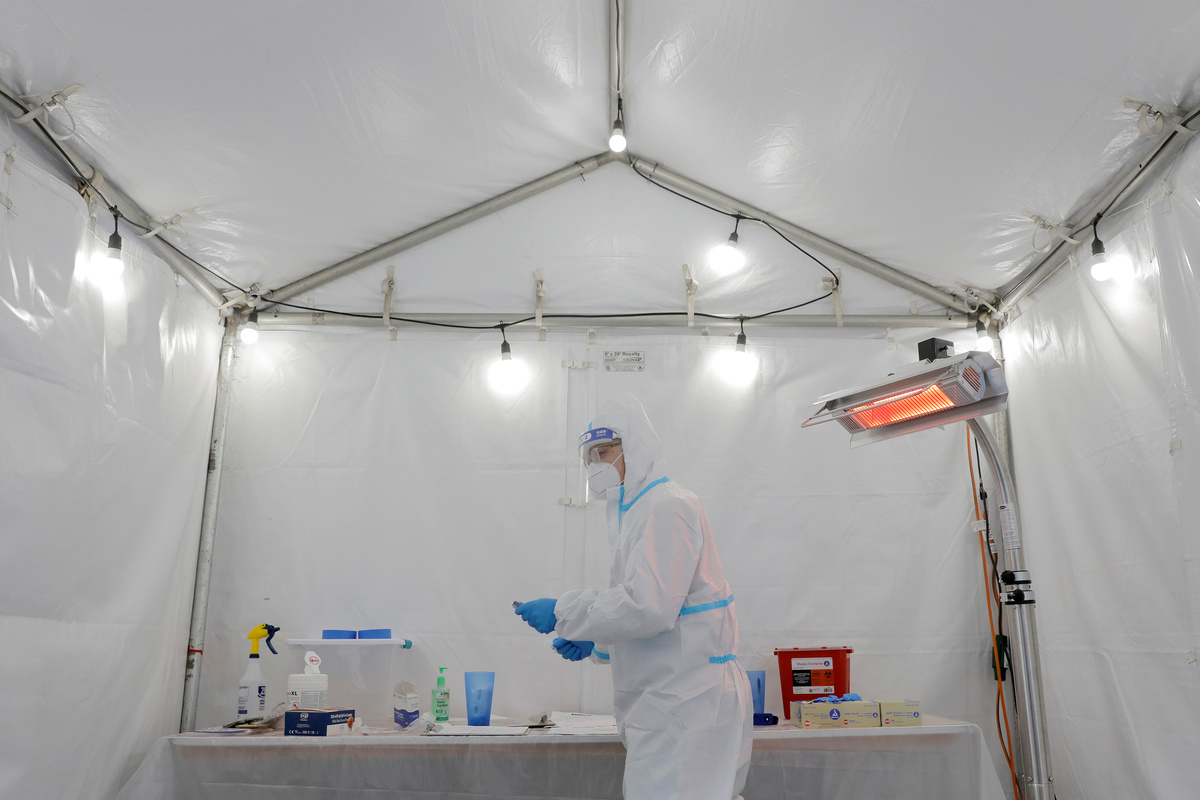
A healthcare worker is seen at a SOMOS Community Care COVID-19 antibody walk-in testing site during the outbreak of the coronavirus disease (COVID-19) in Brooklyn, New York City, New York, U.S., April 24, 2020. REUTERS/Andrew Kelly
The U.S. death toll from COVID-19, the highest in the world, surpassed 51,000 on Friday, having doubled in 10 days, according to a Reuters tally, and the number of Americans known to be infected surpassed 900,000.
OTHER STATES REOPENING
Georgia was not alone in reopening.
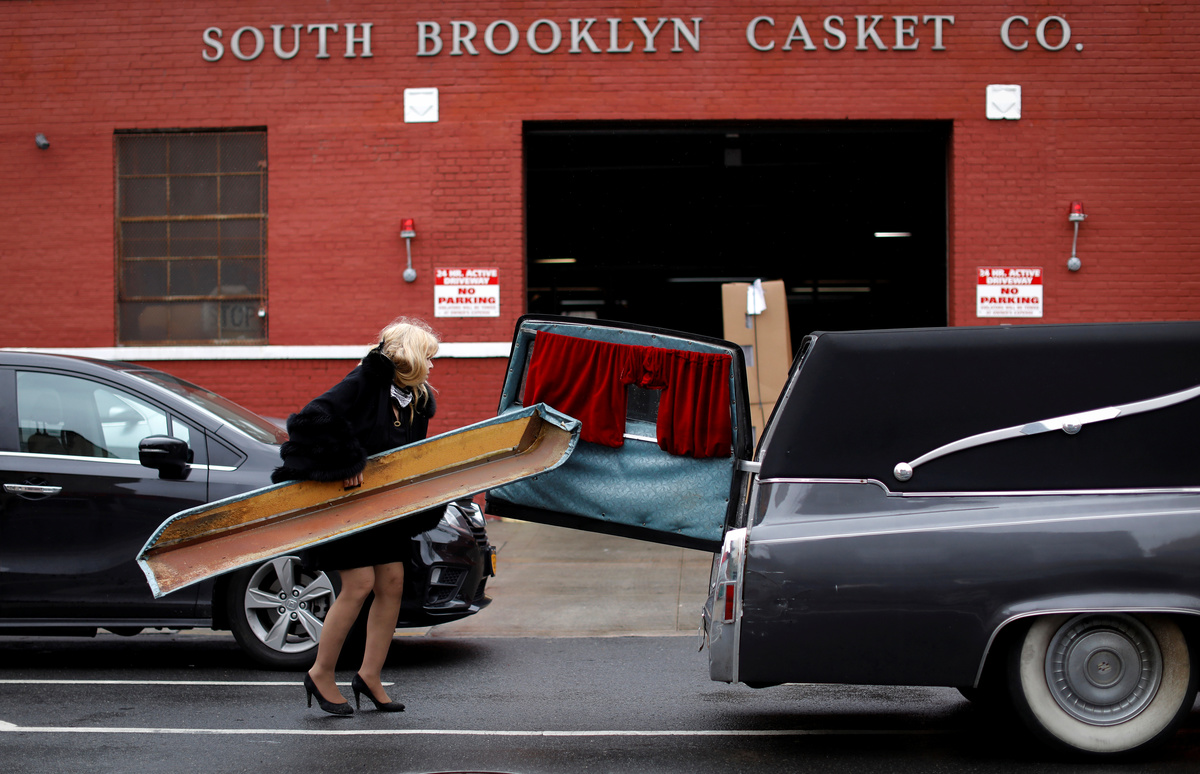
Doris V. Amen, the owner of the Jurek-Park Slope Funeral Home in Brooklyn, prepares to load caskets from the Brooklyn Casket Co. into her 1978 Superior Classic Cadillac hearse for funerals during the outbreak of the coronavirus disease (COVID-19) in New York City, New York, U.S., April 24, 2020. REUTERS/Mike Segar
Oklahoma was permitting some retailers to resume business on Friday, Florida began reopening its beaches a week ago, South Carolina started easing restrictions on Monday, and other states will follow suit next week.
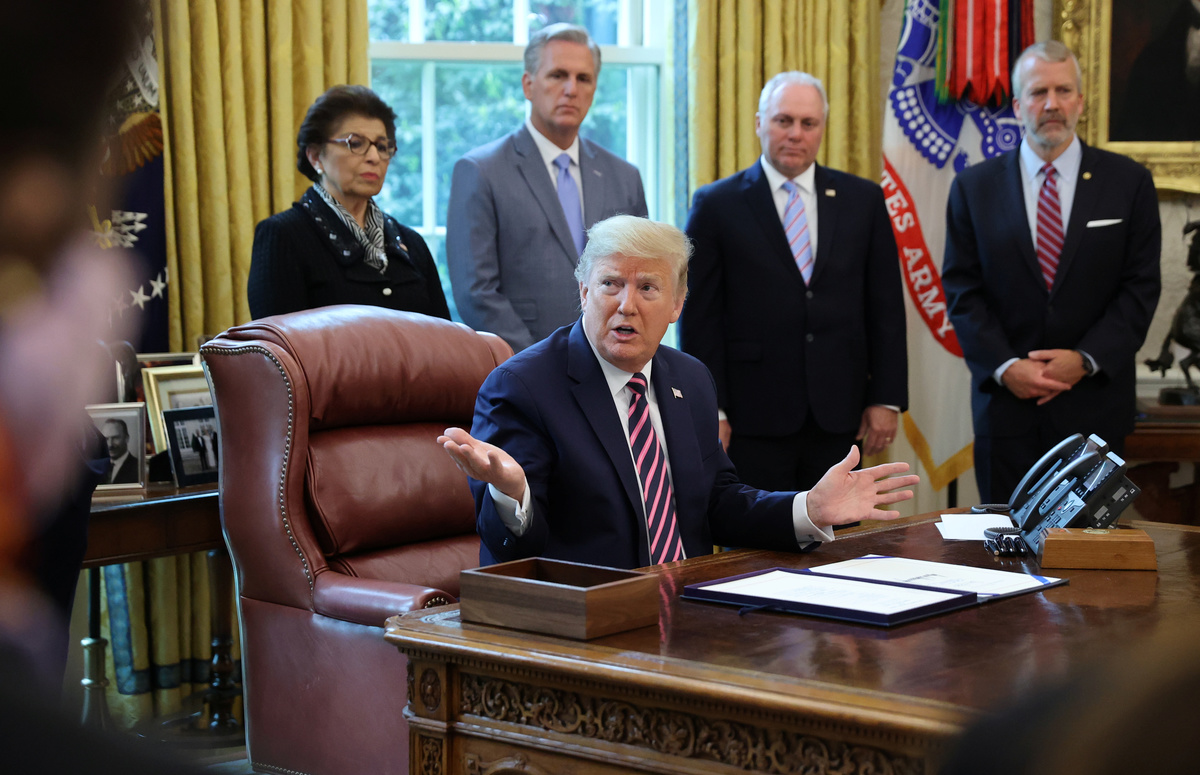
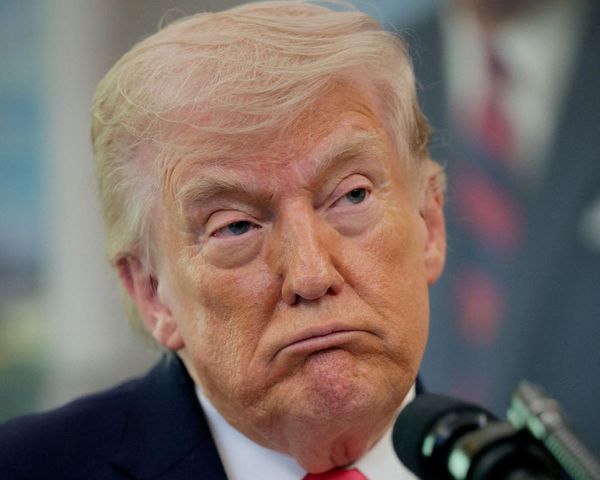
Trump, who had staked his November re-election on the nation's booming economy before the pandemic, has given mixed signals about when and how the country should begin to get back to work.
Last Friday, a day after the White House issued federal guidelines urging a gradual, cautious approach advocated by health experts, he called for several Democratic governors to "liberate" their states from economic restrictions. But in a reversal this week, he publicly criticized fellow Republican Kemp's moves to reopen Georgia.
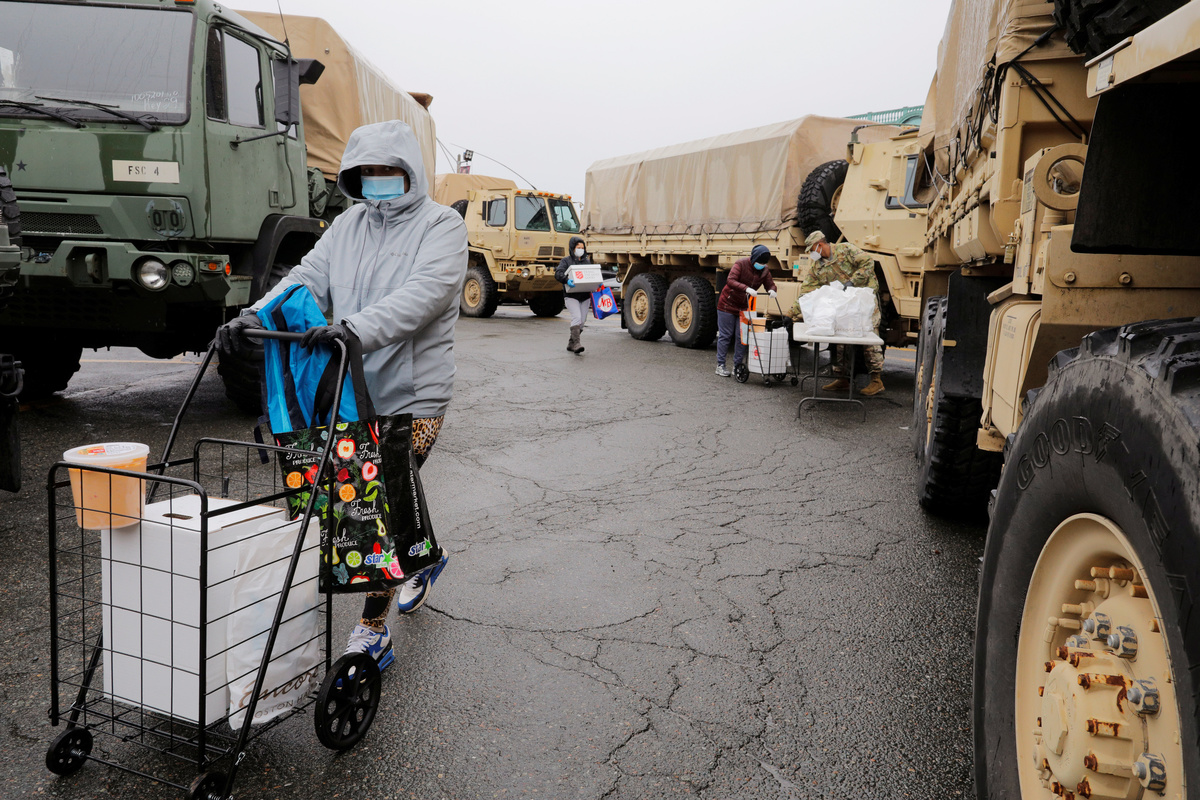
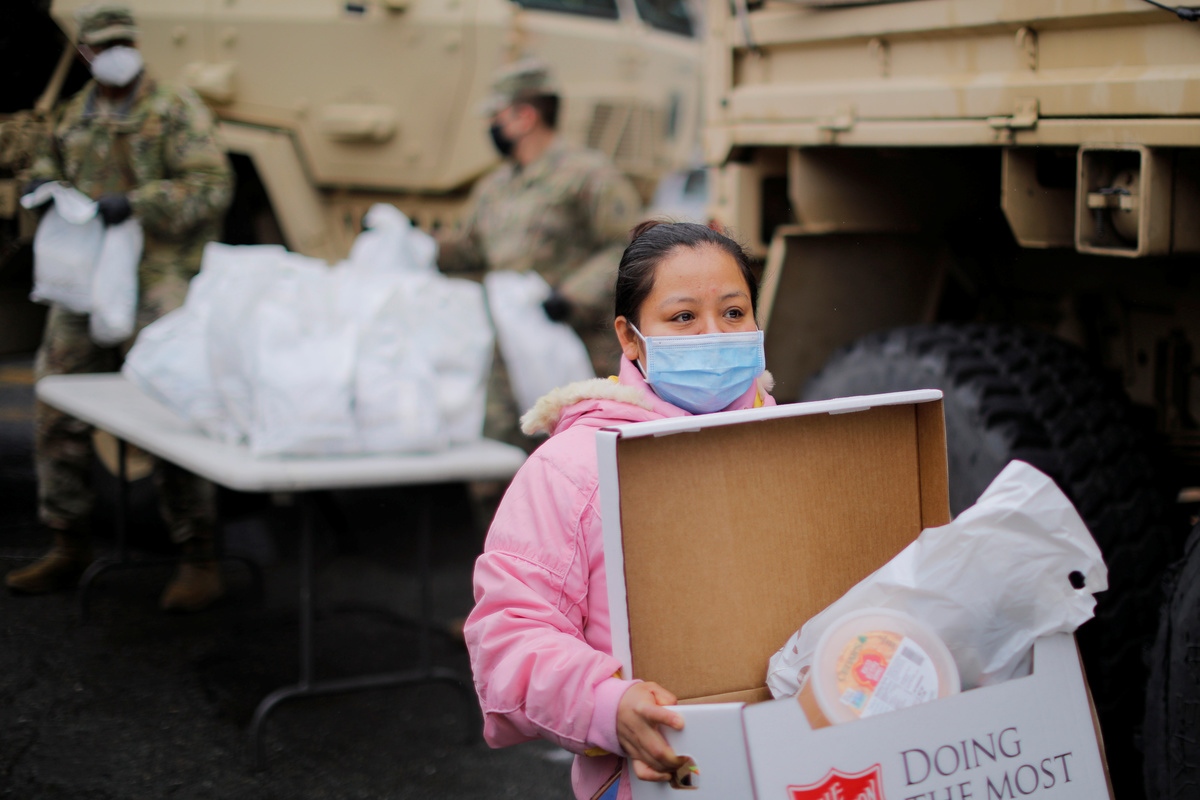
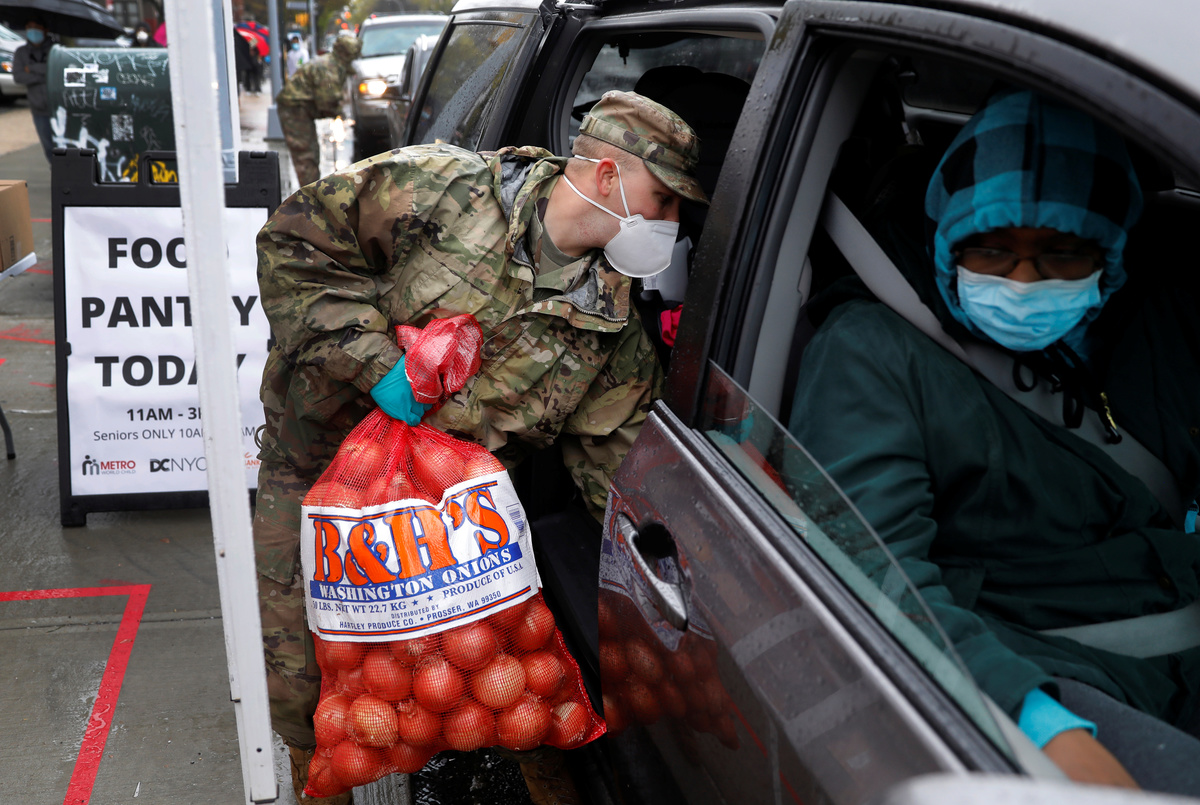
Residents pick up free groceries distributed at a pop-up food pantry by the 101st Engineer Battalion of the Massachusetts Army National Guard amid the coronavirus disease (COVID-19) outbreak in Chelsea, Massachusetts, U.S., April 24, 2020. REUTERS/Brian Snyder
Late on Thursday, Trump sparked fresh confusion over prospects for COVID-19 treatments, suggesting scientists should investigate whether patients might be cured by ingesting disinfectants or being bathed in ultraviolet light.
The comments prompted doctors, health experts and manufacturers of bleach to warn the public not to drink or inject disinfectant. On Friday, Trump said his remarks were meant as sarcasm.
U.S. Representative Doug Collins, a Georgia Republican, said restarting commerce on Friday was sending mixed messages.
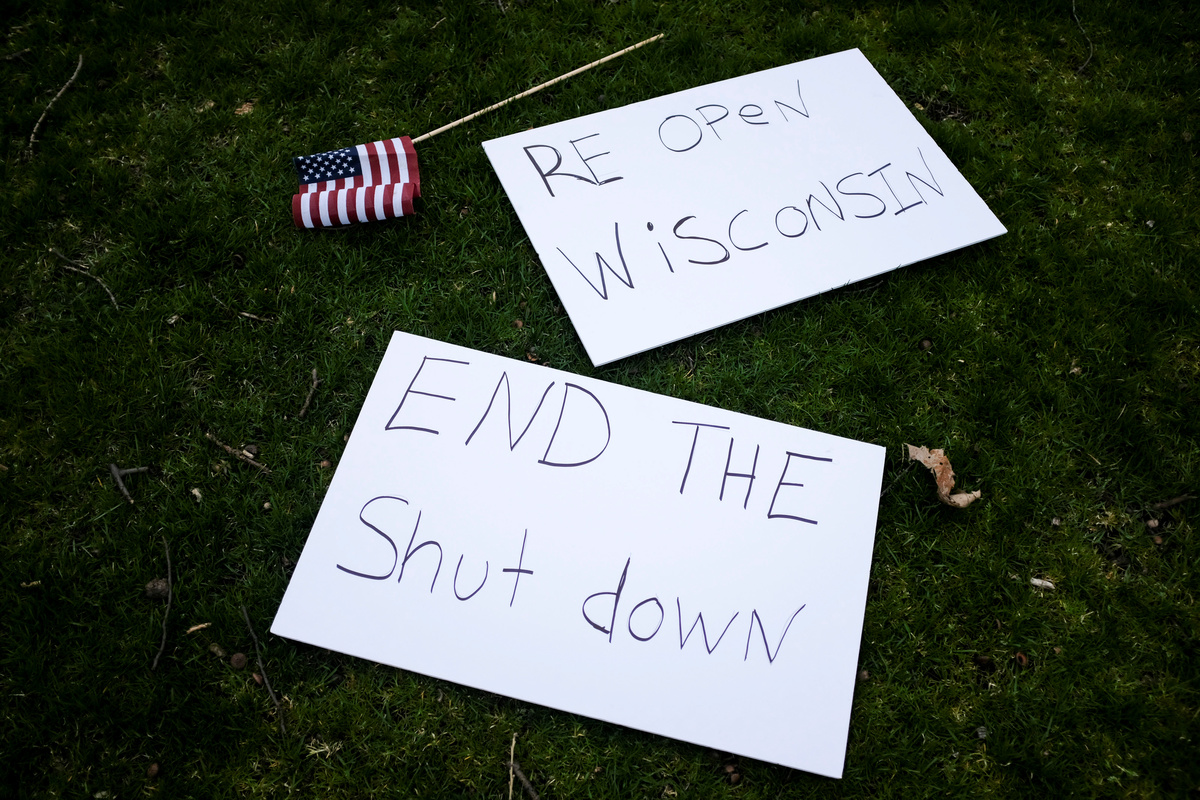
Signs lay on the ground during a protest against the state's extended stay-at-home order to help slow the spread of coronavirus disease (COVID-19) at the Capitol building in Madison, Wisconsin, U.S. April 24, 2020. REUTERS/Daniel Acker
"Everyone's supposed to be staying home, but yet we're opening up these businesses," Collins told Fox News. He cited the guidelines calling for states to register a two-week decline in coronavirus cases before easing restrictions, and said parts of Georgia were still struggling to treat patients.
New York Governor Andrew Cuomo, whose state has been the worst hit by the virus, said reopening the economy prematurely in any U.S. state was a danger to others.
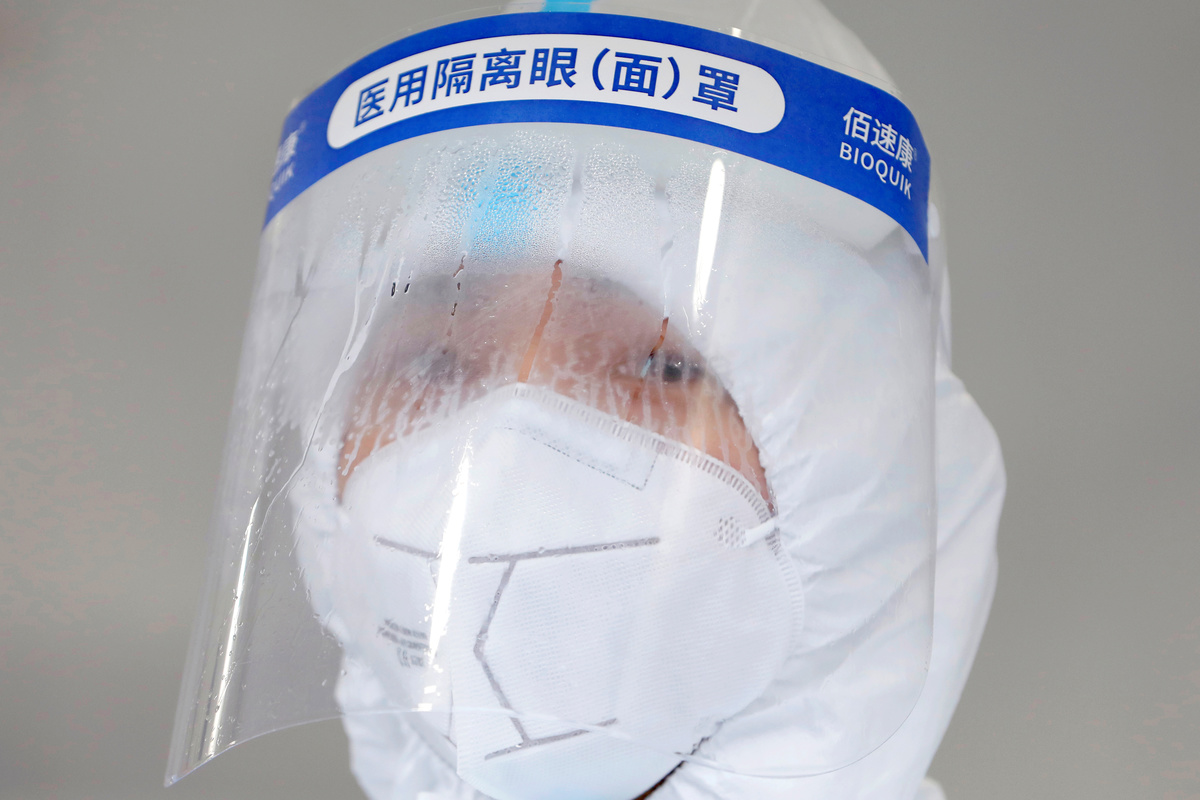
Condensation is seen on the face shield of a healthcare worker at a SOMOS Community Care COVID-19 antibody walk-in testing site during the outbreak of the coronavirus disease (COVID-19) in Brooklyn, New York City, New York, U.S., April 24, 2020. REUTERS/Andrew Kelly
PEAK HOSPITALIZATIONS
According to a University of Washington research model often cited by the White House, coronavirus hospitalizations in Georgia should peak next week.
Oklahoma, with far fewer cases and deaths than Georgia, began opening hair and nail salons and other personal care businesses on Friday. The University of Washington model predicts Oklahoma already hit its hospitalizations peak on Tuesday and could safely loosen restrictions in June.
Protesters against the state's extended stay-at-home order to help slow the spread of coronavirus disease (COVID-19) demonstrate at the Capitol building in Madison, Wisconsin, U.S. April 24, 2020. REUTERS/Daniel Acker
Tennessee reopened most of its 56 state parks on Friday.
Texas on Friday began a "retail-to-go" phase of its reopening, allowing retail shops to either deliver products to homes or letting customers wait in cars in parking lots for purchases to be handed them by store workers.
In practice, many Texas merchants have been doing this for weeks or stayed open outright, as Republican Governor Greg Abbott had classified much of the state's retail economy, including big-box stores, bike shops, dry cleaners and farmers markets, as essential businesses.
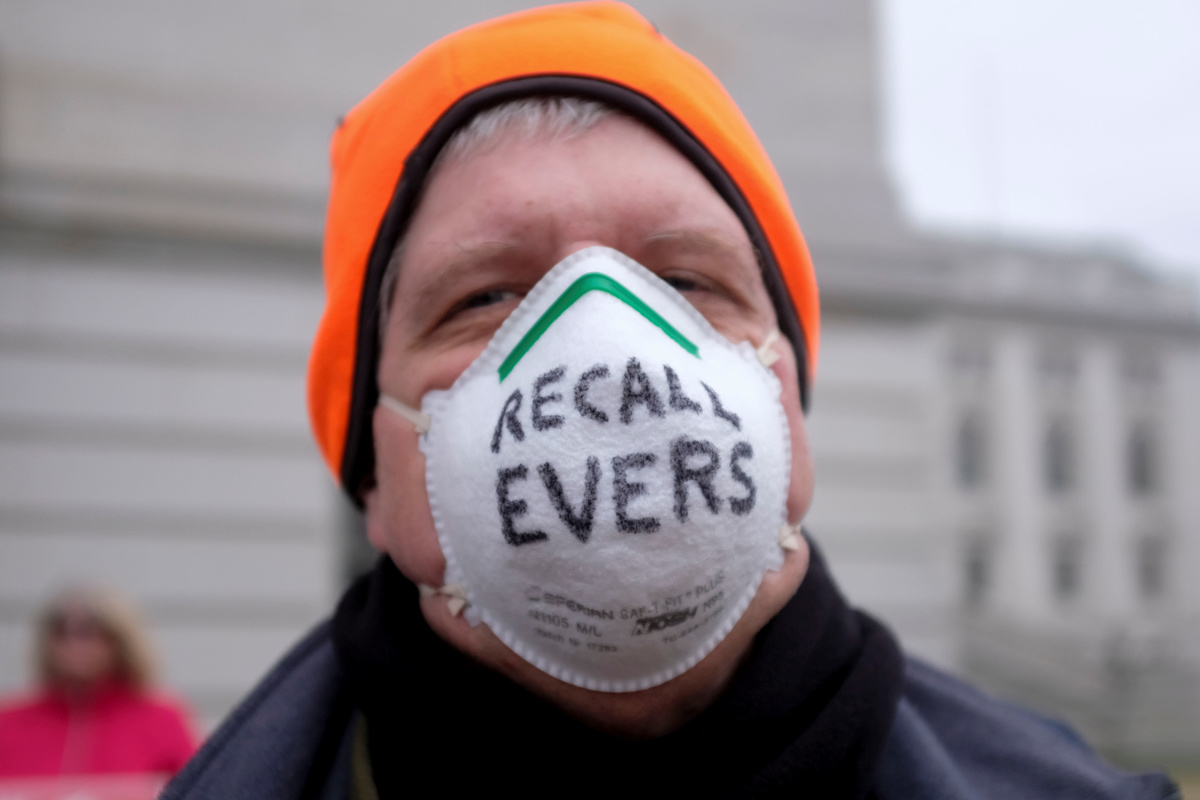
A protester wears a mask advocating for Gov. Tony Evers to be recalled from office during a demonstration against the state's extended stay-at-home order to help slow the spread of coronavirus disease (COVID-19) at the Capitol building in Madison, Wisconsin, U.S. April 24, 2020. REUTERS/Daniel Acker
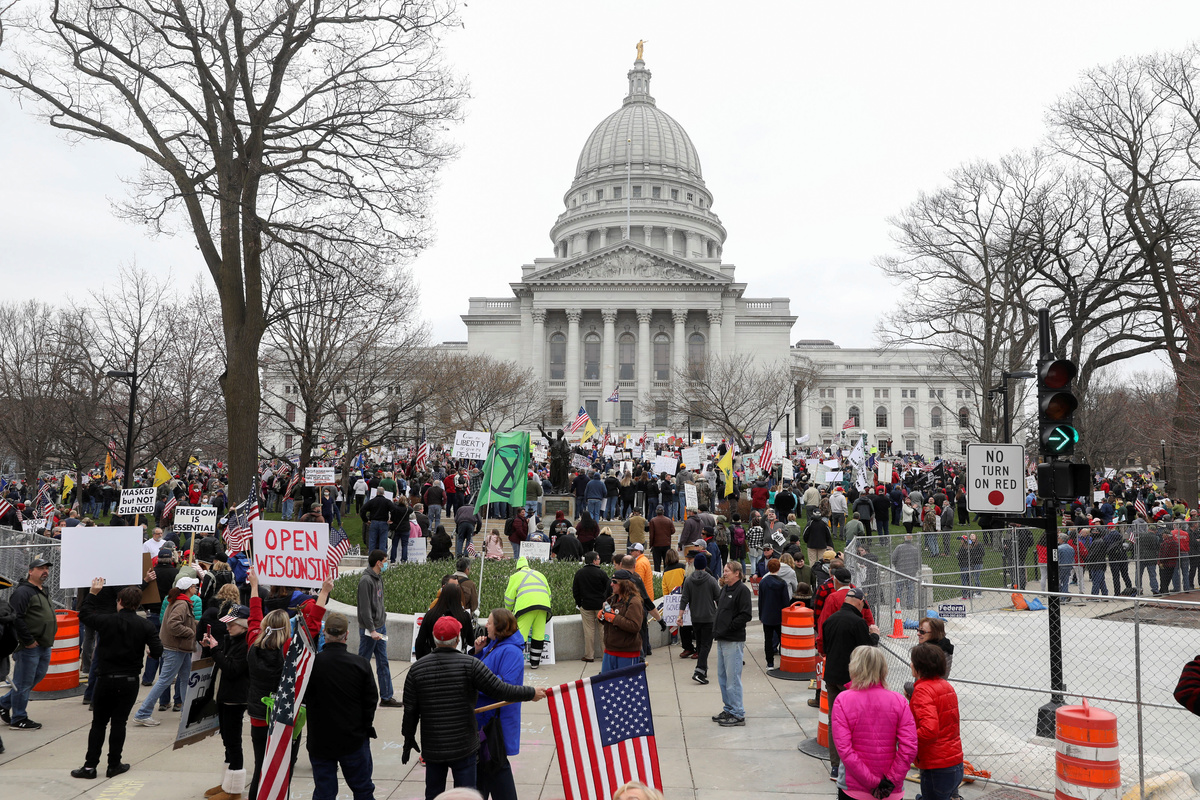
In the latest protest against the shutdowns, hundreds of people gathered on Friday outside the Wisconsin state Capitol building in Madison calling for Democratic Governor Tony Evers to reopen the state, even as it reported its largest single-day jump of new coronavirus cases.
"Stand strong, be united and stand tall and proud for America," said one of the protesters through a bullhorn. Many in the crowd wore Trump hats, waved American flags and carried "Go Back To Work" signs.
There was also a quiet counter-protest - a woman standing by a tree wearing a face mask, a bottle of hand sanitizer on her hip, holding a sign that said, "Please Go Home."
Theo McDaniel, who goes by the name Kutty, tattoos a customer's arm at Black Ink Atlanta during the phased reopening of businesses and restaurants following the relaxing of restrictions due to the coronavirus disease (COVID-19), in Atlanta, Georgia, U.S., April 24, 2020. REUTERS/Bita Honarvar
(Reporting by Rich McKay in Atlanta, Nathan Layne in Wilton, Connecticut, Susan Heavey and Jeff Mason in Washington, Brad Brookes in Austin, Shannon Stapleton in Madison and Jessica Resnick-Ault in New York; Writing by Nathan Layne and Alistair Bell; Editing by Frank McGurty, Howard Goller and Daniel Wallis)
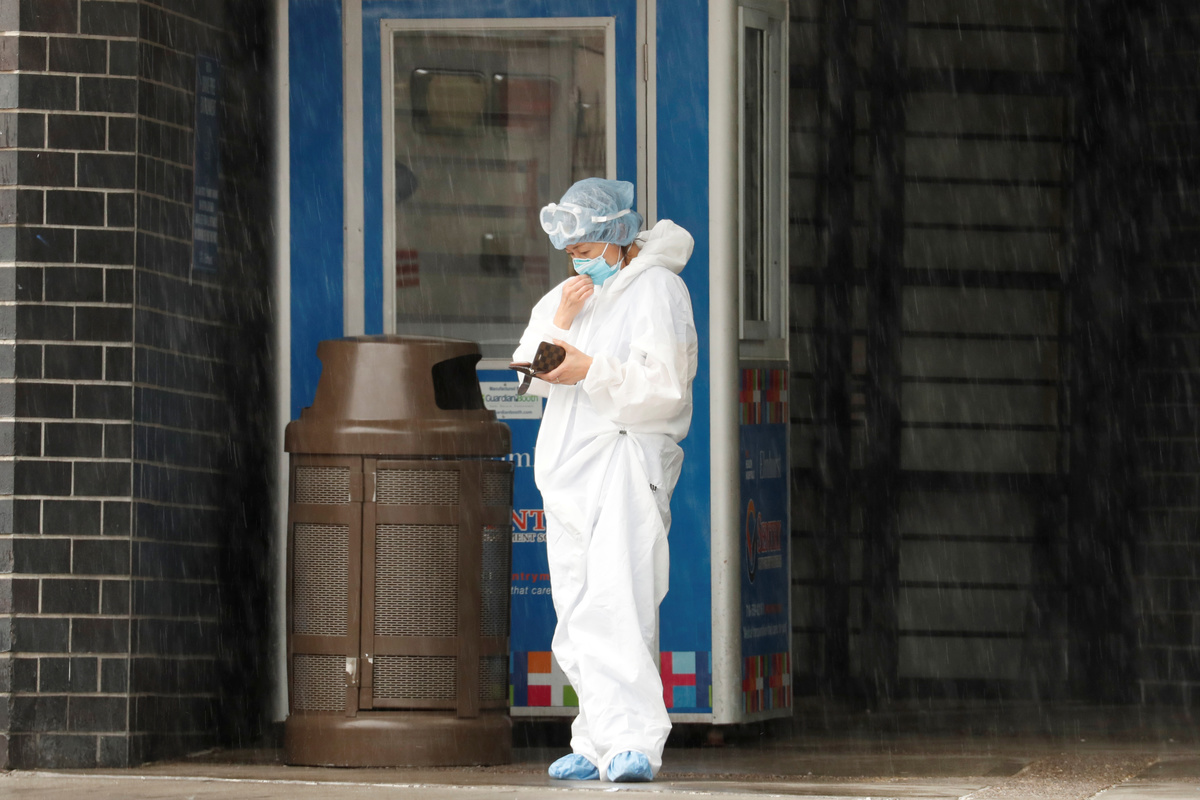
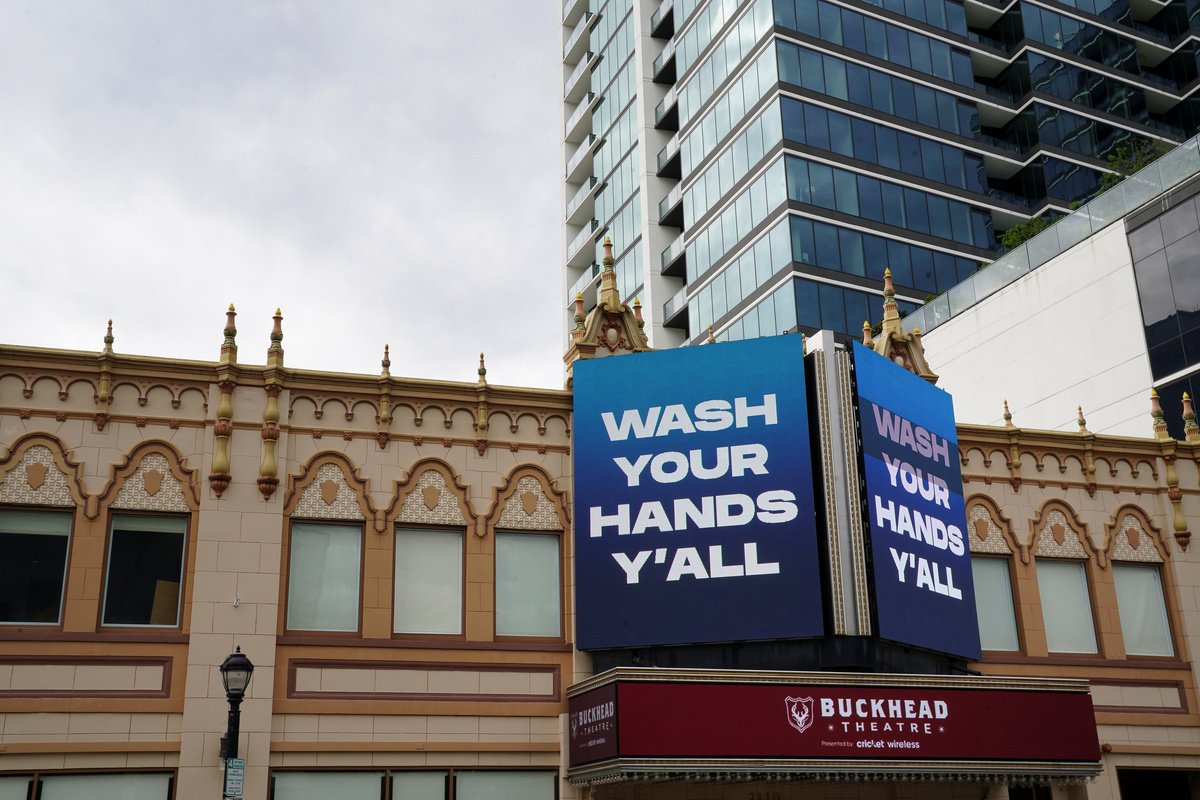
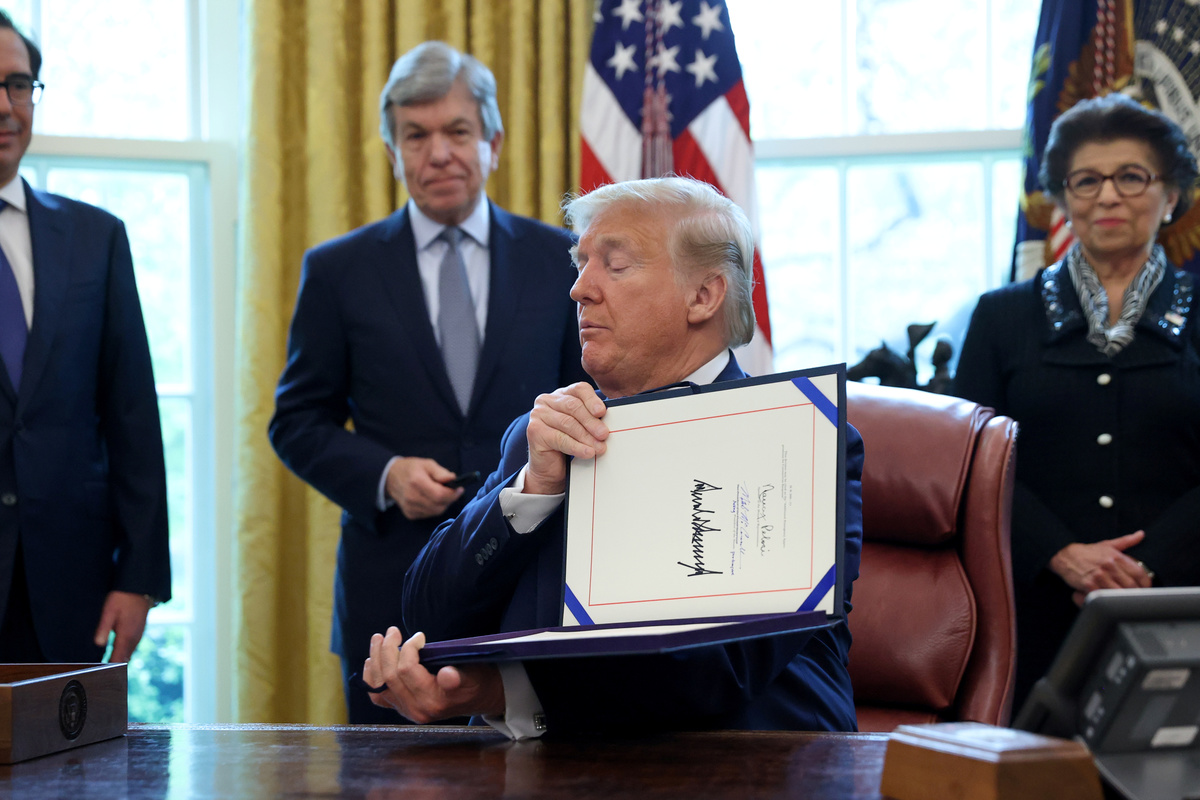
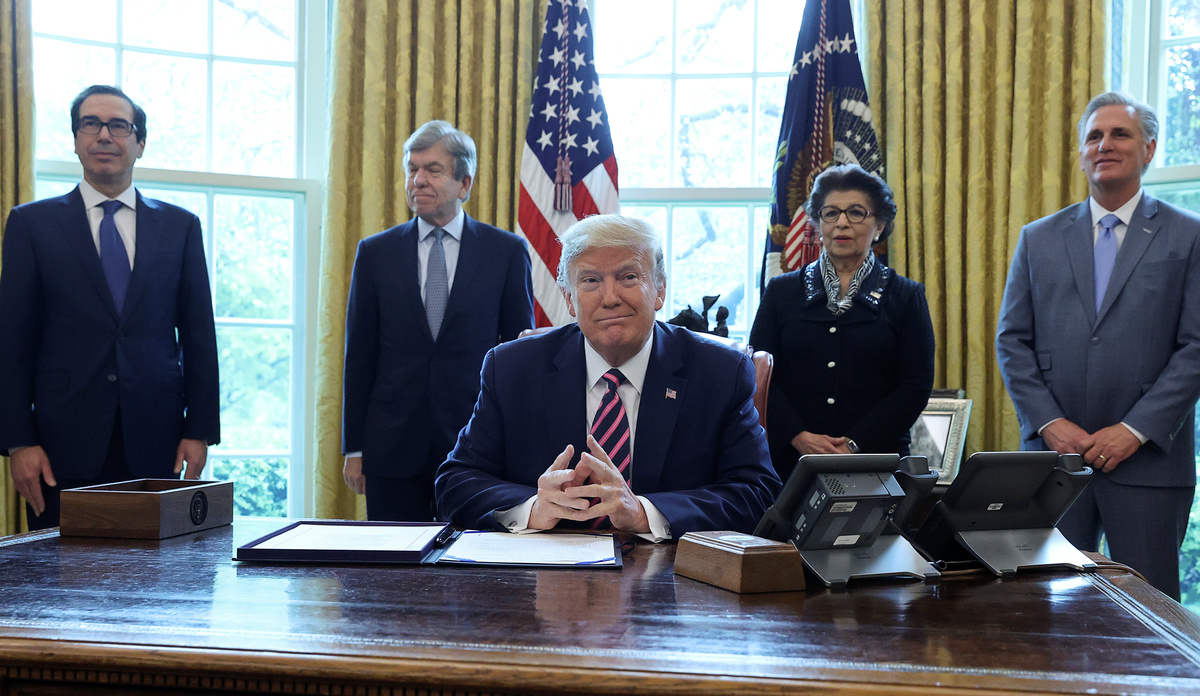
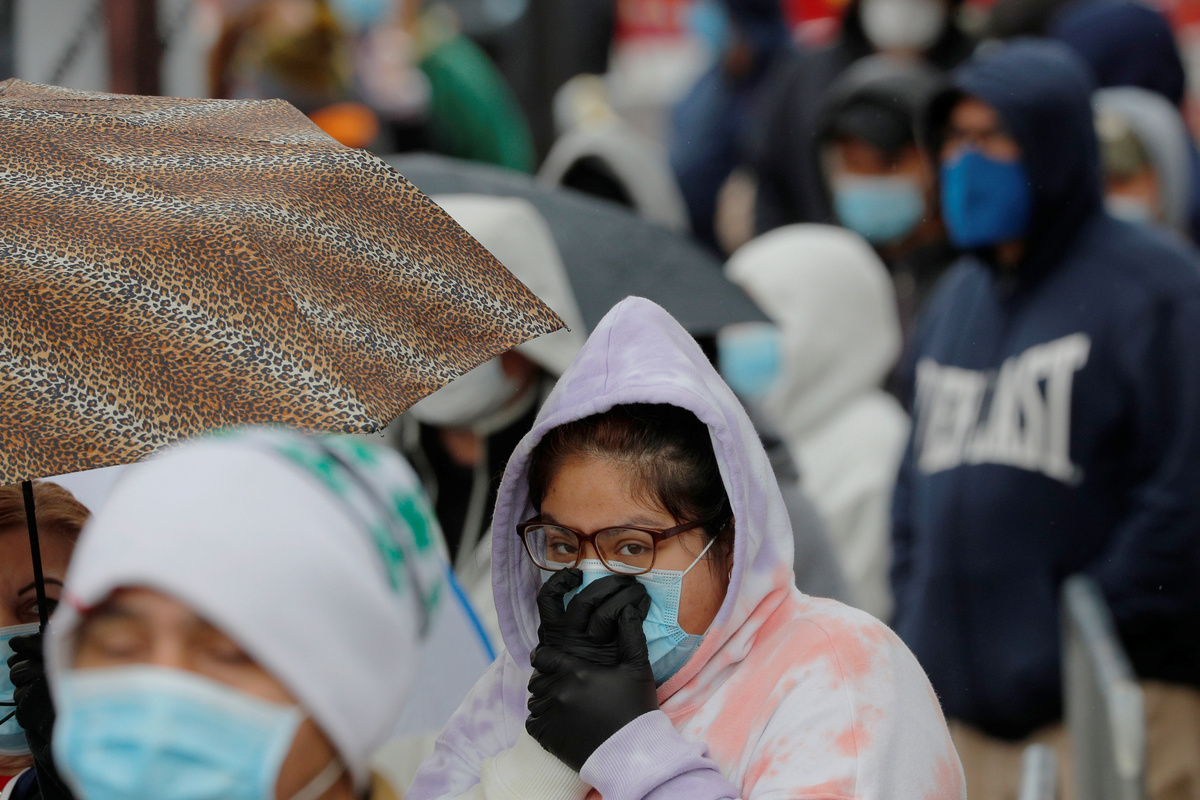
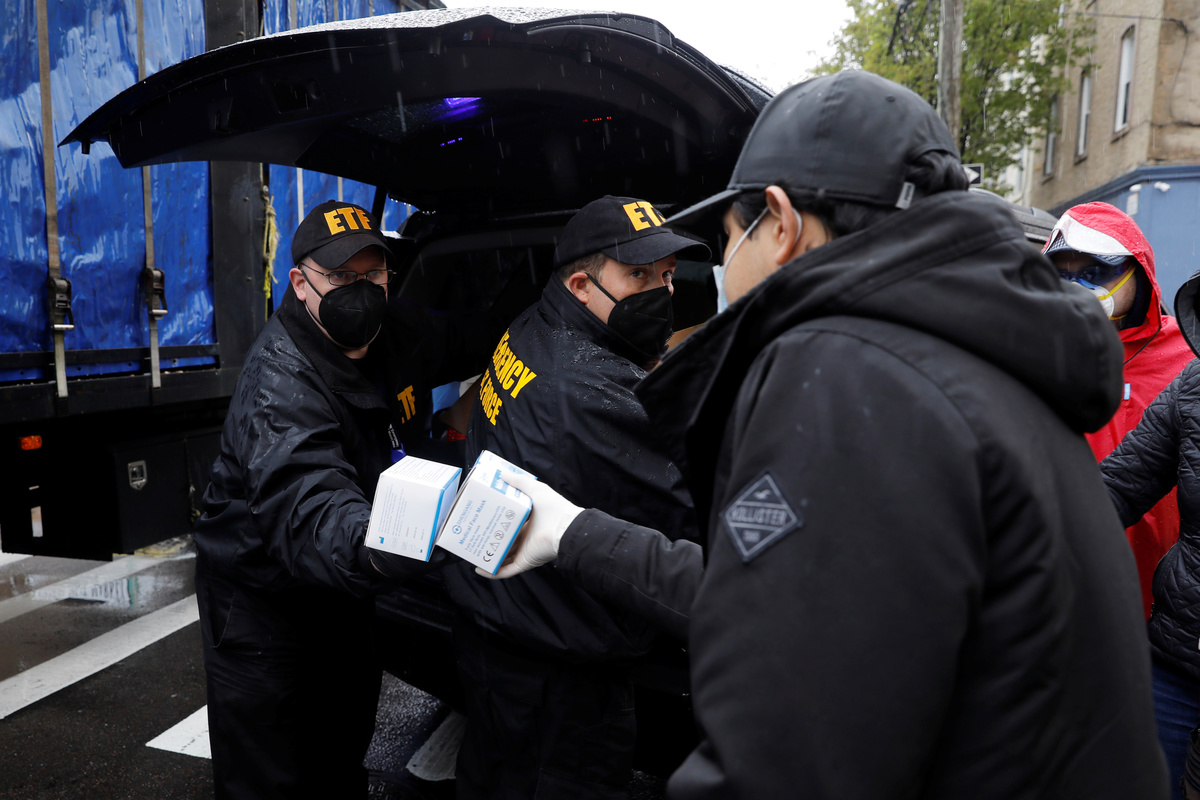
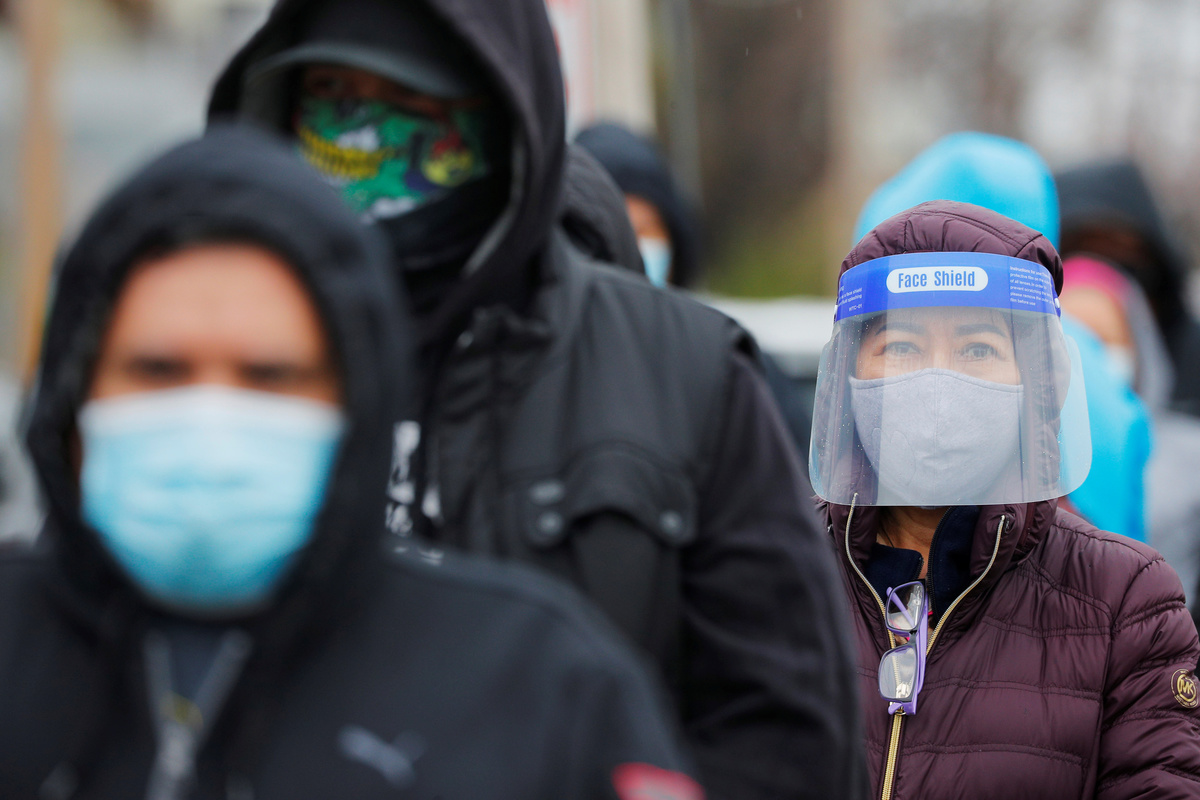
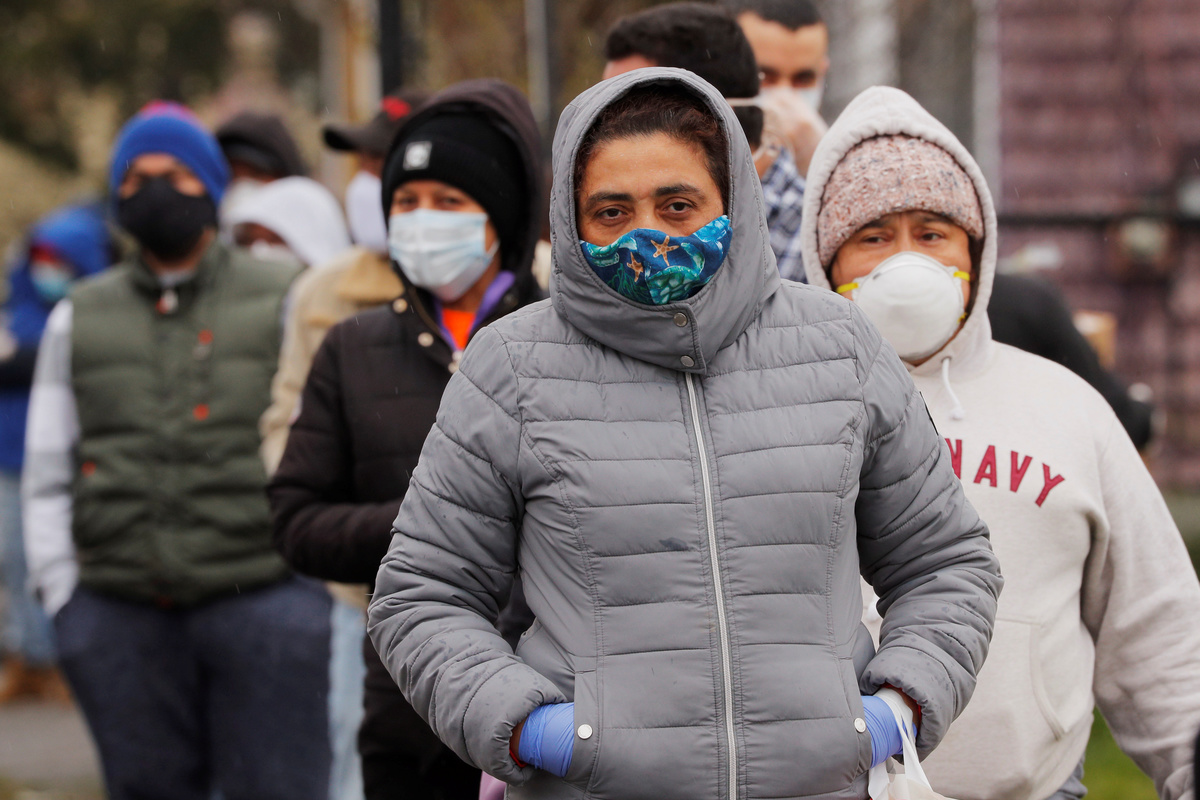
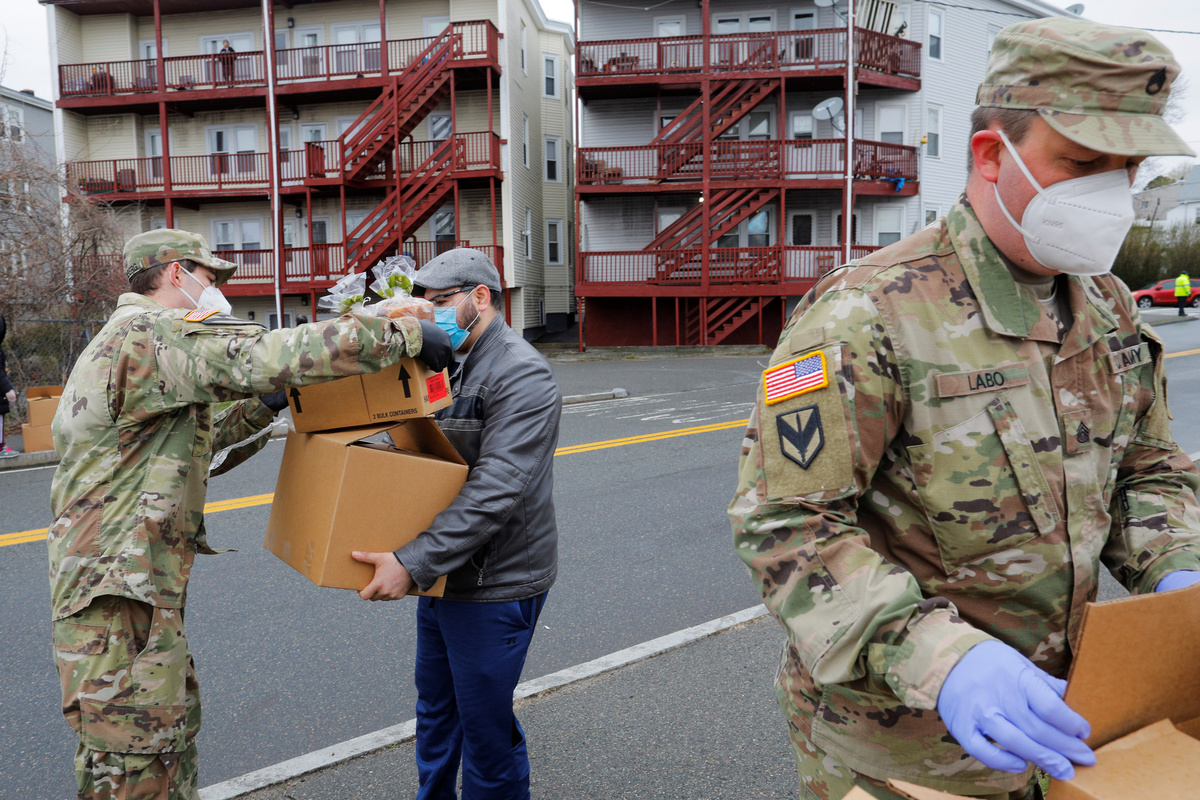
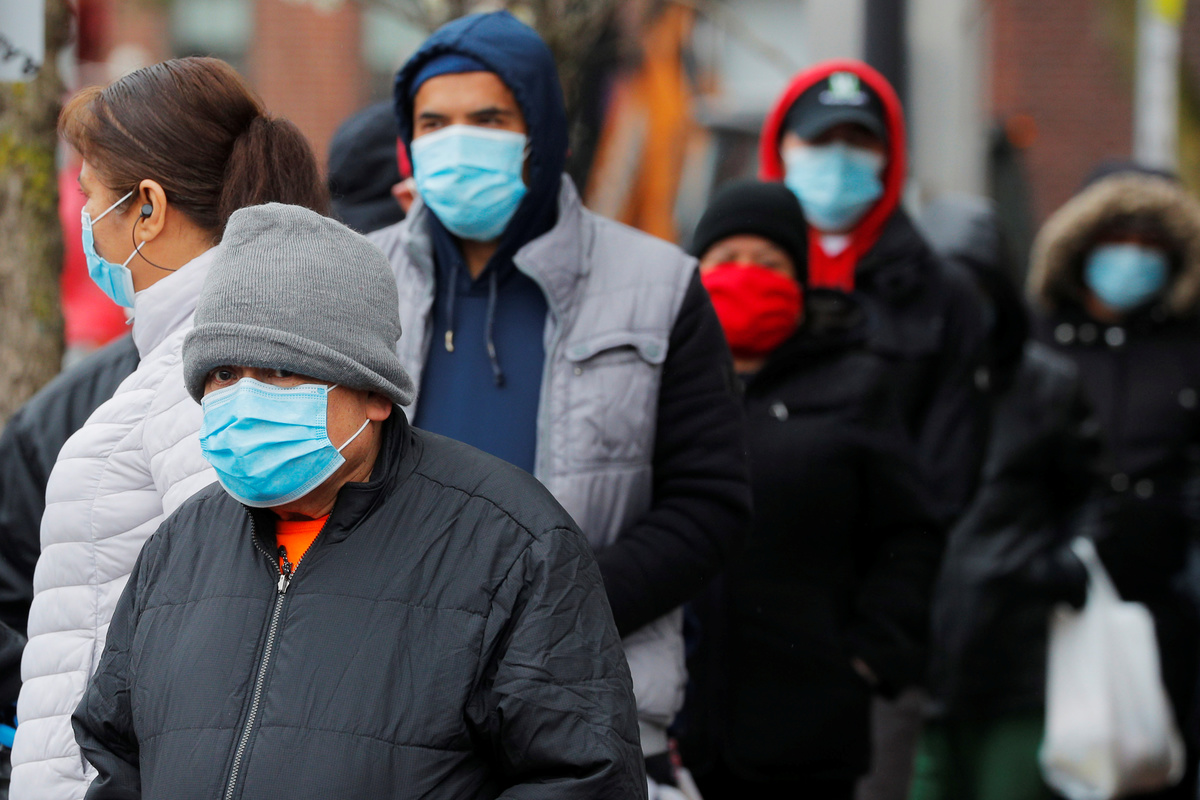
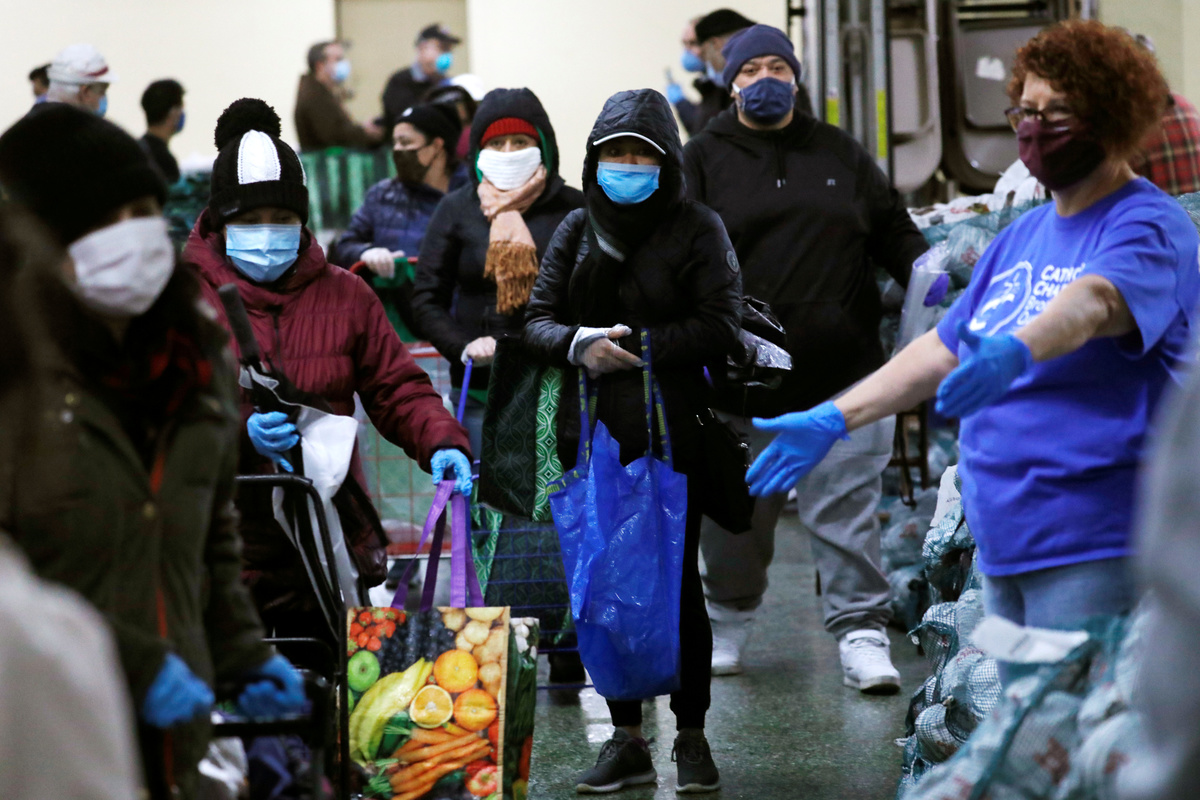
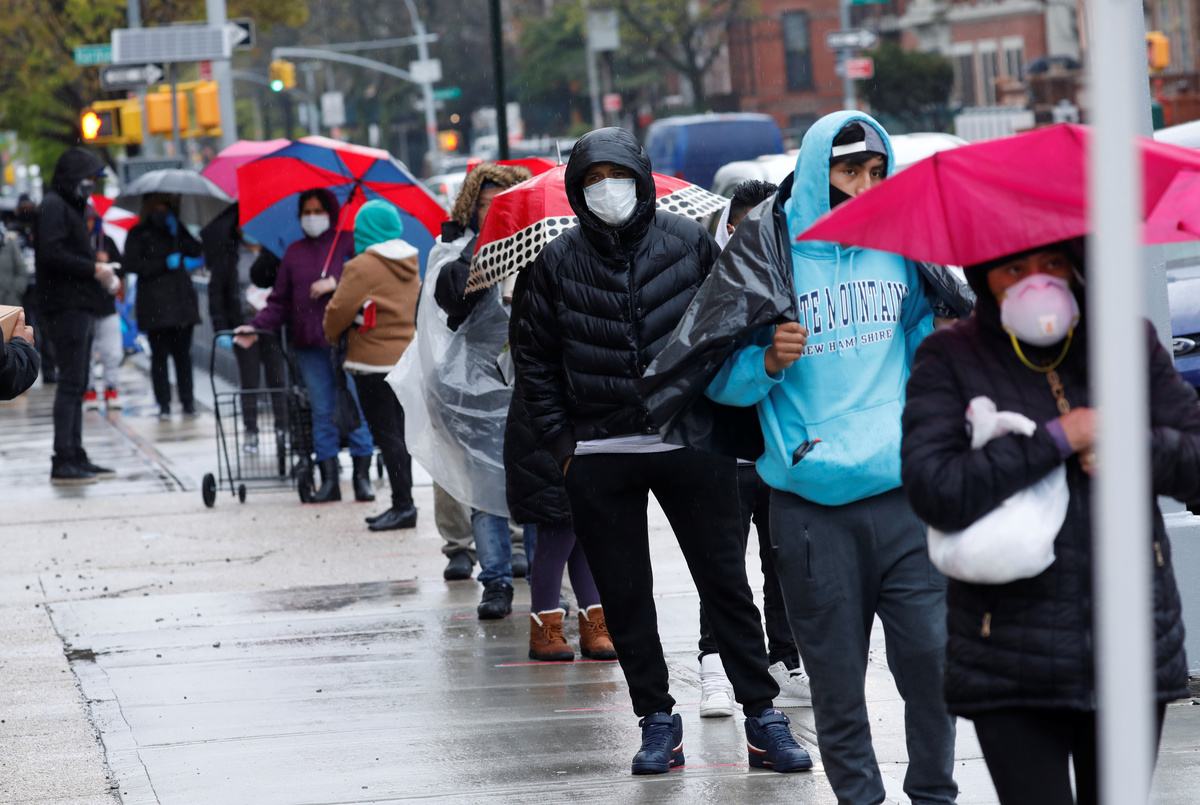
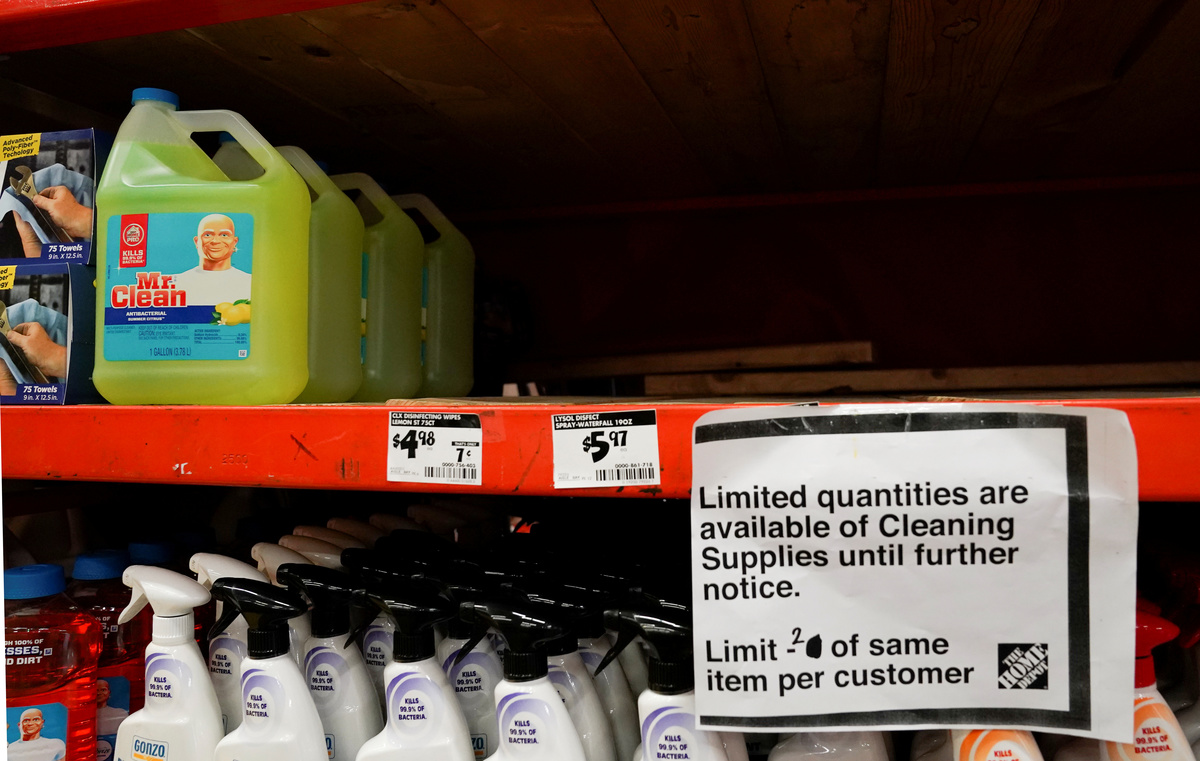
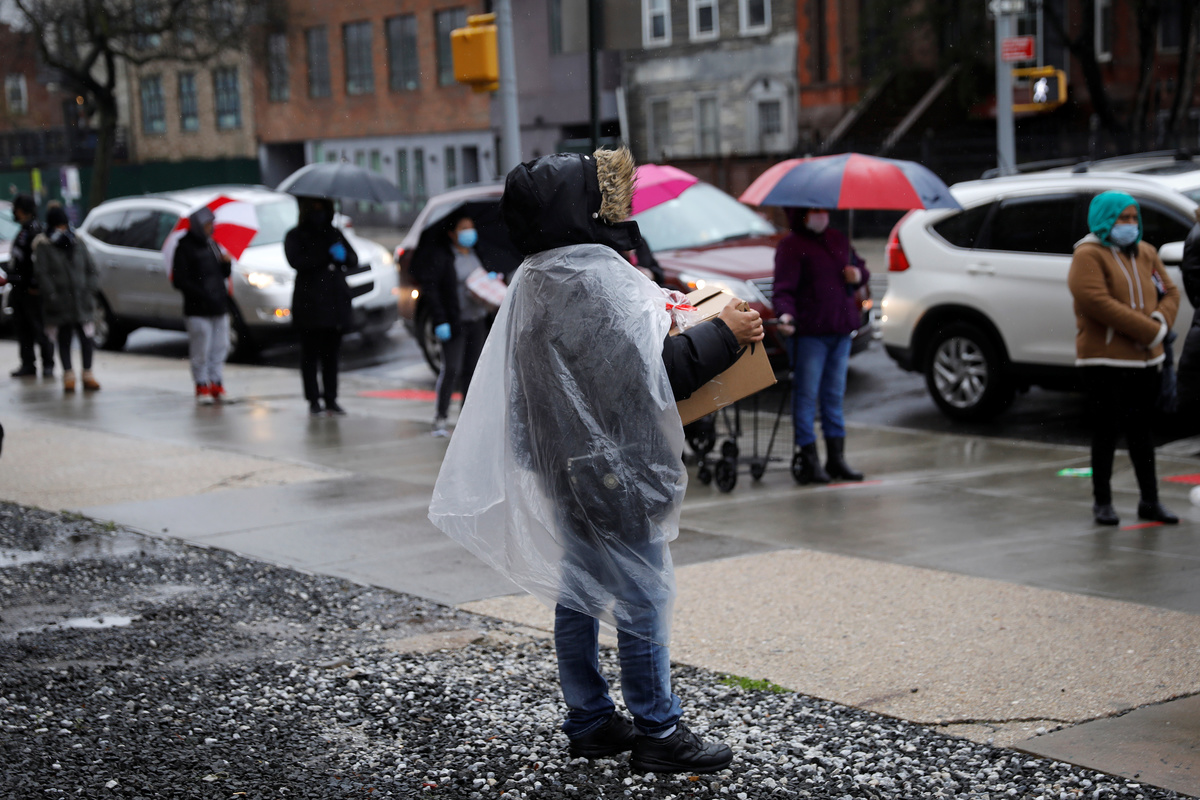
Protesters against the state's extended stay-at-home order to help slow the spread of the coronavirus disease (COVID-19) demonstrate at the Capitol building in Madison, Wisconsin, U.S. April 24, 2020. REUTERS/Daniel AckerA healthcare worker stands in the rain outside Elmhurst Hospital Center, as the spread of the coronavirus disease (COVID-19) continues, in the Queens borough of New York City, U.S., April 24, 2020. REUTERS/Lucas JacksonFILE PHOTO: A message encouraging hand washing is seen above the Buckhead Theater days before the phased reopening of businesses and restaurants from the coronavirus disease (COVID-19) restrictions in Atlanta, Georgia, U.S. April 22, 2020. REUTERS/Elijah NouvelageU.S. President Donald Trump returns the Paycheck Protection Program and Health Care Enhancement Act to his desk after signing and holding up the latest relief bill for the coronavirus disease (COVID-19) outbreak, in the Oval Office at the White House in Washington, U.S. April 24, 2020. REUTERS/Jonathan Ernst U.S. President Donald Trump is surrounded by administration officials and lawmakers prior to signing the "Paycheck Protection Program and Health Care Enhancement Act," approving additional coronavirus disease (COVID-19) relief for the U.S. economy and hospitals treating people sickened by the pandemic, during a signing ceremony in the Oval Office at the White House in Washington, U.S., April 24, 2020. REUTERS/Jonathan Ernst U.S. President Donald Trump speaks surrounded by Small Business Administration Administrator Jovita Carranza, House Minority Leader Kevin McCarthy (R-CA), Rep. Steve Scalise (R-LA) and Senator Dan Sullivan (R-AK) during a signing ceremony for the "Paycheck Protection Program and Health Care Enhancement Act," approving additional coronavirus disease (COVID-19) relief for the U.S. economy and hospitals treating people sickened by the pandemic, in the Oval Office at the White House in Washington, U.S., April 24, 2020. REUTERS/Jonathan ErnstBarber Tommy Thomas, 69, who has been cutting hair for 50 years, gives his long-time customer Fred Bentley a haircut after the Georgia governor allowed a select number of businesses to open during the coronavirus disease (COVID-19) restrictions in Atlanta, Georgia, U.S. April 24, 2020. REUTERS/Julio-Cesar ChavezA woman carries free groceries distributed at a pop-up food pantry by the 101st Engineer Battalion of the Massachusetts Army National Guard amid the coronavirus disease (COVID-19) outbreak in Chelsea, Massachusetts, U.S., April 24, 2020. REUTERS/Brian SnyderResidents wait in line for free groceries distributed at a pop-up food pantry by the 101st Engineer Battalion of the Massachusetts Army National Guard amid the coronavirus disease (COVID-19) outbreak in Chelsea, Massachusetts, U.S., April 24, 2020. REUTERS/Brian SnyderEmergency personnel from the Archdiocese of New York wear protective face masks as they hand out boxes of rubber gloves outside a food pantry for needy residents run by the Catholic Charities of Brooklyn and Queens during the outbreak of the coronavirus disease (COVID-19) in the Brooklyn borough of New York City, New York, U.S., April 24, 2020. REUTERS/Mike SegarA woman wearing a face shield waits in line for free groceries distributed at a pop-up food pantry by the 101st Engineer Battalion of the Massachusetts Army National Guard amid the coronavirus disease (COVID-19) outbreak in Chelsea, Massachusetts, U.S., April 24, 2020. REUTERS/Brian SnyderResidents wait in line for free groceries distributed at a pop-up food pantry by the 101st Engineer Battalion of the Massachusetts Army National Guard amid the coronavirus disease (COVID-19) outbreak in Chelsea, Massachusetts, U.S., April 24, 2020. REUTERS/Brian SnyderMembers of the 101st Engineer Battalion of the Massachusetts Army National Guard distribute free groceries at a pop-up food pantry amid the coronavirus disease (COVID-19) outbreak in Chelsea, Massachusetts, U.S., April 24, 2020. REUTERS/Brian SnyderResidents wait in line for free groceries distributed at a pop-up food pantry by the 101st Engineer Battalion of the Massachusetts Army National Guard amid the coronavirus disease (COVID-19) outbreak in Chelsea, Massachusetts, U.S., April 24, 2020. REUTERS/Brian SnyderPeople wear protective face masks as they receive free food at a pantry for needy residents run by the Catholic Charities of Brooklyn and Queens during the outbreak of the coronavirus disease (COVID-19) in the Brooklyn borough of New York City, New York, U.S., April 24, 2020. REUTERS/Mike SegarPeople wear protective face masks as they wait in line to receive free food at a curbside pantry for needy residents run by the Catholic Charities of Brooklyn and Queens during the outbreak of the coronavirus disease (COVID-19) in the Brooklyn borough of New York City, New York, U.S., April 24, 2020. REUTERS/Mike SegarA limited amount of household cleaning supplies and disinfectants are seen on sale in at a hardware store in Falls Church, Virginia, U.S., April 24, 2020. REUTERS/Kevin LamarqueA man holds packages of free food as people wait in a long line at a curbside food pantry, staffed by the U.S. Army National Guard during the outbreak of the coronavirus disease (COVID-19) in the Brooklyn borough of New York City, New York, U.S., April 24, 2020. REUTERS/Mike SegarA U.S. Army National Guard soldier loads food into a van at a curbside food pantry for needy residents during the outbreak of the coronavirus disease (COVID-19) in the Brooklyn borough of New York City, New York, U.S., April 24, 2020. REUTERS/Mike Segar
Sign up to read this article
Read news from 100's of titles, curated specifically for you.