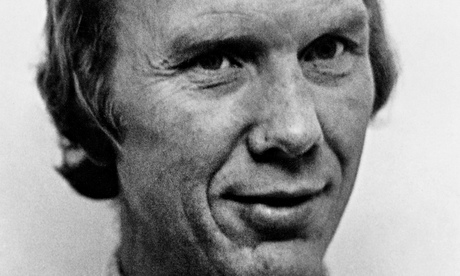
It is more than 50 years since a Co-op worker, Dennis Hurden, was shot dead in a botched robbery in Mitcham, Surrey. One of the four men convicted of his murder, George Thatcher, was initially sentenced to death and ended up serving 18 years for a crime he has always claimed he did not commit. Now he has written his story, Fitted Up, and brought back to life what has been regarded by campaigners for many years as one of the great unresolved miscarriages of justice.
Thatcher was born in 1929 in Farnham in Surrey, spent time in care and left school at 14. He was in trouble as a teenager, breaking into a wine warehouse on a spree and then graduating to taking lead from deserted houses, stealing cars and eventually jewels. By the age of 17 he was in borstal and already on the way to becoming a career criminal.
He recounts the progression from petty villain to hardened safe-cracker, a specialist in breaking into the safes of cinemas. He lived the classic criminal life, spending his ill-gotten gains in West End clubs and always planning that one big job that might just possibly give him another life. His first wife left him and emigrated to the United States with their son while he was serving an early sentence.
Then in 1962 came the Mitcham Co-op Murder, as it became known. His name was put up by a co-accused as the person who had pulled the trigger and, although the same man later retracted the allegation, Thatcher was tried at the Old Bailey and convicted. The evidence against him was essentially his co-accused’s retracted claim and the supposedly incriminating remarks that the police claimed he had made on arrest, remarks that would not have been admissible in court today.
He was represented by the late Christmas Humphreys QC and felt he was badly let down by him. He quotes from Humphreys’s own autobiography, Both Sides of the Circle, in which the barrister expresses his preference for prosecuting on the grounds that “witnesses called by the prosecution are generally telling the truth as best they may and the prisoner is generally guilty”. This, felt Thatcher, explained the lacklustre way he was defended.
His later experiences of the law were happier: he was represented for a while by the late Bernie Simons, of whom he writes fondly, and the book carries an endorsement from Geoffrey Robertson QC, who speaks of a time in the 60s when “judges were hostile and defence lawyers could not care less”.
Inside, his fellow prisoners included train robber Ronnie Biggs and “Mad” Frankie Fraser. He started writing and an ad he placed in the New Statesman in 1972 – “lifer needs help” – drew a response from the playwright David Halliwell, who gave him both help and encouragement.
Two of Thatcher’s plays, The Hundred Watt Bulb and The Only Way Out, were subsequently staged professionally, the latter by the Royal Court.
In 1974 he placed another ad in the New Statesman asking if anyone would like to visit a lifer who was an aspiring dramatist and artist.
A single English teacher called Val, with a young daughter, responded and visited. They fell in love, married in 1980 and are still together more than 30 years later, living now in County Kerry in Ireland. Val writes in an epilogue: “We have finally managed to find peace and contentment.”
The tale is a timely reminder of an era when, as Geoffrey Robertson says, juries tended to believe what they were told by the police and prosecution, and were disinclined to think that anything untoward could have happened. It is a valuable contribution to the literature of miscarriages of justice.
• Fitted Up: the Mitcham Co-op Murder and the Fight to Prove my Innocence by George Thatcher is published by the History Press, price £9.99