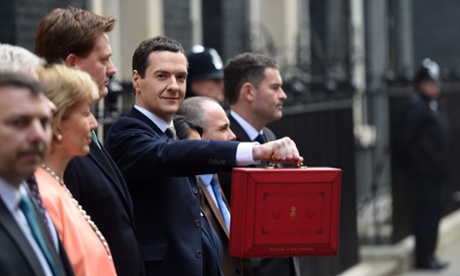
Chancellors delivering a pre-election budget have a choice of going for bribery, fastidious responsibility or a calculated set of political measures that restrict the freedom of manoeuvre of the opposition.
Famously in 1970 Labour’s Roy Jenkins was surrounded by cabinet colleagues such as Robert Mellish begging him, “Don’t do a Stafford Cripps on us Roy”.
Jenkins refused to listen to their pleas and it became a settled part of the Labour history that his refusal to provide a giveaway had lost Labour the ensuing election. (Cripps, chancellor in the final period of the Attlee government, was a symbol of austerity in the Labour pantheon).
By contrast, Norman Lamont, advised by his young private secretary Jeremy Heywood, introduced a new 20p income tax band, wrong-footing Neil Kinnock in 1992 and helping the Conservatives over the line.
Reeling from the great crash of 2008, Alistair Darling two year’s later rejected Gordon Brown’s desperate call to adopt policies to discomfort the Tories. Writing in his memoirs, Darling said: “I fully understand the politics of spending in which a party makes an offer that its opponents cannot or won’t match, but I was acutely aware of what would result from another budget that could be characterised as being out of the spirit of the time”.
The task for Osborne then was also to capture the spirit of our still dispirited times. He took the Darling-Jenkinsist approach, spurning the chance to spend big apart from a novel but not hugely expensive package for savers.
Instead he wanted to focus less on new measures than on the light now clearly glimmering at the end of the tunnel. But his rhetoric needed to be pitch perfect. If he caught the mood right, he could lure wary voters towards greater optimism.
If he over-praised his own achievements, he risked sounding hubristic and preening to voters experiencing the slowest recovery of the century and still worried by the public spending cuts to come.
Boosted by the highest employment rates on record, growth higher than any other major economy, falling inflation, and national debt falling as a share of national income, Osborne could not resist a long opening passage praising himself: “Out of the red and into the black. The sun is starting to shine and we are fixing the roof. We choose the future. Britain is walking tall again. The come back country”.
At times, as the rhetoric was machine-gunned from the despatch box, he sounded as if he was gloating. The lack of public introspection from the chancellor, different to his private persona, can sometimes grate.
Although it cheered his gleeful backbenchers, he must privately worry at how slowly the undoubted good news is translating into economic optimism and identifiable votes for the Conservative party to harvest. Lord Ashcroft’s polling this week showed a steady rise in economic optimism even among those determined to vote Labour. A voteless recovery is no recovery.
Hence so much of the budget was nakedly political, devoted to wrong-footing Labour’s campaign, stealing their better styled clothes and leaving shadow chancellor Ed Balls short of the cash he needed to fund their flagship projects. By the end of the speech so many Labour foxes lay dead, it looked as if David Cameron’s Heythrop Hunt had galloped through the chamber.
If the Tories were delighted most by a single announcement, it was the confirmation that living standards in 2015 will be higher than in 2010, so depriving Labour of its claim that this is the only parliament in history in which living standards have fallen back.
The chancellor said on all three measures – GDP per capita, real household disposable income per capita and households below average income – median incomes will have improved across the parliament.
The Treasury believes the Institute for Fiscal Studies – the arbiters of such matters – concurs, and voters are now £900 better after five years. The living-standards election is no more.
But The Resolution Foundation disputed the numbers, saying Osborne’s favoured measurement including items people would not consider part of their household budget. The said average incomes are still around 4% below their pre-downturn peak, and are still some way below their 2010 level.
Osborne also blew a £600m hole in Labour’s plans to fund its cut in tuition fees from £9,000 to £6,000, taking the money to fund his savings package. Similarly his increase in the bank levy leaves a question on how Balls would now fund his childcare package since it had been due to be funded by a rise in the bank levy.
Labour has already identified a way to fill the black hole, and is relieved Osborne did not make their position worse. The party’s fear was that Osborne would take the whole of Labour’s pensions relief package set aside to fund the tuition fee cut, and then put all the money into the NHS. That would have left Labour spreadeagled.
Osborne has also tried to protect his own flank from charges that he was planning to slash spending back to the level of the 1930s – a charge that arose out of his autumn statement commitment to create a £23bn surplus by 2019-20.
By changing assumptions about the speed with which public spending rises after 2017-18, public spending as a proportion of GDP no longer falls back to a level seen in the 1930s, but instead to 2000 when Labour was in power. But this leaves a roller-coaster in spending with cuts in the first three years and then a splurge at the end of the next parliament.
Labour and the Liberal Democrats pointed to page 75 of the Office of Budget Responsibility report showing government consumption as a share of GDP in 2019 would still be equal to its level of in 1964 and the joint lowest level since 1948. These figures are contested by the Tories since it includes welfare spending.
In any event, the very fact that the two parties are arguing so ferociously about fiscal assumptions, and definitions, probably indicates how this budget is not the moment that decisively changes the election terrain. For the moment at least the trench warfare continues.