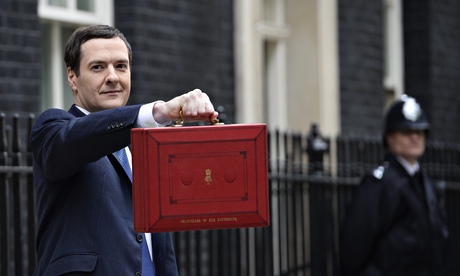
A rumour filtered through Westminster last week that Steve Hilton, once David Cameron’s philosopher-in-chief and architect of party modernisation, was back in town, or just had been, or soon would be. Alarmed by flatlining polls, the prime minister had (it was whispered) called upon the shoeless genius – now on permanent “sabbatical” in California – to bring sunshine and energy to the Tory campaign.
Not so, or not quite. Hilton, who once paid a member of airport staff several hundred dollars for his shoes so he could board a plane, did indeed visit No 10 a few weeks ago to say hello to Ed Llewellyn, (David Cameron’s chief of staff), Kate Fall (Llewellyn’s deputy) and George Osborne (formerly Hilton’s great rival for the ear of the leader).
And yes, he stayed for dinner with Dave and Sam. But this was friendship, not the re-ignition of his once-formidable campaigning and advisory role. The core Tory argument remains “competence versus chaos”, and so it will until polling day on 7 May.
Though the official “short campaign” does not commence until the dissolution of parliament on 30 March, the Conservative bid for re-election will be launched, in practice, by the budget on Wednesday. This will be Osborne’s sixth such performance, a remarkable achievement in itself for a 43-year-old: Gladstone, one of his heroes, was three decades older when he left the Treasury.
Whether this is George’s last budget depends principally upon the voters and then (if a Conservative-led government is returned) his reading of the post-electoral runes. If he wants to remain chancellor, Cameron will leave him in post. Long-serving chancellors are always supposed to crave a spell at the Foreign Office. Personally, I find it hard to imagine Osborne volunteering for a role that would keep him so far from the political action, absent from the morning (and afternoon) meetings in No 10.
In any case: he must first help his friend and boss stay in No 10. Only 51 days separate budget and polling day, so it is naive to expect anything other than a plan bristling with potential electoral appeal. It has already emerged that existing pensioners will now be able to trade in their savings for cash, and seems all but certain that there will be a further tax cut for low earners.
That said, Osborne was explicit on today’s Andrew Marr Show that there would be “no giveaways, no gimmicks” in his “budget for the long-term”. In part, his hand has been stayed by the fact of coalition. As Nick Clegg told his party’s spring conference, this has been “the last act of significant decision making” by the Conservative-Lib Dem partnership. The junior governing party was never going to allow Osborne to turn the budget into a Conservative party political broadcast.
Yet, frustrated as he has often been by the Lib Dems, it was never the chancellor’s ambition to look like a man on the hustings this Wednesday, handing out metaphorical envelopes stuffed with cash to the voters. Indeed, he and his team went back to pre-election budget speeches of the past, and observed how many had included crass giveaway promises that soon crumbled. Osborne’s central claim will be one of political maturity, of a fiscal strategy well advanced but not yet complete, of a governing party requiring the voters’ permission to finish the job. He knows, of course, that Ed Miliband will pose the logical counter-question: since the Rt Hon gentleman has failed to meet his own targets, why should the voters reward failure?
What the Tories are banking on is that better-than-forecast growth and high levels of job creation will trump the sense that this is all taking too long. The shrewdest step Osborne ever took was to admit as quickly as he did – in the 2011 autumn statement – that he was going to miss his targets for the parliament and that, as a consequence, the Cameron project had become a two-term strategy.
It is no accident that the prime minister gave his aides copies of Bill Clinton’s speech to the 2012 Democrat convention in Charlotte, North Carolina, in which he spoke of the scale of the problems confronting Barack Obama when he took office. “No president,” he said, “no president – not me, not any of my predecessors, no one – could have fully repaired all the damage that he found in just four years.”
This week, Osborne’s budget will seek to make a similar case for a second Tory (or Tory-led) term. If his party is to stand a chance on 7 May, the voters – or enough of them – have to sign up to this fundamental proposition.
But is that really all there is to it? The statistics are looking good, so stick with the winning team? As the US political scientist Robert Putnam puts it: “Some of us learn from numbers, but more of us learn from stories.” A fine piece by Jill Lepore in the New Yorker explores the contemporary fixation with inequality and its resonance far beyond graphs and figures. Her argument prompts the thought that, more than ever, what the Tories are up against is the difference between a market and a democracy. Free markets are the indispensable engines of growth, exchange and (often) political liberties. But they are inadequate as the sole basis for human interaction and political debate.
The Tories prospered in the 80s as the champions of the market. Now they are too widely seen as its slave, and – more specifically – as the trade union of the rich. That is an electorally deadly impression which is why, in a remarkable speech last week, Michael Gove declared that “inequality remains the great social and political challenge of our time” and that the Tories must be seen as “warriors for the dispossessed”.
Right on both counts. But most Tories are not seen in that light – not even close. The very idea that their party prioritises the vulnerable, the indigent and the disenfranchised would strike plenty of people as a sick joke. And therein lurks an electoral problem so dauntingly huge that many Conservatives dismiss it angrily as an irrelevance.
Steve Hilton never did, which is why his departure from Westminster was, and remains, a shame. Let me court a Twitter lynching by declaring Osborne a successful chancellor, whose sixth budget will dramatise what is at stake in this election. But the Tories are deluding themselves if they think a blizzard of figures, however impressive, will do the trick on 7 May. Competence is a precondition of electoral success. It is no longer enough.