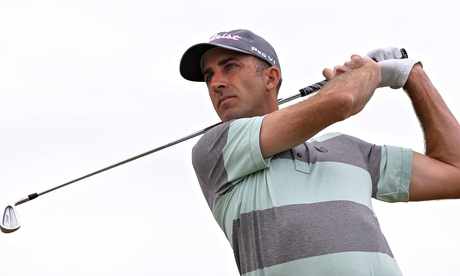
By reputation and almost universal acclaim, the cigar-toting, wine-sipping eccentric Miguel Ángel Jiménez is golf’s “most interesting man”. But only superficially. For the more discerning golf geek, the fan with a deeper interest in what is actually going on in the game, the Australian Geoff Ogilvy is a far more fascinating figure.
US Open champion in 2006, the 38-year old Melburnian is also an award-winning columnist for Golf Australia magazine as well as a partner in the course design company Ogilvy Clayton Cocking Mead. For years now he has been the go-to player on the PGA Tour for any journalist looking for an insightful quote. In a competition admittedly not blessed with great depth, Ogilvy is surely one of the more rounded individuals in the professional game.
He can play too, of course, as his opening round of 69 in the US Open at Chambers Bay demonstrated. In addition to his lone major title – won at Winged Foot as all around him, most notably Phil Mickelson and Colin Montgomerie, imploded over the closing holes – Ogilvy owns three World Golf Championships and eight PGA Tour victories. Twice he has been World Match Play champion and three times he has represented the International side in the biennial Presidents Cup matches against the USA.
Recent times have been less kind, however. Ogilvy languishes just outside the world’s top 100, a ludicrous position for a man in his 30s who has been ranked as high as No3. In a column last year he eloquently explained and expressed the inherent frustrations behind his slump in form. “It’s perverse really,” wrote the father of three. “The better you play, the less you actually need to play well. And that is the best state of mind to be in to play golf well – when you don’t need to. It’s the unseen aspect of competitive golf.
“On the PGA Tour, a loss of form becomes mostly a self-perception thing. After a period of success, the financial side of the business is less of an issue for most guys. But playing poorly is a blow to the ego if nothing else. Plus, the desire to play well never goes away. The better you do, the more fun it becomes. Playing badly is no fun. Which is another great irony. I play my best golf when I’m having fun. But when I’m playing poorly I have less fun. Yet the best way to play better is to have more fun. Work that one out.”
He is doing just that. This week at Chambers Bay, Ogilvy has been making positive noises about both his own form and the controversial venue. This is not the norm – he can often become frustrated by inadequacies he perceives in the courses he is typically asked to play. But in the wake of that opening 69 he was almost purring with pleasure, in stark contrast to those of his peers who complained about the greens.
“I think the course is really good,” he said. “I’m not a fan of massive elevation change, which could have been avoided a couple of times. But they want the wow factor. It’s architecturally very sound.”
As is his way, though, Ogilvy could not resist the temptation to reveal exactly what the United States Golf Association is up to with its course presentation.
“The course was nicely set up,” he said with a smile. “The pin positions seemed reasonable. My guess was maybe 20-30 guys would be under par after today and by the end of Sunday there won’t be any. That’s a sensible strategy for the USGA: keep us all happy on Thursday then gradually wear us all out.
“You can make this course as hard as you want. Over par might win. Or 12 under par. It just depends on what Mike Davis [the USGA executive director] wants to do. They always control the scoring in the US Open. And they always want to make it really, really high.”
Ogilvy also added a new twist to the common complaint from players that as many as five holes at Chambers Bay are inaccessible to the walking spectator.
“No, you can’t follow matches all the way round,” he acknowledged. “But there is an upside to that. Today had an Open Championship feel on some of the holes out there. The people who sat in the grandstands for a while got a real feel for what was a good shot and what was not. So they appreciated what they were watching more than the normal crowds. There were some really knowledgeable reactions.”
Ogilvy may not add a second US Open title to his already impressive résumé come Sunday evening. B ut, win or lose, it’s a safe bet he’ll have something interesting to say about it all.


.png?w=600)