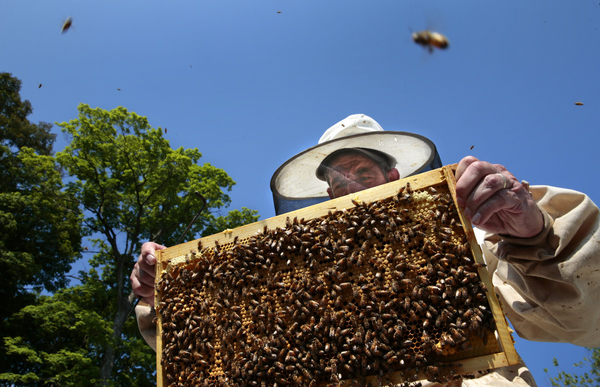
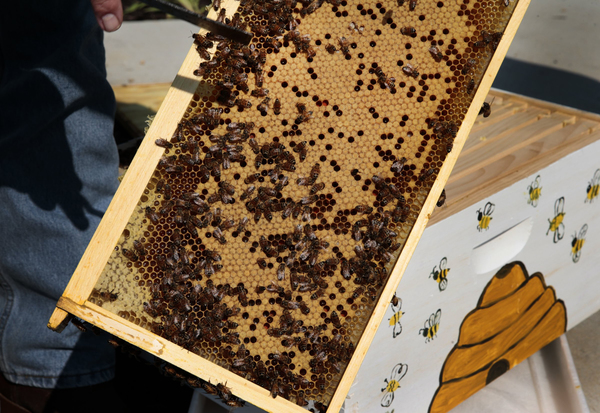
ST. LOUIS _ If not treated, the invasive varroa mite will almost certainly show up in a honeybee hive, latching on to the pollinators, feeding off their internal fluids and threatening to weaken the colony to the point of collapse.
Western bees never evolved defenses to the Asian parasite, brought to North America about 30 years ago. Many of the existing treatments are mite-targeting pesticides that can damage the bees or their honey.
It's a problem Monsanto scientists think they can help solve by tailoring a treatment with far more specificity than synthetic chemicals, one that uses the language of DNA to target genes unique to only the varroa mite. And the agriculture giant thinks it can do it by simply feeding the bees a sugar solution full of RNA, the molecule that transcribes DNA's instructions.
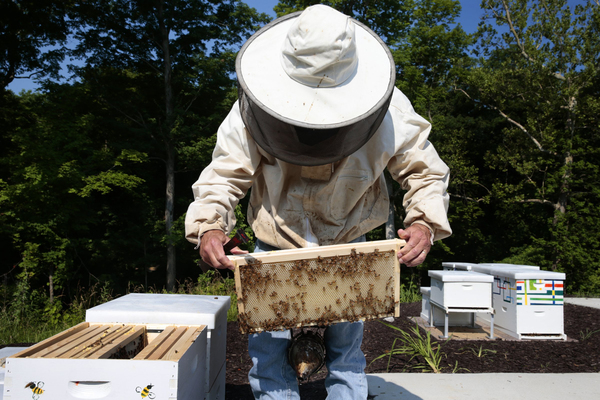
Monsanto has already signed up 2,500 colonies around the country for trials of its bee health product, which started this year.
"In all my years in the industry, I've never heard of this big of a trial in beekeeping," said Jerry Hayes, who heads Monsanto's bee health operations.
The tests could prove significant, not only for honeybees crucial for pollinating the food supply, but for a technology platform that has potential applications far beyond beekeeping. Monsanto believes it will be the first of its products to market that utilize the new genetic technology, probably around 2020.
It isn't alone. Startups with operations in the St. Louis region are looking at their own products using the technology, and other large agribusiness companies are racing to commercialize it.
The mechanism, known as RNA interference or RNAi, has stoked excitement among researchers and industry since its discovery won two scientists a 2006 Nobel Prize.
"This is a learning platform for RNA interference," Hayes said. "So we can figure out how to use it on other bad bugs."