Afternoon summary
- Jeremy Corbyn, the Labour leader, has used his first proper speech of the election campaign to cast himself as the anti-establishment underdog, determined to take on the “cosy cartels” that run a “rigged system” and stop wealth being shared fairly. (See See 2.08pm.) Here is my colleague Heather Stewart’s take on the speech.
That’s all from me for today.
Thanks for the comments.
Updated
Dawn Butler, the Labour MP who spoke at the same event in Westminster this morning as did Jeremy Corbyn, has faced a slightly uncomfortable interview on BBC Radio 4’s PM programme.
Asked several times for policies by which Labour would combat what Corbyn called a “rigged” system, Butler seemed to struggle for specific examples. Instead, Butler accused Theresa May of “trying to rig democracy in our country” in calling a snap election.
Talking about policies to ensure fairness in the City, Butler cited the Costa Coffee chain as a tax avoider, perhaps confusing it with Starbucks, which has attracted criticism over its tax policies.
Butler named Costa as among companies “who don’t pay their full taxes in this country”.
Asked by host Eddie Mair whether she meant Costa, Butler said:
I’ve said Costa Coffee from memory, but let me not say that definitively.
But what I’m saying is the Conservatives will not take on these tax dodgers, and Labour is saying everyone needs to pay their fair share.
As the financial blogger Iona Bain points out, Costa has actually been praised by Ethical Consumer for its record on tax avoidance.
Labour MP Dawn Butler has just accused Costa Coffee of avoiding taxes on @BBCPM. What @EC_magazine says about Costa https://t.co/Cyd1oU57Xx pic.twitter.com/DZUb8m1uCE
— Iona Bain (@ionayoungmoney) April 20, 2017
Later, in a separate interview on BBC News, she said Labour “would scrap grammar schools”. That is not correct. Labour is opposed to Theresa May’s plans to extend grammar schools, but Angela Rayner, the shadow education secretary, has studiously avoided saying the party would close existing grammar schools.

In Skipton someone is making a protest against the party system.

And Michael Dugher, the former shadow culture secretary and MP for Barnsley East, is standing down, according to the New Statesman’s Stephen Bush.
Am hearing from reliable source that Michael Dugher is standing down.
— Stephen Bush (@stephenkb) April 20, 2017
Dave Anderson, the 63-year-old MP for Blaydon and shadow secretary of state for Scotland and Northern Ireland, has announced he is standing down. “I have reluctantly decided that for reasons of health, age and my family’s needs, I cannot commit to another five years in parliament,” he told his local paper.
Anderson had a majority of 14,227 over Ukip at the last election.
May confirms she is still committed to getting annual net migration below 100,000
Theresa May recorded a brief interview on her visit to the factory in Enfield. Her message discipline was commendable - she got “strong and stable leadership” into her first sentence, and the “coalition of chaos” got a mention too - and she had two points to make.
- May criticised Jeremy Corbyn for refusing to rule out a second Brexit referendum this morning - even though Labour did rule it out later (see 2.44pm) - and restated her claim that a Corbyn premiership would amount to a “coalition of chaos”. She said:
This election is about ensuring that we have strong and stable leadership in this country in the national interest ... What we saw from Jeremy Corbyn this morning was his refusal to rule out the possibility of a second referendum over Brexit. That’s wrong. People voted in the referendum last year to leave the European Union. That is what the government needs to put into place. And his failure to rule that second referendum out shows the coalition of chaos that we would have under Jeremy Corbyn.
- She confirmed that she is still committed to getting net annual migration below 100,000. This morning Karen Bradley, the culture secretary, said that controlling immigration was “not about putting numbers on it”, suggesting that the target could be abandoned. (See 9.49am.) May said:
We’ve been very clear, as I was as home secretary for six years, that it’s important that we have net migration that is in sustainable numbers. We believe sustainable numbers are the tens of thousands.

Theresa May has been in Enfield this afternoon, visiting a factory.

The Lib Dems says 8,000 people have joined the party since the general election was announced two days ago. The party now has over 95,000 members, more than twice as many as at the time of the last election.
Veteran broadcaster David Dimbleby will present his tenth general election this June, two years after the BBC announced that news presenter Huw Edwards would take over, my colleague Jane Martinson reports.
The Green Party focused on young people at its election campaign launch in Bristol, pledging to fight to scrap tuition fees, give 16 and 17-year-olds the vote and protect the environment that youngsters of today will grow up in.
In a city that has seen a spate of suspected suicides among its student population, the Green candidate for Bristol West, Molly Scott Cato, said there was a mental health crisis among young people because of the bleak future they faced.
The party’s co-leader, Caroline Lucas MP, said she was optimistic the Greens would win Bristol West after finishing second in 2015 behind Labour.
She also accused other progressive parties in being “reckless” by not backing tactical voting and said that there was a groundswell of public demand for deals to be made to fight the Tories.
The Greens had high hopes of winning Bristol West in 2015 when Darren Hall, a former RAF engineering officer, tried to overturn a Lib Dem 11,000 majority. Labour nipped in to take the seat with a 5,673 majority and the Greens forced the Lib Dems into third place.
Announcing her party’s first policies on a smart hotel terrace with the Clifton suspension bridge as a backdrop, Scott Cato, who is an MEP for south west England said:
This election is the most significant of my lifetime. We truly are at a crossroads.
Today marks the beginning of the Green party’s campaign for a bold positive future for our country in wholehearted opposition to the extreme Brexit and far right agenda threatened by another five years of Tory government.

Brussels wants UK to pay for relocation of EU agencies out of London, leak suggests
According to a leaked draft of the European commission’s proposed Brexit negotiating guidelines, Brussels is going to ask the UK to pay the costs of relocating EU agencies out of London.
Politico Europe, which obtained the document (pdf), says the approach it proposes is “hardline” and “more in-your-face ... than EU officials had previously suggested”.
The European Medicines Agency (EMA) and European Banking Authority (EBA) are both currently based in London’s Canary Wharf. The document says the UK should pay for them to move to the continent, saying:
The United Kingdom should fully cover the specific costs related to the withdrawal process such as the relocation of the agencies or other Union bodies.
Politico Europe says this could even lead to the UK being asked to pay “the travel and expenses of negotiators on both sides, as well as extraordinary summit meetings of EU leaders”.
Unionism is going out for a six-pack.
No, the generally abstemious unionist politicians are not about to go on the lash and sup what the late Rev Ian Paisley denounced as ‘The Devil’s Buttermilk’, aka booze.
Rather his Democratic Unionist Party and the Ulster Unionists are taking about a ‘six-pack electoral pact.’
In the 2015 general election the two parties did a deal in four constituencies where only one pro-nion candidate stood.
Sources in both parties confirmed that this time around there could be a deal to defend existing unionist seats and even gain a seat in South Belfast currently held by the nationalist SDLP.
The Liberal Democrats have criticised Labour for ruling out a second Brexit referendum. (See 2.44pm.)
Before Labour ruled it out, the Tories said that by not ruling it out Labour was uniting with the Lib Dems to threaten Brexit. (See 12.42pm.)
Now the Lib Dems have accused Labour of uniting with the Conservatives to push through a hard Brexit. Alistair Carmichael, the Lib Dem MP, said:
It is clear now that Jeremy Corbyn is more than willing to back the Tories as they pursue a hard, destructive Brexit. He even ordered his MPs to troop through the division lobbies behind Theresa May.
By denying the people a vote on the final Brexit deal, he is turning his back on democracy and the 48% of voters who wanted to remain, but also people who voted leave but clearly want us to stay in the single market.
This is a betrayal of the millions of former Labour voters who strongly reject Theresa May’s hard-right Brexit plan. They deserve a vote on the final deal that the Tories come back with, and the Lib Dems will fight to give it to them.
Unite suspends McCluskey's rival for leadership, Gerard Coyne
Gerard Coyne, who is challenging Len McCluskey for the Unite leadership, has been suspended by the Unite union, my colleague Rajeev Syal reports.
Coyne is seen as the anti-Corbyn candidate because he has attacked McCluskey for focusing too much on supporting the Labour leader. The ballot has closed, but the result has not yet been announced.
Breaking: @gerard_coyne's spokesman said he has been suspended from his job at Unite.
— rajeev syal (@syalrajeev) April 20, 2017
Updated
World Bank chief says UK should not abandon 0.7% aid target
As the Guardian reports today, Bill Gates has warned Theresa May that if the Conservatives go ahead and abandon the UK’s pledge to spend 0.7% of national wealth on aid, its influence in the world will be reduced and more lives will be lost in Africa. May has not yet said she will abandon the target, but she has refused to commit to keeping it in the next parliament, prompting fears that it will be watered down.
Jim Kim, president of the World Bank, has also said that abandoning the target would be a mistake. Speaking in Washington, at the spring meeting of the World Bank, he said:
It is important the people of the UK understand how significant that was in expanding the UK’s influence in the world. It is very unfortunate for the UK to reduce its efforts. I would say 0.7 that has been committed to is critically critically important, not just for developing countries, but for the future of the world.

Updated
Labour rules out second Brexit referendum
Labour have now ruled out a second Brexit referendum. A spokesman for Jeremy Corbyn said:
A second referendum is not our policy and it won’t be in our manifesto.
Earlier, after Jeremy Corbyn and John McDonnell refused to rule the idea out (see 11.40am), the party issued a statement that played down the prospect of a second Brexit referendum under Labour, without ruling it out entirely. (See 12.11pm.)
This is what happens during election campaign. The decision process gets compressed. Under scrutiny from the media, parties get forced to clarify things, with the result that sometimes issues get resolved in hours that had previously been fudged for weeks, months or even years.
Updated
Joe Anderson, the mayor of Liverpool, has announced plans to stand as Labour MP in the constituency currently held by Steve Rotheram - who is in the running to become metro mayor for the Liverpool City region, the Press Association reports.
Rotheram, MP for Liverpool Walton, is Labour’s candidate for the new post of Liverpool City region metro mayor, due to be elected next month, leaving his seat vacant if he is voted in.
Anderson announced on Thursday he intended to stand as the Labour candidate for Walton in the general election on June 8 if selected by the party’s national executive committee.
Rotheram beat Anderson and Wavertree MP Luciana Berger to be selected as the Labour candidate for the mayoral role.
Today I am announcing my intention to stand as Labour's candidate for Liverpool Walton MP pic.twitter.com/QKcbqsDDq6
— Joe Anderson (@mayor_anderson) April 20, 2017
With the prospects of a deal to secure power sharing government in Northern Ireland looking even more remote now as a result of the general election contest, emergency legislation is to be introduced by the end of the week to allow councils in the region to strike a rate.
Northern Ireland secretary James Brokenshire will bring forward a bill at Westminster which by Friday will allow councils across the region to set rates.
This is normally the job of the power sharing executive but with the main parties in Northern Ireland still locked in negotiations to re-establish devolved government, Brokenshire will use his powers to ensure councils don’t run out of money by the end of this week.
If a deal between the parties, principally the Democratic Unionists and Sinn Fein, cannot be reached by the end of May, then Brokenshire has to either re-impose direct rule from London or call an Assembly election.
It is a measure of the odds being stacked against a deal that the secretary of state has acted today to bring in emergency powers allowing him to enable the councils at least to keep running their services amid political deadlock.
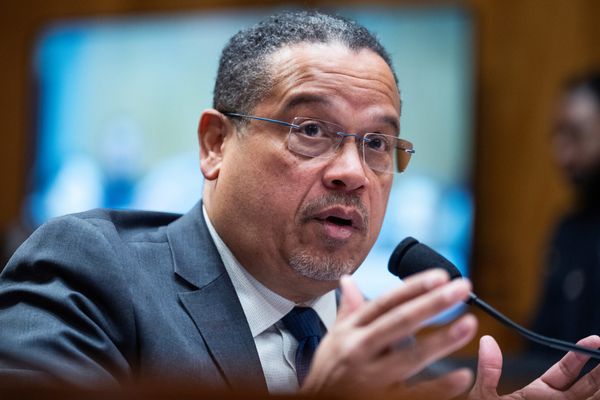
Here is an other shot of Jeremy Corbyn delivering his speech this morning.

Since you’re here ... we’ve got a small favour to ask. More people are reading the Guardian than ever, but far fewer are paying for it. Advertising revenues across the media are falling fast. And unlike many news organisations, we haven’t put up a paywall – we want to keep our journalism as open as we can. So you can see why we need to ask for your help. The Guardian’s independent, investigative journalism takes a lot of time, money and hard work to produce. But we do it because we believe our perspective matters – because it might well be your perspective, too.
If everyone who reads our reporting, who likes it, helps to support it, our future would be much more secure. You can give to the Guardian by becoming a monthly supporter or by making a one-off contribution. - Guardian HQ
Nicola Sturgeon was accused by Willie Rennie, the Scottish Lib Dem leader, of repeatedly dodging questions on whether the Scottish National party would campaign for continued EU membership in its election manifesto.
During first minister’s questions at Holyrood, Rennie twice asked Sturgeon whether she would put EU membership in the manifesto. He said Sturgeon is “going soft on Europe”, and may drop calls for full EU membership at an independence referendum, to avoid alienating a large minority of pro-Brexit nationalists.
Rennie said the SNP’s deputy leader Angus Robertson “struggled to explain his party’s Europe policy on the radio yesterday. Five times he was asked what policy would be in the manifesto at the general election. Five times asked, five times he wasn’t able to answer.”
Sturgeon refused to confirm what would be in the new manifesto, but insisted her party’s support for EU membership was absolutely clear: “There’s no doubt about my policy: I want Scotland to remain in the EU.”
Using the phrase “remain in the EU” allows Sturgeon to sidestep the question which will face voters if there is a second independence vote: by then the UK will have left the EU, leaving an independent Scotland to apply afresh or force the SNP to propose a half-way option of European economic area membership.
SNP sources say Sturgeon will stick to her position until a referendum takes place: they say it would be impossible to set out a definitive policy until the UK’s precise post-Brexit deal with the EU is clear.

Jeremy Corbyn's speech and Q&A - Summary and analysis
Jeremy Corbyn has had a very good morning. Westminster received opinion - which is sometimes right, but often not - has it that he’s a total electoral liability, but today he sounded like an effective campaigner. He delivered a speech that was focused, coherent and passionate. (Full text here.) He neatly inverted his perceived negatives - that he’s unconventional, and that he’s expected to lose - by saying that he had defied odds of 200/1 before and that it would take an outsider to shake things up. And he answered questions at length from journalists, without resorting to the brittle passive aggression he sometimes deploys in Q&As, with a candour that contrasted with Theresa May’s fairly dire record when it comes to media scrutiny.
Above all, he sounded decent and passionate. This came out especially in the Q&A, where he concluded with this rousing answer to a question about whether Labour was a tainted brand. He replied:
The idea that Labour is somehow or other a tainted brand - well, there are people in the audience that are wearing badges of Keir Hardie. He was vilified, vilified beyond belief, when he was elected as the first ever Labour MP. They said how can a working man go to parliament and represent people. Anyone who stands up to create a better, fairer, more decent society gets vilified. Our party gets vilified. But I tell you what: we’re bigger than we have ever been, we are stronger than we have ever been and we are more determined than we have ever been.
Maybe it wasn’t Martin Luther King, but it was easily the most stirring thing anyone has said in this election campaign so far.
That is not to say it will prove transformative. It is very hard to shift public opinion much during a short election campaign and Corbyn’s message will resonate more with Labour diehards than with floating voters. Framing the election as a contest between the establishment and the people obviously fits Corbyn’s politics, but it might have worked better in 1989; polling evidence suggests that, it is not just the establishment that is happy with Theresa May and her government, but the people too. May is popular with all demographics. There might just not be enough people out there who care as much as Corbyn about the system being rigged.
Still, it’s early days. Corbyn’s critics sometimes argued that his campaign would collapse on exposure to the electorate. Instead his first proper campaign outing was a success.
Here are the main points.
- Corbyn said the election was a choice between a Labour party representing the people and a Conservative party representing the establishment.
The dividing lines in this election could not be clearer from the outset. It is the Conservatives, the party of privilege and the richest, versus the Labour Party, the party that is standing up for working people to improve the lives of all.
It is the establishment versus the people and it is our historic duty to make sure that the people prevail.
He said that the system was rigged in favour of “wealth extractors” and, suggesting that Labour would introduce much stronger measures to tackle tax avoidance, he said he would make the system work for everyone.
If I were Southern Rail or Philip Green, I’d be worried about a Labour government.
If I were Mike Ashley or the CEO of a tax avoiding multinational corporation, I’d want to see a Tory victory.
Why? Because those are the people who are monopolising the wealth that should be shared by each and every one of us in this country. Everyone, and I mean everyone, has a contribution to make and a life to lead. Poverty and homelessness are a disaster for the individual and a loss to all of us.
It is wealth that should belong to the majority and not a tiny minority.
Labour is the party that will put the interests of the majority first, while the Tories only really care about those who already have so much.
That is why we will prove the establishment experts wrong and change the direction of this election. Because the British people know that they are the true wealth creators, held back by a system rigged for the wealth extractors.
- He said the fact that he won the Labour leadership when he was a 200 to 1 outsider showed that the party could defy the odds and win the general election.
- He said the fact that he was an outsider and unconventional meant that he was well qualified to take on what he called the “cosy cartels” running the country.
- He said Labour would resist May’s attempts to turn the election into one just about Brexit.
- He refused to rule out Labour offering a second Brexit referendum. He was asked about this but just replied with a general answer about Brexit.

Arron Banks, the multimillionaire insurance broker who was planning to stand against Douglas Carswell in Clacton, is now considering whether to scrap his candidacy in the wake of his the former UKIP MP’s withdrawal. Banks told the Guardian:
Twenty four hours after launching my campaign, the new sheriff in town has run the old sheriff out. He’s a coward, he’s too chicken. He didn’t want to fight me because he knew he would lose.
Banks admitted on Wednesday that he “knows nothing at all” about Clacton and had sent an advance party to scout a campaign headquarters and venues for rallies. The UKIP donor who bankrolled the Leave.EU campaign was intending to start campaigning on Monday.
Tories claim Labour's refusal to rule out second referendum shows Corbyn wants to 'disrupt' Brexit
That didn’t take long. Earlier I said that, if Labour were to offer voters a second referendum on Brexit, Theresa May “would immediately accuse [Jeremy] Corbyn of collaborating with what the Daily Mail calls the Brexit ‘saboteurs’.” (See 11.40am.) I apologise; I was wrong. Labour have merely hinted that they might offer a second referendum, by refusing to rule it out (see 12.11pm), and the Tories are running that attack line anyway.
Commenting on Corbyn’s refusal to rule out a second Brexit referendum, Patrick McLoughlin, the Conservative party chairman, said:
This is yet more evidence of chaos from Jeremy Corbyn and Labour. It shows they can’t provide the strong and stable leadership Britain needs at this serious moment in our history.
It’s clear Labour, the Lib Dems and the SNP are now lining up to disrupt our Brexit negotiations in a coalition of chaos. This can only mean more uncertainty for Britain, more risk and a future that is less secure.
Updated
Carswell says he will not stand again, and urges Clacton to vote Conservative
Douglas Carswell, the former Ukip MP who left the party last month to sit as an independent, has announced that he will not stand for re-election in Clacton. He explained why in a statement on his website. Here’s an extract.
As I promised in my maiden speech, I have done everything possible to ensure we got, and won, a referendum to leave the European Union - even changing parties and triggering a by election to help nudge things along. Last summer, we won that referendum. Britain is going to become a sovereign country again.
I have decided that I will not now be seeking re-election. I intend to vote Conservative on June 8th and will be offering my full support to whoever the Clacton Constituency Conservatives select as their candidate.
It is sometimes said that all political careers end in failure. It doesn’t feel like that to me today. I have stood for parliament five times, won four times, and helped win the referendum last June. Job done. I’m delighted.
There has been speculation about Carswell rejoining the Conservatives. He did not rule out standing as a Conservative candidate in Clacton in 2020, but he ruled out trying to rejoin the party immediately.
Carswell may have found it difficult holding his seat if he had fought it as an independent. Arron Banks, the millionaire former Ukip donor, was planning to stand against him, in what would have been a personal and bitter campaign, and he would have also faced a strong challenge from the Conservatives. In the British system it is very hard for independents to win or hold seats when up against established parties.

No 10 says May remains committed to getting annual net migration below 100,000
Downing Street has said that Theresa May remains committed to getting annual net migration below 100,000. This morning Karen Bradley, the culture secretary, said that controlling immigration was “not about putting numbers on it”, suggesting the Conservatives might drop the under 100,000 target. (See 9.49am.) Asked about this, the prime minister’s spokesman said:
The prime minister said yesterday that she is committed to reducing immigration to sustainable levels and the prime minister has always been clear that sustainable levels are the tens of thousands.
What the secretary of state for culture said this morning is that we have also always been clear that we want to attract the brightest and the best.
The Labour party has issued a formal statement in response to a question about whether it is ruling out a second Brexit referendum. The statement plays down the prospect, but does not explicitly rule it out.
This is from the Mirror’s Jack Blanchard.
I asked Jeremy Corbyn's spokesman if Labour can categorically rule out a second Brexit referendum. Just had this response: pic.twitter.com/yMmzG0IIy9
— Jack Blanchard (@Jack_Blanchard_) April 20, 2017
Corbyn's speech and Q&A - Verdict from the Twitter commentariat
Here is some comment on Jeremy Corbyn’s speech and Q&A from journalists. Generally, the verdict is highly positive.
I will post my own summary and analysis shortly.
From the BBC’s Nick Robinson
No-one should be surprised that @jeremycorbyn is running v the "Establishment" & is long on passion & short on details. Story of his life
— Nick Robinson (@bbcnickrobinson) April 20, 2017
From the Mail’s Tim Sculthorpe
Good start from Corbyn. Good event, decent speech, didn't muck anything up and dodged hard questions reasonably elegantly.
— Tim Sculthorpe (@timsculthorpe) April 20, 2017
From the BBC’s Matthew Price
There's fire in the belly of @jeremycorbyn - you can tell he likes to campaign. Strong messages on inequality, homelessness, corporation tax
— Matthew Price (@BBCMatthewPrice) April 20, 2017
From Sky’s Faisal Islam
Corbyn does answer the elite question well: "I'm proud to represent Islington/ its true people drink cappuccinos every day/ but poverty too
— Faisal Islam (@faisalislam) April 20, 2017
From the BBC’s Laura Kuenssberg
Worth noting only tiny mention of Brexit in Corbyn stump speech
— Laura Kuenssberg (@bbclaurak) April 20, 2017
From GMB’s Piers Morgan
Corbyn savaging 'rich, elite establishment'.
— Piers Morgan (@piersmorgan) April 20, 2017
The same politics of envy that worked so well for Ed Miliband.
From PoliticsHome’s Kevin Schofield
Regardless of whether you think he answered the media's questions or not, at least Jeremy Corbyn took them - unlike Theresa May last night.
— Kevin Schofield (@PolhomeEditor) April 20, 2017
From the Sun’s Harry Cole
Corbyn speech contained ZERO policies. Despite Corbyn complaining that no one talks about policy. ZERO.
— Harry Cole (@MrHarryCole) April 20, 2017
From Jane Merrick
There's something about imminent elections - is it adrenaline? - that gives people a different look. Corbyn has it here. Electoral swagger. https://t.co/AuSjO7Tek4
— Jane Merrick (@janemerrick23) April 20, 2017
From ITV’s Alastair Stewart
The treatment of @bbclaurak & @LibbyWienerITV at @UKLabour @jeremycorbyn event does not auger well. Fair questions; unfair heckling.
— Alastair Stewart (@alstewitn) April 20, 2017
McDonnell repeatedly refuses to rule out Labour holding second Brexit referendum
In his Q&A Jeremy Corbyn refused to rule out Labour holding a second Brexit referendum, on the final deal. (See 11.12am.) John McDonnell, the shadow chancellor, was in the audience and afterwards, when approached by reporters, McDonnell repeatedly refused to rule out a second referendum, the Telegraph’s Kate McCann reports.
Both Jeremy Corbyn and John McDonnell refused to rule out offering a second referendum. McDonnell asked at least 10 times.
— Kate McCann (@KateEMcCann) April 20, 2017
Yesterday, in his interview on the Today programme, McDonnell hinted that Labour might offer a second referendum. He said, when a Brexit deal is agreed, it should be “put to parliament and possibly the British people”.
If Labour were to offer a second referendum on the final Brexit deal, that might go a long way towards neutralising the Lib Dems, whose anti-Brexit stance appeals to Labour remainers. But any offer from Labour might have limited credibility because the party refused to vote for a second referendum when the Lib Dems proposed an amendment on this when the article 50 bill was going through the Commons. And, if Labour were to offer a second referendum, May would immediately accuse Corbyn of collaborating with what the Daily Mail calls the Brexit “saboteurs”.
Updated
Fiona Mactaggart quits parliament, saying she is losing her passion for politics
The Labour MP Fiona Mactaggart has announced that she is standing down from parliament. She represents Slough, where she had a majority of 7,336 over the Conservatives at the last election.
She has announced her decision in an email to local party members. It is rather melancholic. Here’s an extract.
And through parliament I have helped to build a fairer society, making sure that the voices of women, including women of south Asian descent are heard in parliament. I have stuck my neck out to persuade Labour and Conservative governments to back changes which were not immediately popular: granting full British citizenship to people who were British overseas citizens and had no other nationality, making big companies publish information about slavery in their supply chains are just two examples.
But people in Slough still face many problems. For some years now I have had to tell constituents living in miserable overpriced and overcrowded homes that they are unlikely to qualify for a secure tenancy that they can afford. I have been frustrated by cruel immigration rules which prevent families from living together in this country where they are citizens while inefficient administration means that some people easily flout the rules. I am embarrassed to discuss with our headteachers how they will cut spending to fit the meagre budgets they face. I have been depressed by the way the fantastic capacity in the voluntary sector is being run down by lack of funds or poor leadership. I have been bored by political squabbles over personalities and I know I don’t still have the passion which has driven my politics for 20 years.
So I have decided to give someone else a chance to do the wonderful job which I have been privileged to hold for so long.

Q: [From Paul Waugh from the Huffington Post] How are you going to change the rigged system? And was New Labour part of it?
Corbyn says multinationals pay around with pricing systems, to earn money in one country but pay tax in another. And governments are far to ready to negotiate with companies to allow them to avoid tax. He says ordinary people cannot ring up HMRC and offer to pay only some tax. That is why Labour is saying large and medium corporations should publish their tax returns, so everyone can see what is going on.
He says if corporations do not pay tax, the burden falls on small businesses, who have to pay tax, and people who rely on services.
John McDonnell will chase down this missing tax, he says.
He says Labour is campaiging all over the country, and putting forward policies that will benefit everyone.
Q: [From Sky’s Tamara Cohen] Some in Labour want you to promise a second referendum on the Brexit deal. Will you propose that or rule it out?
Corbyn says Labour has set out its Brexit policy. It wants tariff-free access to the single market.
Walking away, and trading under WTO rules, would mean manufacturing in this country would be severely damaged.
Threatening to turn the UK into a tax haven “is not a sensible way of negotiating”, he says.
He says he has held talks with fellow European socialist parties.
He accepts the result of the referendum. But we still have to work with Europe, he says.
- Corbyn refuses to rule out a second referendum on Brexit.
Q: [From the BBC’s Martha Kearney] You have outlined a number of policies recently. Do you worry that your policies are popular, but that Labour has become a tainted brand?
He says people in the audience are wearing Keir Hardie badges. He was vilified when he was first elected. Anyone who stands up to create a decent party gets vilified. But he will continue to stand up for decency and ordinary people.
This gets a huge round of applause. It is a very effective soundbite. I will post the full quote later.
The Labour MP Dawn Butler, who has been chairing, ends with a joke. There is one indisputable fact, she says: June always marks the end of May.
And that’s it.
I will post a summary soon.
Updated
Corbyn's Q&A
Corbyn is now taking questions.
Q: {From the BBC’s Laura Kuenssberg] What do you hope to show voters that they have not seen over the last two years.
Q: [From 5 News’s Andy Bell] Will you raise taxes? And who will pay more?
Corbyn says this is an opportunity to get a message of hope and opportunity out. That people do not have to be homeless, and that people do not need to wait for hospital treatment.
He has set out some policies in recent days, on the minimum wage, on the carer’s allowance, on school meals.
His message is one of social inclusion, he says.
He says he will be travelling the length and breath of this country to get that message across.
His plans are fully costed.
And at the top end he won’t be cutting corporation tax, or handing £70bn back to the wealthiest corporations and people.
This government has got us into more debt than any other Labour government in history to cut services and cut taxes.
Q: [From ITV’s Libby Wiener] Your poll ratings suggest people do not believe you. And you attack the elite. But aren’t you just part of an Islington elite.
Labour activists boo this question.
Corbyn says he is proud to represent Islingtion North. And it is true that there are people their who drink cappuccinos. But 40% of children live in poverty. It is not the case the everyone lives a life of Riley. House prices are driving people out. He wants a government that will invest in those places.
He wants to govern for the whole country.
He says it was kind of Wiener to mention the polls. But in 2015 he was given 200 to 1 as an outside chance.
Updated
Corbyn is now winding up.
In the coming weeks Labour will lay out our policies to unlock opportunities for every single person in this country.
We will focus on giving people real control over their own lives and make sure that everybody reaps a just reward for the work that they do.
We will no longer allow those at the top to leach off of those who bust their guts on zero hours contracts or those forced to make sacrifices to pay their mortgage or their rent.
Instead of the country’s wealth being hidden in tax havens we will put it in the hands of the people of Britain as they are the ones who earned it.
In this election Labour will lead the movement to make that change.
We will build a new economy, worthy of the 21st century and we will build a country for the many not the few.
And that’s it.
Corbyn insists the election is not just about Brexit.
Theresa May will insist that this is an election about Brexit. She will try to downplay the issues that affect people’s lives every day and instead turn the election into an ego trip about her own failing leadership and the machinations of the coming negotiations in Brussels.
It is only Labour that will focus on what kind of country we want to have after Brexit.
Corbyn says Labour will prove the experts wrong.
That is why we will prove the establishment experts wrong and change the direction of this election. Because the British people know that they are the true wealth creators, held back by a system rigged for the wealth extractors.
Corbyn says irresponsible businesses should worry about a Labour government.
If I were Southern Rail or Philip Green, I’d be worried about a Labour government.
If I were Mike Ashley or the CEO of a tax avoiding multinational corporation, I’d want to see a Tory victory.
Why? Because those are the people who are monopolising the wealth that should be shared by each and every one of us in this country. Everyone, and I mean everyone, has a contribution to make and a life to lead. Poverty and homelessness are a disaster for the individual and a loss to all of us.
It is wealth that should belong to the majority and not a tiny minority.
Labour is the party that will put the interests of the majority first, while the Tories only really care about those who already have so much.
Updated
Corbyn criticises the Conservative record on employment.
The Conservatives boast of record numbers of jobs. But what good is that if people in work are getting poorer and don’t share in the profits of that economy while the Conservatives look after the wealthy few? Our offer is to tackle elderly poverty and loneliness, invest in our economy, NHS and schools, to improve rights at work and the £10 living wage.
Corbyn says Tories are 'too morally bankrupt' to take on tax avoiders
Corbyn says most people in Britain do the right thing.
So many people in modern Britain do what seems like the right thing to do. They get jobs, they spend all day working hard, they save to buy their own home, they raise children, they look after elderly or sick relatives. And yet, at the end of it, they get almost nothing left over as a reward.
And he says the Tories are “too morally bankrupt” to take on tax avoiders.
Compare their lives with the multinational corporations and the gilded elite who hide their money in the Cayman Islands because the Conservatives are too morally bankrupt to take them on.
Labour in power will end this racket and make sure that everybody pays their taxes which fund our public services.
Corbyn says Labour will take on the 'cosy cartels' running Britain.
Corbyn says Labour will take on the “cosy cartels” running Britain.
A Labour government that isn’t scared to take on the cosy cartels that are hoarding this country’s wealth for themselves. It needs a government that will use that wealth to invest in people’s lives in every community to build a better future for every person who lives here.
Because the Conservatives, drunk on a failed ideology, are hell bent on cutting every public service they get their hands on, and they will use all of the divide-and-rule tricks of the Lynton Crosby trade to keep their rigged system intact.
Don’t be angry at the privatisers profiting from our public services, they whisper, be angry instead at the migrant worker just trying to make a better life.
Don’t be angry at the government ministers running down our schools and hospitals, they tell us, be angry instead at the disabled woman or the unemployed man.
It is the rigged economy the Tories are protecting that Labour is committed to challenging. We will not let the elite extract wealth from the pockets of ordinary working people any longer.
Corbyn says the system is rigged.
It is these rules that have allowed a cosy cartel to rig the system in favour of a few powerful and wealthy individuals and corporations.
It is a rigged system set up by the wealth extractors, for the wealth extractors.
But things can, and they will, change.
Corbyn says he is proud to be someone who does not play by the rules.
And in a sense, the establishment and their camp followers in the media are quite right. I don’t play by their rules. And if a Labour Government is elected on 8 June, then we won’t play by their rules either.
They are yesterday’s rules, set by failed political and corporate elites we should be consigning to the past.
Corbyn develops his attack on the establishment.
Much of the media and establishment are saying that this election is a foregone conclusion
They think there are rules in politics, which if you don’t follow by doffing your cap to powerful people, accepting that things can’t really change, then you can’t win.
But of course, they do not want us to win. Because when we win it is the people, not the powerful, who win.
The nurse, the teacher, the small trader, the carer, the builder, the office worker, the student, the carer win. We all win.
It is the establishment that complains I don’t play the rules: by which they mean their rules. We can’t win, they say, because we don’t play their game.
We don’t fit in their cosy club. We ‘re not obsessed with the tittle tattle of Westminster or Brussels. We don’t accept that it is natural for Britain to be governed by a ruling elite, the City and the tax-dodgers, and we don’t accept that the British people just have to take what they’re given, that they don’t deserve better.
Corbyn says 2,500 people have joined Labour since the election was called.
Corbyn says election is about the establishment versus the people
Jeremy Corbyn is speaking now.
The dividing lines in this election could not be clearer from the outset. It is the Conservatives, the party of privilege and the richest versus the Labour Party the party that is standing up for working people to improve the lives of all.
It is the establishment versus the people and it is our historic duty to make sure that the people prevail.
Here is more about Ian Lavery’s speech.
Ian Lavery warming up the crowd before Corbyn with a passionate mini-speech about tackling poverty and unfairness.
— Peter Walker (@peterwalker99) April 20, 2017
Despite breakfast/Brexit mixup
— Paul Waugh (@paulwaugh) April 20, 2017
Ian Lavery good choice as warm up man for Corbyn. Working class Geordie accent to dispel JC London m/c image
Ian Lavery introducing Jeremy Corbyn at his campaign launch: "We can't allow Theresa May to unhindered deliver a breakfast...".
— Adam Bienkov (@AdamBienkov) April 20, 2017
I'll hand it to Ian Lavery, unlike some of his Labour colleagues he clearly really believes in Jeremy Corbyn. Proper stump speech this.
— Kate McCann (@KateEMcCann) April 20, 2017
Lavery says it has 'always been a struggle' for labour - and they don't expect a free hearing
— Laura Kuenssberg (@bbclaurak) April 20, 2017
'Unity is strength - let the battle commence' - he closes before introducing Corbyn as the 'next Prime minister' crowd on their feet
— Laura Kuenssberg (@bbclaurak) April 20, 2017
Ian Lavery, Labour’s co elections chief, is introducing Jeremy Corbyn.
Huge cheer for Lavery previewing Corbyn's line 'it's not a foregone conclusion'
— Laura Kuenssberg (@bbclaurak) April 20, 2017
Labour's election chief Ian Lavery hammering home the election isn't a foregone conclusion and May can't be trusted. Warm-up man for Corbyn
— Kevin Maguire (@Kevin_Maguire) April 20, 2017
Jeremy Corbyn speech
Jeremy Corbyn is about to deliver his first major speech of the election campaign.
Andy Burnham, the Labour former health secretary and, for two or three months in 2015, favourite to be next Labour leader, has announced he is standing down as an MP.
He is standing as Labour’s candidate for mayor of Greater Manchester and he is the favourite to win. His plan had been to wait until that election, on 4 May, and to quit as an MP if he won.
The early general election means he has brought his resignation forward. If he loses the mayoral election he will be stuffed, but that is thought to be unlikely. In the 2015 general election the area covered by the Greater Manchester mayoralty voted 46% Labour and 26% Conservative, so he should be home and dry.
Burnham has put a statement about his decision on his website.

Putin would welcome a Corbyn victory because of his 'feebleness' on defence, says Fallon
Defence secretary Sir Michael Fallon has described Jeremy Corbyn as feeble and gutless on defence, adding that Russian president Vladimir Putin would welcome a Labour victory.
The defence secretary said the UK had put in place protections to try to prevent Russia intervening in the general election as it had in other European elections and allegedly in the White House race.
Fallon, was speaking in Estonia where he took part in a ceremony to formally mark the deployment of 800 British troops as part of a Nato effort to deter Russian interference in the Baltic states. Speaking to British journalists, he said:
Russia will be watching Labour’s feebleness that Jeremy Corbyn has not supported this deployment. He has questioned it. He has questioned this deployment.
He has not made clear how they would finance our 2% commitment to Nato and at every point he has voted against a stronger defence, including the renewal of Trident last July. Russia will be watching that, will have noted that feebleness and will be watching it throughout this campaign.
Fallon was used during the 2015 general election as the Conservative bruiser, making highly-critical personal attacks on the then Labour leader Ed Miliband.
Asked if Putin would want Corbyn to win, Fallon said:
Putin would certainly welcome feebler British defence … Any undermining of our deterrent or our commitment to 2% defence spending or any gutlessness in response to Russian aggression would certainly be welcome in Moscow.

But Paddy Ashdown, the former Lib Dem leader, is in favour of the idea. He tweeted this this morning.
Well done the Greens for reaching out for sensible seat arrangements, where these can be done. Labour and Lib Dems shld respond positively
— Paddy Ashdown (@paddyashdown) April 20, 2017
Controlling immigration 'not about ... numbers', says culture secretary
In an interview on Sky News this morning Karen Bradley, the culture secretary, said that controlling immigration was “not about putting numbers on it”. Her comment suggests that the Conservatives may drop their explicit pledge to get annual net migration below 100,000 when they publish their manifesto. Bradley said:
What we need is to have the right people, to attract the brightest and best, it’s not about putting numbers on it, it’s about making sure we can deliver where industries need skills, where brightest and best want to come to Britain, we want to be an attractive place that people want to come and work and we want to be the strong economy that pays for those public services people value so much.
Yesterday Amber Rudd, the home secretary, refused to say whether a firm net migration target would be included in the manifesto.
For most of the last few years annual net migration has been running at more than 300,000 - more than three times the Tory target - and most experts think there is no prospect of it being reduced to below 100,000 any time soon.
In their 2010 election manifesto the Conservatives said:
So we will take steps to take net migration back to the levels of the 1990s – tens of thousands a year, not hundreds of thousands.
This was not worded as a firm commitment to hit the ‘below 100,000’ target and in the 2015 manifesto, when the proposal was repeated, it was described as an “ambition” to get net migration into the tens of thousands, not a cast-iron promise. But to the electorate it sounded like an absolute commitment, and David Cameron’s failure to meet it contributed to the sense that his government had failed on immigration.

Jeremy Corbyn has ruled out forming an anti-Tory coalition or “progressive alliance” with the SNP at Westminster, claiming that the SNP were far from progressive and had no interest in improving the UK.
Conscious of the backlash that question caused amongst English voters in 2015, the Labour leader moved far more quickly than his predecessor Ed Miliband to quash speculation fueled by the Tories and Nicola Sturgeon of a Labour-SNP pact at Westminster.
In a statement issued soon after the Commons voted to authorise the snap election, Corbyn said:
There will be no coalition deal with the SNP and a Labour government … The SNP wants to break up the UK; it has no interest in making it work better. Independence would lead to turbo-charged austerity in Scotland – not progressive politics.
Devised by Tory election strategist Lynton Crosby, the Conservatives put up billboards in 2015 portraying Miliband peeping out of Alex Salmond’s top pocket. In its splash today, the Telegraph quoted Theresa May warning of a “coalition of chaos” if Labour and the SNP collaborated at Westminster after the June election.
Backed by some activist groups, the SNP has consistently talked up the case for an alliance of centre left parties at Westminster including the Greens and Plaid Cymru. Sturgeon gave lukewarm support to that option on Wednesday, suggesting Corbyn’s very slender chances of winning in June made the question moot.
Emily Thornberry's Today interview - Summary
John Humphrys’ interview with Emily Thornberry this morning won’t be one for his memoirs. Getting a member of the shadow cabinet to concede that, yes, Jeremy Corbyn is to the left of Tony Blair does not really count as news, according to most definitions, although Thornberry’s general reluctance to play the whole ‘how leftwing is Corbyn?’ game probably says something about the stigma still attached to these labels.
Still, some of the other things she said were more interesting. Here’s a summary.
- Thornberry, the shadow foreign secretary, said that companies that do not behave responsibly should be “frightened” of a Labour government. Asked about the speeches from Corbyn’s speech released in advance, in which he singles out Southern Rail, Philip Green and Mike Ashley (see 7.06pm), she said:
There are people who create a lot of jobs who behave in an entirely responsible way, who see that companies are part of our society, that they provide employment, they provide for the country, and who also pay for the roads. And those that are not behaving in that way should be frightened of a Labour government because we will be standing up to them.
- She said Labour was optimistic now because it thought it would get “a proper hearing” during the election campaign.
What we positive about is that we are now going to get a proper hearing.
- She said Labour would stand up for people who feel “the elite has not been taken on”. She particularly singled out tax avoidance by individuals and companies as something that outraged people who did pay their taxes. Corbyn would tackled this, she said.
- She admitted that some people earning £70,000 did not feel rich.
There are many people on £70,000 who may well feel that their circumstances are such that they are not rich. And I understand that. But they are certainly on a higher income - it’s just a matter of maths - than those on £26,000.
- She said that Corbyn had “a lot in common” with Ed Miliband. Asked if Corbyn was to the left of previous Labour leaders, she said:
I think philosophically he is to the left of Tony Blair, yes, if that’s a question you really want me to answer.
But when asked if he was to the left of Ed Miliband, she replied:
I think there are some differences, but I think that Jeremy and Ed have a lot in common, actually.

Q: Tony Blair went into the 1997 election determined to make friends with the City. Corbyn is taking a different approach. He is more leftwing than Ed Miliband.
Thornberry says Corbyn is saying we can do things differently, on behalf of nurses and teachers and people like that, and everyone will benefit.
Q: Is he to the left of previous Labour leaders?
Philosophically, Corbyn is to the left of Tony Blair, Thornberry says.
Q: And to the left of Ed Miliband?
There are some differences, Thornberry says. But she says Corbyn and Miliband have a lot in common.
Q: Where on the electorate should people put Corbyn?
Thornberry says this is “empty nonsense”. What is important is who you think about when you take decisions when you are in power. Labour will not govern in the interests of hedge fund owners, or company owners who act irresponsibly. It will act in the interests of people on average earnings, £26,000.
Q: So people earning more than £26,000 should watch out?
No, says Thornberry.
And that’s it.
Q: Corbyn says in his speech Southern Rail, or Mike Ashley, the Sports Direct owner, should be worried by his policies. So what will he do about them?
Thornberry says firms that are not behaving properly should be frightened of Labour.
She says Labour wanted the Office for Budget Responsibility to vet opposition manifestoes. But the government blocked that.
Q: This is like Michael Foot’s approach in 1983.
Thornberry says that’s not true.
Q: But what is Corbyn saying then?
Thornberry says the point she is making is that there is an elite who think the rules don’t apply to them, that taxes don’t apply to them. Labour is prepared to make radical change and to stand up to these elites. It will make society fairer.
This is not picking off people on particular incomes, she says.
Emily Thornberry's Today interview
John Humphrys is interviewing Emily Thornberry.
Q: You have a heck of a hill to climb.
Thornberry says they have six weeks, and they are now confident they will get a proper hearing.
Q: What does Corbyn meant by not playing by the rules?
Thornberry says a lot of people feel the elite have not been taken on. By elite, she means people like bankers who keep their wealth offshore.
Q: But lots of governments say they will make people pay their taxes?
Thornberry says progress has been glacial. People on average earnings pay their taxes. So it is about time tax avoidance by the wealthy stopped.
It does not need to be like this, she says.
Q: Do you include people earning £70,000 in the elite group. John McDonnell said yesterday this group should pay more in tax.
Thornberry says she cannot go into details of the party’s tax plans today. She will be happy to discuss them after the manifesto has been published. She says some people on £70,000 may not feel rich. But they earn more than people on average earnings of £26,000.
Updated
Good morning. I’m taking over from Claire.
Emily Thornberry, the shadow foreign secretary, is about to be interviewed on Today about Jeremy Corbyn’s speech later today.
My colleague Owen Jones has been talking, over the last few months, to voters in Leave areas. And he says he’s not seeing the hostility so often painted in coverage of Brexit:
We’ll hear a lot about Britain being a bitterly divided nation as we head into a general election. And it would be delusional to deny the referendum has created rifts. But having spent the last few months travelling between English communities that plumped for Brexit, I didn’t find much evidence of ordinary voters brimming with venom for each other.
People who voted leave didn’t regard remainers as effete metropolitan elitist saboteurs; remainers didn’t see leavers as knuckle-dragging bigoted Neanderthals. The appetite to turn neighbour against neighbour over the referendum – and to transform the aftermath into a full-blown culture war – certainly exists in certain media and political circles. My suspicion is that people are growing pretty weary of it. I found that most are too decent and busy to hate each other.
Leeds Labour group is setting political Twitter a-flutter with this apparent hint of an unveiling – Ed Balls, returning to fight for his former Morley and Outwood seat? Or a noon anticlimax?
We need lots of Labour members to be in Morley between 12 & 2pm TODAY for a big campaign launch. Can you help? Tweet/DM us for more details.
— Leeds Labour 2018 (@LeedsLabour2018) April 20, 2017
(Ed Balls Day is next week, incidentally.)
Updated
Farage says Nuttall has 'six weeks to prove himself'
Nigel Farage – who continues to hint that he might run again in South Thanet, where he finished second to Conservative Craig Mackinlay in 2015 – is on the Today programme now.
He says he still hasn’t decided whether he’d be better placed to have an influence on the Brexit deal in Westminster or Strasbourg, where he is still an MEP.
But he does think he’d win in South Thanet, he adds.
He says there’s been only one Ukip strategy meeting so far, on Wednesday – he doesn’t mention that it was at elite London private members’ club 5 Hertford Street – and offers what sounds like slightly backhanded support for party leader Paul Nuttall:
He’s got six weeks to prove himself.
Of Douglas Carswell, until recently Ukip’s sole MP and now a party exile, Farage says:
We should have kicked him out two years ago.
(Note: Carswell defected to Ukip less than three years ago.)

Updated
Is the general election at risk of hacking? Jonathan Haynes takes a look at the issue in detail here. But for the worried, a summary: probably not.
While there’s a strong case that foreign actors have tried to influence elections in other countries – such as the DNC hack in the US – we probably don’t need to worry unduly about cyberattacks swinging the UK election. Besides: why would a foreign state bother? We’ve already got a divided country struggling with its own future without any need for outside interference.
The Telegraph has caught up with the Labour leader’s brother, the meteorologist Piers Corbyn, who says the US election has some pointers for getting a message across:
The BBC is evil and they will carry on being evil. At every opportunity they criticise him. Why? The BBC have never been so biased against any party leader as now. That is because Jeremy stands for something different …
The alternative media will help Jeremy. That happened with Donald Trump.
Karen Bradley, the culture secretary, is first out of the government blocks this morning with the “coalition of chaos” line. You’ll be hearing it a lot more, despite Corbyn explicitly ruling out any pact with the SNP.
No matter, insists Bradley: Corbyn can only be prime minister “if he is propped up by the Scottish National party and the Liberal Democrats”, she tells Radio 4’s Today programme.
Updated
Corbyn’s speech – hailed as his first keynote address of the campaign – will take aim at bosses and corporations, according to previews shared with the media:
[The] rules have created a cosy cartel, which rigs the system in favour of a few powerful and wealthy individuals and corporations. It’s a rigged system set up by the wealth extractors for the wealth extractors.
But things can, and they will, change. And Labour in this election will be part of a movement of the British people to make that change.
How dare they crash the economy with their recklessness and greed, and then punish those who had nothing to do with it?
We will overturn this rigged system. The Conservatives will never do that.
If I were Southern Rail or Philip Green [chairman of Arcadia Group], I’d be worried about a Labour government.”
If I were Mike Ashley [chairman of Sports Direct] or the CEO of a tax-avoiding multinational corporation, I’d want to see a Tory victory. Labour is the party that will put the interests of the majority first.
How do you feel about the snap election? We’re looking to build a picture of the mood of the country ahead of the general election. Wherever you live, and however you’re intending to vote, please do share your views with us:
The Snap: your election briefing
Welcome to day two of the actually not all that snappy, seven-week snap election campaign.
I’m Claire Phipps, bringing you the morning wrap of all things politics (sign up here if you’d like it direct to your inbox) and steering the live blog; Andrew Sparrow joins us later. Comments are open below or find me on Twitter @Claire_Phipps.
What’s happening?
Real fight starts now, as Labour leader Jeremy Corbyn makes his first major campaign speech in Westminster this morning. He might have voted for Theresa May’s early election timetable (and for article 50), but from now, he’s playing by different rules, he’ll tell his audience:
Much of the media and establishment are saying this election is a foregone conclusion … They say I don’t play by the rules – their rules. We can’t win, they say, because we don’t play their game.
They’re quite right: I don’t. And a Labour government elected on 8 June won’t play by their rules.
The Tories can keep “fatcat bosses” Philip Green and Mike Ashley, Corbyn will say: the Labour manifesto will be for “the nurse, the teacher, the small trader, the carer, the builder, the office worker”.
Should the nurse, the teacher et al not propel him into No 10, though, Corbyn might not follow the unwritten rules that usually see a defeated opposition leader step down. The Independent reports today that even if he loses, “there is a good chance Mr Corbyn will either refuse to resign or run again to retain power”.

Maverick rule-ripping, too, from Theresa May, who is sticking to her refusal to take part in head-to-head TV debates, instead insisting she prefers to “go out and knock on doors” to reach voters. Some 7 million people watched the 2015 ITV debate in which David Cameron squared off against Ed Miliband and co, so that’s an ambitious door target. The BBC and ITV have confirmed they will screen leaders’ debates, even if the actual leader isn’t there to debate.
Perhaps May’s intention is to steer clear of what she is keen to label the “coalition of chaos”, the Brexit naysayers who are dividing the country, once nostalgically known as “a democratic opposition”. After Nicola Sturgeon raised the prospect of an informal “progressive alliance” to try to oust the Conservatives, the PM seized the chance to recycle a 2015 Cameron slogan (one previous owner, slightly tarnished). Corbyn categorically ruled out any such pact – but don’t be surprised if some hastily recast versions of the Miliband-in-Salmond’s-pocket ads sneak their way out of CCHQ regardless.
At a glance:
- May backs Tory MPs investigated over 2015 election spending – even though some could face the possibility of being charged with offences mid-campaign.
- Tim Farron says he doesn’t believe being gay is a sin.
- Scotland is a two-horse race, say SNP and Conservatives.
- Campaigner Gina Miller is to launch a tactical voting initiative against hard Brexit.
- Who’s standing and who’s stepping down – as Labour holds emergency selections for vacant constituencies.
- Zoe Williams: How to survive the election campaign of doom.
Poll position
Brought to you, as polls must be these days, in association with a generous pinch of salt.
A YouGov poll for the Times – the first since we all knew an election was bearing down on us – has the Tories on double Labour’s score: 48% to 24%. It finds only 12% of Labour voters expect Corbyn’s party to win a majority. And that anticipated Lib Dem bounce hasn’t sprung through yet: they stay on 12%.
EXC: Tonight Tories on 48% in the first YouGov poll taken since Theresa May called election - highest since May 2008 pic.twitter.com/awaKs7V0Yv
— Sam Coates Times (@SamCoatesTimes) April 19, 2017
Latest polling in Scotland has the SNP streets ahead on 47%, with the Conservatives second on 27%, and Labour on 14%.
Diary
- Brexit business at 9.15am, when Theresa May holds talks with Antonio Tajani, president of the European parliament, at Downing Street.
- At 10.30am, Jeremy Corbyn makes his first keynote speech of the election campaign, in Westminster.
- At 1.15pm in Bristol, Green leaders Caroline Lucas and Jonathan Bartley will launch their party’s campaign.
- And Boris Johnson hosts US House speaker Paul Ryan, on a trip to talk trade.
Talking point
On Wednesday, May repeatedly dodged questions on whether the Tory manifesto will delete Cameron’s 2015 commitment to spend 0.7% of GDP on foreign aid. Any cut to the £12bn aid budget would be a salve to the rightwing press – the Daily Mail today trumpets the speculative proposal as a “bonfire of the chumocracy’s legacy”. But Microsoft founder and philanthropist Bill Gates told the Guardian the ramifications could be devastating:
The big aid givers now are the US, Britain and Germany – those are the three biggest and if those three back off, a lot of the ambitious things going on with malaria, agriculture and reproductive health simply would not get done.
Read these
Nicola Sturgeon, writing in the Scotsman, says the PM’s motives for calling a general election are evident:
She knows that as the terms of her hard Brexit become clearer, the deep misgivings that so many people already have will increase and grow. So she wants to act now to crush the parliamentary opposition that she faces. Labour’s self-inflicted weakness has presented the excuse …
No prime minister, not even Mrs Thatcher, has complained that there should not be robust debate in parliament. That is a healthy and indeed necessary in any parliamentary democracy, but Theresa May does not seem willing to acknowledge any views other than hers. That simply isn’t acceptable in a democracy.

Here’s Owen Jones on how Labour could up its media game:
What the Tories traditionally do is shoehorn in their vision, whatever the question, and repeat it in some form or other throughout the interview. That can be quite irritating – and not just for their opponents – but this constant repetition of what they stand for, regardless of what question they are asked, is very effective. The electorate end up absorbing a big chunk both of how the Tories want to be seen, and how the Tories want to see their opposition …
The Tories are very good at presenting THE CHOICE. On Brexit, for example, Labour could say: ‘Voters have a clear choice. Either a Labour Brexit deal that keeps Britain in the single market and protects jobs, or a chaotic Tory Brexit deal that damages jobs, living standards and the economy.’ … It’s not for me to pre-empt that clear Labour vision, but they have to present THE CHOICE as well. Here’s where we stand in a sentence or two, and here, by way of contrast, is where the Tories stand.
Suzanne Moore, in the Guardian, says voters will need to think tactically, too:
Militant remainers are delusional about how much support they have. They have mistakenly chosen to be led by discarded middle-aged Blairites and Nick Clegg. Many people just want politicians to get on with Brexit. They are not full of regret. But there is a real divide in this country; May is wrong to locate it in Westminster alone …
Opposition has to come from an alliance. It is Labour who have refused to countenance alliances. It is that party that will pay the price. The politics of purity have polluted the atmosphere so much that when May saw that she could get a clean sweep, she went for it. Who can stop her?
Revelation of the day
Nigel Farage has told the Sun that he fancies his chances of winning in South Thanet, where he finished second to Conservative Craig Mackinlay in 2015. He told the Sun – after lunch with Ukip leader Paul Nuttall at man-of-the-people hangout/elite London private members’ club 5 Hertford Street:
A bit of me says what happened last time in South Thanet was so monstrous there that they wouldn’t dare try it again, so I think if I did run I would win it.
It would be Farage’s eighth attempt to win a Westminster seat. His previous seven runs were, for him, unsuccessful.
The day in a tweet
In the absence of an Ed Balls announcement, the jostling for seats lacks pizzazz:
While I'm pleased to hear Bob Marshall Andrews is still alive, not sure his defection to the LibDems is the coup of the century tbh
— Gaby Hinsliff (@gabyhinsliff) April 19, 2017
And another thing
Would you like to wake up to this briefing in your inbox every weekday? Sign up here!