May feels the heat over benefits cuts, while McClusky suggests 200 seats would be enough for Labour
That concludes our live coverage. Here’s a quick update on the events since my colleague, Andrew Sparrow’s afternoon summary:
-
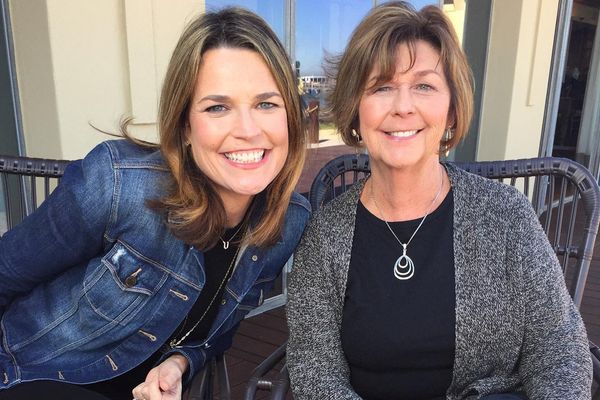
Kathy Mohan, the voter who confronted Theresa May over her benefit cuts tells on Monday, the Guardian she is suffering and feels lost.
-
The Unite leader, Len McClusky, said 200 seats would represent electoral success for Labour, even thought that result would be the party’s worst since 1935.
-
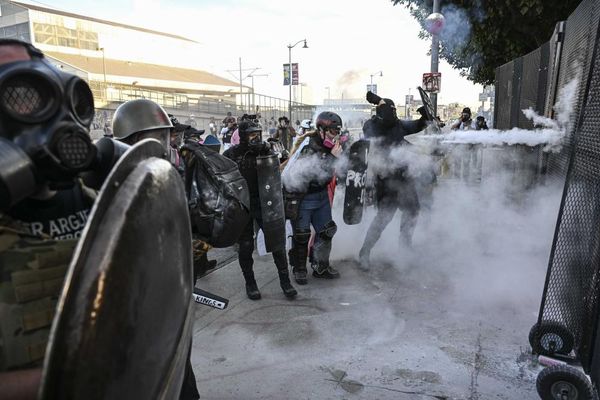
Labour’s Diane Abbott received a somewhat hostile reception when she addressed the Police Federation
- The prime minister was confronted by voters during a phone-in, who attacked her government’s record.
'I’m suffering': woman who confronted May tells of disability cuts ordeal
Kathy Mohan, who has suffered from benefit cuts, was thrust into the political limelight on Monday, when she confronted the prime minister during a visit to Abingdon, in Oxfordshire.
“Do you know what I want? I want my disability living allowance to come back ... I can’t live on £100 a month. They just took it all away from me,” she told Theresa May.
Today, in an interview with the Guardian, she says:
I wanted to have my say. I just came out with it. I said I have learning disabilities and I want to stick up for other people. I’ve seen what people are going through, I know that people are killing themselves....
It’s like I’ve got no life, I feel lost. I can’t go anywhere. I’ve got no money. I’ve used the food bank, I’ve never done that before in my life.
The prime minister, Theresa May, has been confronted by voters during a conference call event with members of the public, who attacked her over the Tory government’s record on helping disabled people and warned her that Labour’s manifesto pledges were resonating with the public.
One caller, named Jane, said May was “sending attitudes to disabled people back to the 1940s” due to the government’s replacement of disability living allowance with personal independence payments.
The prime minister responded:
It is about focusing funding on those who are most in need and helping those who can move into the workplace to do so.
Another caller, named Jim, suggested May might face more of a challenge than expected in the general election after the launch of Labour’s manifesto. He told May:
Today’s manifesto from the Labour party set out a lot of information that to the vast majority of the population in this country will appear very attractive.
I thought, with things like the minimum wage, the NHS, schools and so on, unless you are very careful, you are going to find a significant swing to Labour on those issues.
May replied:
From what I see, it is a very long wish list, a whole lot of promises. But, if you look at it, it doesn’t add up. The question you always have to ask about the Labour party is how will they pay for it? I think it’s ordinary working people who pay the price.
One thing I know is that nationalising the water companies is not a way to ensure that bills will be kept down and the service will be good.
Once again, she declined to rule out tax rises if the Conservatives win the general election but claimed that it was Labour’s “natural instinct” to do so.
Members of a Conservative mailing list and followers of the party’s Twitter feed were among those invited to take part in the event.
One repeated her campaign slogan, while another urged her to tell the Scottish First Minister, Nicola Sturgeon, that now was not the time for a second independence referendum.
Updated
Diane Abbott’s attempt to woo the Police Federation ended up with her being jeered as she failed to back officers having controversial protective equipment to save them from being spat at.
Abbott went to the federation’s conference armed with promises that Labour would fund 10,000 more officers if elected and rhetoric attacking years of cuts to police funding by the Conservative government.
That was received with polite applause in Birmingham by delegates representing 120,000 rank and file officers.
But the shadow home secretary came unstuck when tackled on her position on spit hoods, a controversial mesh device used by officers to stop suspects spitting at them.
Updated
Jeremy Corbyn has been defending his proposals to scrap university tuition fees and embark on a large-scale housebuilding programme against allegations that they are “dangerous” and “leftwing” at a community centre in Pudsey, near Leeds.
On tuition fees, Corbyn told the crowd:
Somebody at lunchtime told me this was all very dangerously leftwing stuff. Well I tell you this: if you look around the world at the countries with the greatest levels of equality, with the best standards of education and the best achievements in education, all of them fund their students through university because they realise we all benefit from an educated population.
Isn’t that what it’s about?
Updated
Labour’s election campaign will be a “success” if the party holds 200 seats, the general secretary of Unite has said, a result which would be the party’s worst since 1935.
Len McCluskey, one of Jeremy Corbyn’s staunchest backers, whose union has spent millions on Labour’s campaign, said he could not see the party winning the election, but said any result would be good if Theresa May’s Conservative majority did not increase “dramatically”.
In an interview with Politico, McCluskey said:
The scale of the task is immense. People like me are always optimistic. But I don’t see Labour winning. I think it would be extraordinary.
I believe that if Labour can hold on to 200 seats or so it will be a successful campaign. It will mean that Theresa May will have had an election, will have increased her majority but not dramatically.
If Labour held 200 seats, the result would probably give May a working majority of more than 80 MPs, up from 17. Labour ended the last parliament with 229 seats.
McCluskey said he blamed “the constant attack of the media on Jeremy Corbyn and the image that they’ve pinned on Jeremy” and said it was a “huge task” to revive the Labour leader’s image.
He’s got now just under four weeks to try to see if you can break through that image and it’s going to be a very, very difficult task. We are sending messages out to our members saying, this is a decent, honest man, who is on your side, what have you got to be afraid of, what have you go to lose?
Labour’s policies will make Britain a better and more equal society so we’re trying to pump out that message. Whether that breakthrough can happen, we’ll wait and see. I’m not optimistic, but we’ll wait and see.
McCluskey said the reception from crowds across the country on the election campaign trail gave him hope the party could get a better result than polls were predicting.
There are massive, massive crowds that turn out for him. We’re fighting for every seat. Let’s wait and see what that turns itself into, in terms of percentage votes and seats.
Updated
In an interview with the Politico website, the general secretary of Unite, Len McCluskey, has said Labour will have run a “successful campaign” if it manages to hold on to 200 seats at the election, adding that it would be “extraordinary” if the party actually won.
Updated
Afternoon summary
- The 2017 general election will be fought at a time when voters are getting poorer. As Larry Elliott reports, that was the big message from the latest official figures for the cost of living showing that the annual inflation rate has reached 2.7%.
That’s all from me for today.
Thanks for the comments.

IFS says Labour's tax for high earners likely to raise revenue, 'but could raise nothing'
The Institute for Fiscal Studies has published a briefing on Labour’s plans to increase income tax for those earning more than £80,000. It says that, while the proposal is likely to raise some revenue, and could raise as much as the £4.5bn Labour expects, it could also raise nothing because of people taking steps to avoid it.
This is from Robert Joyce, an associate director at the IFS and author of the briefing note.
Labour is proposing to raise income taxes for the highest-income 2% of adults. Many would take action to reduce their taxable income in response: for example by increasing contributions to private pensions. Because the extent of those kinds of responses is very uncertain, the amount of extra revenue these higher tax rates would raise is also very uncertain. Labour’s policy could raise something like the £4.5 billion per year it expects, but it could also raise nothing. What is certain is that the proposal would miss an opportunity to sort out the complex mess that recent governments have made of the tax system for those with the highest incomes.

Photograph: ANDY RAIN / POOL/EPA
Torsten Bell, director of the Resolution Foundation, has written a good blog about the Labour manifesto. He says the arguments about whether or not Labour’s costings add up overlook the inherent uncertainties.
While it’s relatively easy to estimate how much a 1 per cent change in this rate or that rate of tax will bring in, once you move to talking about big shifts of 9 per cent on Corporation Tax, or an additional 5 per cent on earnings over £80,000 you enter much less certain territory. Behavioural change by those facing these tax rates becomes as important as the rates themselves – as does government action to try and respond to those changes. We’re then into a complex world of shifted incentives, changed behaviour, tax avoidance and tax enforcement. Those telling you that such tax rises would raise nothing are as wrong as those telling you with equal certainty what they will raise in pounds and pence.
Equally, costing manifestos suffers from another big problem – you can’t cost a fudge and politics is full of fudges. For example the manifesto uses the word “review” 37 times, ranging from “the entire business rates regime”, to state pension age, legal aid funding and the Mineworkers Pension Scheme. Good luck costing a review.
One “review” that has disappeared from the manifesto text since the leak of the draft last week is of the cuts to Universal Credit. In its place is an allocation of £2bn to reversing an unspecified amount of those cuts – and without a firm policy it’s hard to know if £2bn will cover it. That switch is welcome, but it is only enough to reverse less than half of overall cuts associated with reduced work allowances and the two-child limit on benefit entitlement in 2021-22. To further see the difficulty of costing parties plans compare the fact that Jeremy Corbyn said at his manifesto launch today that Labour would not freeze benefits, but the manifesto makes no reference to reversing the benefit freeze that is set to bite hard in the next few years. Should we cost the manifesto or what the party leader says?
Bell also says that focusing on these costings also misses the big picture.
This manifesto is really about significantly increasing the tax take to spend significantly more. Rather than getting our calculators out, we should really be debating the desirability or otherwise of a larger state.
Updated
Labour’s manifesto is the third longest since 1979, the Press Association’s Ian Jones says.
At roughly 23,600 words, this is Labour's third-longest manifesto since 1979. #GE2017 pic.twitter.com/uZQJX9WXVe
— Ian Jones (@ian_a_jones) May 16, 2017
Earlier I mentioned the “telephone town hall” (or conference call, to you and me) that Theresa May is holding tonight. See 12.37pm.
But it turns out that people based abroad will not be able to ring in. This has angered some Britons living on the continent worried about their rights after Brexit. Dave Spokes, from Expat Citizen Rights in EU, said:
The government keeps its citizens in the dark by refusing to commit to protecting their rights, now it seems to be ignoring the very people worried about having their lives turned upside down by Brexit.
What supporters said at the Labour manifesto launch
“I don’t know how anyone can stand in this room and not support what was said by Jeremy Corbyn today on that stage,” said Victoria Jenkins, 48, a charity worker from Bradford who said she felt like she had witnessed a historic moment.
I feel just very privileged to be one of the few people attending and excited for what I’ve heard and the changes that could come.
She would love to see Corbyn walk into Downing Street but supports his policies and approach regardless of the election result.
Even if Labour don’t win it’s change in the right direction, a proper alternative to what the government is offering.
Jenkins was one of many Labour activists fired up by the Corbyn’s policy programme, arousing a passion they could not muster for Ed Miliband or the latter years of New Labour.
“I voted for Ed Milband but I feel like he was a decent bloke who was all the time thinking ‘Oh, what shall I say now: I’ve said something leftwing [so] I’ll have to chuck in something a bit rightwing,’” said Neal Heard, 57, also from Bradford, who said the manifesto was “amazing” and made him feel “inspired”.
What Corbyn is trying to do is get Labour to believe in something and stand for something. He is an honest person and he will hopefully get more and more people to come round to seeing this is a really good chance. I blooming well hope he will win.
Party manifestos are typically unveiled to a ripple of polite clapping. But cheering, whooping and hollering were the order of the day as Jeremy Corbyn, the Labour leader, delighted his audience with the programme of mass nationalisation, the end of tuition fees and billions for the NHS.
The audience was an invited crowd of Labour supporters, many of them students, retirees and public sector workers, who were moved to boo as journalists asked whether immigration should come down and why Corbyn’s leadership is lagging behind Theresa May in the opinion polls.
Three retired former public sector workers – Bridget Maguire, Alison Richards and Ann Spears, all Labour members for more than 30 years – said they thought voters would be convinced by his policies and presentation.
Richards, 71, described the manifesto as “what some of us have been wanting for a while”. She said:
I think you have to be honest with people that you cannot have good public services without paying for them. The public will like it if they get what’s been said without it being filtered and distorted.
Maguire, who recently retired from working adult social care, said every individual policy was popular.
People are calling for things that we are promising to deliver. We have everything the public have been asking for: more investment in housing, rent controls, funding for education, adult education, investment in the NHS ... it will speak to people as long as they come out and vote.

Updated
Carl Emmerson, deputy director of the IFS, told the Guardian that the policies represented “a very big tax rise”.
“They will almost certainly bring in tens of billions of pounds but quite possibly not the full amount that Labour expects,” he said.
He argued that the change in the rates for income tax were very “uncertain” because it was not clear how people would respond and whether there would be a spike in avoidance.
Labour have reduced the total likely to be raised through tax by £3.9bn to account for “additional behavioural change and uncertainty” but Emmerson pointed out that the figure covered two huge shifts in corporation and income tax.
He also highlighted the Labour priorities arguing that they had “offered big increases for schools, infrastructure, childcare and tuition fees but much less for the NHS or reversing benefit cuts”.
High earning graduates would benefit most from the tuition fees policy, he said, while a bigger move on benefits would have targeted the working age poor.

Earlier I said that the Institute for Fiscal Studies are saying that Labour’s plans would take tax as a proportion of GDP to its highest level for 70 years, while the Resolution Foundation is saying it would be at its highest level for about 30 years. (See 1.45pm.) It wasn’t clear to me why there was a discrepancy.
It is because they are looking at different measures, they tell me. The IFS is talking about tax as a proportion of GDP; the Resolution Foundation is talking about receipts as a proportion of GDP.
@AndrewSparrow We are looking at just taxes, if include non-tax income of government then get a different answer. Either can be justified. Hope that helps!
— IFS (@TheIFS) May 16, 2017
@davesmith_109 @AndrewSparrow charts show slightly different things - taxes v receipts - but the big picture is the same, a big choice about the size of the state
— ResolutionFoundation (@resfoundation) May 16, 2017
NEW from @TorstenBell - Labour’s manifesto: let’s focus on the big choices not the small change https://t.co/AIAVeERnmX pic.twitter.com/C48ILMZPEu
— ResolutionFoundation (@resfoundation) May 16, 2017
Labour says it will spend £10bn over five years softening impact of benefits freeze
Labour has put out a statement clarifying its position on the benefits freeze. A spokesman said:
As our manifesto and costings documents explain, Labour is committed to injecting £10bn over five years into the benefits system to review and redesign it for the economy we want to create and make it more effective at reducing poverty and supporting people in work. As Jeremy Corbyn made clear today, that will mean an end to the freeze. The form that restructuring will take will be subject to review.
In Labour’s costings document (see 11.41am), and in Jeremy Corbyn’s BBC interview (see 2.53pm), the party talked about £2bn being available to mitigate the impact of the benefits freeze. This statement clarifies this, making it clear that £2bn is an annual figure and that the party will commit to spending it every year for a five-year parliament - explaining the £10bn figure in the statement.
But £2bn a year, or £10bn over five years, still does not fully compensate for the impact of these cuts. See 2.53pm.
Updated
The Economist’s Buttonwood column (which covers financial markets) has won the prize for best headline on an article about the Labour manifesto.
Old McDonnell has a plan. He eyes IOUs
Buttonwood concludes Labour does not have a coherent economic plan for post-Brexit Britain. Here’s an excerpt from the article.
But what will happen to growth in this scenario? Britain is facing a post-Brexit future in which businesses must decide whether they will have sufficient access to the single market to base themselves in Britain or, if they are international, whether they might want to move back to America (if Mr Trump ever unveils his tax cut) or to Asia. A business contemplating a Labour government will face the following outlook: a tax rate gradually rising to 26%, a higher tax on executive pay, higher tax rates for the company itself in high-earning industries like finance, and more restrictions on labour hiring policies (workers will get full rights from day one, no zero hours contracts, there will be “sectoral collective bargaining”, a higher minimum wage, and four extra public holidays).
It doesn’t sound like a very appealing offer for companies thinking about staying in, or coming to, Britain. Yes, as has been pointed out, Britain has the lowest corporate tax rate in the G7 but the direction is generally down; Britain will be moving against the tide at just the moment when its future is most in doubt. Think about a big American bank; it will have to pay the excess pay tax, its employees will be taxed more, it may be hit by the bank levy and its clients will be taxed via the “Robin Hood” tax on derivatives. That is a big incentive to move back to New York, or to Dublin for EU business. Some may say “good riddance” but the banks’ employees pay a lot of tax. The result is that the tax take will be a lot lower than Labour thinks and growth will be slower.
Here is an analysis of the Labour manifesto by my colleagues Alan Travis and Phillip Inman.
Sky’s Faisal Islam has more on what Labour aides are saying about the Labour plan to spend some money mitigating the impact of the benefits freeze, without reversing it in full.
Labour aides say 3 yr cash freeze on benefits until 2020 will not be lifted across the board, but £2bn/yr made available as part of reform
— Faisal Islam (@faisalislam) May 16, 2017
... so £3.5bn a year saving on not uprating working age benefits with inflation, remains, but a targeted £2bn to thaw it for certain people
— Faisal Islam (@faisalislam) May 16, 2017
... so £3.5bn a year saving on not uprating working age benefits with inflation, remains, but a targeted £2bn to thaw it for certain people
— Faisal Islam (@faisalislam) May 16, 2017
ITV’s Robert Peston, who asked the question at the manifesto launch about why Labour was not reversing the benefits freeze (see 2.04pm), subsequently pressed Jeremy Corbyn on this in an interview. As he writes on his Facebook page, he was not impressed by Corbyn’s answer.
According to the Institute for Fiscal Studies, if Labour ended the freeze for the two years remaining of it from April 2018, that would require it to find an additional £3bn every year.
In other words Jeremy Corbyn seemed to be doing, in his reply to my question, what he and his shadow chancellor promised they would not do, namely make an unfunded spending promise, on the hoof.
I asked him about this later, and he said that the £4bn of welfare changes in his manifesto is somehow the same as ending the benefits freeze.
But that is simply not so.
So either Jeremy Corbyn just made another spending commitment in his answer to me. Or he wants us to think he is doing more for poorer households than is actually the case.

Q: In your Facebook interview yesterday you said some other methods of killing foxes were more cruel than hunting. What could be more cruel than being torn apart by dogs?
May says the reporter should look at the literature on this. She says she is proposing a free vote.
PM arrives at Screw Fix in Stoke on Trent: pic.twitter.com/jeD9PC6cA5
— Harry Cole (@MrHarryCole) May 16, 2017
Updated
Q: Can you guarantee that the “national living wage” will reach £9 an hour by 2020 as George Osborne promised?
May says the promise always was that it would go up in line with median earnings.
Q: We are at Screwfix today. Would Labour’s plans screw or fix the economy?
May laughs. The former, she implies.
May says Labour's sums 'don’t add up'
Theresa May is now taking questions from the media.
Q: If you are the party of working people, will you match some of their pledges?
May says when you look overall at that manifesto, “it doesn’t add up”.
Labour will not be able to deliver what they are promising, she says.
- May says Labour will not be able to deliver its promises because its sums “don’t add up”.
She says Labour’s “nonsensical economic policies” mean they will produce “a coalition of chaos”.
Q: What is your response to the revelation that President Trump disclosed intelligence matters to the Russians?
May says she does not comment on intelligence matter. It is up to Trump what he wants to tell his guests, she says.
Updated
Turning back to the Labour manifesto, business organisations have been criticising it.
This is from Carolyn Fairbairn, director general of the CBI.
Labour’s proposals taken as a whole prioritise state intervention over enterprise, and fail to offer the pro-growth and competitiveness agenda the country so badly needs.
While employers will welcome new commitments on skills and infrastructure, living standards will only rise if open markets remain the mainstay of the UK economy, rather than stifling new rules, regulations and burdens on firms.
Some of the Labour policies deserve ‘three cheers’ and show what business and government can achieve together in partnership, for example on apprenticeships and innovation. Others, such as the future of the UK’s digital infrastructure, pose important questions yet need real collaboration with business to make them work. But too many - from renationalisation to new rules that potentially undermine the UK’s flexible labour market - are far wide of the mark.
The CBI has produced a more detailed critique here.
And this is from Adam Marshall, director general of the British Chambers of Commerce.
High personal taxation, sweeping nationalisation and deep intervention in business decision-making are not the hallmarks of an ambitious and enterprising society. Taken together, some of the headline propositions in the Labour Party manifesto will give business communities across the UK real cause for concern.
May confirms that the Conservatives will publish their manifesto later this week.
(It is expected on Thursday.)
Theresa May's campaign speech
Theresa May is doing a Q&A with workers at a factory in Stoke-on-Trent.
She started with a short speech, mostly focusing on the Tories’ plans for workers’ rights announced yesterday.

Updated
Here is some comment on the Labour manifesto from the leaders of the UK’s two biggest unions.
From Len McCluskey, the Unite general secretary
What Labour is doing today is what Labour does best – offering real change for the many in this country. Labour will invest in our people and build a Britain that we can all be proud of ...
In every aspect of life – from an affordable home to a safe NHS, from a decent education for all our kids to a living wage and a decent job – the story of the Tory party is that our communities suffer.
The Labour party will put a halt to this. Under Labour, working people and their communities will stand tall again.
From Dave Prentis, the Unison general secretary
Labour has produced a manifesto that delivers for public services. Ending the pay cap will make a huge difference for hard-pressed public sector employees.
Proper investment in the NHS and social care will have a huge impact on patients and staff too.
When the other parties unveil their manifestos later this week, they would do well to take a leaf out of Labour’s book - and stand up for public services and those who work in them.
Direct criticism of Israel has been watered down in Labour’s manifesto, amid concerns that a draft version indicated a hardening of the party’s stance, the Press Association reports.
An attempt to balance the criticism aimed at both Israelis and Palestinians also appears to have occurred with the inclusion of calls for an “end to rocket and terror attacks”.
A leaked version of Labour’s 2017 general election manifesto criticised the “wrong and illegal” expansion of Israeli settlements in the West Bank and said it represented a “threat to the very viability of the hopes of securing a successful outcome of the peace process”.
It added the “continued humanitarian crisis” in the Palestinian territories could not be accepted, with support included for Palestinian recognition at the United Nations.
This version went further than Labour’s 2015 election manifesto, which made no mention of illegal settlements or the crisis in the Palestinian territories.
The final version of Labour’s 2017 policy continues to reiterate the 2015 commitment to a two-state solution to ensure peace in the Middle East.
It also repeats the belief that there is no military solution to the conflict and “all sides must avoid taking action that would make peace harder to achieve”.
The document adds: “That means both an end to the blockade, occupation and settlements, and an end to rocket and terror attacks.
“Labour will continue to press for an immediate return to meaningful negotiations leading to a diplomatic resolution.
“A Labour government will immediately recognise the state of Palestine.”
When he interview John McDonnell, the shadow chancellor, on the Today programme this morning, Nick Robinson suggested at one point that McDonnell might have been passed a note telling him what the figure for the deficit was. (See 9.12am.)
James Mills, McDonnell’s press officer, says this did not happen.
@bbcnickrobinson @tnewtondunn There was no paper passed, must have been background noise in the radio car
— James Mills (@JamesMills1984) May 16, 2017
As does Dino Sofos, a BBC journalist who looked into it.
Spoke to the engineer who was sat next to @johnmcdonnellMP during his Today interview. He was not passed a note and did not check his phone.
— Dino Sofos (@dinosofos) May 16, 2017
And Robinson accepts that McDonnell was not handed a note.
For the record - BBC colleague in radio car confirms that no paper was passed to @johnmcdonnellMP this morning. https://t.co/PVOTZWi5g8
— Nick Robinson (@bbcnickrobinson) May 16, 2017
Corbyn pledges to reverse 'worst effects' of benefits freeze, but not to fully undo it
Critics of the Labour manifesto are focusing on commitments that are unfunded, and two in particular: a commitment not to go ahead with planned increases in the state pension age, which costs nothing in the short term but which by the middle of the century would cost billions and billions; and an off-the-cuff comment by Jeremy Corbyn in his Q&A about increasing benefits. (See 1.37pm and 2.04pm.)
Corbyn referred to two Tory policies that were introduced by George Osborne in his summer 2015 budget, when he needed to find a way of implementing the £12bn benefit cuts the Tories promised in their election campaign.
First, he referred to the freeze in tax credits and working-age benefits. According to the Treasury red book, that will save the Treasury £4bn a year by 2020-21 (but less in earlier years).
And, second, he referred to the benefit cap, which will limit families to claiming £20,000 a year in benefits outside London, and £23,000 in London. Before 2015 it was set at £26,000. The Treasury red book says that policy will save the Treasury £495m by 2020-21.
In an interview with the BBC that just just been broadcast, Corbyn sought to clarify his position on benefits. He said Labour would mitigate the “worst effects” of the Tory benefits freeze - but not reverse them altogether. This is what he told Laura Kuenssberg.
We have set aside £2bn to deal with the worst effects of the benefit cap, which will help a lot. The benefit cap has very perverse effect, worst in the areas of high cost private sector housing such as central London .... The housing costs are the biggest element to it. So we will deal with that.
Secondly, we are increasing the living wage so those in in-work benefits, that will obviously effect them.
We are also saying that those on disability benefits, going through often the indignity of capability at work assessment, [that] that will be a medical assessment, not an official bureaucratic assessment.
So there are going to be a lot of changes there.
The £2bn we have set aside is to ensure that we deal with the worst effects of the way the cap operates ...
Bear in mind we have had two weeks to prepare all of these policy issues because of the way the election has been called. I accept the challenge.
In his answer Corbyn seemed to be confusing the benefits freeze (which will affect millions, and save the Treasury a huge sum by the end of the decade) and the benefit cap (which affects fewer people, saves considerably less).
There is no commitment in the manifesto to reversing the benefit cap, although Corbyn is saying the party will be saying more about this soon. (See 2.04pm.)
There is a commitment in the manifesto to spend £2bn extra on universal credit “for review of cuts and how best to reverse them”. (See 11.41am.) This would mitigate to some extent the impact of the benefits freeze, because the freeze covers universal credit and other benefits. But in 2015 the Tories announced a series of other cuts to universal credit, worth at least £5bn by 2020-21, as well as the freeze worth £4bn. Some of these cuts were abandoned by George Osborne after a Tory revolt, but others were not. Labour’s £2bn will compensate claimants to some extent for these cuts, but will not be enough to undo them in full.
Updated
Here is my colleague Larry Elliott’s analysis of the Labour manifesto. He says the document is based on four key assumptions – and one sleight of hand.
Updated
What Corbyn said in his Q&A about not freezing benefits
This is what Jeremy Corbyn said in his Q&A when he was asked by ITV’s Robert Peston why Labour had not committed to reversing the planned cuts in tax credits. (See 12.10pm.) This is the answer that the Tories are treating as an unfunded spending commitment. (See 1.37pm.)
Yes, increasing benefits is important, and clearly we are not going to freeze benefits. That is very clearly. We are also looking the perverse effects of the benefit cap on people and their housing accommodation, particularly in London and in the centre of our big cities. You will be hearing more about that in the very near future.
IFS says chances of Labour raising the full £50bn it wants from extra tax are 'pretty small'
Paul Johnson, the director of the Institute for Fiscal Studies, has cast doubt on Labour’s ability to raise £50bn from tax – a central plank of its manifesto.
Speaking on BBC Radio 4’s World at One programme, Johnson said:
The chance of getting £50bn are pretty small. You would get, I don’t know £20bn or £30bn, but the long-run impact will be rather smaller than the £50bn that they are hoping for.
The tax promises are uncertain, I think that would be the kindest way to put it ...
They’re looking at raising an awful lot of money from companies and from higher earners, and the long-run impact of the changes they are suggesting almost certainly wouldn’t raise the full £50bn.
It would raise a lot of money. It seems to us is that if they were able to raise that amount that would take tax burden in the UK to its highest level in 70 years.
Updated
The Institute for Fiscal Studies says Labour’s plans would take tax as a proportion of GDP to its highest level for 70 years. (See 12.47pm.) But the Resolution Foundation, a rival economic thinktank, says this figure would only be its highest level since the 1980s.
Labour's tax plans would bring receipts as a share of GDP up to levels last seen in the mid-1980s. Raises big debate about size of the state pic.twitter.com/e4jgXPFaKZ
— ResolutionFoundation (@resfoundation) May 16, 2017
If I can find out who’s right, I will let you know.
UPDATE: The IFS and the Resolution Foundation are using different measures. The IFS is talking about tax as a proportion of GDP; the Resolution Foundation is talking about receipts as a proportion of GDP. See 4.53pm for more detail.
Updated
Tories claim to have identified nine unfunded spending commitments in Labour manifesto
The Conservatives are also accusing Labour of failing to explain how all their policies will be paid for. They have identified nine proposals in the manifesto that they say are unfunded.
But four of those relate to proposed nationalisation plans (water, Royal Mail, rail and energy), which Labour says it would fund from its infrastructure programme (which will be funded by borrowing, because it counts as investment not current spending.
Two of the others are relatively trivial: reversing cuts to union learn (a union training initiative) and setting up a commission on lifelong learning.
The Tories also say Labour has not explained how it would fund 3,000 more prison guards, although conceivably this could be funded by savings in the Ministry of Justice budget.
But the final two items on the Tory list are potentially more problematic.
The Labour manifesto says after the state pension age rises to 66, Labour would not go ahead with planned further increases. Instead it would commission a new review of the pension age. On the World at One just new Martha Kearney has just said that the BBC has been told that, over time, not going ahead with planned increases in the state pension age could cost £93bn. Rebecca Long-Bailey, the shadow business secretary, said the party would be setting out its plans on this in due course.
The Tories also point out, as their final point, that Jeremy Corbyn said in the Q&A (see 12.10pm) that the party would not keep the proposed tax credit cuts. Corbyn told ITV’s Robert Peston, who asked the question, that “clearly we’re not going to freeze benefits” and that the party would be saying more about this in due course. Long-Bailey was also asked about this, and implied any increases could be paid for by the money set aside by the party for benefit increases, although the Labour costings document does not say this.
Commenting on this list of supposed unfunded commitments, David Gauke, the chief secretary to the Treasury, said:
Today confirms what we already knew: Jeremy Corbyn’s nonsensical ideas simply don’t add up. And every single working family in this country would pay for Corbyn’s chaos with higher taxes.
I will post more from the Long-Bailey interview shortly.
Updated
Tories claim five proposals have been dropped from Labour's manifesto
The Conservatives claim to have identified five proposals that were in the draft Labour manifesto last week that have been dropped from the final version out today. This is from their press release. (I’ve added the numbers – and some punctuation – but otherwise the rest of wording comes from the Tory press release.)
1 - Their draft says: ‘Cover apprentices’ travel costs, which currently run to an average of £24 a week – a quarter of earnings if apprentices are on the minimum wage’.
This is not in today’s manifesto.
2 - Their draft says they would help small businesses with the transition to a higher living wage: ‘Labour understands that many small businesses may struggle with the higher real living wage that we will bring in. By ringfencing the extra proceeds from tax revenues and lower eligibility for in-work benefits, we will establish a new employment allowance for businesses that struggle to pay a higher living wage.’
This is not in today’s manifesto.
3 - Their draft says they would build more ports: ‘To prepare for global new trade arrangements, we will study the feasibility of port development in Southampton and Avonmouth as well as Liverpool, Hull and Birmingham.’
This is not in today’s manifesto.
4 - Their draft says there will be ‘no private prisons under Labour’.
Their manifesto now says: ‘Under a Labour government, there will be no new private prisons and no public sector prisons will be privatised.’
5 - Their draft says they would support Heathrow expansion: ‘Labour supports the expansion of aviation capacity and we will continue to support the work of the Airports Commission.’
Today their manifesto has a weaker commitment: ‘Labour recognises the need for additional airport capacity in the south-east. We welcome the work done by the Airports Commission, and we will guarantee that any airport expansion adheres to our tests that require noise issues to be addressed, air quality to be protected, the UK’s climate change obligations met and growth across the country supported’
Updated
And here is the Institute for Fiscal Studies’ analysis of how much extra those earning more than £80,000 would have to pay under Labour’s plans to raise income tax for high earners, and how many people would be affected.
Labour’s proposed income tax rise: cash losses by income (assuming no behavioural response), in numbers... (2/2) #GE2017 pic.twitter.com/JNUHndNQtz
— IFS (@TheIFS) May 16, 2017
Updated
IFS says Labour's plans would take tax as proportion of GDP to highest level for 70 years
The Institute for Fiscal Studies has posted more on the Labour manifesto plans. It says Labour’s plans would take tax as proportion of GDP to the highest level for 70 years.
If Labour did raise £49bn in tax it could push tax receipts to highest level in 70 years #GE2017 https://t.co/voP8JEtwMH pic.twitter.com/c48Zr5HVQK
— IFS (@TheIFS) May 16, 2017
If Labour did boost spending by £74bn spending could reach highest pre-crisis level since mid-1980s #GE2017 https://t.co/EqdPwXn647 pic.twitter.com/uvYUJFHmAr
— IFS (@TheIFS) May 16, 2017
Updated
Kezia Dugdale, the Scottish Labour leader, pre-empted the launch of her party’s UK election manifesto by challenging the Scottish National party to pledge it will nationalise ScotRail, the country’s main rail operator, which is controlled by Holyrood.
Dugdale said the UK manifesto promises to bring railways “back into public ownership, as franchises expire or, in other cases, with franchise reviews or break clauses”.
Dugdale said Scottish rail users “are fed up with overcrowded, delayed and cancelled trains. The SNP refused Labour’s proposal for a fare freeze for all passengers this year; but the SNP must now follow our lead and commit to delivering a ScotRail service run for passengers, not profit.”
Dugdale’s gambit is designed to increase pressure on Humza Yousaf, the Scottish transport minister, to agree to a public sector bid but it is opportunistic. Yousaf has already started talks with rail unions and transport groups on building up a public sector bid for ScotRail once its contract comes up for renewal in 2024, or if he invokes an early break clause, which can be done from 2020.
The Scottish government proposal is not guaranteed nationalisation: it focuses on allowing a public sector bidder to compete with private firms. Even so, the Scottish TUC welcomed Yousaf’s roundtable talks on a public bid last December, describing it as “a constructive meeting that helped to identify the pertinent issues”.
Updated
Theresa May is taking part in what the Conservatives are calling “a telephone town hall” tonight. It’s a ghastly Americanism; what they really mean is a conference call.
If you want to take part, you can sign up here.
Updated

Ukip has given its initial response to the Labour manifesto – choosing to focus on the element connected to regenerating the pub industry.
A couple of paragraphs in the manifesto, in the section on local communities, calls for a national review of pubs “to examine the causes for their large-scale demise, as well as establishing a joint taskforce that will consider future sustainability”.
Ukip’s leader, Paul Nuttall, said the plans “demonstrate a complete lack of joined up thinking”. He said:
Whilst guaranteeing to list all pubs as assets of community value to help stop them being sold off to supermarket chains and the like is laudable, when combined with a refusal to rule out a rise in beer duty it is nothing but an empty gesture.
Protecting pubs from becoming supermarkets, while at the same time reinforcing the supermarkets’ ability to undercut pub prices is fantasy economics, and a cruel fantasy at that.
Updated
Caroline Lucas, the Green party’s co-leader, says there are many Green ideas in the Labour manifesto.
Labour's Manifesto: A big step forward on a fairer economy. Some good, some bad on climate change. Weak on Europe. Terrible on #Trident. 1/2
— Caroline Lucas (@CarolineLucas) May 16, 2017
Genuinely pleased to see many @TheGreenParty policies from 2015 make it into the Labour Manifesto. Good ideas aren't owned by any party. 2/2
— Caroline Lucas (@CarolineLucas) May 16, 2017
Labour to consider replacing council tax with land value tax
Some intriguing small print in the costings document for Labour’s manifesto: the party will give an immediate injection of £1.5bn to local authorities in the next fiscal year (2018-19) to try to slow the pace of council cuts.
It will also “initiate a review into reforming council tax and business rates and consider new options, such as a land value tax, to ensure local government has sustainable funding for the long term”.
The valuations on which council tax payments are based have failed to keep pace with house prices in recent years, so the current system is not very progressive, and indeed, some experts think it’s so unfair it should be scrapped.
A land value tax, meanwhile, is a bold policy that aims to capture some of the gains of rapid increases in property prices so that the benefits can be spent on local infrastructure, for example. Labour clearly felt it would be too politically tricky to put in the manifeso – but it seems they’re at least toying with the idea.
Updated
Here is my colleague Owen Jones’s take on the Labour manifesto.
And here is how Owen’s article starts.
Wanted: a compelling vision for a left-of-centre party. Must invest in economy, modernise essential services, get the well-off to pay more tax. Free wifi on trains a bonus. Someone answered my personal ad! Labour’s manifesto – unveiled today – is a moderate, commonsense set of antidotes to the big problems holding back one of the wealthiest countries on earth. And – intriguingly – here is an attempt to confront the crisis of identity and vision afflicting social democracy not just in Britain, but across the western world.
Updated
Q: [From ITV’s Robert Peston] Forecasters say the living standards of the poor will fall because of benefit cuts. Why have you not committed to reversing these? [See this Resolution Foundation blog for more on this.] And how much extra would you borrow?
Corbyn says Labour is looking at the impact of benefit cuts. The party will be saying more about this, he says.
On borrowing, he says Britain’s problem has been that it did not borrow enough.
Q: [From the Daily Mirror’s Jack Blanchard] A lot of people like your policies, but they don’t like you as leader. Why is that?
This generates booing from the audience.
Corbyn says opinion polls have found that the party’s policies are very popular.
He says he is very proud to have been elected Labour leader.
This manifesto is a joint effort.
Leadership is not about dictating. It is also about listening, about understanding. You have to reflect the reality of people’s lives, he says.
He says he is proud to represent an inner city community.
Leadership is about understanding the frustrations in people’s lives, and in producing policies that address them.
Being strong is not about “shouting, dictating and instructing”.
He does not indulge in abuse, he says. The personal abuse thrown around on social media is appalling, he says.
He says more than 500,000 people have been brought into Labour because they are excited about what the party can do.
And that’s it. Corbyn is now winding up.
Updated
Q: Are there any provisions to fix failing academies. My son came out of school at 18 because the schools failed him.
Corbyn says under Labour headteachers will not have to take collections at the school gates to pay for their schools. Labour will ensure schools are properly funded.
Where schools are failing, there has to be an effective and strong local education authority that can step in. He says Labour is not convinced every school should be accountable only to the Department for Education. Labour wants all schools to be part of the local authority family. Schools can learn from each other. But if they compete, that will not happen. He quotes the African proverb, says it takes a village to raise a child.
He says he and his deputy, Tom Watson, discussed earlier on the Labour bus how exciting the pupil arts premium would be.
Q: [From the Morning Star] What will you do about the shockingly biased media?
This triggers lots of cheering (though not from the journalists in the audience).
Corbyn says some of the media are biased against Labour.
Labour is very serious about ensuring freedom of information. He says journalists and a free press are intrinsic to a free society.
Q: Do you support the Post Office providing a people’s bank?
Corbyn says Labour thinks high street banks are important for the community. He says Labour will look at the role the Post Office can play in ensuring people get good banking.
Updated
We already knew that Labour would seek to raise £19bn by reversing most of the Conservatives’ cuts to corporation tax. But the manifesto reveals that a Labour government would also seek to raise another £3.8bn through an “efficiency review of corporate tax reliefs”.
The National Audit Office has pointed out in the past that the government does not systematically analyse the effectiveness of the many tax reliefs, including, for example, entrepreneurs relief and the research and development tax credit.
Seema Malhotra, who was in John McDonnell’s Treasury team before last summer’s mass shadow cabinet walkout, had begun a review of these reliefs, asking whether they were properly targeted. But the impact of this planned review will be to increase the tax bill for Britain’s companies by almost £4bn.
Updated
Corbyn's Q&A
Corbyn is now taking questions from journalists and Labour supporters.
Q: Can you confirm you are against fracking?
Corbyn says Labour believes fracking is damaging to the environment. The manifesto is clear, he says. (It opposes fracking.)
Q: [From 5 News’s Andy Bell] Can you say if it would be good if immigration came down?
This provokes booing from the audience.
Corbyn asks people to show respect. He says he is an NUJ member.
In response to the question, he says immigrants have made a fantastic contribution to our society. Our country owes them a great deal of debt and thanks.
People should not be brought into the UK to undercut people here. Free movement will no longer continue after Brexit. He says in future there will be a fair migration policy, and there will be an end to the undercutting of standards.
A Home Office run by Diane Abbott will be fair and decent, he says.
Q: [From the BBC’s Laura Kuenssberg] Can you confirm that you would spend more and tax more and borrow more?
Corbyn says he is proposing a rebalancing of our economy. It will make it fairer.
Wages will increase through the living wage. That will lead to economic growth.
And it will lead to a slight reduction in in-work benefits.
He says he does not need lectures from this government. It has borrowed more than every Labour government in history.
Labour would invest for the common good. Every other country asks why Britain invests so little. Let’s turn it around, he says.
Updated
Corbyn is still speaking at the launch.
He got a big cheer when he challenged Theresa May to “come out of hiding” and debate him.
He says Labour wants an inclusive society.
A person’s future should not be determined by where they are born.
These proposals represent hope, he says. They are for the many not the few.
And that’s it. His speech is over.
And here is the Labour costings document.
The Institute for Fiscal Studies has already started tweeting about Labour’s plans to increase income tax for the top 5% of earners.
Labour proposes tax rise on the 1.3 million people with the highest incomes (IFS analysis to follow soon) #GE2017 pic.twitter.com/yeQsFQaDrT
— IFS (@TheIFS) May 16, 2017
Labour’s proposed income tax rise: cash losses by income (assuming no behavioural response), in a picture... (1/2) #GE2017 pic.twitter.com/fzgagTAqef
— IFS (@TheIFS) May 16, 2017
How Labour plans to increase spending by £48.6bn a year
And this is what the costings document says about how Labour would spend an extra £48.6bn a year.
National education service and early years
Schools: increasing funding, including protection against losses from the new funding formula, free school meals and arts pupil premium - £6.3bn
Skills: introducing free FE tuition, equalising 16-19 funding and restoring education maintenance allowance - £2.5bn
Childcare and early years, including more money for Sure Start - £5.3bn
Removing university tuition fees and restoring maintenance grants - £11.2bn
Health and social care
Healthcare including free car parking but excluding higher pay and capital expenditure - £5.0bn
Social care - £2.1bn
Restore nurses’ bursaries - £0.6bn
Work and pensions
Social security: increase employment and support allowance by £30pw for those in the work-related activity group, scrap bedroom tax, implement the personal independence payment legal ruling, restore housing benefit for the under 21s, scrap bereavement support rayment reforms. Extra £2bn for universal credit for review of cuts and how best to reverse them, up-rate carers’ allowance to the level of job seeker’s allowance - £4bn
Double paternity pay and paternity leave - £0.3bn
State pensions: up-rate state pensions for British pensioners overseas, extending pension credit to those affected by changes to their state pension age since the 1995 Pensions Act - £0.3bn
Other departments and items not included above
Lift public sector pay cap - £4bn
Introduce a real living wage of at least £10 an hour by 2020, with net fiscal benefits ringfenced to provide support to small businesses - £0.0bn
Recruit an additional 10,000 police officers to work on community beats - £0.3bn
Other current spend items: including abolition of employment tribunal fees, additional border guards, firefighters and HMRC tax collection staff - £0.6bn
Barnett consequentials (Scotland, Wales, NI) - £6.1bn
Updated
You can read the manifesto here.
Corbyn is now mentioning some of the manifesto pledges.
It will boost the minimum wage to £10 an hour by 2020.
It will end the cuts in the NHS and introduce safe staffing levels.
It will scrap tuition fees ...
There is so much cheering at this point that Corbyn has to stop.
When it finishes, he says this will lift the debt cloud.
It will guarantee the triple lock to protect pensioner incomes.
And it will build 1m new homes, at least half of which will be at social rent.
Updated
Corbyn says opinion is changing. “It is moving towards Labour,” he says.
There is no secret why.
Because people want a country run for the many, not the few.
He says people are struggling to make ends meet. “Our manifesto is for you.”
Young people despair of getting a home of their own.
Students leave college in debt.
People have worked for years without getting a pay rise, he says.
Labour will change all that with a manifesto that is “radical and responsible”.
Updated
The Labour manifesto is available here (pdf).
And the Labour costings document is here (pdf).
Jeremy Corbyn's speech
Jeremy Corbyn is speaking now.
He thanks those in the party who have produced the manifesto in a very short period of time.
And he thanks his shadow cabinet team. If you look at it, you see experience, diversity, age range, and people who’s experience is rooted in real life experience, he says.
How Labour would raise £48.6bn a year extra in tax
Here is a more legible version of what the Labour costings document says about the extra money Labour would raise in tax.
Corporation tax - £19.4bn
Income tax increases for top 5% - £6.4bn
Excessive pay levy - £1.3bn
Offshore company property levy - £1.6bn
Labour’s tax avoidance programme - £6.5bn
Extension of stamp duty reserve tax to derivatives and removal of exemption - £5.6bn
Efficiency review of corporate tax reliefs - £3.8bn
Revising tax giveaways of capital gains tax, inheritance tax, bank levy and scrapping the married persons’ tax allowance - £3.7bn
VAT on private school fees - £1.6bn
Other: savings of discretionary housing payments from scrapping bedroom tax, soft drinks industry levy spend redirected from capital to revenue, higher rate IPT on medical insurance, reform controlled foreign companies corporation tax regime - £2.6bn
Allowance made for additional behavioural change and uncertainty, reducing total tax take - £3.9bn
Updated
Now the Labour launch is hearing from Mohammad, a bus driver from Oldham.
He says he does not have debts, but his children will if they go to university.
He says he is proud to be a Labour activist. The party is proposing a future where there is hope for everyone.
Updated
The first, Martin, says one of his sons has brittle asthma. He often has to take him to the local hospital, but services are chaotic because the hospital is not properly funded.
He says he has two sons at the severe end of the autism spectrum. He says getting the help they needed was very hard.
He says he used to drink a bottle of red wine at night. He was drinking too much, and at one point tried to take his life. He says he and his wife realised they were suffering from severe depression.
He says he and his wife have tried to get their sons into a special needs school that they like, but cant. The services are not properly funded, he says. He says he has seen parents in tears because they are not getting the help they need.
He says Labour would give the NHS the money it needs, and introduce a proper care service.
It would develop a better, fairer Britain, he says. That is why he is voting Labour.
Updated
Jeremy Corbyn publishes Labour's manifesto
Jeremy Corbyn and his shadow cabinet have arrived for the launch.
Sarah Champion, the shadow minister for women and equalities, is introducing Corbyn. She describes him (as is customary at these events) as Britain’s next prime minister.
She says first they will hear from two local residents who will explain why Britain needs a Labour government.
Labour plans to raise £48.6bn extra a year in tax
Labour plans to raise £48.6bn extra a year in tax.
Labour's tax raising plans - £48.6bn to be raised pic.twitter.com/rK2vNGlccP
— Robert Peston (@Peston) May 16, 2017
Updated
Labour plans to increase spending by £48.6bn a year
Labour plans to increase spending by £48.6bn a year.
And Labour's spending plans - also £48.6bn a year pic.twitter.com/cB8SHoOxfP
— Robert Peston (@Peston) May 16, 2017
Labour proposes 45p tax rate at £80k, and 50p rate at £123k, raising £6.4bn
Here are the proposed changes to income tax.
Labour's new income tax proposal - 45p above £80k and 50p above £123k. Raises £6.4bn
— Rowena Mason (@rowenamason) May 16, 2017
Journalists at the launch have now got the costings document, which was not leaked last week.
I will post the figures as soon as I get them, but you might be able to read them here.
Labour costings in full. pic.twitter.com/OSBmdpRkb0
— Paul Waugh (@paulwaugh) May 16, 2017
More scenes from the launch.
The balcony scene at Bradford - Jeremy Corbyn is due to launch the official version of the Labour manifesto here at the University at 1100 pic.twitter.com/UnMZW8r8SU
— rachel younger (@rachyoungeritv) May 16, 2017
Jeremy Corbyn fans wait for him at Bradford university pic.twitter.com/fF2V4CBZxK
— Anushka Asthana (@GuardianAnushka) May 16, 2017
There seems to be a pen at the side of #LabourManifesto launch for protesters with placards: pic.twitter.com/1dAKwHXB5a
— Faisal Islam (@faisalislam) May 16, 2017
Here is a closeup of the manifesto cover.
Here it is! #LabourManifesto @itvcalendar pic.twitter.com/6BFZgH3jGd
— Joe Pike (@joepike) May 16, 2017
Updated
Here are Jeremy Corbyn and Tom Watson arriving at the manifesto launch.

Plaid Cymru promises 'infrastructure revolution' as it launches manifesto
Plaid Cymru has published its election manifesto (pdf). Speaking at the launch, Leanne Wood, the party’s leader, said the party was proposing an “infrastructure revolution”. She said:
Plaid Cymru’s plan to invest in our schools, hospitals, roads and railways would bring about a revolution in our infrastructure network.
In all parts of our country, buildings which are the bedrock of our vital public services are creaking. Much of our housing stock is decades old and in decay. The state of our roads and railways are going backwards when they should be taking us forward as a nation.
Many of our towns and cities are still living in the shadow of deindustrialisation. Now is the time to kick-start a genuine economic recovery in Wales by investing in every part of our country.
Plaid Cymru’s £7.5bn plan is an ambitious yet achievable goal that would generate jobs, boost productivity, and transform our economic fortunes.
Wales has faced decades of neglect and underinvestment at the hands of successive Labour and Tory governments in Westminster.
Our public services have been cut to the bone and we are still waiting for our first mile of electrified railway. We know that Wales can do better than this. It’s time to build up our country - and Plaid Cymru has the action plan to do just that.
History tells us that the Tories and Labour never have and never will put the interests of Wales, its economy and its people first. Only a vote for Plaid Cymru on June 8th will ensure that there is a strong team of MPs in London willing and able to defend and develop Wales.

Here’s one for the diaries: a week today (Tuesday 23 May) the Institute for Fiscal Studies will hold a presentation to give its verdict on the main parties’ manifesto plans. The IFS is seen as the UK’s pre-eminent independent authority on tax and spending policy and at previous elections it has found something trenchant and critical to say about just about everyone. There is no reason to think that this year will be any different.
The IFS has already been churning out very useful analyses of election announcements so far. You can find them here. There seem to be more relating to Labour plans than to Tory plans, but that might be because Labour has been putting out much more policy. We’re told the Conservative manifesto will adopt a minimalist approach, and that before its publication the party has had relatively little to say on the policy front.
Here are some of the things the IFS has said already about Labour’s plans.
In a briefing on the minimum wage, it says Labour’s plan to raise it to £10 an hour, including for 18- to 24-year-olds, is a gamble.
Ultimately, the most difficult thing about the setting of minimum wage policy is that we do not know the point at which the minimum wage significantly hits employment. But this should lead to a very simple conclusion: politicians should be particularly careful when setting its level. There is a good case for a minimum wage. But large and sudden increases create considerable risk that those who are supposed to be the beneficiaries of the policy end up paying the cost of ill thought out proposals in higher unemployment or lower hours of work.
In a briefing on Labour’s plans to abolish tuition fees, it says graduates who earn most in the future would benefit the most.
In a briefing on Labour’s plans for education spending, it says the party is proposing “significant increases” which, if spent well, could make “a positive difference”.
And in a briefing on Labour’s plans to increase corporation tax, it says this could raise £19bn but that there would be potential disadvantages.
Updated
ITV’s political editor Robert Peston has written a Labour manifesto preview on his Facebook page. Here’s an excerpt.
The point is that when corporates and the rich flee abroad to escape higher taxes and other costs, they take not only their contribution to the Exchequer but also the jobs they create.
Or to put it another way, the great debate about Labour’s manifesto won’t be about whether it is principled, ambitious, left-wing and a break with the great political consensus of the past 30 years that it is only possible to win elections from the centre-ground of politics.
The manifesto is all those things.
The controversy will be whether Labour’s programme would in practice harm the private sector, which ultimately pays for our public services - and to a significant increase in the indebtedness of a relatively highly indebted state, well beyond what Labour forecasts, believes and hopes.
This is from the BBC’s Norman Smith.
Who's who in Labour pecking order by seating next to Jeremy Corbyn - Diane Abbott,John McDonnel,Angela Rayner... pic.twitter.com/9uCq7U2mtn
— norman smith (@BBCNormanS) May 16, 2017
According to the BBC’s Laura Kuenssberg, Labour are saying that the water nationalisation would be part of their capital spending programme, and that therefore it does not need to be included in the costings that cover current spending.
Labour sources stress plans for water nationalisation part of capital spend, so not part of today's costings
— Laura Kuenssberg (@bbclaurak) May 16, 2017

Inflation went up to 2.7% in April, from 2.3% in March, which is higher than the City expected.
My colleague Graeme Wearden has more on his business live blog.
A high court judge will consider today whether a legal ban on prosecuting Tony Blair over the Iraq war can be challenged.
A private criminal prosecution against the former Labour prime minister was blocked in 2016 when it was ruled Blair would have immunity from any criminal charges.
Today the high court will consider arguments for reversing that ban and for keeping it. The attorney general, Jeremy Wright QC, the government’s top legal officer, wants the ban upheld and also to join the case.
In November 2016, a British court ruled against an application to bring a private prosecution. A district judge at Westminster magistrates court ruled Blair had immunity from prosecution over the Iraq war and that any case could also “involve details being disclosed under the Official Secrets Act”.
The attempted private prosecution was brought in the name of a former top Iraqi general and sought to try Blair for the crime of aggression. Today, a more senior judge will consider whether there are sufficient grounds to grant a judicial review of the rejection of the prosecution.
The high court judge will consider the paper submissions made by lawyers and there will be no public hearing.
Updated
McDonnell confirms Labour would nationalise water industry, but unable to state cost
John McDonnell, the shadow chancellor, has given at least five interviews this morning. Here are the key points he made.
- McDonnell rejected claims that the spending plans in the Labour manifesto would cost around £95bn. This claim appeared in the Daily Mail and other conservative papers last week, after a draft of the manifesto was leaked. But McDonnell said that figure was “wildly exaggerated”. Labour sources have said the real figure is nearer £55bn.
- He was unable to say how much it would cost to bring the water industry back into public ownership. This plan was not included in the draft of the manifesto leaked last week, but will be in today’s document, the BBC reports. McDonnell confirmed that, saying:
We believe this is an industry that should be brought back into public ownership for public benefit.
He said Labour would look at how this could be done. One option would be to buy the firms outright, he said. But Labour would not want to set a price now, he said, because that would affect the negotiations. Commenting on the price, he said:
A determination would be made by parliament itself. It has the right to do that.
This suggests Labour would not necessarily commit to paying the market price. McDonnell also said Labour could offer the owners bonds instead of shares.
So there are different mechanisms that can be used which minimise the overall cost but maximise the advantages of bringing it back into public ownership.
McDonnell’s inability to be more precise about the cost of nationalising the water industry has been criticised by commentators on Twitter. This is from the Guardian’s former political editor Michael White.
John McDonnell is sharpest pencil in the Corbyn box but his water (etc)nationalisation plans crumble under gentle probing from R4's Robinson
— MichaelWhite (@michaelwhite) May 16, 2017
And this is from the Financial Times’ Jim Pickard.
McDonnell claim to have fully costed his manifesto is disintegrating: he can't explain how to find tens of billions for nationalisations.
— Jim Pickard (@PickardJE) May 16, 2017
The fact that McDonnell was unable to put any figures on the cost of this policy may also be a sign that it was included in the manifesto at the last minute, perhaps as a result of pressure from unions or others attending Labour’s Clause V meeting last week, without much preparatory work having been done on it in advance.
- McDonnnell refused to discuss whether Jeremy Corbyn would stay on as leader after the general election, saying the question “doesn’t even deserve looking at”.
- McDonnell defended Corbyn’s decision to appoint Andrew Murray, a Unite union official who until recently was a Communist party member, to his campaign team. Robinson put it to him that in 2015 Murray said communism represented a view of society worth working towards and that Murray only left the Communist party last year. McDonnell said Murray had been converted to democratic socialism:
[Murray] has left the Communist party and joined the Labour party, as have many others. We are converting people to our cause of democratic socialism.
- McDonnell appeared to have difficulty answering a question about the size of the deficit. When Robinson first asked him what the figure was, McDonnell, who was midway through another answer, just carried on. Robinson then pressed him again, and said that he thought he had heard McDonnell (who was being interviewed on the phone from Bradford) being passed a piece of paper. McDonnell said the figure was £68bn to £70bn. Robinson said it was £52bn. McDonnell said he was talking about the prediction by the government, and aides later said that he was quoting the figure for 2015-16, the last year for which final figures are available, not the figure for 2016-17, which is still a provisional one.
- McDonnell said Corbyn’s campaign meetings were “swamped” and that this was evidence that there is “a rumbling for change”.

Updated
Q: You want to control large parts of the economy. But you can’t even control parts of the shadow cabinet.
McDonnell says we will see that the Labour plans are based on sound advice. Labour would be pragmatic and reasonable. It wants the Office for Budget Responsibility to monitor its spending plans.
And that’s it.
I will post a summary soon.
Q: Are there any things you want to cut?
McDonnell says there will be some areas in the manifesto where spending will be reduced.
Q: Why is it fair for GPs and headteachers to pay more in tax?
McDonnell says people earning more than £80,000 will face a “relatively modest” tax increase.
The top 5% will be asked to pay more. Headteachers will be asked to pay for teachers in their schools. Nurses should not have to go to food banks, he says.
He says people earning those sums will see the need to raise more to spend on public services.
Q: Many people will be unnerved that you have appointed someone, Andrew Murray, to run your election campaign that believed communism was worth fighting for.
McDonnell says Murray has left the Communist party to join Labour.
Q: Have any business people joined you.
Yes, says McDonnell, naming some.
Q: So you welcome people, even those who supported communism just a few months ago.
McDonnell says they are converting people to democratic socialism.
Updated
Q: The IFS say you are proposing around £75bn of extra spending.
McDonnell says we will see the figure at 11am. But Labour will set out how it will pay for this. He says he thinks no other party has done this in the past.
Q: Paul Johnson, the director of the IFS, says this is the biggest state intervention in the economy outside of a crisis.
McDonnell says it would be a significant intervention “because that is what is needed”. Britain needs infrastructure investment.
Q: What is the deficit at the moment?
McDonnell says it is about £68bn to £70bn.
Robinson says it is less than that. McDonnell says he is talking about the predicted figure.
Updated
John McDonnnell's Today interview
John McDonnell, the shadow chancellor, is being interviewed by Nick Robinson.
Robinson says that although the manifesto was leaked last week, some new items are in the final manifesto, like nationalisation of the water industry. And today we will get the costings.
Q: You never expected to be presenting a manifesto. Is this the manifesto you would choose?
McDonnell says even when he was a backbencher he used to draw up an alternative budget.
Some of the ideas in the manifesto are ones he has campaigned for for years. But the party has consulted on the ideas.
Q: No one person is holding you back?
McDonnell says the whole party has come together to back this.
Q: How much will nationalising water cost? And where will the money come from?
McDonnell says water bills have gone up 40% as a result of privatisation. And the industry has used tax avoidance. Labour will look at how it could be brought back into public ownership. One option would be to buy it back.
Q: Thames Valley alone is worth £12bn.
McDonnell says he does not want to discuss price now. But parliament has the ability to set a price.
Q: So you won’t include the price in your costings.
McDonnell says the party will consult on different methods that could be used. One would be a switch from shares to bonds.
Updated
Good morning. I’m taking over from Claire.
John McDonnell, the shadow chancellor, is about to be interviewed on Today.
Andrew Sparrow is here to steer you through the rest of the day.
If you’d like to sign up to receive the Snap, our election briefing email, tomorrow and every weekday morning, it takes a mere moment just over here.
Destined to be overshadowed by Labour, Plaid Cymru is also launching its election manifesto this morning at 10am (livestreamed on the party’s Facebook page).
The leader, Leanne Wood, has already stressed that the party will have to move forward on Brexit – which it opposed – to focus on “what a good deal for Wales could look like”.
The BBC reports this morning that the Plaid Cymru “action plan” has been put together to oppose a “cruel and reckless Tory party” and to call for each of the UK nations to endorse any post-Brexit trade deal.
It’s also expected to demand that all EU money that has thus far gone to Wales is replaced by Westminster.
Updated
Although Labour’s manifesto announcement isn’t until 11am, the shadow chancellor, John McDonnell, is doing the interview rounds this morning, hinting at – but unable to give firm details of – the party’s costings.
He has dismissed some reports that Labour’s pledges could cost in the region of £95bn – he is said to have put them at around £55bn:
Claims Labours manifesto will cost £95 billion "wildly exaggerated" says @johnmcdonnellMP
— norman smith (@BBCNormanS) May 16, 2017
Will Jeremy Corbyn stays after the election ? "It's a question that doesn't even deserve looking at" - @johnmcdonnellMP
— norman smith (@BBCNormanS) May 16, 2017
McDonnell will be on the Today programme at 8.10am, which we’ll cover here in the live blog, and in which he’ll presumably continue to tell us to wait for the manifesto.
Updated
Entrepreneurs would be eligible for benefits of £100 a week to kickstart their business, under Liberal Democrat plans that leader Tim Farron said would show they were “the party of business”.
The allowance would be available via the British business bank, set up by the then business secretary Vince Cable in coalition. The government-owned business development bank would then assess the case for awarding the start-up allowance, as well as need, the party said.
Farron said the Conservatives had “lost the right to call themselves the party of business” after Theresa May made a commitment to leave the single market and the customs union. He will launch the policy in Bath, one of the party’s target seats that they are hoping to snatch back from the Conservatives.
The start-up allowance would cost £146m over five years to give 50,000 entrepreneurs £2,600 over their first six months in business, the equivalent of £100 a week, to help with living costs while the business grows, the party said.
Applicants would need to be in receipt of a start-up loan from the business bank, which has loaned to 44,000 businesses since it was set up in 2012, with the average small loan being around £6,000. Financial circumstances and the viability of the business are taken into account.
“While the Conservatives focus on giving tax cuts to giant corporations, our focus is on small businesses seeking to grow,” Farron said. “And unlike Labour and the Conservatives, we would stay in the single market.”

Updated
Guardian readers have been sharing their ideas of what they’d like to see in the Labour manifesto (that sneak preview last week gave us all an idea which way it was heading).
Here’s what readers came up with:
- Stop selling off the NHS
- Introduce rent controls
- Get rid of academies and free schools
- Adopt a more pro-European stance
- Invest heavily in green energy
- Scrap Trident - and spend the money on the NHS and education
- Renationalise the railways
- Tax wealth more and income less
- Commit to electoral reform
- Lift the pay freeze in the public sector
Read the list in full here – and see which of the top 10 Labour has already committed to:
Ukip released an interim list of its candidates late on Monday and, going through the names, one thing was apparent – how few women are standing for the party on 8 June.
Of 371 seats for which details were available (of the 377 Ukip is contesting overall), just 45 of the candidates are women: a fraction over 12%.
There are, in fact, more Ukip candidates called David, Michael and John (47 combined) than there are women.
In contrast, 41% of Labour’s candidates are female, with 29% for the Conservatives and 30% for the Liberal Democrats. The Greens’ candidate list is 37% female, and the party also has non-binary and transgender candidates.
Updated
Ahead of the manifesto launch – expect it around 11am – Jeremy Corbyn has written in the Mirror about how a Labour government would do things differently:
Most of this will cost money of course, but Labour’s proposals are fully costed and will be funded by asking the richest to pay a bit more, as well as clamping down on tax evasion.
Britain will get none of this from the ‘nasty party’ – Theresa May’s words to describe the Tories, not mine. Don’t be fooled by the rhetoric.
Their commitment is, as ever, to the rich and powerful.
Only Labour offers hope in this election. Perhaps that is why the prime minister is running scared of a debate with me.
The Snap: your election briefing
Welcome back to the stump with our daily campaign live blog. I’m Claire Phipps with what you need to know right now, plus the early breaking news; Andrew Sparrow will be along later. Come and chat in the comments below or find me on Twitter @Claire_Phipps.
What’s happening?
The Labour manifesto: so good they launched it twice. After last week’s leaked draft, real sight starts now with the official unveiling. Expect the two versions to be cross-checked more forensically than most electoral promises, for signs of altered policies, missing lines and corrected semi-colons.
(Don’t use all your manifesto-poring quota on Labour, though: Plaid Cymru’s also appears today; and the Lib Dems are drumrolling theirs with promises on benefits for startups, a 5p charge on disposable coffee cups and the return of nursing bursaries.)
While we wait for Labour’s formal announcement, nibble on these hors d’oeuvres dished out to the media in advance:
- a fat-cat tax on big businesses, banks and Premier League clubs, with employers charged a 2.5% levy on earnings above £330,000 and 5% on those above £500,000 (in the Guardian);
- a commitment to “consider the option of a more federalised country” (also the Guardian);
- 30 hours a week of free nursery care for all two-year-olds until they start school, along with capital investment to create enough spaces (in the Mirror);
- nationalising the water and sewage system in England (BBC).
Are there any bedazzling surprises still to jump out of the cake? Details of the tax rises for those earning over £80,000 a year, of course – though the hint is that they might move into the 45% bracket, with a new 50p top rate somewhere higher up the scale.
On the subject of surprises – although politicians really ought to be less surprisable by now, after Gordon Brown v Gillian Duffy, and The Thick Of It repeats – Theresa May met a real voter yesterday.
Cathy Mohan told the PM, on a walkabout in Abingdon, that she had learning disabilities and was left with £100 a month to live on, and no carer support, after government changes to disability benefits. May’s response? “We’ve got a lot of plans for people with mental health.” Which is all very well, except learning disabilities and mental health problems are two distinct things. Primer for the prime minister, please.
Despite this, May, in a Facebook Live Q&A with ITV’s Robert Peston, insisted she’d still rather take questions from the public than debate the Labour leader; the first televised leaders’ head-to-head is due to go ahead on Thursday without either of them. Jeremy from Islington did manage to get his question put to the PM by Peston. But with peak audience figures hitting 14,500 (technically a zero audience in TV terms), not many people would have witnessed the answer.
Amid the snubs and tirades, though, a glimmer of that once-heralded kinder, gentler politics. Vote Labour, says Alistair Campbell. Tory voters are “our friends”, says Labour’s Jonathan Ashworth. Here’s Ukip stepping aside for Conservative candidates who promise to push for a “decisive Brexit”. All very chummy. But things turn bitter back on Facebook – to be fair, that’s what it’s for – where the Tories have set off a digital sprinkler of attack ads against Corbyn. The same analysis found Labour’s online campaign so far barely mentions him.
At a glance:
- Jeremy Corbyn vows to help underpaid and overworked nurses.
- More than 100,000 community events to mark anniversary of Jo Cox’s death.
- Today programme team at odds over all-male line-up on day after election.
- Analysis of new candidates suggests Tories set to become more Eurosceptic.
- DUP leader Arlene Foster accused of sexism over “blonde” comments.
Poll position
A small contraction in the Tory lead – more like a Braxton Hicks – in yesterday’s Guardian/ICM poll, with the Conservatives down one point on 48% and Labour up one to 28%. The Lib Dems snuck up one to 10%; Ukip and the Greens as they were on 6% and 3% respectively.
Survation for ITV’s Good Morning Britain yanks Labour up to 30%, with the Conservatives still on 48%.
And in “can we trust the pollsters?” part 274: spot the flaw in this YouGov survey “from each region of the UK”.
Diary
- At 10am, Leanne Wood launches Plaid Cymru’s manifesto in Rhondda.
- We’ll also get Labour’s version at 11am, in Bradford.
- Tim Farron’s Lib Dem battlebus is touring the south of England.
- At 2pm, in South Queensferry, Nicola Sturgeon gives a speech to mark 10 years of SNP government at Holyrood.
- From 7pm, Theresa May takes part in a Conservative-run “telephone town hall”; you can sign up here to receive an enticingly titled “autocall”.

Read these
Siobhan Fenton, in the Spectator, says the PM’s weekend visit to Northern Ireland has “backfired spectacularly”:
Theresa May has, perhaps more than any other modern British Prime Minister, shown disinterest, if not outright contempt, for Northern Ireland. Clearly focusing on Brexit, she sees Northern Ireland as an unnecessary distraction to her main goal. So her decision to visit Northern Ireland, in order to ask for votes, naturally went down badly. The move risked showing an arrogant attitude that she would only come when she had something to get from the Northern Irish in return …
Her visit has reignited disdain for and distrust of what many in Northern Ireland consider to be the British establishment. At a crucial time for power-sharing talks (which are still in limbo due to another deadline extension), this may extinguish goodwill from Northern Irish parties towards Britain and flare tensions further in what is already a fraught situation.
In the New European, Patience Wheatcroft, a Conservative peer, wonders what place there is for remainers in the party:
The ‘C word’ seems to have been banished from the blue party’s lexicon. As the hoardings at press conferences declare, it is now ‘Theresa May’s team’. She and the members of that team exhort the electorate to vote for her, not her party, although her name will only appear on the ballot papers for Maidenhead. The manifesto, when it emerges, will be hers, drafted by her trusted henchmen, a programme for the May presidency.
This is somewhat disconcerting for someone who felt comfortable being labelled as a ‘Conservative’, albeit of the ‘One Nation’ variety … Worse still, I remain a remainer, a position which May cannot countenance. Yet, according to You Gov, 39% of Conservatives voted to remain in Europe on that fateful day last June and a majority of Conservative MPs were firm believers in the need for Britain to remain in the EU. They haven’t all changed their minds because, by a narrow margin, a majority of voters felt differently.
Revelation of the day
Spotted by BuzzFeed in Australia: a backbench Labor (that’s how they spell it; don’t bombard the readers’ editor) MP has deleted a tranche of tweets critical of Corbyn, whom he had called a “Hamas and Hezbollah supporter” who “must go”. Michael Danby told BuzzFeed “[I] certainly haven’t changed my attitude” and blamed the wipe on a “miss-interpolation” by his staff, which now knocks “mis-spoke” off the top of the excuse charts.
The day in a tweet
And another thing
Would you like to wake up to this briefing in your inbox every weekday? Sign up here!
And one last thing
Unlike many news organisations, the Guardian hasn’t put up a paywall – we want to keep our journalism as open as we can. The Guardian’s independent, investigative journalism takes a lot of time, money and hard work to produce. Here’s how you can support it.
Updated