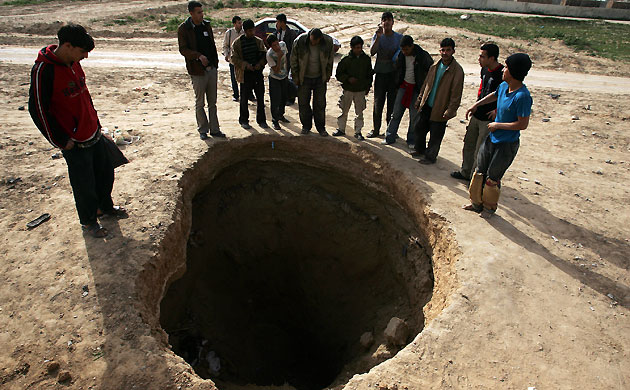
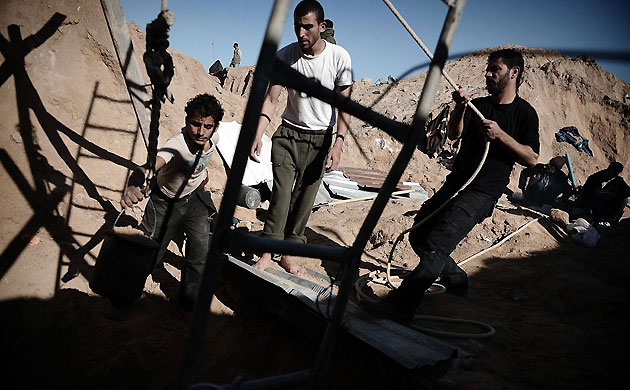
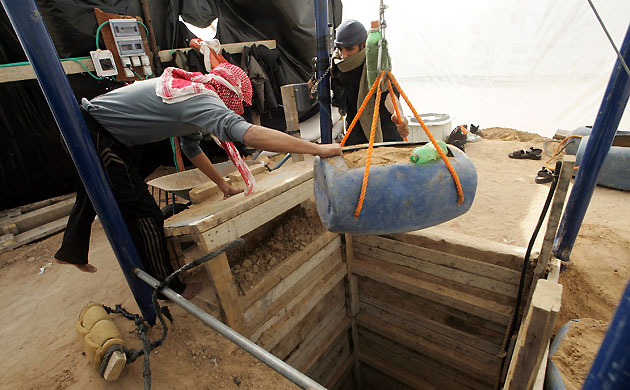
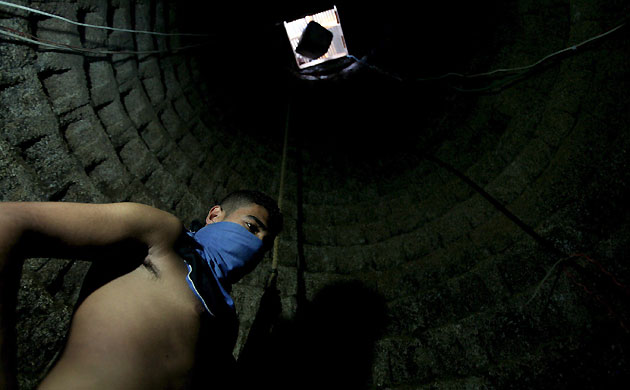
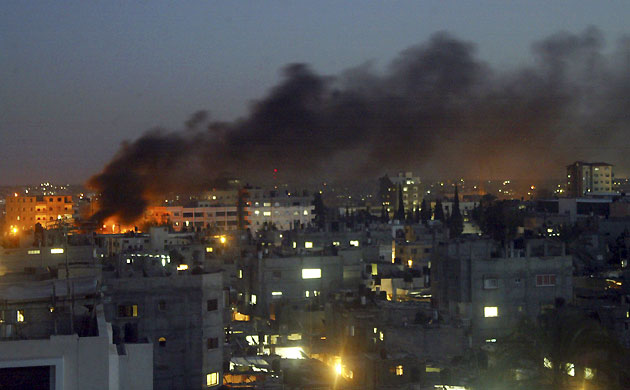
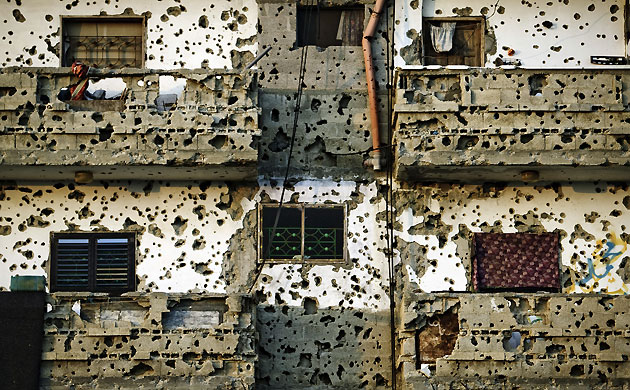
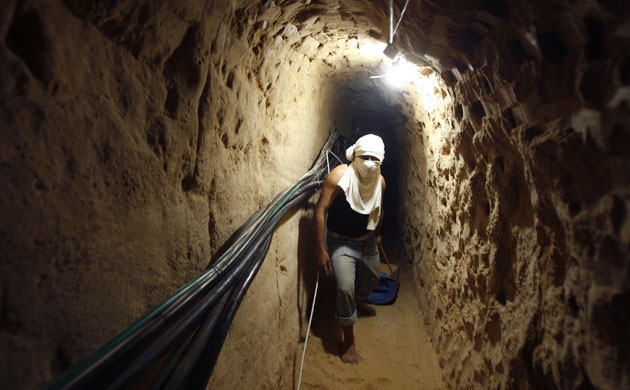
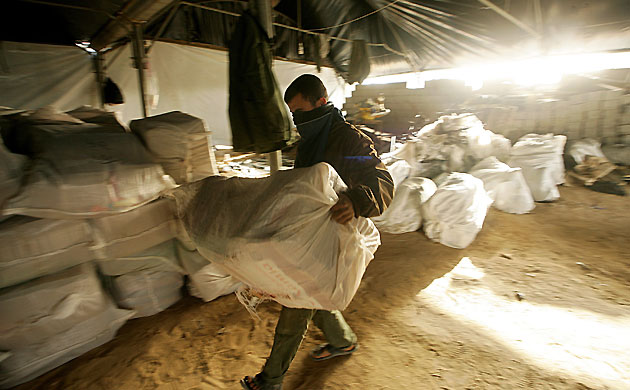
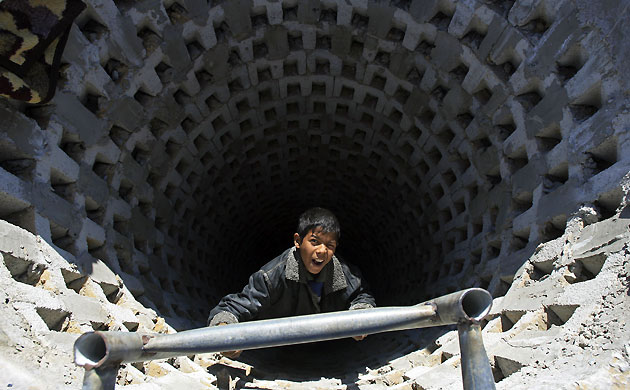
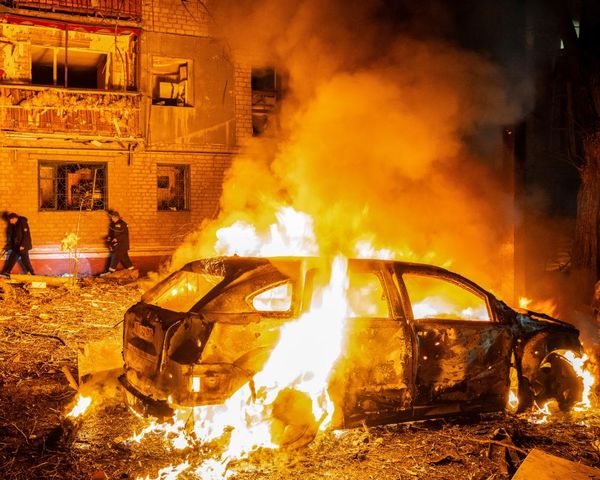
Palestinians stand over the hole of a collapsed tunnel, damaged during Israel’s three-week war in GazaPhotograph: Abid Katib/GettyLocated in the Rafah area of Gaza, the tunnels connect with Egypt under the border. Here several Palestinian men carry out rebuilding workPhotograph: AFP / Getty/AFPThe tunnels are used to transport essentials such as food, clothing and machinery, along with weapons and ammunition, through to GazaPhotograph: Abid Katib/Getty Images
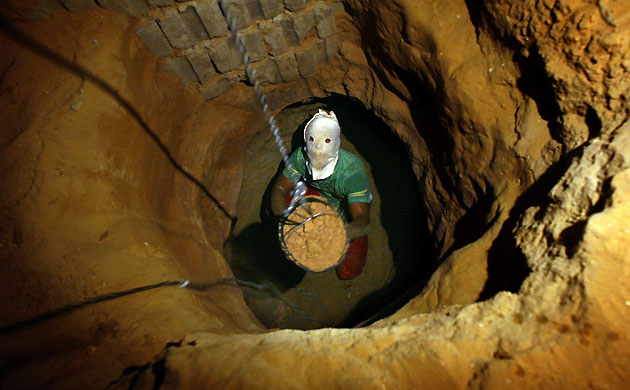
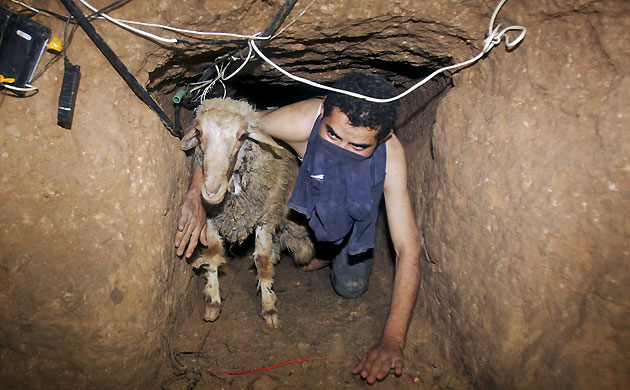
A tunnel digger, wearing a mask to conceal his identity, removes sand in a bucketPhotograph: Kevin Frayer/APIsrael claimed it had struck 100 tunnels on the final day of the conflict alone, but this seems unlikely as the damage has taken a matter of days to repairPhotograph: Mohammed Saber/EPASmoke and fire fills the sky as Rafah comes under attack following Israeli warnings for residents to leave the area. Whereas civilians were injured and buildings destroyed, only the tunnel entrances were damagedPhotograph: Abed Rahim Khatib/EPAHomes riddled with bullets from Israeli Defence Forces above ground levelPhotograph: Zoriah Miller/RapportIt is thought that the passages, which are about 15 metres underground, were too deep to be badly damaged by the 500-pound or one-tonne bombs dropped by Israeli F-16sPhotograph: Ibraheem Abu Mustafa/Reuters/ReutersIn one smuggling session the following goods were passed through: dry, yellow chicken feed; spare parts for cars; a box of Chinese-made, brass-coloured coat hooks; microwaves; kerosene cookers; packets of women’s underwear; and several large, 5.5-kilowatt generatorsPhotograph: Abid Katib/Getty ImagesAnimals are also transported this way, including goats and even cattlePhotograph: Khalil Hamra /APA boy looks out from an opening. As one worker puts it, 'there's nothing for us except the tunnels'Photograph: Eyad Baba/AP
Sign up to read this article
Read news from 100’s of titles, curated specifically for you.