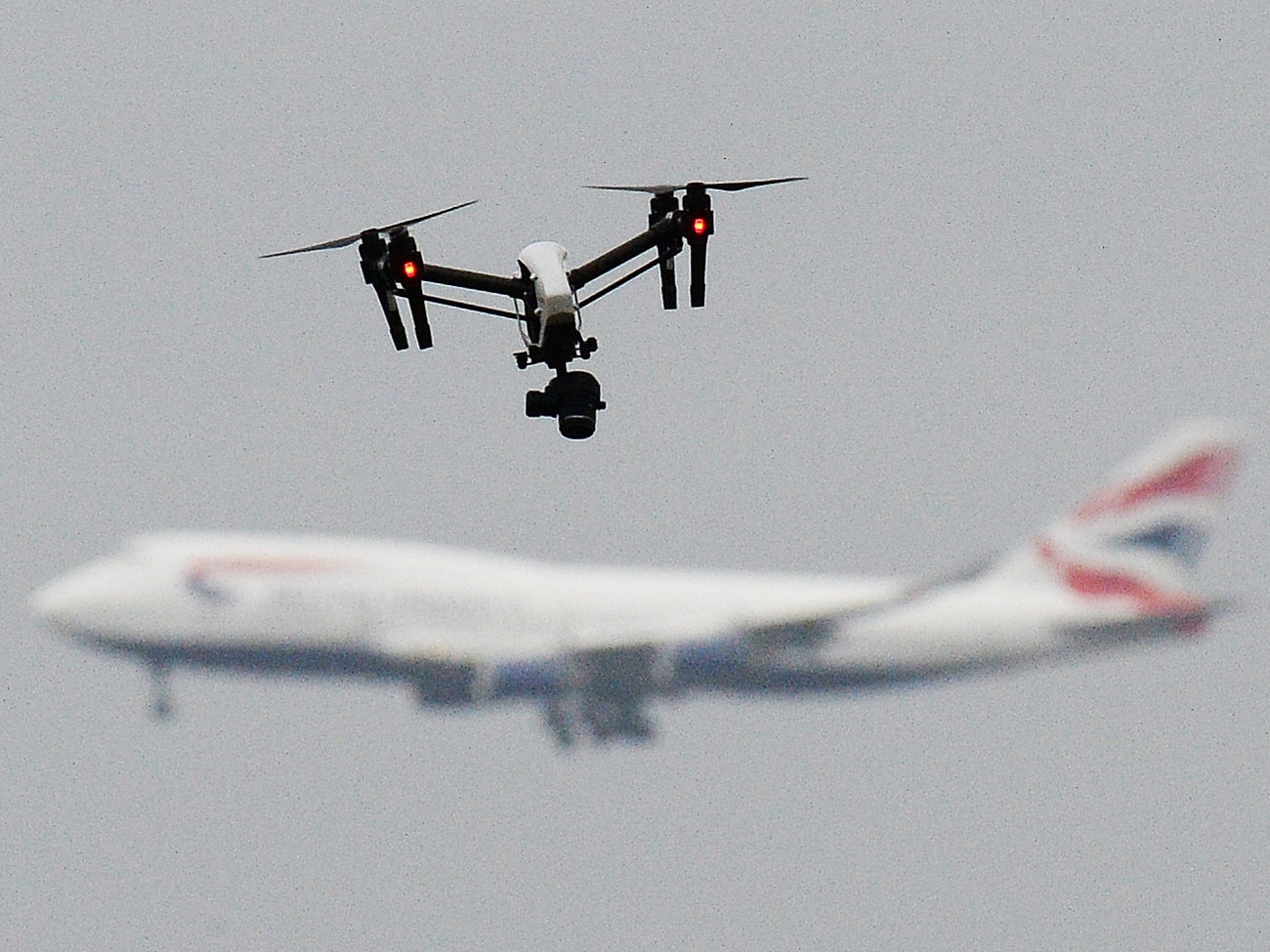
Tens of thousands of people had their Christmas holidays disrupted after Gatwick Airport was forced to close due to rogue drones.
The airport's only runway was reopened on Friday morning, with a range or protection and surveillance measures reportedly put in place to prevent further chaos.
While no details of protection have been revealed by either the airport or the authorities, The Independent understands military-grade technology is involved.
The source declined to disclose further details, perhaps to avoid tipping off the drone operators, but military and drone experts were able to give an idea of the kind of technology available to law enforcement and airport security services.
Richard Gill spent 10 years as a logistics officer in the British Army before becoming CEO of Drone Defence, a firm specialising in technologies and strategies to prevent drone misuse.
“We’re not privy to the intelligence to know what type of drones are being flown but the operation is exceptional both in terms of sophistication and planning," he said.
"To avoid capture for so long would have taken meticulous planning, suggesting this is something much more sinister than a hobbyist or prankster."
Radar
One of the key tools for spotting drones will be radar.
“The military has a range of technologies to secure airspace against planes, helicopters and drones," Mr Gill said.
“They will be able to provide military-grade radar technology in order to help detect the drones and potentially the operators.”
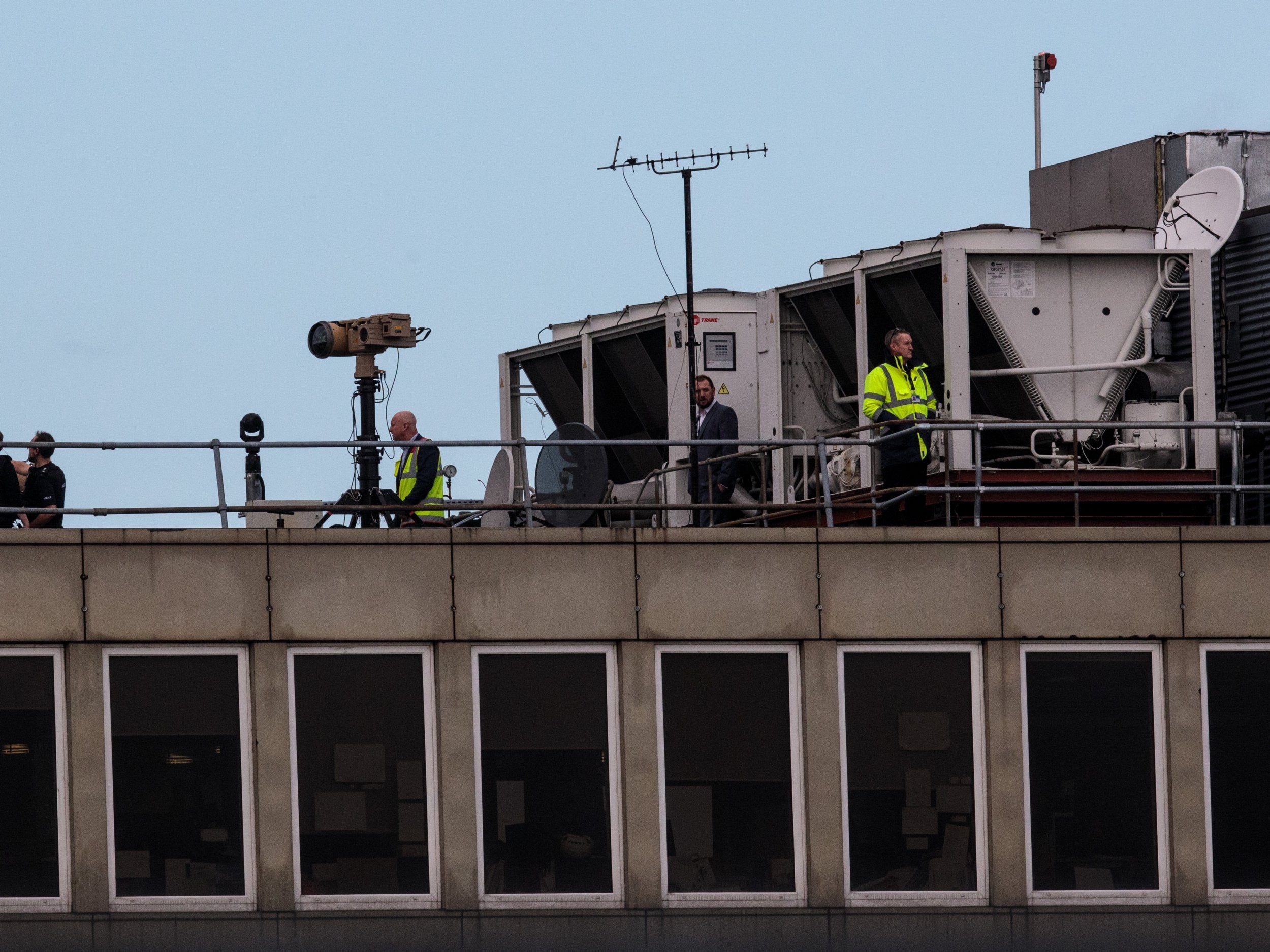
One such radar system that may be deployed at Gatwick is the Israeli-developed Drone Dome system, of which the British Army bought six earlier this year.
Signal jammers
The vast majority of drones can be controlled in real time with a remote control that communicates with the drone using radio waves.
A device that jams the signal, such as the E1000MP Portable Drone Jammer, can therefore effectively prevent a drone from flying.
"This is the most simple point of attack to disrupt a drone, forcing it to crash-land, or return to whoever is controlling it," Mr Gill said.
Such a method of attack doesn't work, however, if a drone's flight path has been pre-programmed.
Nets
Due to the sophistication of the operation, it is unlikely that whoever was behind the drone disruption was controlling them in real-time using radio signals.
Therefore the only way to take out the drones would be through physical methods.
Dutch police have previously trained eagles to pluck drones out of the sky using their powerful talons, however this program was cancelled earlier this year.
Instead police forces are looking towards guns that fire nets which ensnare the propellers of the drone, forcing it to crash.
These devices have a maximum range of only 300 metres, Mr Gill said, meaning it can be quite easy for drone operators to avoid such technologies.
Lasers
A longer-range solution to this could be high-powered lasers.
Earlier this year it was reported that Chinese researchers are working on a new handheld laser weapon capable of hitting targets up to half a mile away.
The US military is also developing laser technology for taking down drones, according to Mr Gill, though it is yet to be deployed.
"Defence contractors in the US have developed and tested this technology but I'm not aware of its deployment," he said.
"If developed correctly this could provide a very accurate and powerful tool to use against stray drones."