Garry Kasparov has been retired from competitive play for a decade but the former world champion and for most people still the all-time No1 stole the show at St Louis last weekend. Kasparov’s 10-game rapid/blitz match with Nigel Short was intended as an extra to the announcement of a new $1m Grand Tour in which the London Chess Classic at Olympia this December will be the finale.
Kasparov began with a draw from a winning position, lost game three on time through misjudging his clock but then simply took off. He won seven games straight to take the match 8.5-1.5, banging out his rich combinative play so fast that the computer commentaries had difficulty in keeping up before confirming that his tactics were sound and correct.
The match was unrated and Kasparov has no official Fide rapid or blitz rating but, if he turned up at the next world rapid/blitz championship, he would be a prime contender even if Magnus Carlsen defended his titles. The pair did have blitz sessions together during the brief and unhappy period in 2010 when Kasparov coached the Norwegian and Carlsen reported afterwards that the games were close: “Neither of us likes losing, especially him.”
Short will be 50 next month but he is still active and strong, the oldest in the world’s top 100. He will be the favourite to capture the world senior title in Italy in November. The Englishman, who challenged for Kasparov’s world title in 1993, fought and counterattacked hard, acted as a fine foil for Kasparov’s magic and had the disadvantage of jet lag, flying direct from Bangkok after winning the Thailand Open.
The Grand Tour, which is clearly intended as a Western rival to Fide’s Grand Prix series where almost all the venues are in the old Soviet Union, will comprise the Stavanger, St Louis (Sinquefield Cup) and London Classic tournaments, with an Indonesian event planned as an extra for 2016. Each tournament will include nine grandmasters from the world elite, led by Carlsen, plus a wild card from the host venue.
Quite likely some of the top GMs will regard the Grand Tour and the Grand Prix as a bonus and play in both, as happened in the mid-1990s when there were two world champions and two candidates qualifiers. Such rivalries are basically unstable and Fide, whose Grand Prix already has budget and venue cuts from its previous version, will be under pressure.
Kasparov in his pomp rarely played Richter Sicilians, so this an interesting opening. Short’s attack with 9 h4, 11 f4 and 14 e5 was too sharp, but its refutation only became clear with 16...Bxe5! and 21...Rd8. White then has no good way to defend his d1 knight since if 22 Kc1? Qe1! with Qd2+ and Qxe2. After that the white king was pummelled round the board until mate.
Nigel Short v Garry Kasparov, eighth game
1 e4 c5 2 Nc3 Nc6 3 Nge2 Nf6 4 d4 cxd4 5 Nxd4 d6 6 Bg5 e6 7 Qd2 Be7 8 O-O-O O-O 9 h4?! a6 10 Kb1 h6 11 f4?! Bd7 12 Bxf6 Bxf6 13 Nf3 Qa5! 14 e5 dxe5 15 Qxd7 e4! 16 Ne5 Bxe5! 17 fxe5 Rad8 18 Qxb7 Rxd1+ 19 Nxd1 Qe1 20 Be2 Qxh1 21 Qxc6 Rd8! 22 b4? Qe1 23 Qxa6 Qxb4+ 24 Kc1 Qd2+ 25 Kb2 Rb8+ 26 Bb5 Qb4+ 27 Kc1 Rxb5 28 Nc3 Rxe5 29 Qc6 e3 0-1
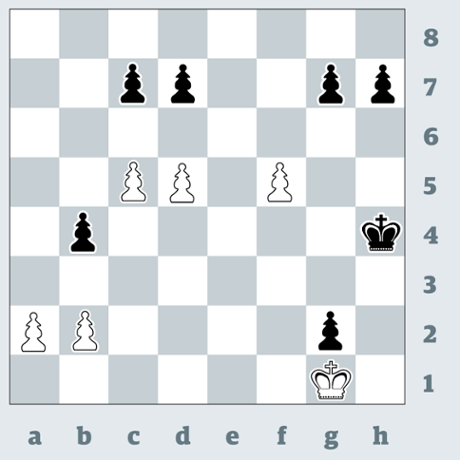
3388 1 f6! gxf6 2 Kxg2 Kg5 3 a4 bxa3 ep 4 bxa3 Kf5 5 a4 Ke5 6 d6! cxd6 7 c6! dxc6 8 a5 and queens.