The growth is a remarkable thing during these weeks between spring and summer. If you could hear it, there would be a tangible hum, made from a million buds breaking and stems flexing. The tide of green sweeps up and over bare earth, cloaking it as fast as the leaves fill out above us. Blink and you miss the soft marbling on the new leaves of the epimedium and the dusty bloom overlaying the ruby young growth on the Molly-the-Witch. Blink again and this first of the peonies will be open – primrose cups filled with bees.
The flurry of spring perennials starts the summer garden. One layer takes over from the next, replacing and adding like an increasingly complex textile. Many of the first to rise are woodlanders, happy to take the early light, then dwell in the shade as the summer canopy closes over. The epimedium is a good example, flowering in a mass of tiny columbines and in combination with coppery foliage. Most are tough enough to live in dry shade once they are established, making them great contenders for running under the skirts of deciduous shrubs. You cannot go wrong with Epimedium perralchicum or E sulphureum as long as you give them a good start.
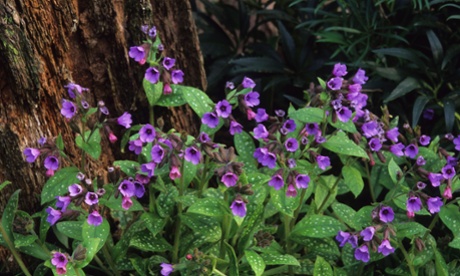
Though the lungworts can be prone to mildew if they get dry at the root, pulmonaria are a mainstay of spring planting. Neat by nature, they rarely rise to more than a foot and will gently spread when happy, to make weed-proof groundcover. This winter, my Pulmonaria rubra was in flower in February and providing a feeding ground to the first lone bees through March and April. The foliage of this humble plant is simply green but most have the spots and some have spectacular silver marbling. In some this is spectacular, the foliage lighting up shady areas in summer.
Pulmonaria ‘Blue Ensign’ is plain leaved but it makes up for it with a carpet of gentian-blue flowers. I use these under Rosa glauca as a groundcover and love that moment when the smoky-pink foliage on the rose comes to life. There are a wealth of marbled cultivars. P saccharata ‘Leopard’ is a good one, with flowers colouring pink and mauve as they age. ‘Opal’ is well named and a cool companion among unfurling ferns. I am fond of ‘Sissinghurst White’ for a similar position or as a companion to early-flowering Viola riviniana ‘Purpurea’. With its purple foliage and copious flush of early flower, ‘Purpurea’ likes to find itself on the edge of things, in cracks where nothing else will grow.
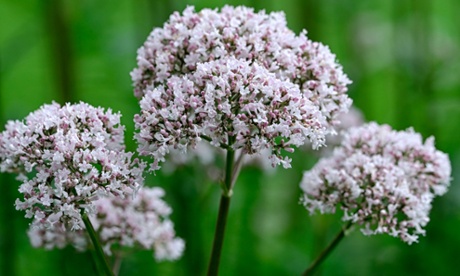
The common-or-garden Valeriana officinalis, with its sleep-inducing roots and animal attraction for cats, is a plant I would miss if it wasn’t there in spring. Tall and wiry like an umbellifer, it has sweetly perfumed flowers that foam just-pink. As with many of the early-flowering perennials, cut them to the base, leaves and all, immediately after flowering and they will return later in summer with a fresh crop of foliage.
Get growing
When you are establishing drought-tolerant perennials in dry shade, work plenty of compost into the ground and keep well watered for the first summer. Better still, plant in the autumn and let the winter moisture do the work for you
Email Dan at dan.pearson@observer.co.uk
Follow the Observer Magazine on Twitter @ObsMagazine