A gang that smuggled drugs, weapons, and phones into multiple UK prisons using drones has been jailed.
The system has been likened to Deliveroo or Uber Eats for prisoners.
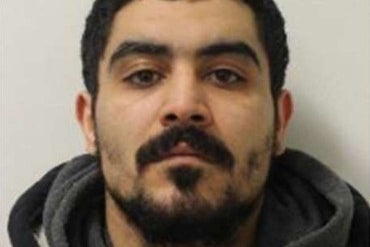
Shafaghatullah Mohseni, 29, orchestrated dozens of “drops” at prisons across London and the southeast of England between 2 December 2024 and 26 February 2025.
Hashin Al-Hussaini, 28, Mohammed Hamoud, 22, Faiz Salah, 29, Zahar Essaghi, 51, Mustafa Ibrahim, 30, and Emanuel Fisniku, 25, assisted Mohseni by acting as lookouts and drivers, and received payments for the illicit shipments.
Harrow Crown Court, sitting at Hendon Magistrates’ Court, heard on Monday that at least two flick knives were among the contraband planned to be smuggled into the prisons.
Other items included packages of drugs containing cannabis, Xanax and Valium, as well as tiny mobile phones that could be hidden from guards.
Judge James Lofthouse described it as a “well-oiled conspiracy” which prison guards struggled to tackle – even if they had actually seen the drones making the drop-offs at cell windows.
Staff shortages meant guards could head to the cells to watch – through the door hatch – as “prisoners were stuffing items behind pipes”.
However, by the time enough prison staff were available to conduct a search, the illicit items had vanished, the judge said.
“Those who conspire for profit to flood our prisons with drugs and mobile phones, and are heedless to whatever else including weapons they smuggle in, facilitate further criminality, and undermine the general running and good order of our prisons,” he said.
Judge Lofthouse said inmates had items delivered “to order”, and criticised the “corrosive” impact on prison safety and security from drones arriving with packages “as if by Uber Eats or Deliveroo”.
Mohseni, referred to in court as the “grand delivery driver”, was sentenced to five years and three months in prison as the leader of the conspiracy, having arranged drops in phone calls to prisoners and their relatives and received more than £30,000 in payments for the drone flights.
Al-Hussaini, Hamoud, and Essaghi were sentenced to 33 months in prison, Salah was jailed for 31 months, Ibrahim, 30 months, and Fisniku, 27 months.
The Metropolitan Police said the gang was responsible for 75 per cent of all drone drops into London prisons between December 2024 and February 2025.
All seven defendants admitted their roles in a “serious, organised, and prolific enterprise” to supply Class B and C drugs, and conveying list A and B articles into prisons.
They would travel by car to the prisons, often in the early hours of the morning, and fly packages filled with contraband through cell windows.
The gang targeted at least nine prisons including Wormwood Scrubs, Brixton, Pentonville, Wandsworth, Norwich, and Leicester, the court heard.
Opening the case on Monday, prosecutor Sam Barker said: “Operation Buzzbin was a major police investigation conducted by the Metropolitan Police’s Specialist Crime Command to investigate drones being used to convey drugs, mobile telephones, USB sticks, and other contraband into prisons across the southeast of England.
“In total there were 70 different visits by the conspiracy group to prisons between 2 December 2024 and 26 February 2025, so the conspiracy ran until the involvement of the police for a period of 86 days.”
The court heard that police arrested Mohseni, Al-Hussaini, Hamoud, and Fisniku travelling by car to a drop at HMP Norwich on 26 February 2025 after being tipped off that a knife was going to be smuggled into the prison.

They found a sports bag in the car with a drone, two packages containing phones and cannabis, and a knife.
The prosecution has accepted that the conspirators “may not have been aware” that in one of the flights they conveyed a flick knife in one of the packages.
“But the fact is they did convey one of the knives,” added Mr Barker.
The conspirators were initially charged with conspiring to convey a knife into a prison, which has since been dropped as the defendants may not have packed the packages themselves.
Most of the 70 operations saw more than one flight take place, and the conspirators have been estimated to have made roughly 140 flights.
Along with cannabis, the conspirators also smuggled Xanax and Valium and were initially accused of smuggling cocaine, but this was later dropped.

One of the drones was recovered by police after it crashed into a woman’s backyard near HMP Wandsworth, the court heard.
She told officers that a man had knocked on her door to collect the drone in the early hours of the morning, but she had refused his entry.
Close relatives of prisoners were found to have sent large sums of money to Mohseni, as payment for the items, the court heard.
“The headline is that Mr Mohseni received £26,785 from 14 individuals who are directly linked to a serving prisoner, at a prison where he was delivering items,” said Mr Barker.
Mohseni was at the centre of a “web of financial transfers” which saw him receive money and then pay the rest of his co-conspirators.

Defending him, Michael McAlinden, said that Mohseni began the offending as a means to pay off his debts.
Mohseni, of Edgware, Salah, of north-west London, Essaghi, of north-west London, Ibrahim of Harrow Weald, Fisniku of Islington, Al-Hussaini, of Harrow, and Hamoud, also of Harrow, were all told they must serve 40 per cent of their sentences before being released on licence.
Concluding the sentencing hearing, Judge Lofthouse commended the work of Met Police officers including one who had gone to the Netherlands and China to secure key evidence from drone data records.
In July 2025, the chief inspector of prisons Charlie Taylor warned of the increased risk drones would pose for smuggling drugs into prisons.
The watchdog chief said: “There is a level of risk that’s posed by drones that I think is different from what we’ve seen in the past, and both with stuff coming in and ultimately the potential for something even more serious to happen.
“What I’d like to see is that the prison service really get a grip of this issue and and we’d like to see the government, security services coming together, using technology, using intelligence, so that this risk doesn’t materialise.”
Prisons unable to keep up with crisis of drones delivering drugs, report finds
Prison drugs crisis hits ‘endemic’ levels as drone sightings soar 1,140 per cent
Inmates are having Mounjaro delivered to their cells using drones, says prison governor
Drone caught airdropping contraband into HMP Wandsworth Prison