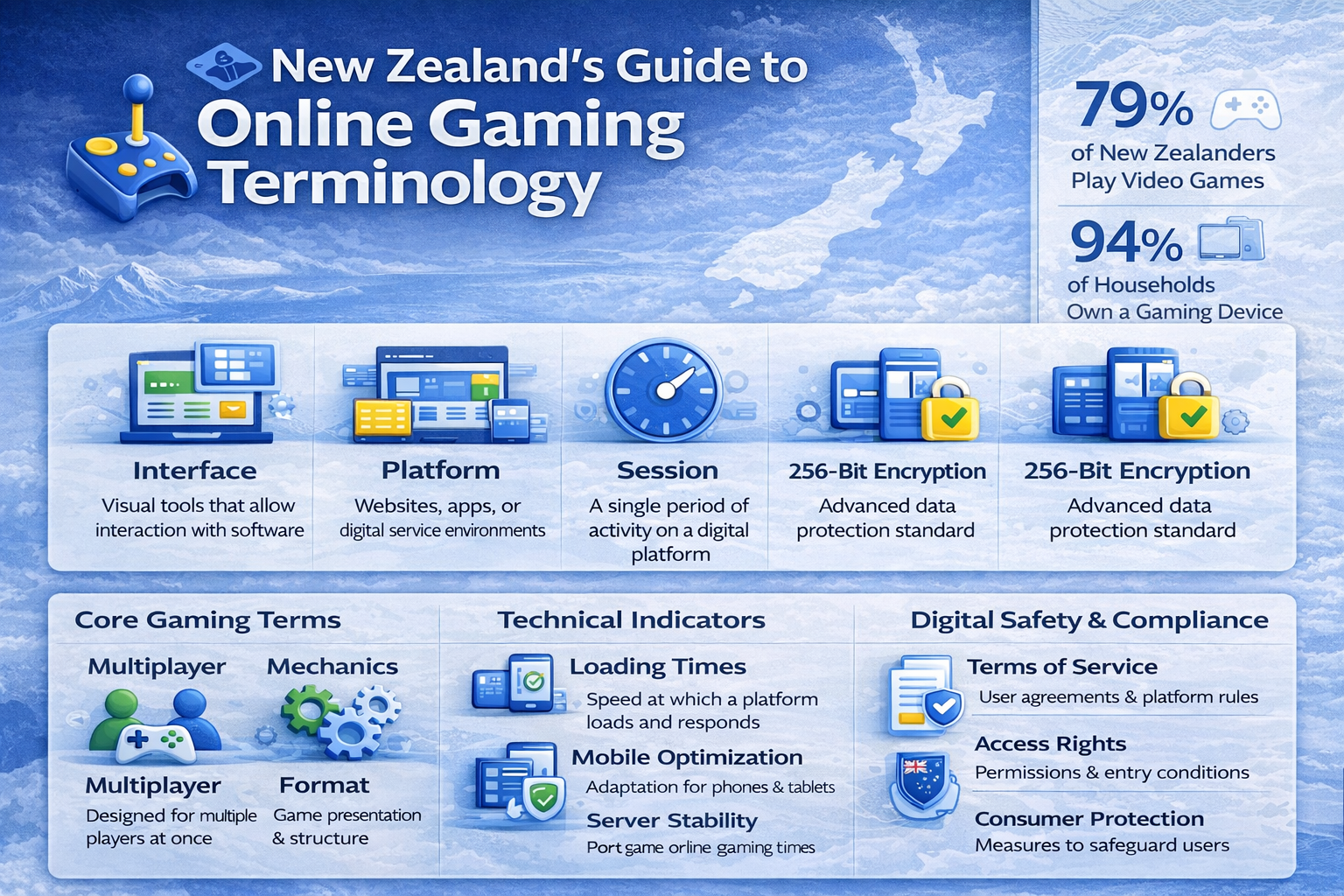
Online games are no longer just “entertainment.” They now function as communities. Understanding the language of digital platforms matters now more than ever. In New Zealand, approximately 79% of the population plays video games, with 94% of households owning a device for play. People aged 65 and over are increasingly active, often playing to challenge themselves and maintain mental health. The trend now challenges the assumption that digital gaming is for younger audiences. For older people navigating the web, internet-related terminology is everywhere. Online gaming words (gaming terms) now appear in site menus or help sections. Without a clear understanding of the phrases, people may struggle with content feeds or misunderstand industry reports. Our blog explains the core terminology used by many New Zealanders online. The goal is to equip you with a mental map of terms and not to promote games. It describes a range of digital interactions, from platform interfaces to leisure software and user settings. Basic literacy in crucial terms supports safer, more confident navigation online.
The Evolution of Digital Leisure and Gaming Terminology
Internet leisure has grown over the past decade. Activities once enjoyed in person or with physical components now happen on apps and screens. What many Kiwis call online gaming encompasses a wide range of activities, including apps, browser-based platforms, and social communities. For many, having free pokies explained is the first step in understanding how traditional leisure formats have transitioned into these digital environments. Understanding standard gaming terms helps break down references once limited to entertainment journals that now appear in economic analysis and health discussion forums. This literacy supports broader digital participation in a society where screens and software are essential for information, communication, and leisure.
Navigating the Vocabulary of Online Gaming Words
Discussing the glossary helps reduce confusion when accessing digital platforms. Key online gaming words appear on many sites and shape interactions.
- Interface: Visual and functional elements that enable interaction with the software.
- Platform: A service that delivers digital content. It includes a website, software environment, or app page.
- Session: A single period of interacting with the software.
- Multiplayer: Unique software designed to accommodate more than one participant at any time.
- Mechanics: The rules that govern how an online platform works.
Gaming terms and meanings are essential for understanding digital trends and software reviews. They help people learn digital participation without becoming confused by jargon. The mainstream media outlets cover digital engagement using the same terminology as many industry analysts.
Technical Lexicon of Popular New Zealand Casino-Style Terms
Discussions surrounding online platforms rely on performance and infrastructure language in a consistent pattern. In New Zealand media, terms of gaming describe how systems function, how data is handled, and software compatibility on mobile devices. This is particularly relevant as technical accessibility and server performance are becoming key factors for the growing demographic of older gamers who value stability. Reports often reference "loading times" when comparing platforms or explaining user frustration in digital services, as short delays indicate efficient data transfer and strong server performance. Another frequent terminology is 256-bit encryption. It indicates the strength of a system's data protection for information transmitted between users and servers. In simple terms, higher levels mean complex encoding. The phrase “256-bit encryption” is a term New Zealand technology companies use to describe platforms that follow modern security standards, especially for financial and personal data in line with privacy expectations.
- Poker: A card game with strategic betting rounds. It has variants, separated by their mechanics or rule sets.
- Baccarat: A card comparison game with specific scoring points.
- Sic Bo: A dice game with many betting options.
- Blackjack: A card game where players aim for a unique score.
- Craps: Another dice game with complex betting points.
- Keno: A numbers-based game resembling a lottery, widely recognized in NZ through Lotto outlets.
Phrases rely on standard terminology for reporting market categories and software mechanics. For instance, when a platform describes “roulette,” readers understand that the software simulates a wheel with numbered segments. In business and money reporting in several digital markets, labels serve as technical references. They impact how systems are constructed and categorised.
Understanding Platform-Specific Gaming Lingo and Slang
Web platforms use standard interface labels and informal expressions that regularly appear in media reviews and help sections. The gaming lingo is not just for entertainment products. Some terminology appears on subscription services, apps, and similar online tools for news, finance, and communication. At the interface level, users encounter terms like dashboard, menu, lobby, and settings. Taken out of context, gaming terminology may be confusing, but it is essential to online games.
- Dashboard: The main screen that displays all available content or functions.
- Menus: Organise options into tabs or lists, commonly available as slide-out panels or drop-downs.
- Lobby: A selection screen that appears before primary interaction begins. It is borrowed from physical waiting spaces.
- Settings: Covers controls similar to display, sound, account preferences, and notifications.
The UX/UI language is standard for iGaming platforms. Words like swipe, scroll, and toggle primarily describe actions used to navigate software. Many game reviews mention navigation depth, describing the number of steps required to reach a primary function. Shallow navigation means fewer layers, while deep navigation means more layers. Terminology helps reviewers explain usability with less technical detail. Other gaming slang terms appear more frequently for user commentary and informal reviews. Lag refers to the delay between a request and the system's response. A glitch is a minor malfunction that does not entirely disrupt the system. Patch displays a software update that adjusts features or fixes issues. Some slang overlaps with the bigger digital culture.
- AFK (Away From Keyboard): Refers to temporary inactivity on the platform.
- Grind: Outlines the repeated steps required to advance to the next level.
Terminology is standard among readers who do not engage with digital gaming platforms and are regulars in market analyses. Learning the vocabulary helps readers interpret software reviews better. When a note indicates frequent lag, it points to performance issues rather than a personal preference, allowing older Kiwis to feel more confident reading digital content and reducing confusion.
A Breakdown of Popular Gaming Phrases in the New Zealand Market
A set of popular gaming phrases is used to group software by context, structure, or rules in New Zealand media. Gaming terminology helps journalists and analysts to describe digital products and their functions without mentioning specific brands. Learning the gaming words list and their meanings makes it easier to follow coverage of digital leisure and tech trends.
- Mechanics: Describe how systems operate on a structural basis. Terms such as turn-based, real-time, and random outcomes describe the interaction flow. The media uses gaming terms when discussing probability-driven systems, providing a neutral way to explain structure without emphasising participation.
- Format Translation and Digital Adaptation: Describe how traditional activities appear in software. Words like table format, virtual board signal, or simulated drawing systems are rules converted into screen-based interactions. They help readers learn the continuity between physical and digital formats.
- Regional and Regulatory Context: Some phrases exist to describe local alignment with regulations rather than the technicalities. Terminology such as "New Zealand-facing platform" or "domestic compliance framework" indicates that the software operates in accordance with local standards for legality and consumer protection, often referenced by the Department of Internal Affairs.
- Usage and Engagement: Terms such as “session-based use” or “casual engagement” assess behaviour patterns. They are helpful for demographic analysis, particularly when examining older New Zealanders' digital habits.
Specialised Vocabulary for Card and Bingo Formats
Web bingo and similar social card-based platforms rely on a narrow, standardised vocabulary. New Zealand elderly often encounter terms in news articles, platform guides, and other software reviews that discuss online leisure or community-based digital activities. Understanding bingo terminology helps readers interpret how platforms are structured to improve interaction, without requiring technical knowledge. The terminology below focuses solely on structure and function. It compares general meanings with how the same terms are applied to digital bingo and card-based systems on an interface.
|
Term Category |
General Meaning |
Gaming-Specific Context |
|
Interface / UI |
Visual and functional software elements that readers can interact with |
Number boards, digital cards, and control buttons |
|
Session Length |
Duration of a single period of activity |
Total time spent in a digital bingo room or card table |
|
Mechanics |
Rules that control how a system operates |
Card sequencing, round progression, and number draws |
|
Access Rights |
All conditions required to participate |
Entry to tables or rooms |
|
Consumer Safety |
Specific measures for reduced risk |
Session reminders, usage alerts, and specific information notices |
Digital bingo formats use terms such as pattern, call, and draw to describe the number setup. Social card-based platforms rely on terms such as deal, round, and hand to reflect physical card play and have already been adapted for digital use. Other arcade terms, such as auto-mark or quick play, primarily describe automated interaction features.
Technical Indicators: Gaming Terms and Infrastructure
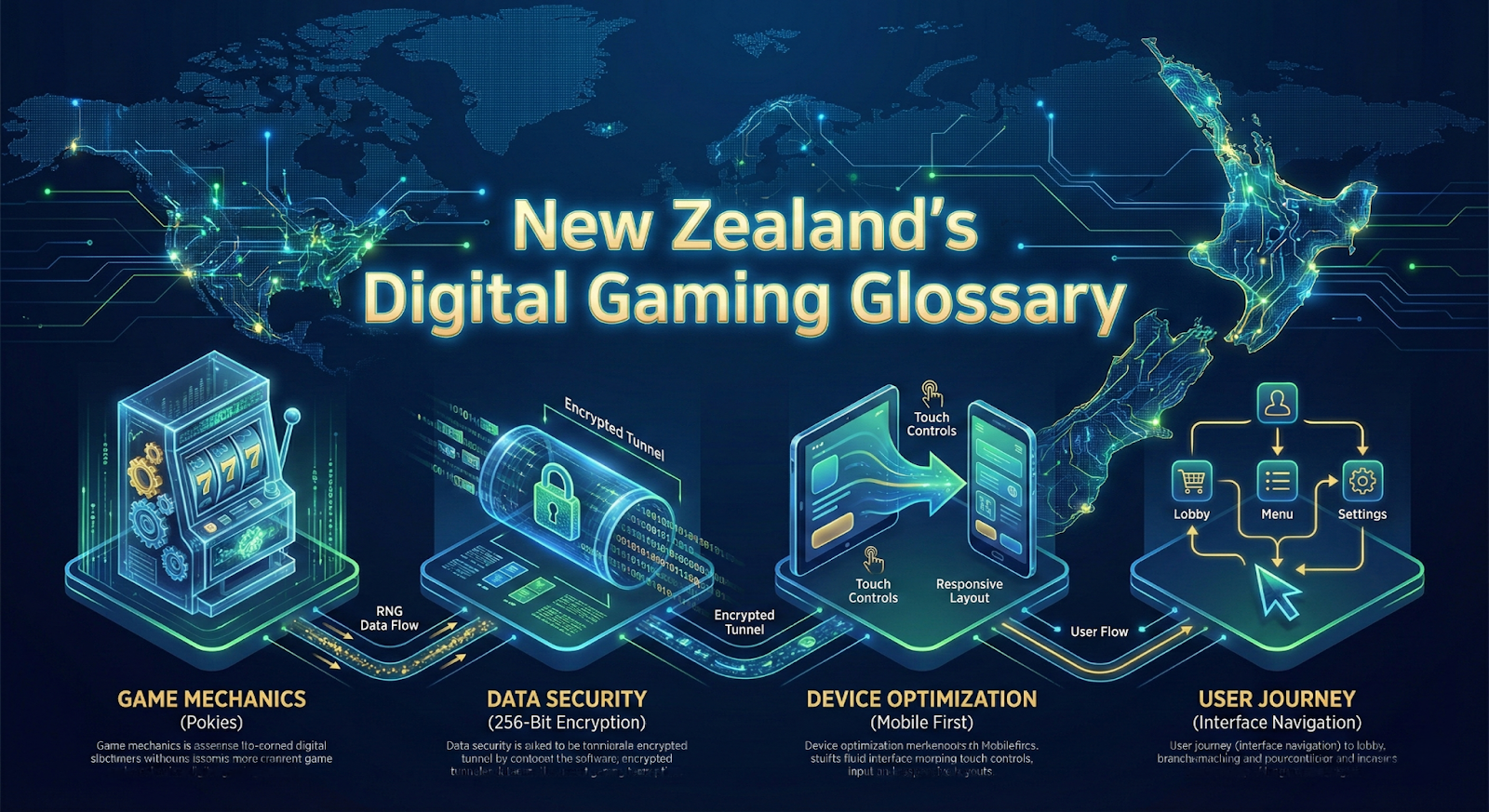
Discussions surrounding online platforms rely on performance and infrastructure language in a consistent pattern. In New Zealand media, terms of gaming describe how systems function, how data is handled, and software compatibility on mobile devices. They form part of a wider gaming terminology dictionary already shared across digital industries.
“Loading times” is a standard term for the delay between a user's action and the system's response. Short loading times indicate efficient data transfer and strong server performance, while long delays indicate network congestion. Reports reference loading times when comparing platforms or explaining user frustration in digital services. Another frequent terminology is 256-bit encryption. It indicates the strength of a system's data protection for information transmitted between users and servers. In simple terms, higher levels mean complex encoding. The phrase “256-bit encryption” is a term technology companies use to describe platforms that follow modern security standards, especially for financial and personal data. “Mobile device optimisation” refers to configuring software functions on tablets and smartphones. With the Interactive Games & Entertainment Association (IGEA) reporting that mobile devices are the preferred platform for the majority of Kiwi players, optimisation is now a baseline expectation for features in New Zealand.
The Role of Industry-Standard Gaming Acronyms
Business and technology reporting depend on abbreviations to simplify repeated technical phrases. Most game acronyms appear in software reviews and market analyses, where they discuss system design. Understanding common acronyms helps readers follow conversations without seeking technical knowledge. UI, or User Interface, refers to the visible elements users interact with on a screen. It includes the menus and other layout structures. Reports that include UI changes describe how the information appears and how the system functions internally. UX, or User Experience, focuses on how people interact with software. It covers ease of use and consistency for various screen ratios. UX simply describes whether a platform is easy to use or confusing over time. Other acronyms describe software categories beyond look and feel. RPG, or Role-Playing Game, is another common term in digital entertainment. RPG terms explain systems designed around progression and structured interaction.
Digital Safety and Terms of Service in Online Gaming
Terms of Service are a key factor in digital safety, clearly defining how a platform operates and the conditions users agree to. These documents are referenced in New Zealand technology reporting to protect customers and safeguard data for multiple digital services. Organizations like Netsafe New Zealand emphasize that clear, transparent terms are vital for protecting users from predatory data practices and ensuring digital accountability. The value of Terms of Service is in its clarity regarding access conditions, data usage, and liability limitations, helping readers recognise platforms that efficiently manage issues and risk.
Internet literacy now shapes how New Zealanders interact with online sites. The expansion through entertainment, media, and services requires plain language seen in everyday reading. Terms once used only in specialist discussions now appear frequently in news articles, software reviews, and similar public policy contexts. Understanding such language helps Kiwis gain clearer interpretations of digital environments. Words that describe key terminology provide a sense of structure and function. Terminology such as mechanics, access rights, sessions, and technical performance clearly explain system behaviour, not promotional ads, which is a pivotal distinction. It helps readers distinguish system design from marketing language in real-time, not just in games like online pokies. Familiarity with technical indicators, including 256-bit encryption and loading times, helps improve awareness of performance and security. They appear frequently in reporting, since they reflect the current baseline expectations for any digital service. Learning standard phrases helps readers better understand independent reviews.