Sports and spectators go together like sushi and soy sauce. Fans go wild watching players push the envelope, and athletes feed off the crowd's excitement.
But the Tokyo Olympics were held mostly without spectators at most of the venues.
Reflecting on this situation, Japan's national soccer team captain Maya Yoshida said in frustration: "The fans give us great energy in the last 10 minutes when we are struggling. I wonder what the Games are for, and for whom, if Japanese people cannot go and see them."
Yoshida made the statement knowing that he might be criticized by people opposed to holding the Olympics.
Some athletes withdrew from the Games because there would be no spectators.
Organizers made the decision on July 9 that spectators would not be allowed at venues in Tokyo -- home to the tennis events -- and three other prefectures. On the same day, Australian tennis player Nick Kyrgios tweeted that he was pulling out of the Olympics.
"It's been my dream to represent Australia at the Olympics and I know I may never get that opportunity again. But I also know myself. The thought of playing in front of empty stadiums just doesn't sit right with me. It never has," Kyrgios wrote in a post.
There was no choice but to hold the Olympics without spectators because of the current resurgence of the coronavirus. Unfortunately, that mostly deprived people in the host nation the opportunity of watching the Olympics in person.
However, people value seeing events in person, as evidenced by crowds gathering along the marathon course in Sapporo in violation of social distancing guidelines.
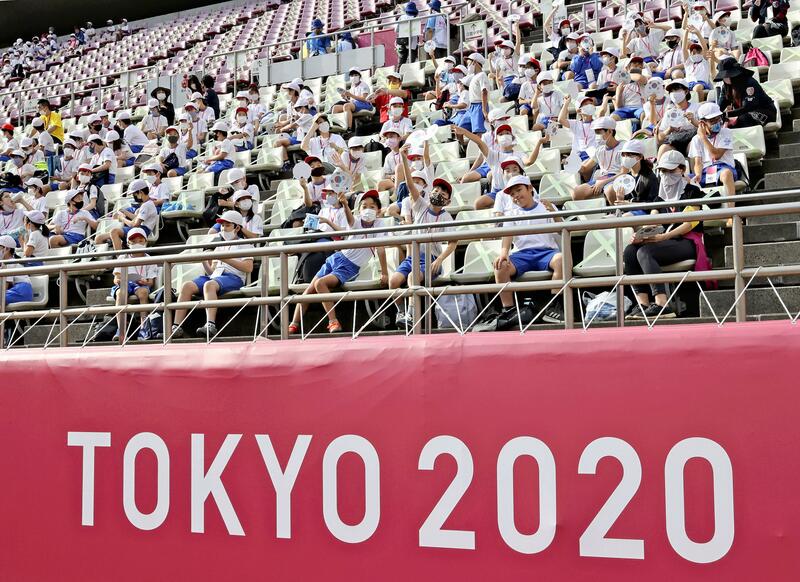
Students in Miyagi, Ibaraki and Shizuoka prefectures attended Olympic events thanks to a school program that gave young people opportunities to see the Tokyo Games in person.
Spectators were banned from venues in Ibaraki, in principle, but about 3,400 children from 21 schools in the prefecture watched soccer matches from July 22 to 27.
Regarding the Paralympics, a decision has not yet been made about whether to allow spectators to attend events. Organizers are mulling the matter as the number of novel coronavirus infections increases.
On Aug. 5, Junichi Kawai, the head of the Japanese Paralympic delegation, visited Toshihito Kumagai, the governor of Chiba Prefecture, where four Paralympic events are scheduled to be held, and asked that schoolchildren be allowed to watch the Paralympics even if organizers decide to ban spectators.
"The Paralympics will provide a golden opportunity to develop an inclusive society that respects diversity," Kawai said.
Read more from The Japan News at https://japannews.yomiuri.co.jp/