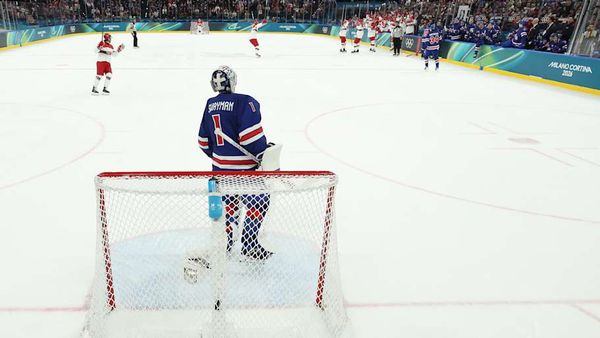
Britain is lifting restrictions on TV advertising for casinos, bookmakers and betting websites. Photograph: Getty Images/Christopher Furlong
They're called "pokies" and they are the most depressing sight for any visitor to Australia. They are the rows and rows of high-stakes gaming machines found in virtually every pub in the country, made worse by noisy TV screens broadcasting 'Tab' betting on the horses.
Gambling addiction is at epidemic levels, and the worst addicts are the authorities themselves, now grubbily dependent on the tax revenues that gush in from the pokies. Yet we in Britain (despite abandoning the supercasino) are merrily relaxing our gambling laws, closing our eyes to the evidence from across the globe of the appalling impact it has on society and families.
For a country of just 21 million people, Australia contains more than a fifth of the world's total gaming machines, with half of them in New South Wales alone. To a holidaymaker like I recently was they are ugly and intrusive. There is nowhere for a quiet drink and a chat in a NSW 'hotel', as the pubs are called.
But the impact on local communities is rather more serious. "I hate the bloody things," one NSW pub manager told me. "At closing time I have to go in there and clear out people who have shoved all their wages into the machines. It causes huge problems here and it causes a lot of domestic violence and breakdowns."
It is estimated there are now 300,000 problem gamblers in Australia (equal to the number in Britain, where the population is three times higher) and for every problem gambler there is at least four other people - partners, children, parents, siblings - who are also affected. That is at least 1.5 million Australians who are worse off financially, mentally and emotionally as a result of relaxed gambling laws.
Some of the grimmest figures come from the poorest working class suburbs of Sydney, where researchers have found that up to half of the average weekly household income is lost to the pokies. And fine words about tackling gambling addiction ring hollow when you discover that around 40% of the profits made by gaming companies and pubs comes from problem gamblers.
Back in Britain, are we learning from the experience of Australia? Don't bet on it. Some 16 casinos - all larger than any that currently exist - are planned across the country. Following in the path of Australia, Britain has also begun dismantling restrictions on advertising. In September, the go-ahead was given for the first TV ads for casinos, bookmakers and betting websites in a decision the Royal College of Psychiatrists described as "crazy". Meanwhile, maximum stakes on arcade slot machines have been raised.
The New South Wales government is now hooked on the revenues gambling brings in - more than 10% of its entire income. And the UK looks set to follow.
Until recently, Britain's approach to gambling was pragmatic. We have accepted that gambling, like prostitution, is one of those activities that no government anywhere will stamp out. We allowed it, but didn't encourage it. We permitted high street betting shops, but never sought to make them especially attractive. No soft seats, no alcohol or food, and no advertising.
Now it appears the Labour government is actively encouraging gambling, despite all the evidence from Australia that the biggest losers are those that can afford it least. Is this really a good idea?