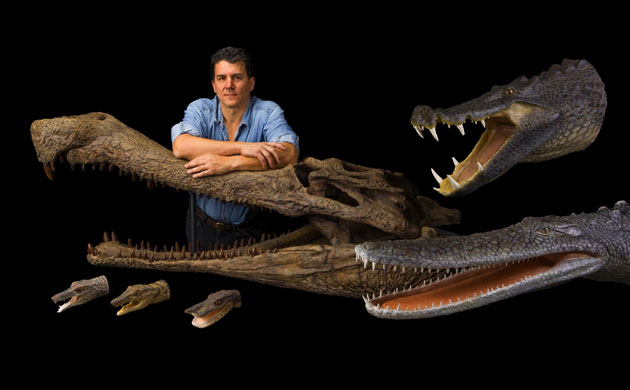
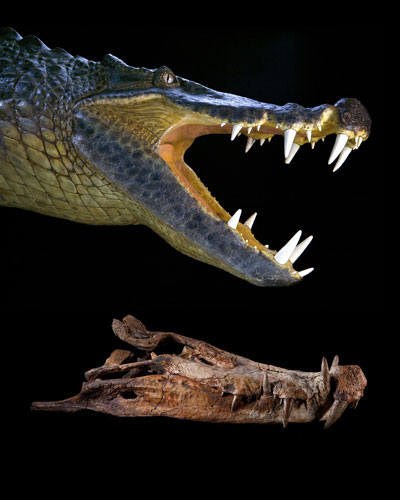
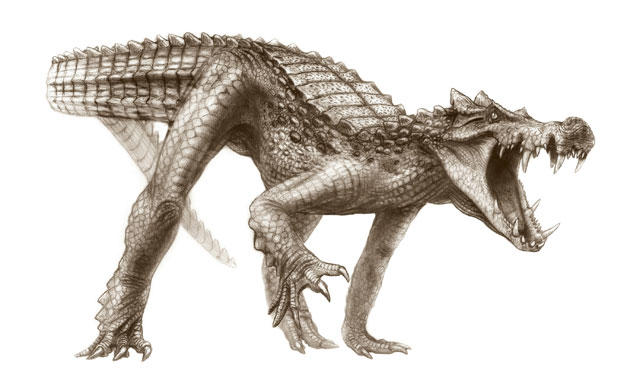
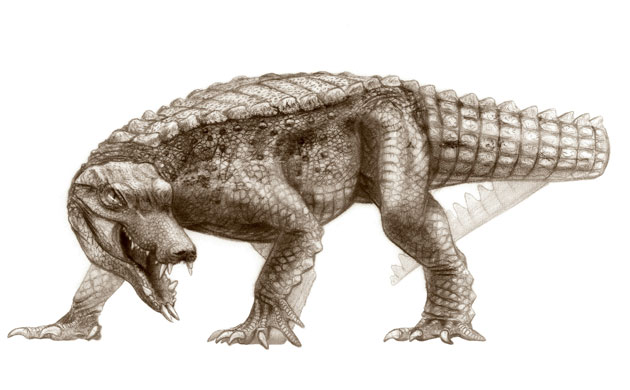
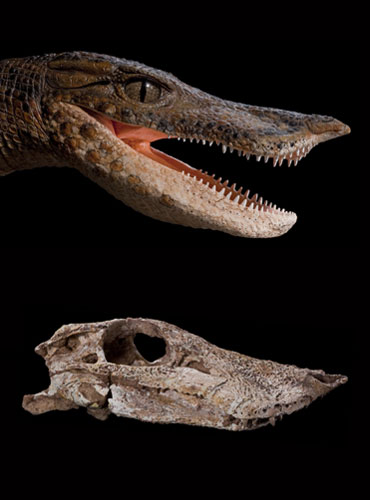
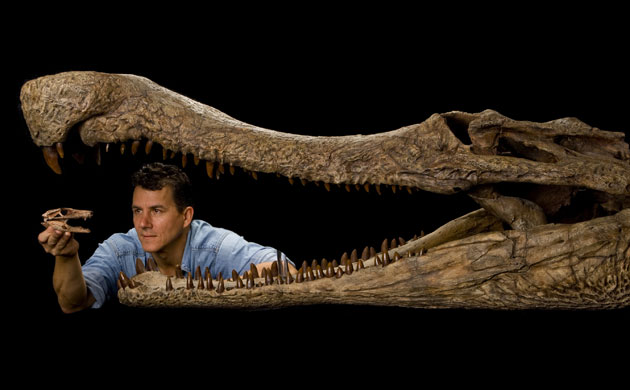
Paul Sereno, a palaeontologist at the University of Chicago, with his Saharan discoveries – SuperCroc, BoarCroc (upper right), PancakeCroc (lower right), RatCroc, DogCroc and DuckCroc. The fossil crocs were unearthed in a series of expeditions to the Sahara beginning in 2000, supported by the National Geographic SocietyPhotograph: Mike Hettwer/NGA flesh model of the head of BoarCroc and the fossil skull discovered in the Sahara. BoarCroc was a 6m-long meat eater with three sets of dagger-shaped fangsPhotograph: Mike Hettwer/NGArtist’s conception of BoarCrocPhotograph: Art by Todd Marshall/National Geographic
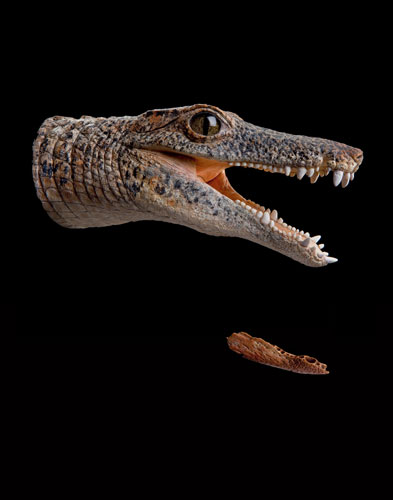
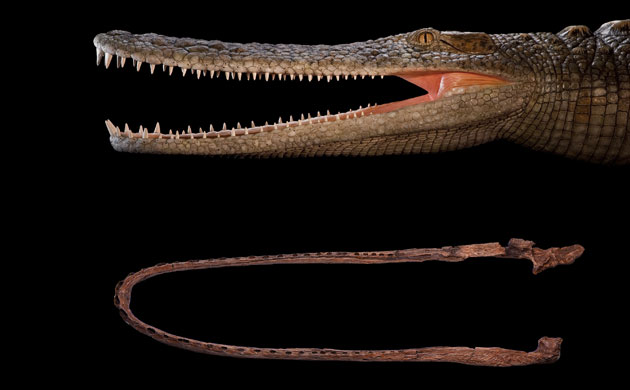
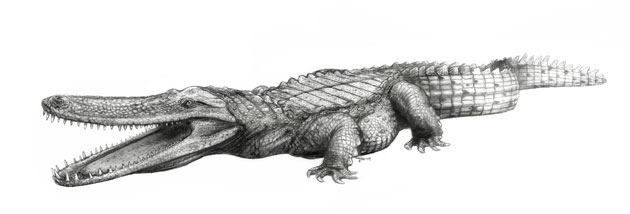
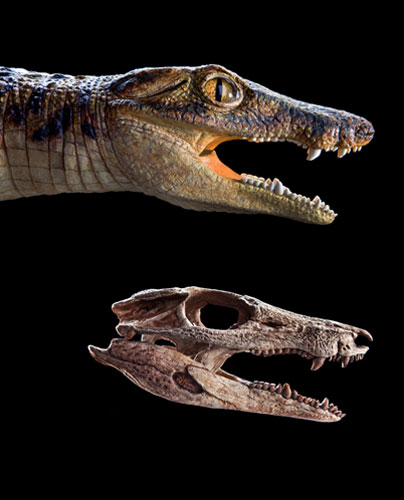
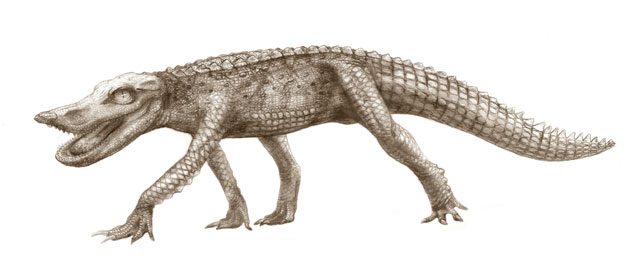
A flesh model of the head of RatCroc and its fossil lower jaw. RatCroc used its pair of buckteeth to dig for plant roots and grubs. Other fossil bones, not pictured, helped flesh out RatCroc’s features Photograph: Mike Hettwer/NGArtist’s conception of RatCroc, a metre-long, upright plant and grub-eater Photograph: Art by Todd Marshall/NGA flesh model of the head of PancakeCroc and its fossil lower jaw. PancakeCroc was a fish eater with a metre-long, pancake-flat skullPhotograph: Mike Hettwer/NGPancakeCroc probably remained motionless for hours, its open jaws waiting for prey Photograph: Art by Todd Marshall/NGA flesh model of the head of DogCroc and its fossil skull. DogCroc had a soft, doglike nose and would have been an agile galloper and swimmer Photograph: Mike Hettwer/National GeographicDogCroc running at full tiltPhotograph: Art by Todd Marshall/NGA flesh model of the head of DuckCroc and its fossil skull. DuckCroc had a broad, overhanging snout and a long, pointed nose Photograph: Mike Hettwer/NGDuckCroc was around a metre long. In common with the other ancient crocs, but unlike modern crocodiles, it walked upright with its legs extendedPhotograph: Art by Todd Marshall/National GeographicSereno in the jaws of SuperCroc, holding the fossil head of DogCrocPhotograph: Mike Hettwer/National Geographic
Sign up to read this article
Read news from 100’s of titles, curated specifically for you.