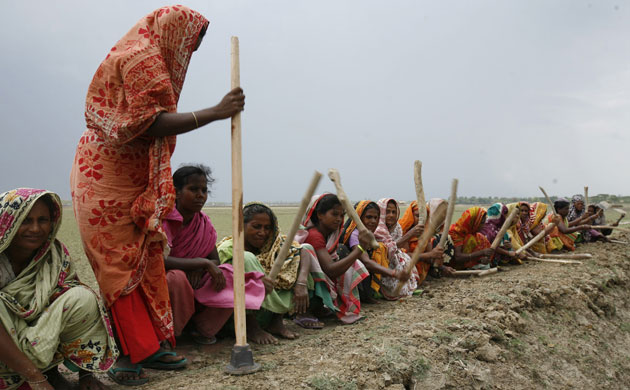
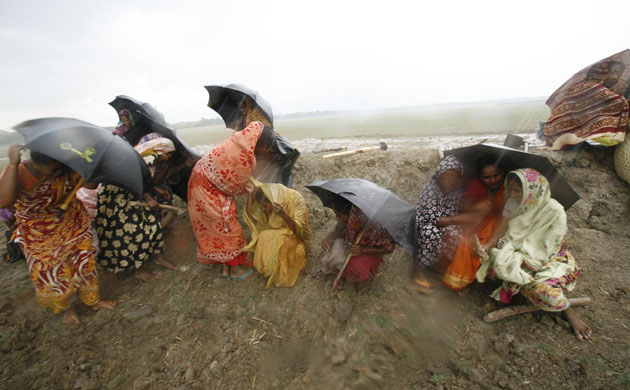
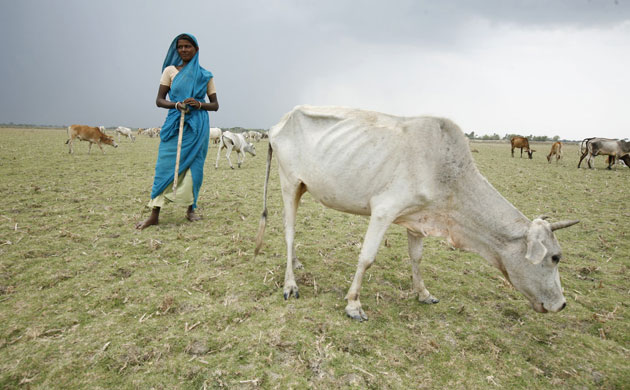
Bangladeshi women repair a road at Shayamnagar on 15 May, before cyclone Aila struckPhotograph: Abir Abdullah/EPA/OxfamThe Bangladeshi women were caught in a sudden downpour while repairing the roadPhotograph: Abir Abdullah/EPA/OxfamBangladeshi women graze cattle in a field at Shayamnagar on 15 MayPhotograph: Abir Abdullah/EPA/Oxfam
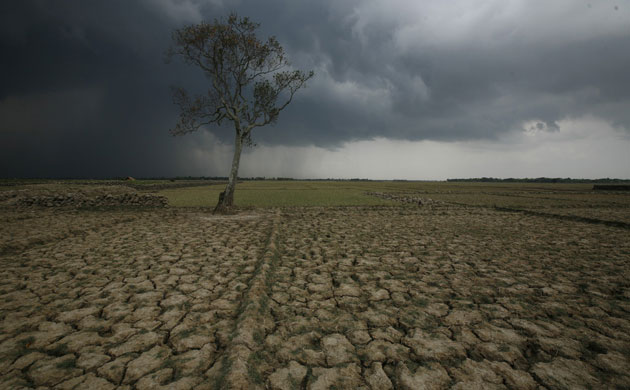
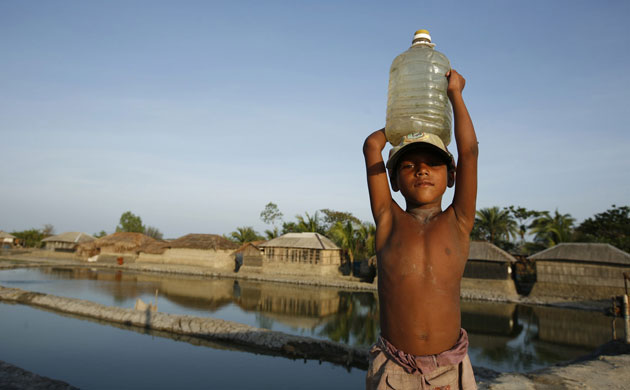
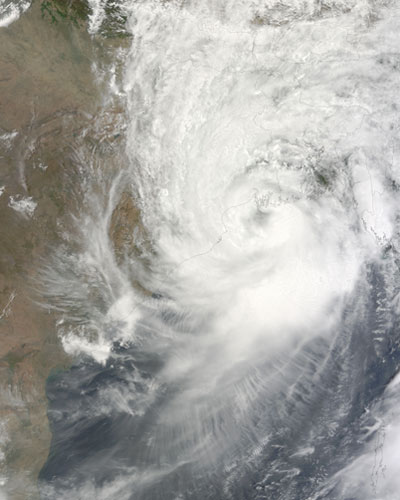
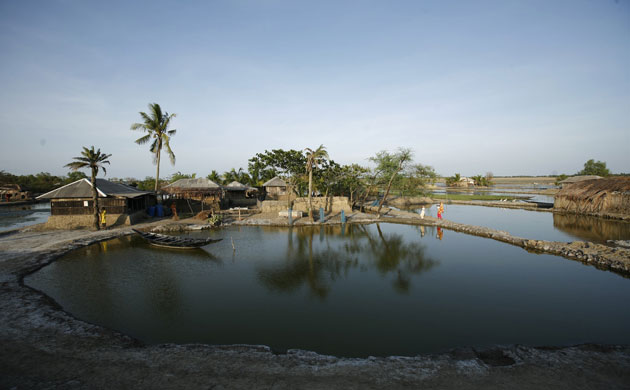
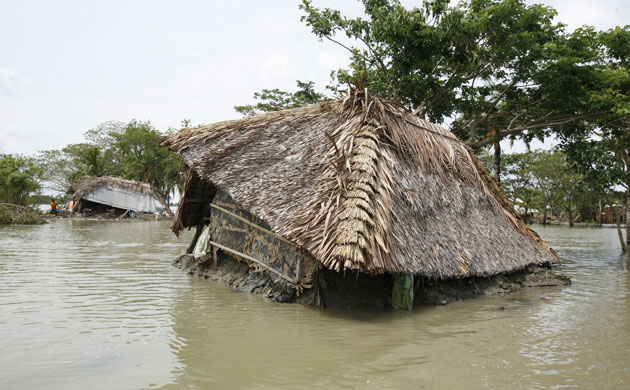
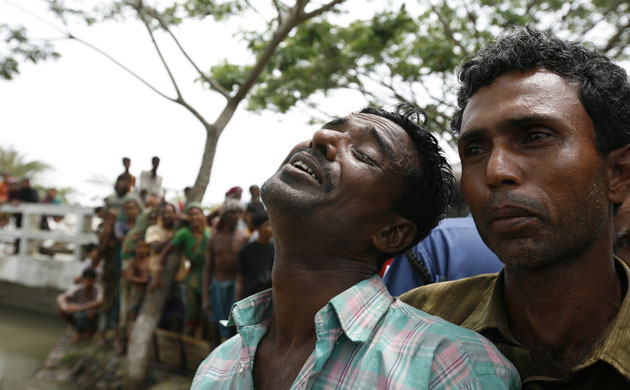
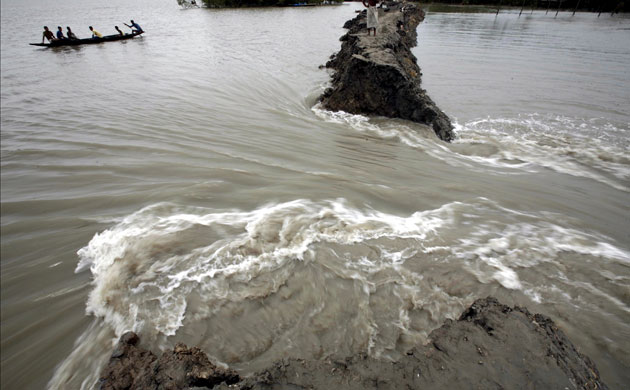
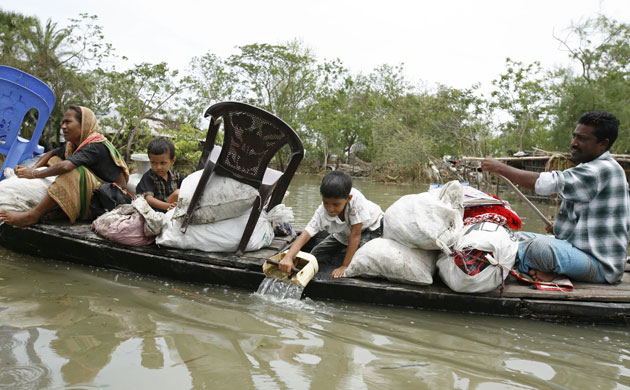
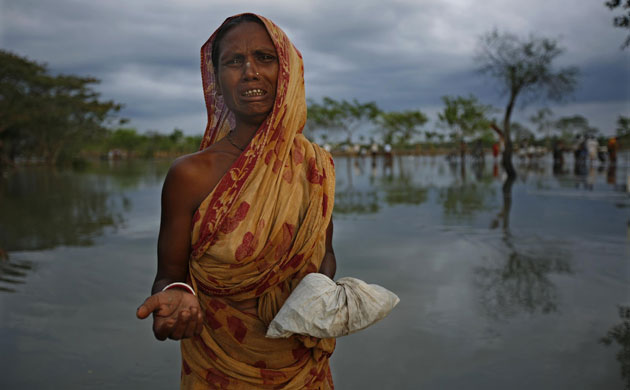
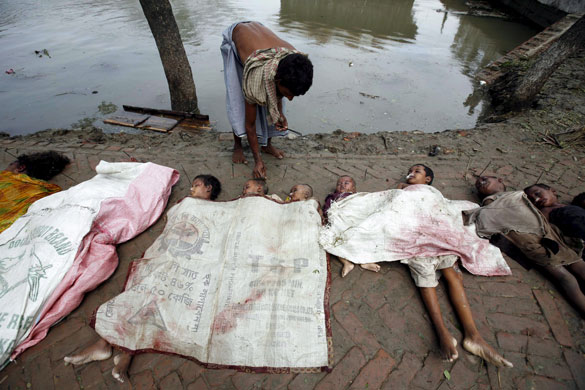
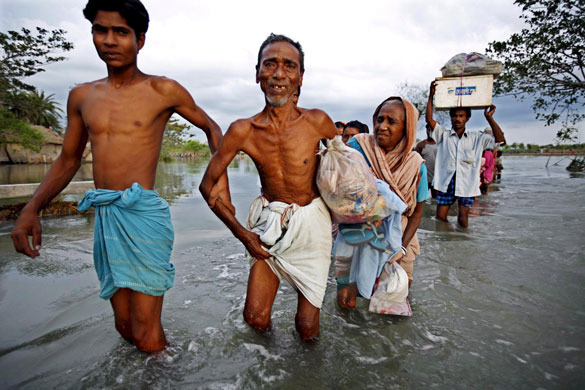
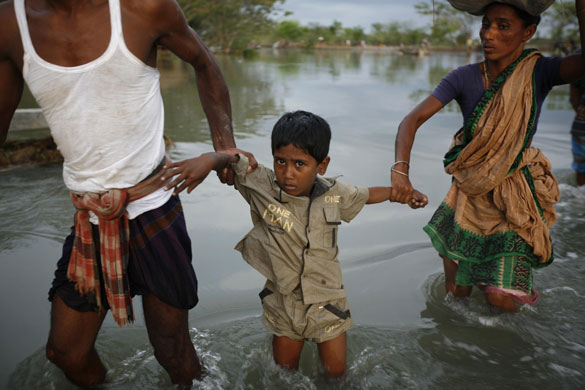
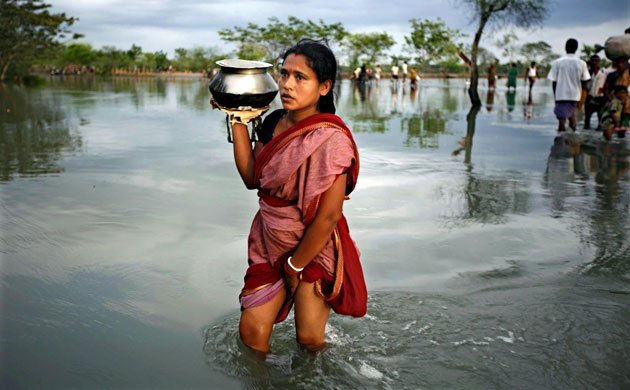
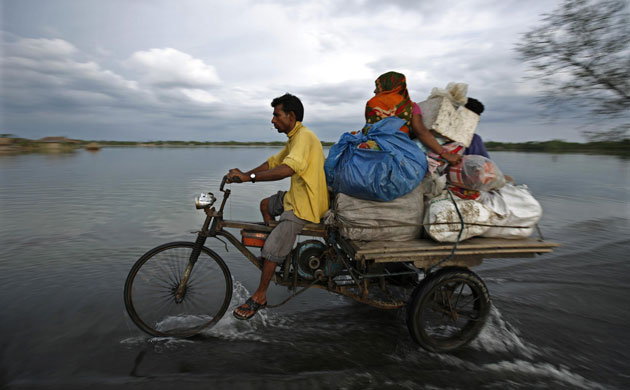
Black clouds gather in the sky before Aila. There had been no rain for eight months in Satkhira areas, which had caused crops to failPhotograph: Abir Abdullah/EPA/OxfamRubel, 8, carries a bottle of clean water from a nearby water source in SatkhiraPhotograph: Abir Abdullah/EPA/OxfamImage of Aila captured on 25 May, the same day that the storm temporarily strengthened to a Category 1 cyclone. Aila almost completely fills this scene, stretching from the Bay of Bengal deep into India, Bangladesh, and Burma. On May 25, Aila’s wind speeds reached up 75 miles an hour. According to the Associated Press, some 2.3 million people were affected by Aila, many of them stranded in flooded villages. Storm surges in Bangladesh flooded agricultural areas with salty water. Home to roughly 25,000 residents, the coastal island Nijhum Dwip was reported to be completely submerged. Photograph: Terra/MODIS/NASASmall ponds, coconut trees, small houses and shrimp farms, a very common secene of Gabura Union, Satkhira which was badly affected by the cyclonePhotograph: Abir Abdullah/EPA/OxfamTwo days after the cyclone struck, many rural villages had not yet been reached by relief workers, and the death continued to rise significantlyPhotograph: Abir Abdullah/EPA/OxfamA Bangladeshi man mourns after the loss of his wife and children in the cyclone in Gabura, SatkhiraPhotograph: Abir Abdullah/EPA/OxfamWater gushes through the collapsed embankment after cyclone Aila hit Gabura, SatkhiraPhotograph: Abir Abdullah/EPA/OxfamCyclone affected Bangladeshi people travel by boat with their belongings to a safer location after the cyclone hit at Gainbari, Satkhira, on 26 MayPhotograph: Abir Abdullah/EPA/OxfamA Bangladeshi woman cries as she looks for refuge after flood waters enters new areas after the cyclone Aila hit in the south-west parts at Harinagar, Satkhir, 28 MayPhotograph: Abir Abdullah/EPA/OxfamDead bodies lined up after cyclone Aila hit Gabura, SatkhiraPhotograph: Abir Abdullah/EPA/OxfamVillagers wade in flood waters in search of refuge as water enters new areas in HarinagarPhotograph: Abir Abdullah/EPA/OxfamA Bangladeshi family wades through flood water to refuge in Harinagar, SatkhiraPhotograph: Abir Abdullah/EPA/OxfamA woman wades through flood waters in Harinagar, Satkhira Photograph: Abir Abdullah/EPA/OxfamA Bangladeshi family travel to safety place as flood water enters new areas after the cyclone Aila hit in the south-west parts at Harinagar, Satkhira, Bangladesh 28 MayPhotograph: Abir Abdullah/EPA/Oxfam
Sign up to read this article
Read news from 100’s of titles, curated specifically for you.