Get all your news in one place.
100’s of premium titles.
One app.
Start reading
The Guardian - UK
The Guardian - UK
Environment
Jessica Aldred and Eric Hilaire

Gabon's war on illegal wildlife crime - in pictures

Gabon: War on wildlife crime
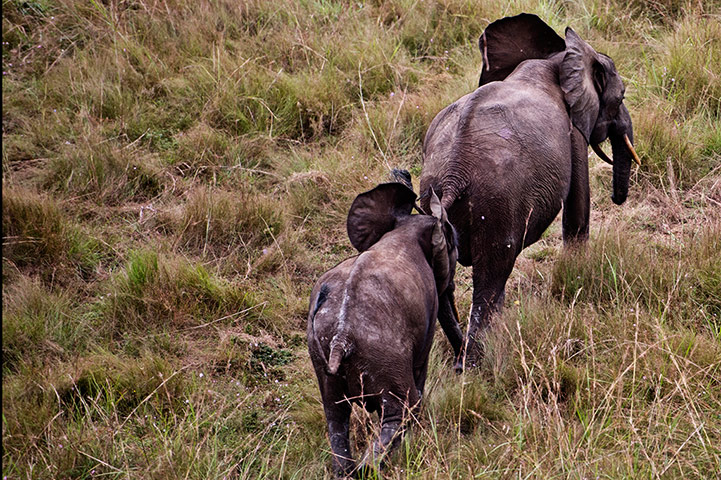
Two elephants in Wonga Wongué reserve. Gabon is home to about 50,000 African elephants and most of the continent's remaining population of forest elephants. The forest elephant, (Loxodonta cyclotis), is now accepted to be a separate biological species from the larger savanna elephant, and lives in the forests of west and central Africa. Its ivory is more finely grained and highly prized. Last year Gabon raised the status of the forest elephant to ‘fully protected’ due to unprecedented levels of poaching
Photograph: James Morgan/WWF-Canon
Gabon: War on wildlife crime
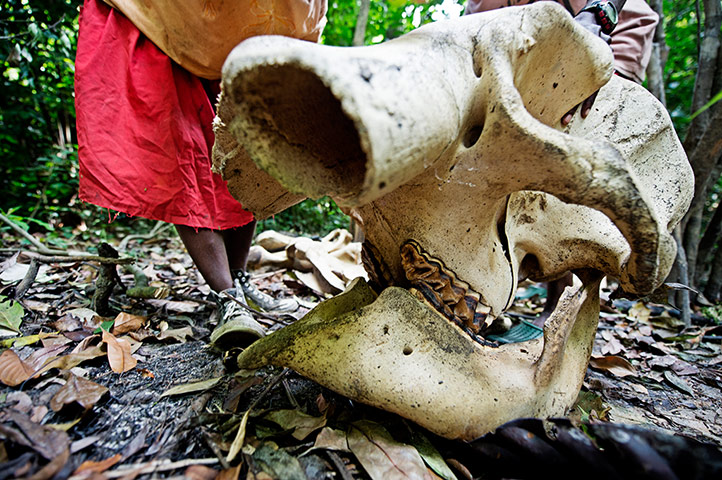
Scientists reported the highest recorded rate of illegal elephant killings in 2011, with tens of thousands of the large mammals lost that year to poachers, according to the Convention on International Trade in Endangered Species of Wild Fauna and Flora. The global trade in illegal wildlife products in now estimated at $8-10bn a year, driven mostly by demand from Asia's burgeoning middle classes
Photograph: James Morgan/WWF-Canon
Gabon: War on wildlife crime
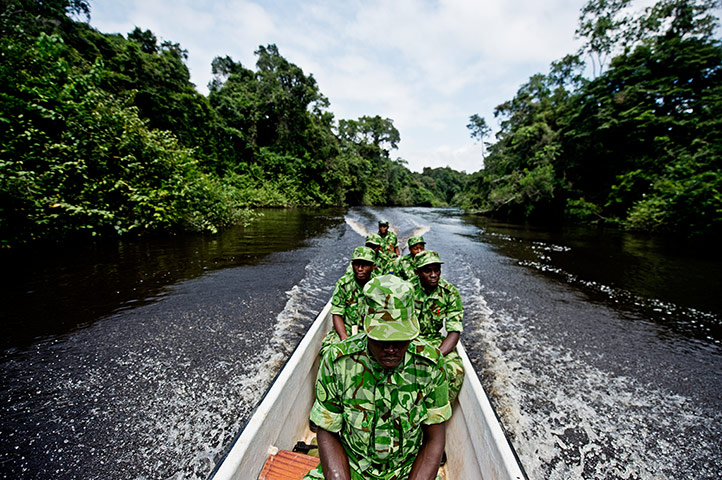
Eco guards patrol the Oua River in north-west Gabon. Rivers are often used as quick ways to export poached elephant ivory and other bushmeat out of the jungle. Gabon has beefed up its wildlife enforcement overall, adding a military branch of 250 people to its park service staff to conduct antipoaching operations in high-risk areas
Photograph: James Morgan/WWF-Canon
Gabon: War on wildlife crime
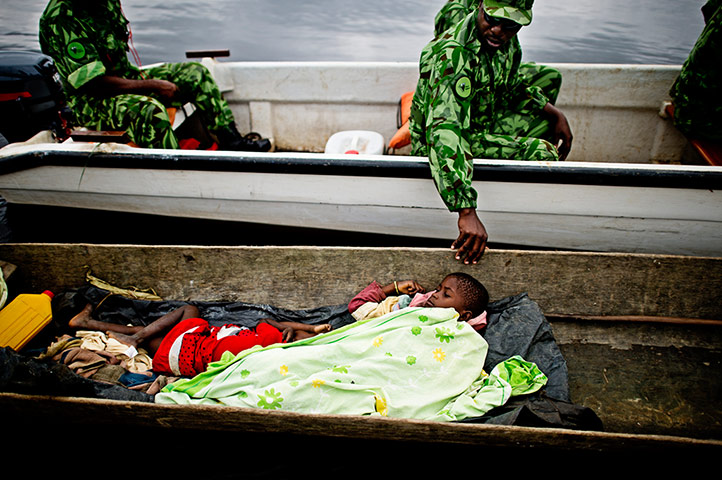
Eco guards inspect check a dug-out canoe. In the last 30 years the vast majority of forest elephants across Africa have been slaughtered for the illegal ivory trade. The Democratic Republic of Congo, which once had over 500,000 forest elephants, counts 12,000 or fewer today. Gabon and northern Congo represent the last frontier
Photograph: James Morgan/WWF-Canon
Gabon: War on wildlife crime
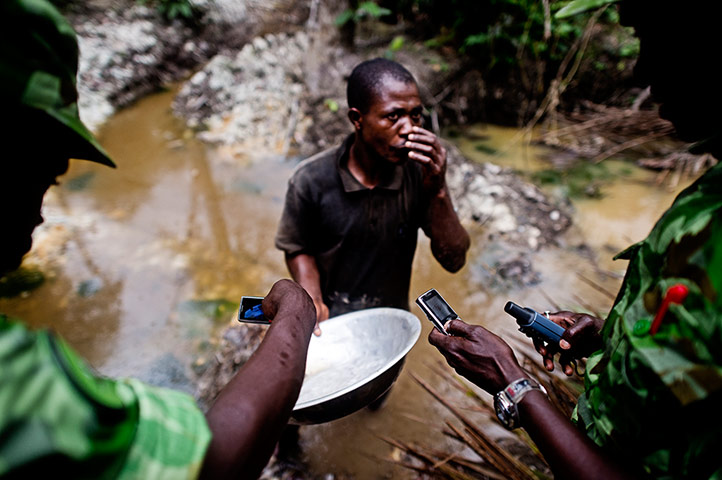
Eco guards photograph some gold found by a small-scale miner in the forest along the Oua River
Photograph: James Morgan/WWF-Canon
Gabon: War on wildlife crime
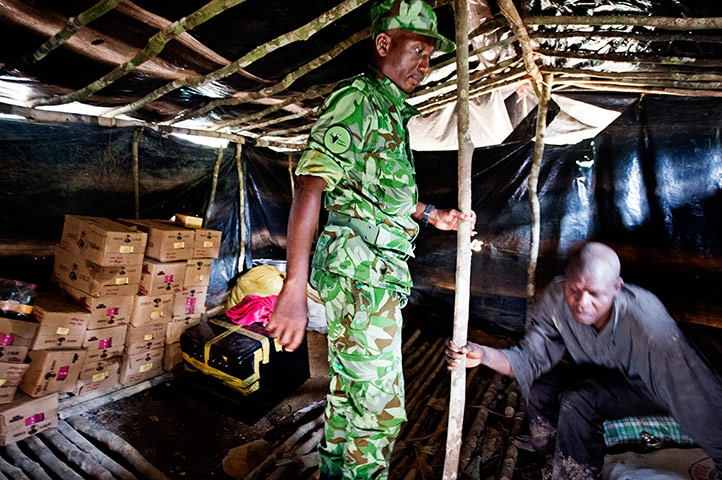
An eco guard searches the hut of a gold miner who has come to Gabon from Equatorial Guinea. The market price for ivory is growing exponentially. Today just one tusk from a prize bull elephant will sell on the black market for upwards of $50,000 Photograph: James Morgan
Gabon: War on wildlife crime
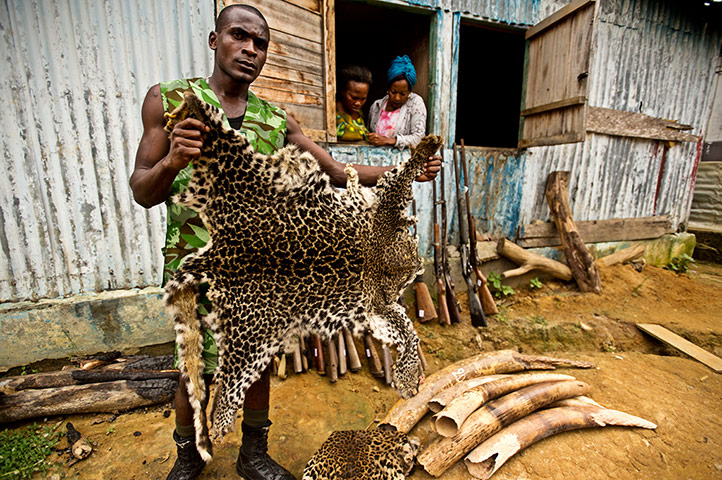
Mba Ndong Marius, an eco guard from Oyem, holds up a poached leopard skin in front of a collection of seized ivory and weapons. In 2004, the first national training of eco guards and eco guides was organised by WWF-Gabon, in collaboration with the National Forestry School (ENEF) and other partners
Photograph: James Morgan/WWF-Canon
Gabon: War on wildlife crime
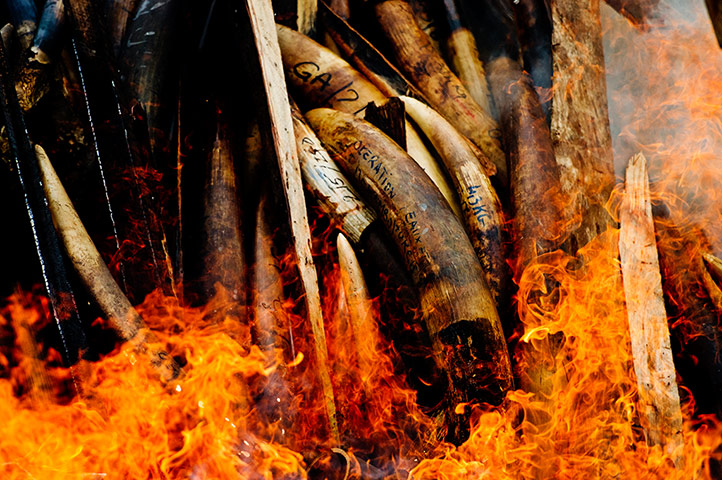
Gabon burned its government-held stockpile of ivory in June to mark the country's commitment to combat poaching and illegal wildlife trade. The bonfire had an estimated black market value of almost $10m dollars - money that would have ended up in the hands of international crime syndicates
Photograph: James Morgan/WWF-Canon
Gabon: War on wildlife crime
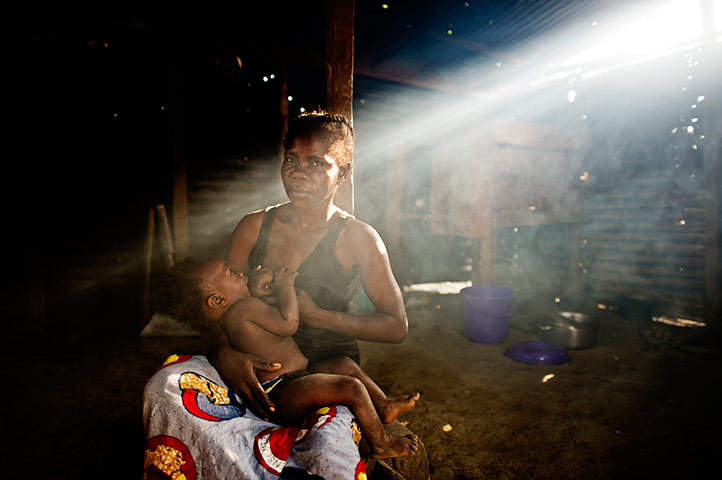
Although international markets are the major driver of poaching, widespread poverty means that local indigenous communities are involved in the commercial illegal ivory trade
Photograph: James Morgan/WWF-Canon
Gabon: War on wildlife crime
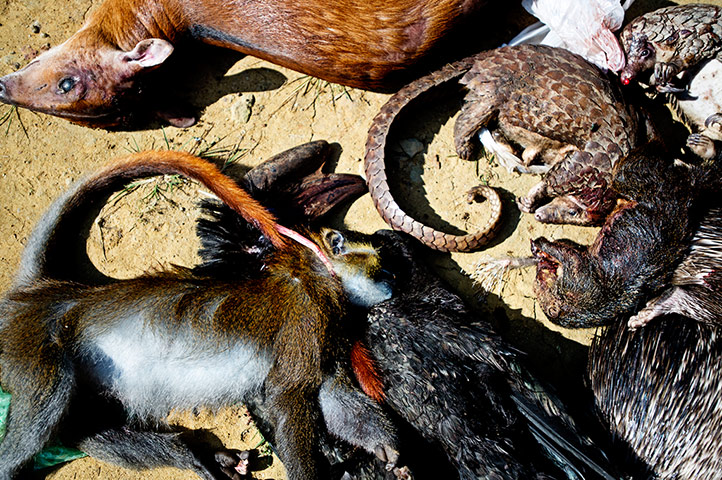
A large haul of bushmeat laid out next to a police post outside Oyem. Bushmeat is the meat of wild animals hunted for income or subsistence. Due to increasingly unsustainable levels of hunting and trade, the harvest of wild meat has become a focus of global concern. This is particularly so in the tropical forests of west and central Africa, leading to reports of a 'bushmeat crisis' in the region
Photograph: James Morgan/WWF-Canon
Gabon: War on wildlife crime
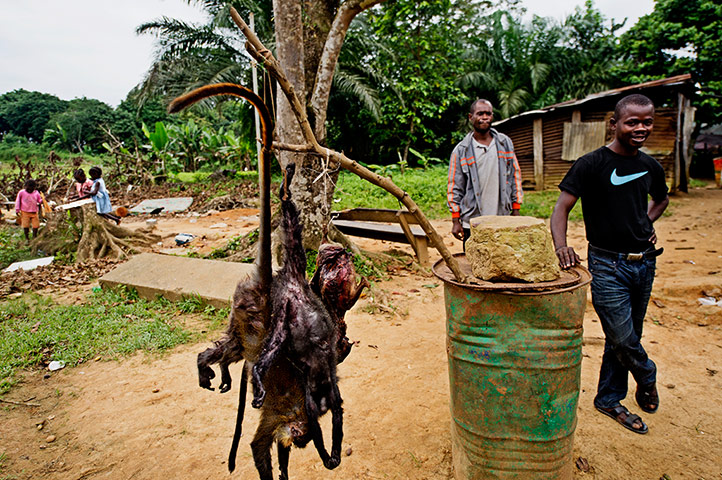
Bushmeat for sale along the road from Libreville to Makokou. 'Extinctions resulting from this unsustainable level of hunting will not only threaten ecosystem services but are also likely to seriously impact upon the food security and livelihoods of those people who use this resource,' conservationists say
Photograph: James Morgan/WWF-Canon
Gabon: War on wildlife crime
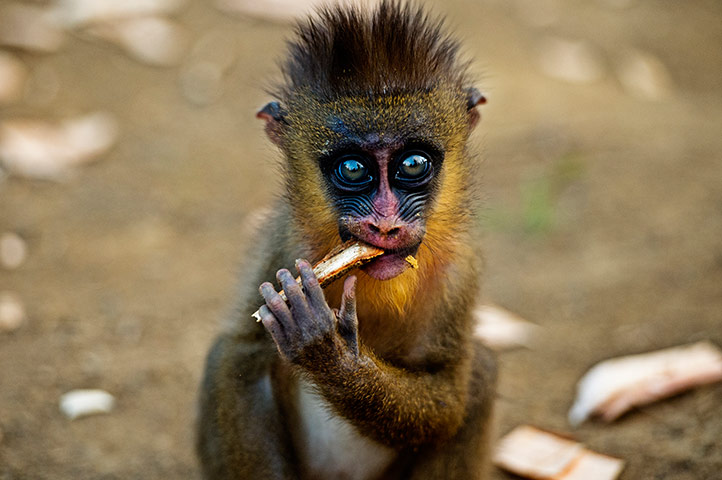
A juvenile Mandrill monkey. Its mother was killed by poachers and it now lives in Minkebe village
Photograph: James Morgan/WWF-Canon
Gabon: War on wildlife crime
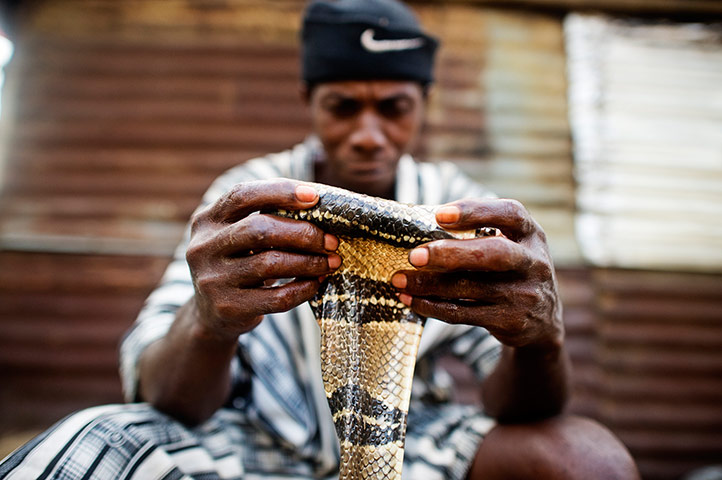
In Mekobe village a man rolls the skin of a water cobra. The meat of the snake will be eaten and the skin preserved to hang on his wall
Photograph: James Morgan/WWF-Canon
Gabon: War on wildlife crime
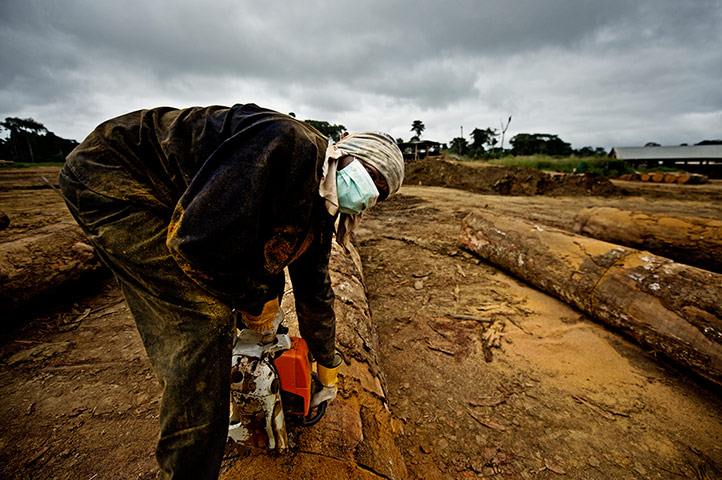
A worker saws logs in a concession belonging to Rimbunan Hijau, a Malaysian multinational that is one of the largest logging enterprises in Gabon and probably the leading supplier of Gabon's exports of logs (particularly okoumé) to China. Increased logging pressures push elephants closer to villages and increase instances of poaching
Photograph: James Morgan/WWF-Canon
Gabon: War on wildlife crime
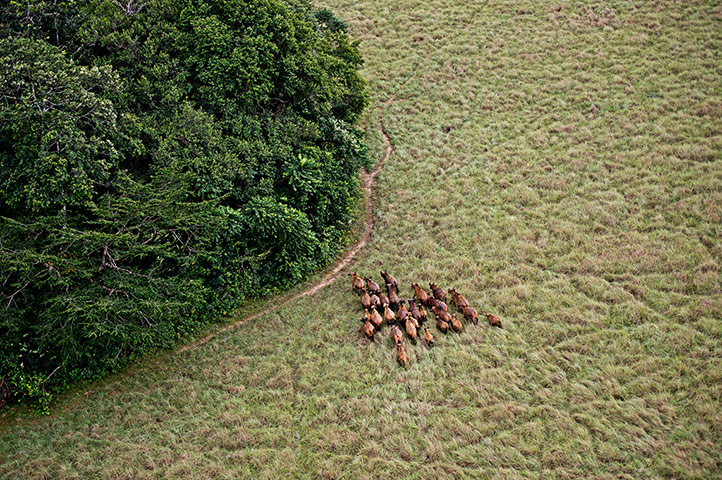
A herd of buffalo in Wanga Wangue presidential reserve, Gabon
Photograph: James Morgan/WWF-Canon
Sign up to read this article
Read news from 100’s of titles, curated specifically for you.
Already a member? Sign in here
Related Stories
Top stories on inkl right now
One subscription that gives you access to news from hundreds of sites
Already a member? Sign in here
Our Picks
Fourteen days free
Download the app
One app. One membership.
100+ trusted global sources.