
Apple is reportedly developing satellite capabilities for the iPhone which would allow users to contact first responders from remote locations where cellular service may not be available.
Bloomberg first reported on the feature that would rely on satellite networks from a company called Globalstar. Apple wouldn’t incorporate the technology into its iPhone 13, due out in September, but it might be ready in time for the subsequent phone. Any such iPhone would require a new chip capable of communicating with satellite networks.
Apple, of course, has declined to comment on the reporting. Mark Gurman, who published the story for Bloomberg, has a strong track record accurately reporting on internal projects at Apple.
Implementation —
The satellite services would consist of two separate components. Emergency Message via Satellite, the first, would let users send short text messages to emergency services and contacts over a satellite network when there’s no cell signal available. It would be integrated directly into the Messages app, with gray bubbles indicating a message was sent via satellite. One way users might send emergency messages would be by typing “Emergency SOS” into the field where they would usually input a contact name.
Because messages would be short, the second feature would let users quickly report major emergencies, like a sinking ship, through a series of prompts that would ask questions such as whether search and rescue is needed or if there are weapons involved.
In both cases, a user’s GPS and Medical ID information could be delivered to emergency services.
Safety first —
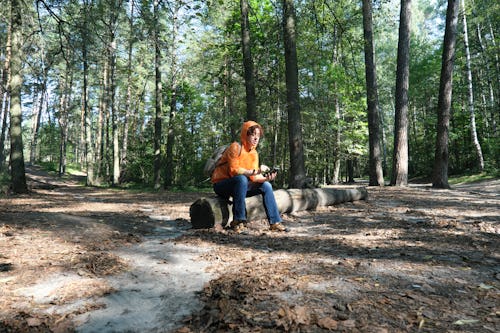
Such emergency features would be useful in remote areas like mountains, where data service is often not available. Serious hikers already use products like the Garmin inReach to send short messages or an SOS over satellite networks, but incorporating it directly into a smartphone used by the masses could help rescue a lot more people before it’s too late. Devices like the inReach can easily cost $500 or more, and also require a service plan. Presumably Apple’s service would come with an additional service charge to compensate Globalstar.
Cases like the recent death of a hiker in Northern California, found a week after his disappearance, demonstrate the potential benefit of offering satellite SOS through a smartphone. All too often, getting lost and disoriented in remote areas can have fatal consequences.