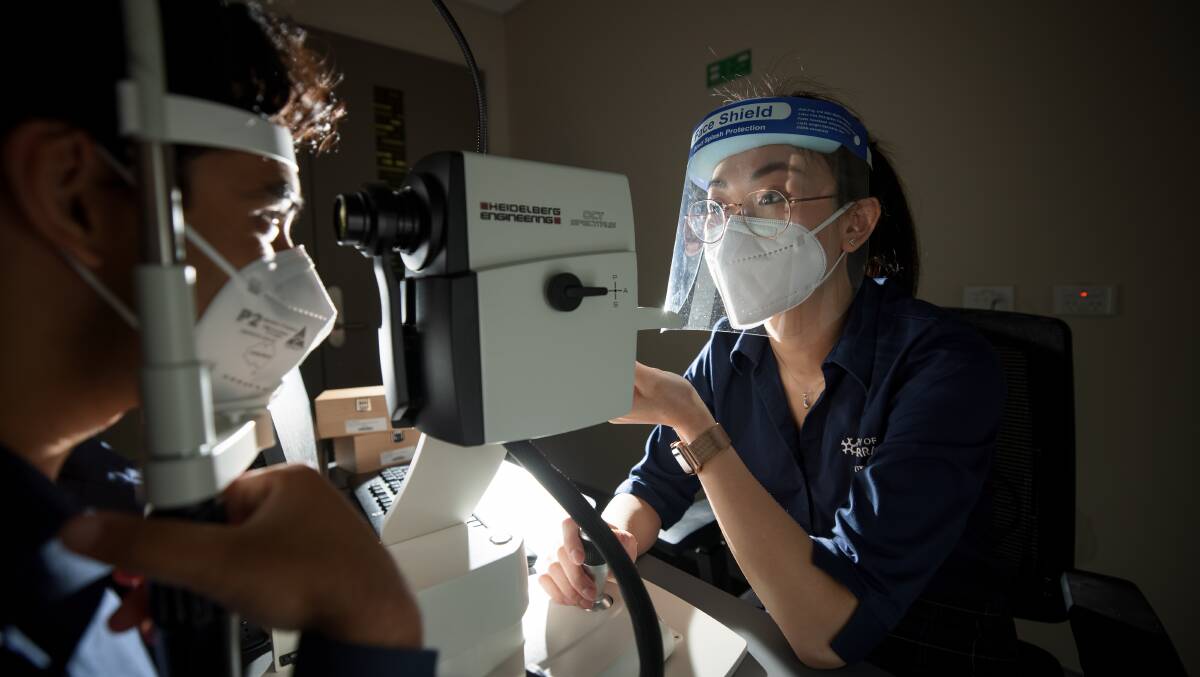
When Emily Tran got her first pair of glasses at a young age she noticed a dramatic change in her vision, sparking her interest in the field of optometry.
"I was short-sighted so there was a lot of things that I noticed were blurry but didn't know that wasn't normal until I got glasses," she said.
"It kind of changed the way I looked at things outside and made me more happy being able to see things in class."
The third-year optometry masters student at the University of Canberra has been able to return to her placement at the UC Clinic, along with other final year and penultimate year students studying nursing, midwifery, medical radiation sciences and physiotherapy.
Executive dean of health Professor Michelle Lincoln said students had done theory classes remotely during the ACT COVID lockdown but there were some practical procedures that couldn't be taught online.
"So they need to, for example, think of nursing, practise taking blood pressure and have someone observe them and give them feedback about how to do that.
"And similarly with physio therapy students it's particular manipulations of muscles and exercise prescription ... they're all very sort of practical, hands-on skills that health professionals need."
Amid the ongoing COVID-19 outbreak, students have to comply with the ACT government's requirements for personal protective equipment as they need to be within 1.5 metres of each other.
The placements or classes have fewer students in each group and the groups are separated from each other on campus. There are strict hand-sanitising and cleaning protocols.
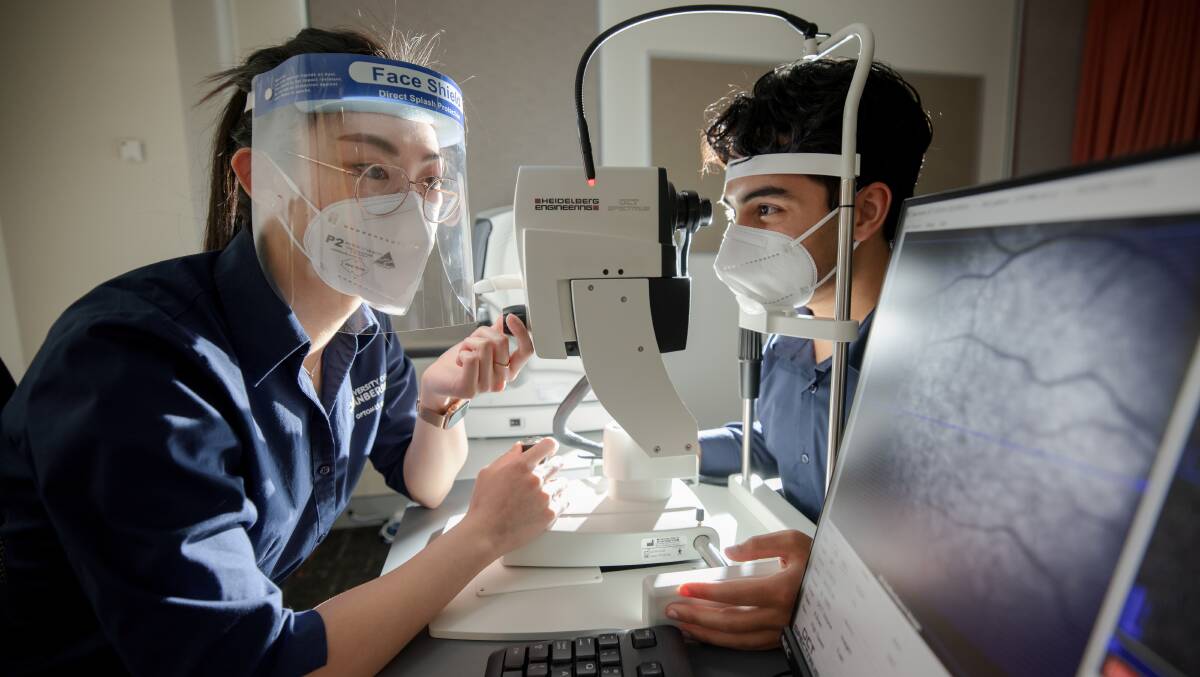
"You can imagine we might bring eight nursing students into one of our teaching labs, they might be there for a couple of hours only with that group of students and then they leave," Professor Lincoln said.
"We clean everything down and then we might have another group coming in the afternoon. It's quite labour-intensive, but important, incredibly important."
By following the infection control procedures and getting familiar with telehealth consultations the students are learning valuable skills to take into the workforce.
The lockdown has caused a backlog of clinical placements. Professor Lincoln said the priority was to make sure the graduates complete their courses so they could join the workforce.
"Health professionals are going to be pretty tired I think heading in next year and looking for some fresh people and fresh faces. It's important we finish as many of those final year students as we can and then we'll turn our attention to really trying to move through some of those students in the early years."
Miss Tran said it was extremely important to continue her clinical placement to be able to practice the skills she learned.
"Putting that together and learning how to process and sequence the whole consultation is very very important in terms of being competent and knowing what to do when you come out to work in practice."