Small businesses have called for an end to “unfair” payment practices after it was revealed that one of the UK’s biggest food manufacturers had requested money from suppliers to keep doing business with the firm.
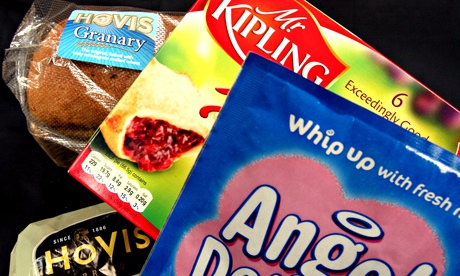
Premier Foods, maker of Oxo stock cubes, Ambrosia custard and Mr Kipling cakes, asked for payments totalling millions of pounds from suppliers across the country, according to a BBC Newsnight investigation.
The Federation of Small Businesses said the revelations were only the latest example of bad payment practices stretching suppliers to breaking point. It said one small business in the south-west had been asked to pay £1,700 to secure its future business with Premier Foods.
“Premier Foods should be ashamed of themselves. Driving a hard bargain with your suppliers is one thing, but demanding a cash gift under the threat of delisting, is downright unfair,” said John Allan, FSB chairman.
A spokesman for the government’s Department for Business, Innovation and Skills said: “We are concerned by recent reports and are consulting to assess the evidence so we can establish what more we can do. We are also consulting on whether the biggest companies should be required to report publicly on whether businesses need to pay to be on their supplier lists.”
The furore over the payments to Premier Foods is likely to add momentum to debates under way as part of the small business enterprise and employment bill being discussed in the House of Lords.
The shadow small business minister, Toby Perkins, said Labour had proposed legislative changes to stop firms “exploiting” their suppliers, through practices such as late payment and charging companies to be on their supplier list.
“This issue of businesses charging suppliers to be on their supplier list, or changing the payment terms so that suppliers are being paid very late, is a growing problem,” he told BBC Radio 4’s Today programme. “Businesses that have a much more constructive, a much more even relationship with their suppliers, are disadvantaged in the face of competition against people who are exploiting their suppliers.”
The Institute of Directors said politicians were right to be concerned about the “unacceptable” pay-to-stay deals. In a sharply worded statement the influential City lobby group said defenders of free-market forces should be furious, arguing that such hostile business practices would damage the reputation of corporate Britain and fuel demands for more regulation.
“At a time when public faith in business is painfully low, such unacceptable behaviour puts a bullet in the chamber for those who think the heavy hand of regulation is the only way to change the culture of corporate Britain,” the IoD director general, Simon Walker, said. “If companies continue to give politicians good cause to intervene, they cannot be surprised when regulations begin to rain down. Holding small businesses and suppliers at gunpoint is a sure way to catch the attention of policymakers and regulators. Premier need to consider their arrangements closely. We encourage them to think of the long-term damage they could be doing to their suppliers, their brands, and business in general.”
Retail experts said Premier Foods had not broken the law, but the demands raised questions about business ethics. “Smaller suppliers to the food manufacturing industry typically operate under microscopic margins, meaning that they are extremely dependent on high volume contracts with the likes of Premier Foods, to stay afloat,” said Julie Palmer, a partner and retail expert at Begbies Traynor consultancy.
“With suppliers under constant pressure to slash prices further while accepting unreasonably elongated payment terms, the UK’s largest food manufacturers and retailers need to find a better way of balancing prices with profits, without pushing their suppliers off a cliff.”
Premier Foods has also been struggling in recent months, as cash-strapped consumers increasingly turn to discount grocers and supermarkets’ own-brand products. The maker of Bisto gravy and Sharwood’s sauces shocked the City in October when it warned that 2014 profits would be below expectations, an announcement that sent shares tumbling by more than a third.
About six weeks after the profits warning, the company wrote to some suppliers, asking them “to make an investment payment to support our growth”. When a supplier raised questions about the payment, Premier said anyone not making payments “will be nominated for delist” from their supply.
One supplier, who has had a contract with Ambrosia for more than 10 years, told Newsnight the demands were like blackmail. “What they are saying is: ‘Unless you pay this money, you can’t do the work.’” Another said: “It is like a gun held to your head.”
A Premier Foods spokesperson said: “We launched our ‘invest for growth’ programme in July last year as part of a broader initiative to reduce complexity in support of plans to help turn around the business. This included a commitment to halve the number of our suppliers and develop more strategic partnerships focused on mutual growth.
“As part of the programme, our suppliers are asked to make an annual voluntary investment to help fund our growth plans. In return, our suppliers benefit from opportunities to secure a larger slice of our current business. They also stand to gain as our business grows in the future.”