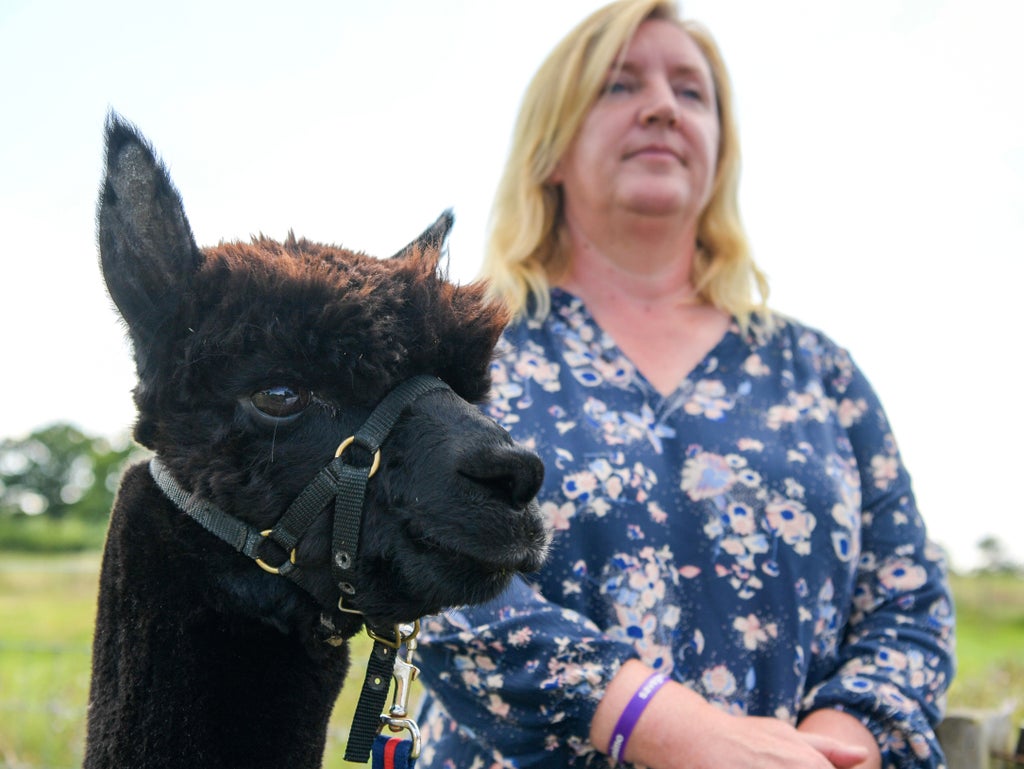
Further tests on Geronimo, the alpaca euthanised by government vets earlier this year, have found no traces of bovine tuberculosis, a report has claimed.
The alpaca was taken from his farm in Gloucestershire in August and killed by Animal and Plant Health Agency staff, following a four-year legal fight to save him which garnered widespread national attention.
Geronimo was infected with TB and his death was “a necessary measure to control the spread of bovine tuberculosis”, officials at the Department for Environment, Food, and Rural Affairs (Defra) said at the time, following a High Court ruling in July.
But his owner Helen Macdonald, a veterinary nurse, had argued that testing carried out on Geronimo had been flawed and that her animal was healthy.
The preliminary findings of a post-mortem in September were unable to settle the dispute.
While Ms Macdonald said the findings showed Geronimo did not have tuberculosis, Defra said the examination had discovered TB-like lesions in his liver and lymph nodes – but not his lungs – and that these required further investigation.
“These tests include the developing of bacteriological cultures from tissue samples, which usually takes several months. We would expect to complete the full post-mortem and culture process by the end of the year,” said the UK’s chief veterinary officer Christine Middlemiss.
On Thursday night, the Daily Mail reported that these tests had been finalised, and had shown no traces of the disease.
Ms Macdonald is now considering suing ministers over Geronimo’s slaughter, the paper reported.
Defra and Ms Macdonald did not immediately respond when contacted by The Independent, and both parties had declined to comment in the Mail’s report, which it was not possible to immediately verify.
In the wake of Geronimo’s killing, which occurred days before a warrant for his death was set to expire, Ms Macdonald had called on George Eustice to resign as environment secretary, accusing him of “murdering an innocent animal”.
Defra had said: “We are sympathetic to Ms Macdonald’s situation – just as we are with everyone with animals affected by this terrible disease.
“While nobody wants to cull animals, we need to do everything we can to tackle this disease to stop it spreading and to protect the livelihoods of those affected.”