KENT, Ohio _ Stacey Lim was an adult before she got hearing aids that made her happy.
They were purple.
"For me, I always felt like my hearing aids never reflected who I was," said Lim, a Stow High School graduate who is now an assistant professor of audiology at Central Michigan University. Getting colorful hearing aids told the world that her hearing loss isn't something she wants to hide, she explained. It's just part of who she is.
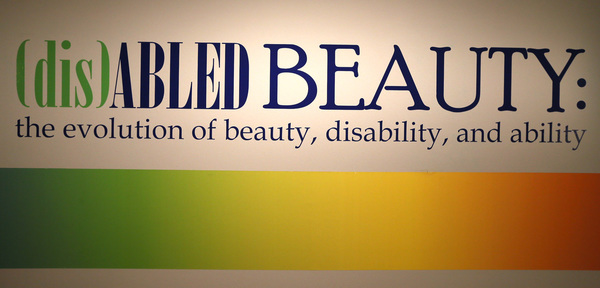
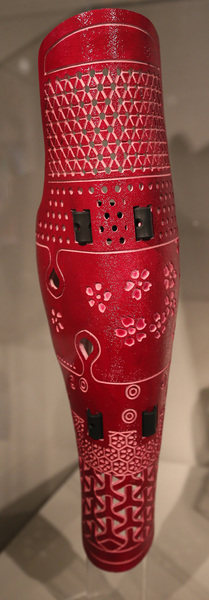
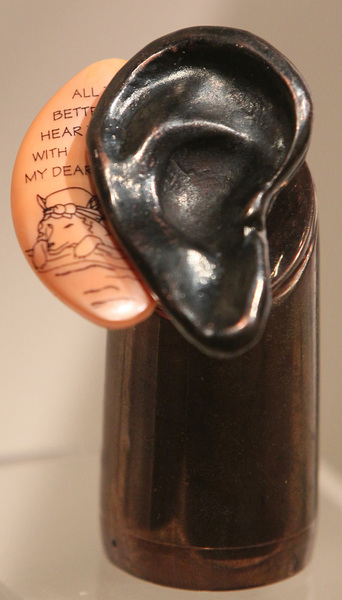
Eliminating the stigma of disabilities is one of the reasons Lim and colleague Tameka Ellington teamed up to create "(dis)ABLED BEAUTY," an exhibit on display through March 12 at the Kent State University Museum. The exhibit explores stylish approaches to physical challenges _ things like blingy prostheses, whimsical canes and fashionable clothing that's easy to put on.
The exhibit is also intended to highlight the demand for products that are attractive as well as assistive, said Ellington, an assistant professor of fashion at Kent State. Maybe, she said, it will inspire future and current fashion and product designers to address that underserved market.
Ellington said she and Lim became friends as Ph.D. students at Kent and first teamed up professionally on a study into the aesthetics and function of hearing devices. That work made them realize how much demand there is for products that celebrate disabilities rather than hiding them, and it ultimately led to the creation of "(dis)ABLED BEAUTY."
If there's an over-arching message to the exhibit, it's that people with disabilities are just people. They want to look good. They want to be comfortable. They don't want to hide their challenges, but they don't want to be defined by them, either.
And sometimes, they just want to have fun.
That's apparent from one of the most charming displays in the exhibit, a child's wheelchair that's been transformed into a likeness of the dragon Toothless from the movie "How to Train Your Dragon."
The dragon figure encompasses the chair, so it appears the chair's occupant is riding on the dragon's back. It was created as a Halloween costume by Oregon residents Ryan and Lana Weimer, parents of three children with disabilities and the founders of the nonprofit organization Magic Wheelchair.
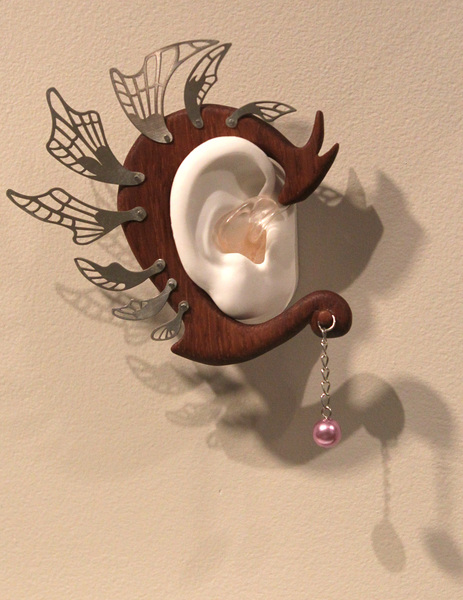
Whimsy winds its way through the exhibit. There's an arm sling decorated with a black squirrel, one of several slings the Kent State Fashion School designed for the university's president, Beverly Warren, after she tore her rotator cuff last year. There's a wooden sculpture by Ravenna artist Robert Katkowsky that looks like a quirky peg leg. There's a hearing aid decorated with a tiny gold lock and key, one adorned with an American flag and another that glows in the dark.
One of Lim's favorites is a playful hearing aid decorated with a miniature banana, just like one she owns. It was created by Mimi Shulman, a jewelry designer with hearing loss who called her creation, I Can't Hear You, I Have a Banana in My Ear.
"You know what? People with hearing loss have a sense of humor, too," Lim said.
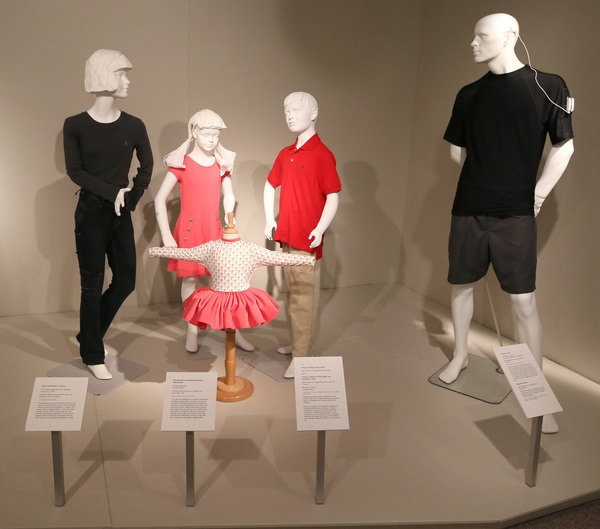
Many of the items in the exhibit combine fashion with function. There's an edgy leather motorcycle jacket with a modified back, designed to be comfortable for a wheelchair user and easy to put on. There's a sweet child's dress with hidden supports to raise the arms of a child who can't hold them up on her own to play or eat. There's a pair of Nike Zoom LeBron Soldier 9 Flyease shoes, a version of the popular athletic shoe that has a zipper behind the heel so someone with limited strength can easily slip the shoe on and off.
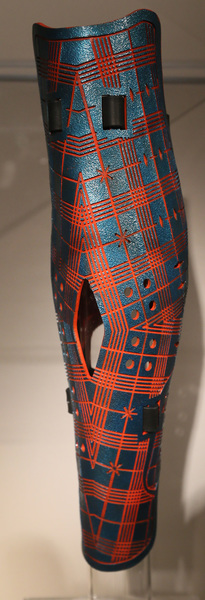
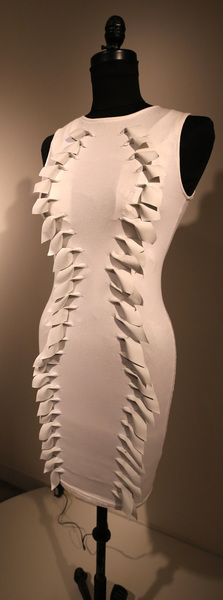
Some of the items represent cutting-edge technology, such as a bionic hand and a dress with sensors that make ruffles flutter to alert a hearing-impaired wearer to sounds in the vicinity. Other items are meant to draw attention to a disability and show the wearer's individuality, such as a prosthetic leg cover in racy silver and black and another in a bold orange-and-teal plaid.
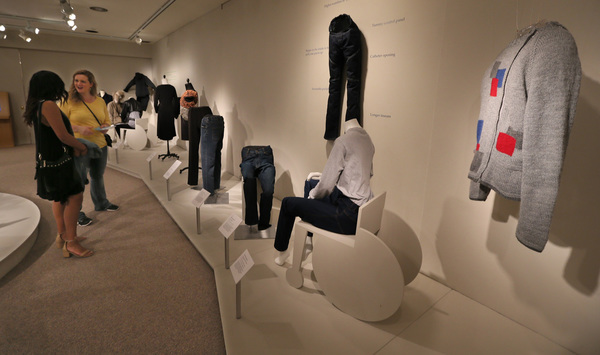
Both Ellington and Lim hope the exhibit will inspire designers to create clothing and other products that are inclusive as well as attractive.
"There's a whole market out there for things like this," Ellington said. " ... People with disabilities can be fashionable, too."